Artwork
安達吟光画 第二番目狂言 漂流奇譚 西洋劇 三幕目 アメリカ鉄道の場|“Act II, Scene 2: Along Train Tracks in America,” from the series The Strange Tale of the Castaways: A Western Kabuki
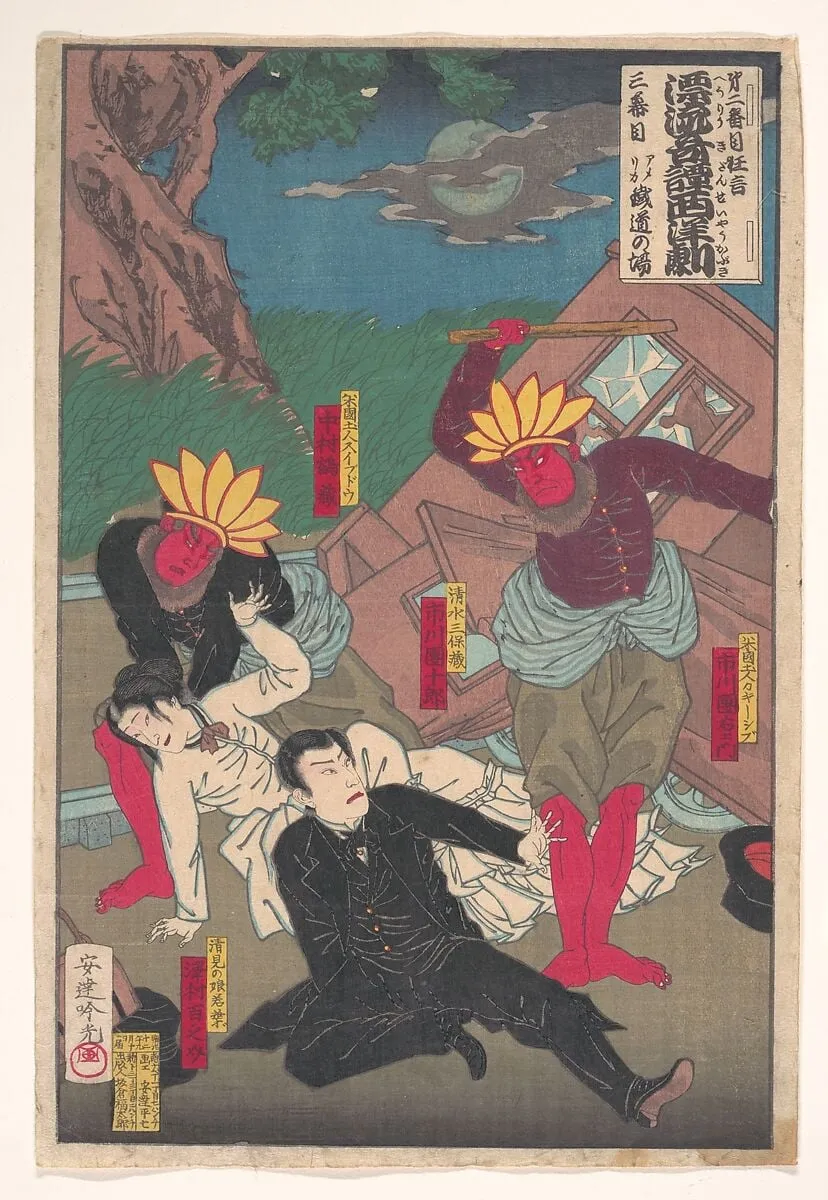
安達吟光画 第二番目狂言 漂流奇譚 西洋劇 三幕目 アメリカ鉄道の場|“Act II, Scene 2: Along Train Tracks in America,” from the series The Strange Tale of the Castaways: A Western Kabuki is an ink print by the Impressionist artist Adachi Ginkō. It dates from 1879 and is held in the collection of the Metropolitan Museum of Art.
About this work
Overview
The scene depicts a dramatic moment set along American railway tracks, merging Japanese print traditions with Western narrative themes.
Created in 1879 by Adachi Ginkō, this woodblock print is part of a series titled The Strange Tale of the Castaways: A Western Kabuki. Rendered in nishiki-e technique with ink and color on paper, it follows the vertical ōban format. The scene depicts a dramatic moment set along American railway tracks, merging Japanese print traditions with Western narrative themes. The Metropolitan Museum of Art holds this example among its collection of late 19th-century Japanese prints.
Subject & Meaning
The print illustrates a chaotic confrontation among four figures on a train track, drawing from a fictional tale of castaways in America. Two men in vivid red trousers engage in combat, one wielding a sword, while a third lies injured, clutching his head. A fourth figure sprawls nearby, suggesting broader violence. The scene reflects a hybrid genre—kabuki theater reimagined through a Western setting—where moral conflict and physical struggle replace traditional Japanese narratives.
Technique & Style
Adachi Ginkō employed bold outlines and saturated colors typical of nishiki-e woodblock printing. The figures are rendered with exaggerated, theatrical postures reminiscent of kabuki staging, while the background—moonlit sky, sparse trees, and a distant house—is rendered with flat planes and minimal detail. The contrast between the bright red garments and the dark, muted environment heightens the drama, emphasizing movement and tension over realism.
History & Provenance
Produced during a period of intense cultural exchange in Meiji-era Japan, this print was part of a series capitalizing on public fascination with Western stories filtered through Japanese aesthetics. Adachi Ginkō, known for his topical prints, adapted foreign narratives into familiar visual forms. The work entered The Metropolitan Museum of Art’s collection as part of its broader acquisition of Meiji-period prints, reflecting early Western interest in Japanese print culture.
Context
In the 1870s, Japan’s rapid modernization and opening to the West inspired artists to reinterpret foreign subjects through traditional media. Kabuki theater, already adapted to contemporary themes, became a vehicle for storytelling about America, railways, and foreign conflict. This print reflects a broader trend: Japanese audiences consumed tales of the West not as documentary, but as imaginative spectacle, blending exoticism with cultural familiarity.
Legacy
Adachi Ginkō’s series contributed to the evolution of ukiyo-e into a medium capable of addressing modern, global themes. While not widely known outside specialist circles, these prints document a pivotal moment in Japanese visual culture—when traditional techniques were repurposed to engage with international narratives. The work remains a quiet testament to the adaptability of woodblock printing amid societal transformation.
Artist & collection

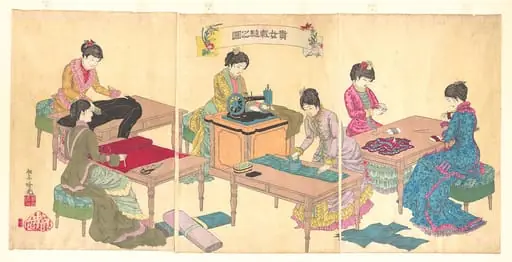 安達吟光画 『貴女裁縫之図』|Ladies Sewing (Kijo saihō no zu)
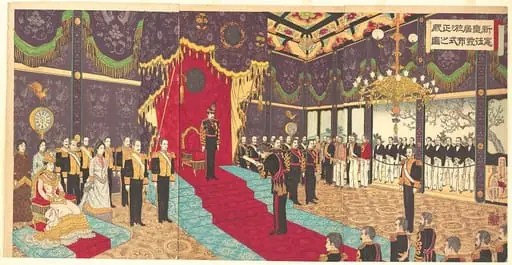 新皇居於テ正殿憲法発布式之図|Illustration of the Issuing of the State Constitution in the State Chamber of the New Imperial Palace (Shin kōkyo ni oite seiden kenpō happushiki no zu)
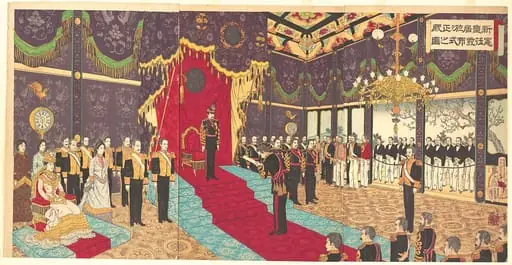 Shinkokyo Oite Seiden Kempo Happu no zu|View of the Issuance of the State Constitution in the State Chamber of the New Imperial Palace
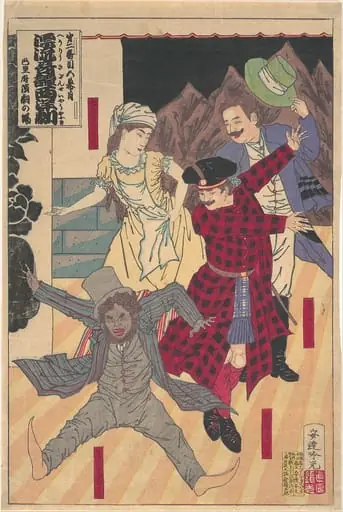 安達吟光画 第二番目五幕目 漂流奇譚西洋劇 巴里府演劇の場|“Act II, Scene 5: At the Opera in Paris,” from the series The Strange Tale of the Castaways: A Western Kabuki
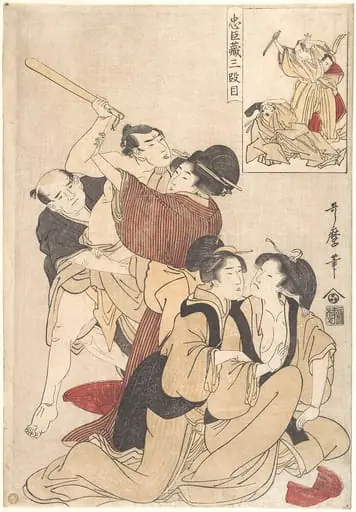 忠臣蔵三段目|Chushingura Act III
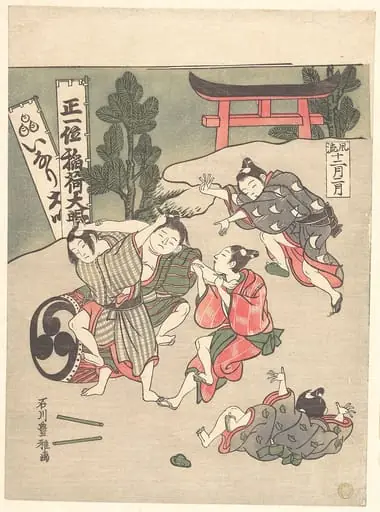 Inari-ko|The Second Month
 Untitled
 H Beard Print Collection
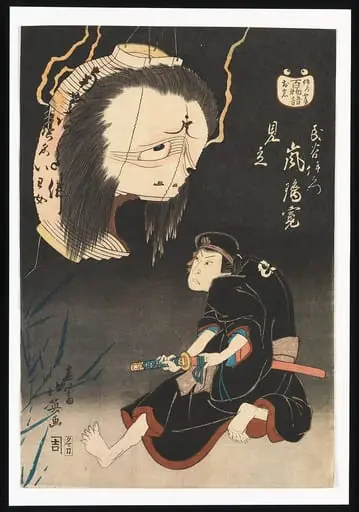 春江斎北英画 二代目嵐璃寛 見立 「百物語」|Kabuki Actor Arashi Rikan II as Iemon Confronted by an Image of His Murdered Wife, Oiwa, on a Broken Lantern, Referring to Katsushika Hokusai’s Hyaku monogatari (One Hundred Ghost Stories)
 Untitled
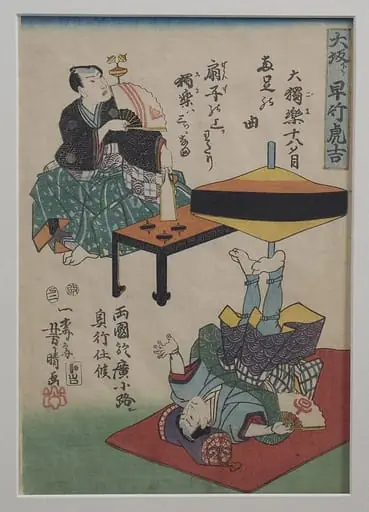 大坂下り早竹虎吉|Hayatake Torakichi from Osaka: Spinning Tops in Ryogoku
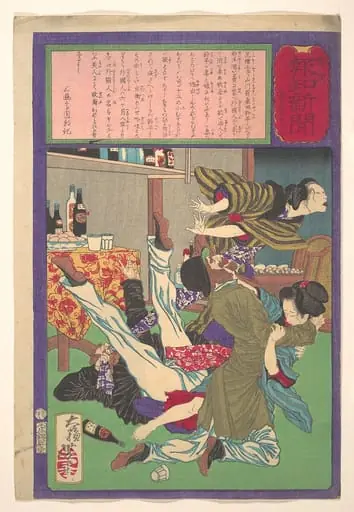 郵便報知新聞 645号|Postal Hōchi Newspaper no. 645, Englishman raping a wine shopkeeper's daughter (Yūbin Hōchi shinbun, roppyaku yonjū gogō)