Artwork
A Design for Illuminations to Celebrate the Birthday of King George III
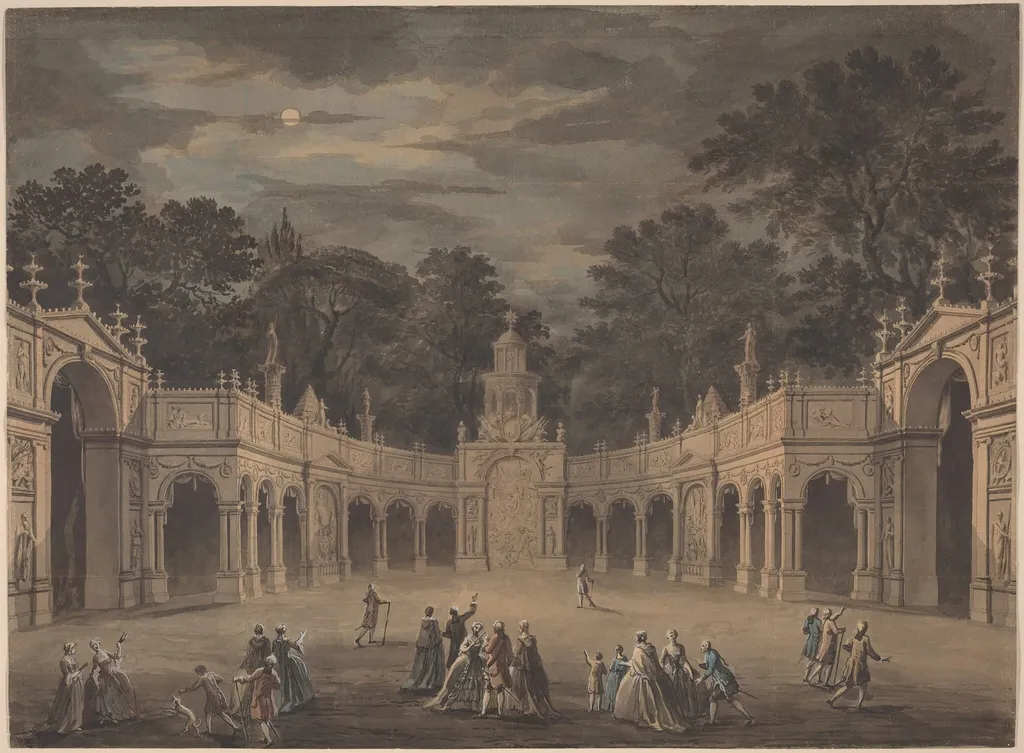
A Design for Illuminations to Celebrate the Birthday of King George III is a watercolor drawing by the Romanticist artist Robert Adam. It dates from 1763 and is held in the collection of the National Gallery of Art.
About this work
Overview
Created in 1763, this drawing by Robert Adam was conceived as a preparatory design for temporary illuminations marking the birthday of King George III.
Created in 1763, this drawing by Robert Adam was conceived as a preparatory design for temporary illuminations marking the birthday of King George III. Executed in watercolor over graphite and enhanced with white pigment on laid paper, it reflects Adam’s role as an architect and designer of festive pageantry rather than a painter in the traditional sense. The work belongs to a series of ephemeral celebrations commissioned for the royal court.
Subject & Meaning
The design envisions a grand architectural framework of arches, columns, and ornamental motifs intended to be lit with candles and lanterns during the king’s birthday festivities. It translates royal authority into visual spectacle, using classical forms to convey order and continuity. The imagery was not meant for permanent display but to transform public spaces into temporary monuments to the monarchy.
Technique & Style
Adam employed watercolor with graphite underdrawing, selectively lifting areas with white pigment to simulate the glow of candlelight. The precision of the linework and the restrained use of color reflect his architectural training and attention to spatial harmony. The style is restrained yet theatrical, balancing classical restraint with the demands of public spectacle.
History & Provenance
Commissioned in 1763, the drawing was part of a larger effort to celebrate the king’s birthday with elaborate urban illuminations in London. It remained within Adam’s circle and later entered institutional collections, likely through his family or patrons. Its survival is unusual, as most such designs were discarded after the events they served.
Context
In the 1760s, royal birthdays were occasions for public displays of loyalty, often orchestrated by architects and designers. Adam, already prominent for his neoclassical interiors, was frequently called upon to design temporary structures for civic celebrations. This drawing situates him within a tradition where architecture served political and ceremonial ends.
Legacy
Though the illuminations themselves vanished after the event, this drawing preserves a rare record of 18th-century royal pageantry. It illustrates how architecture and design were mobilized for political symbolism, offering insight into the intersection of art, power, and public ritual in Georgian Britain.
Artist & collection


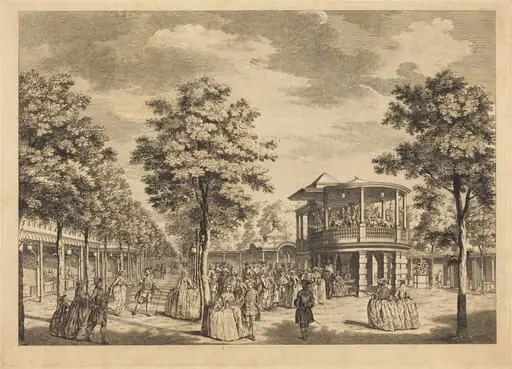 Vauxhall Gardens shewing the Grand Walk at the Entrance of the Garden and the Orchestra with Musick Playing
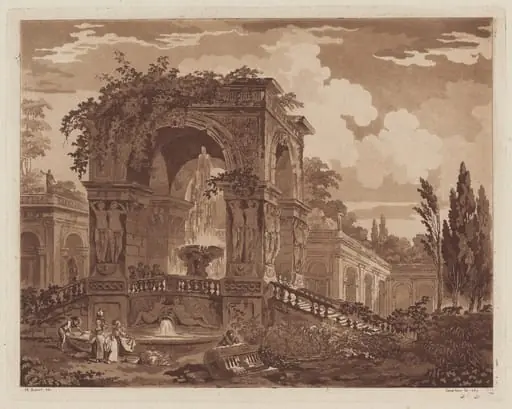 View of an Antique Fountain
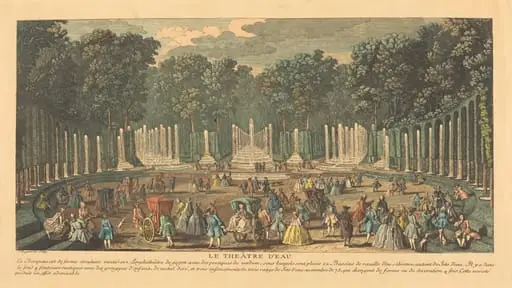 The Theatre of Water (Le Théâtre d'Eau)
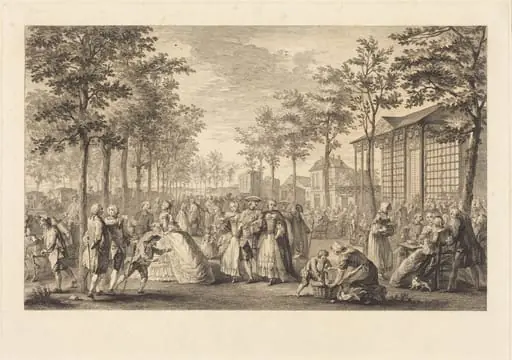 La promenade des remparts de Paris
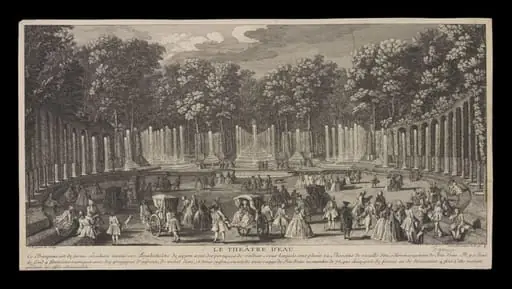 H Beard Print Collection
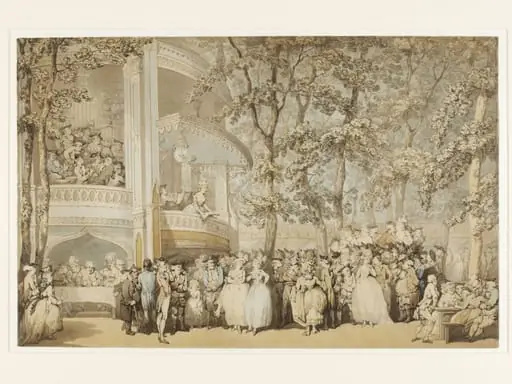 Vauxhall Gardens
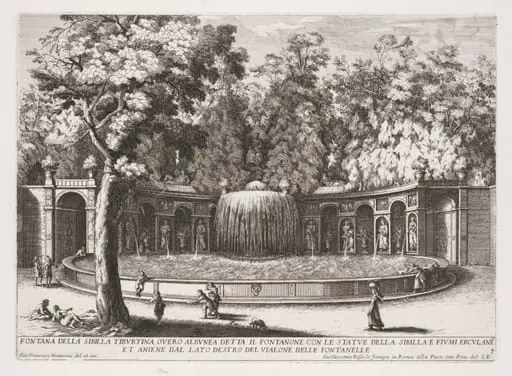 The Fountains of Rome (Le fontane di Roma), Book IV, plate 7: Fountain of the Tiburtine Sibyl (Fontana della Sibilla Tiburtina)
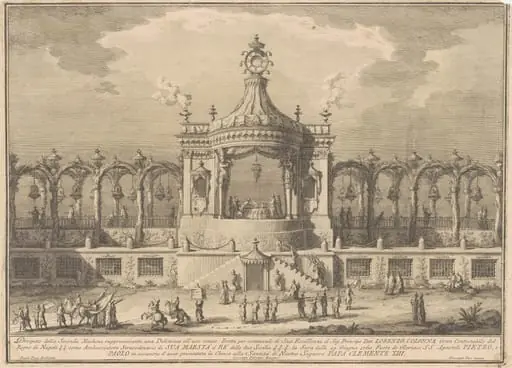 The Seconda Macchina for the Chinea of 1760: A Chinoiserie Pavilion
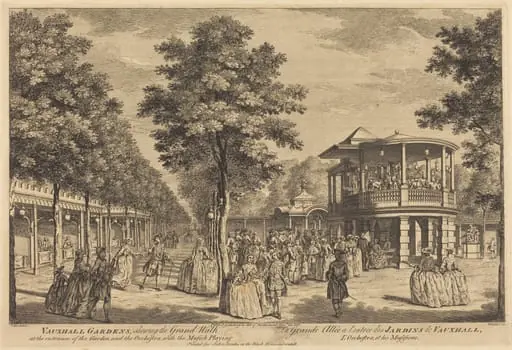 Vauxhall Gardens shewing the Grand Walk at the Entrance of the Garden and the Orchestra with Musick Playing
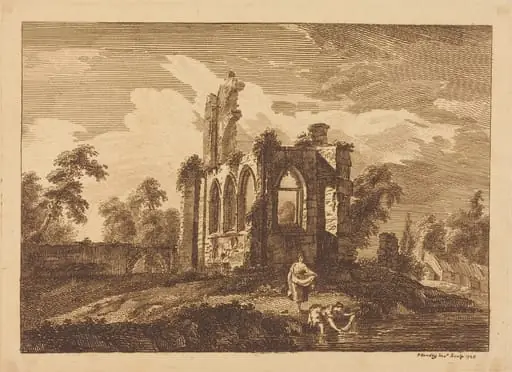 Ruins with Two Women Washing Clothes in a River
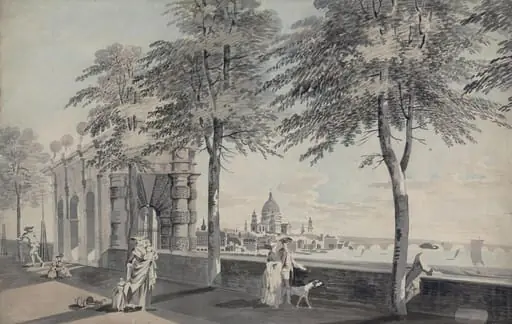 York Stairs, the Thames, Blackfriars Bridge and St. Paul's Cathedral
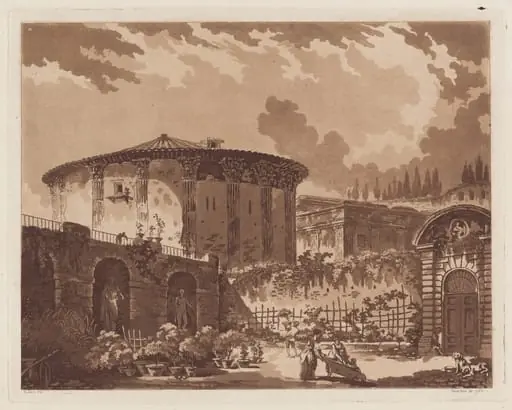 View in the Garden of a Roman Villa, with the Temple of Hercules Victor and the Temple of Portunus