Artwork
La Sagesse
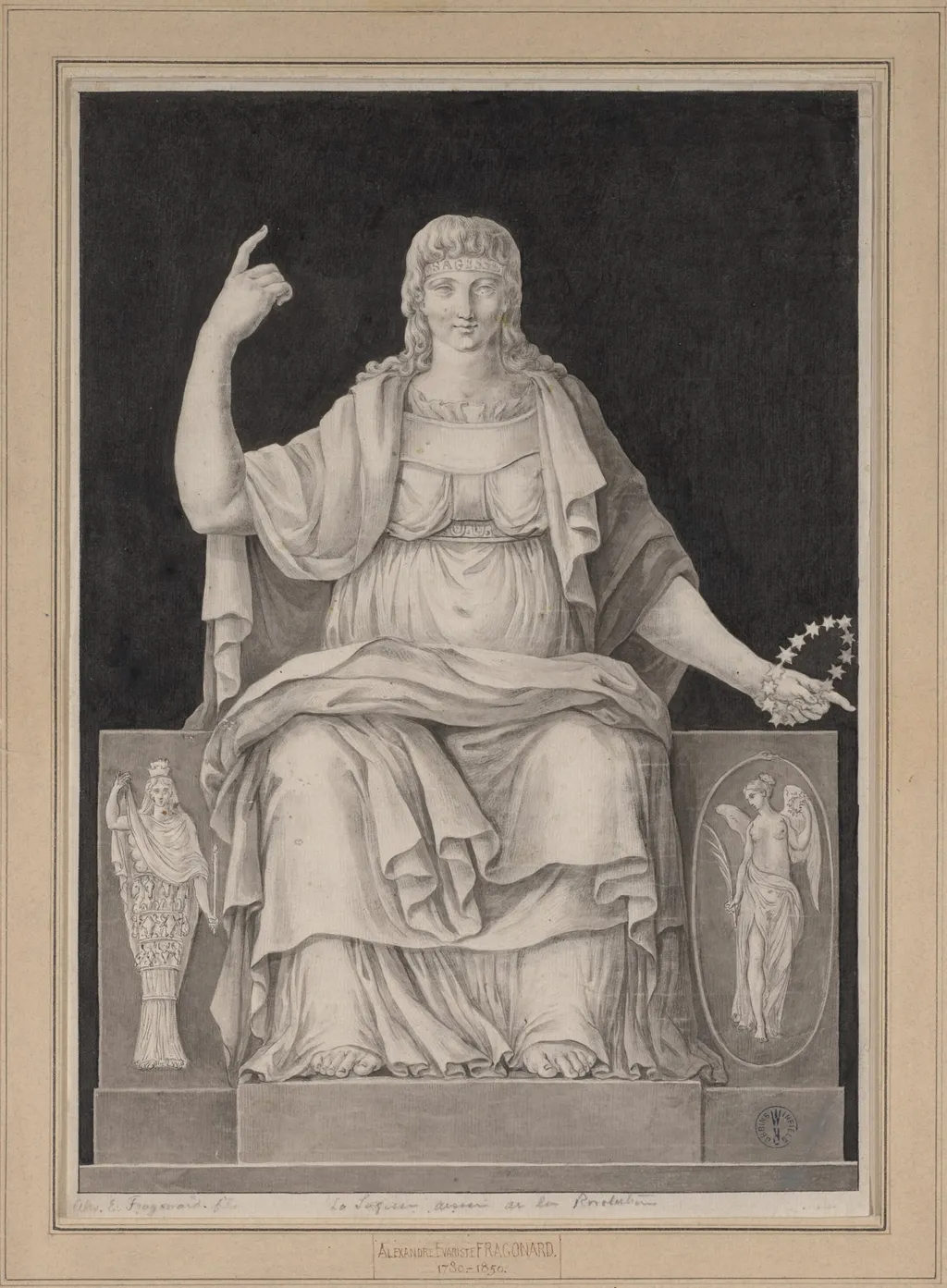
La Sagesse is a drawing by the Baroque artist Alexandre-Évariste Fragonard. It dates from 1800 and is held in the collection of the Cleveland Museum of Art. Created when the artist was eighteen, this grayscale drawing depicts a monumental female figure representing Wisdom.
About this work
Overview
Rendered in monochrome, the work mimics the appearance of a classical sculpture, with careful modeling of light and shadow to suggest volume and texture.
Created when the artist was eighteen, this grayscale drawing depicts a monumental female figure representing Wisdom. Rendered in monochrome, the work mimics the appearance of a classical sculpture, with careful modeling of light and shadow to suggest volume and texture. The absence of color enhances its timeless, antiquarian tone, evoking Roman or Hellenistic statuary rather than contemporary 18th-century art.
Subject & Meaning
The central figure bears the word 'Sagesse' inscribed on her brow, identifying her as the personification of wisdom. She holds a crown of stars—a symbol of divine knowledge—and raises one arm in a gesture of authority, reminiscent of judicial or oracular poses. Two smaller female figures flank her throne, possibly embodying virtues or attendant spirits, reinforcing the theme of moral and intellectual order.
Technique & Style
The drawing employs a grisaille technique, using only shades of gray to simulate sculptural form. Soft transitions between light and dark, akin to sfumato, lend the stone throne and drapery a tactile realism. The precise handling of edges and subtle gradations suggests an early mastery of chiaroscuro, aligning the work with Renaissance precedents despite its youthful origin.
History & Provenance
Executed in the early 1750s, the drawing stems from the formative years of Jean-Honoré Fragonard, son of a prominent painter. Though little is documented about its immediate reception, its classical ambition reflects the academic training he received in Paris. The work remained in private hands until entering a public collection, where its technical maturity drew scholarly attention.
Context
In mid-18th-century France, classical allegory remained central to artistic education, especially in the Académie. Fragonard’s choice to render Wisdom as a sculpted figure aligns with contemporary interest in antiquity and moral philosophy. The drawing may have served as a study for a larger commission or as an exercise in idealized form, demonstrating his grasp of classical iconography.
Legacy
Though not widely exhibited during his lifetime, this early work reveals Fragonard’s foundational skill in draftsmanship and classical emulation. It stands as a testament to his precocious understanding of form and symbolism, foreshadowing his later versatility. The drawing continues to be studied for its quiet authority and technical refinement, offering insight into the training of young artists in Enlightenment France.
Artist & collection
Artist
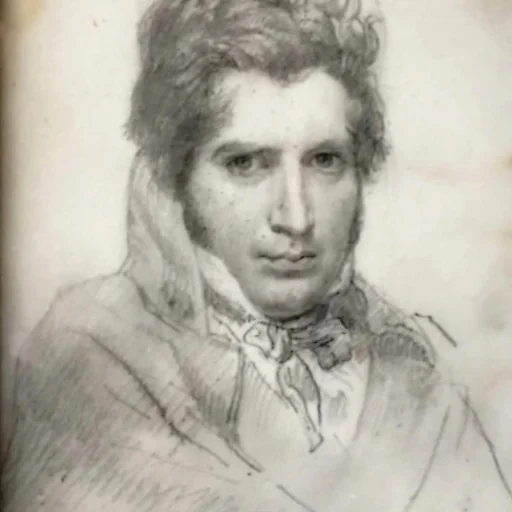
Alexandre-Évariste Fragonard (French pronunciation: ; 26 October 1780 – 10 November 1850) was a French painter and sculptor in the troubadour style.

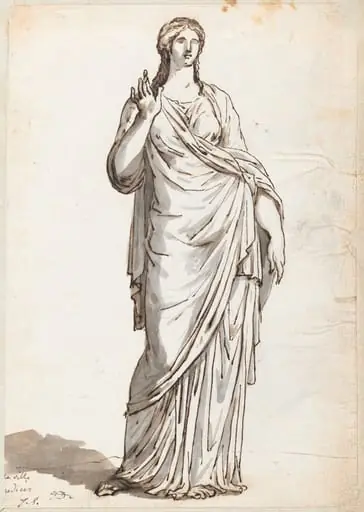 Woman with a Raised Hand, from the Villa Medici
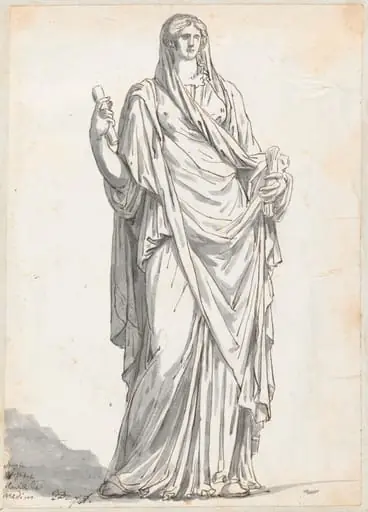 Orante from the Villa Medici
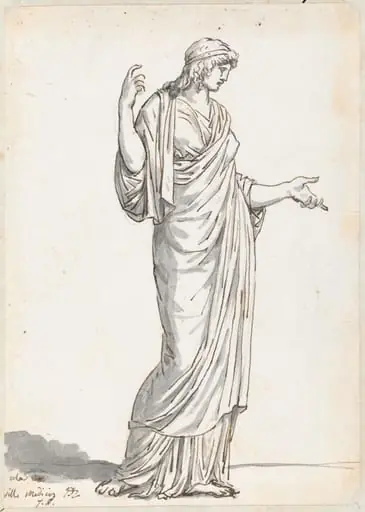 Woman from the Villa Medici
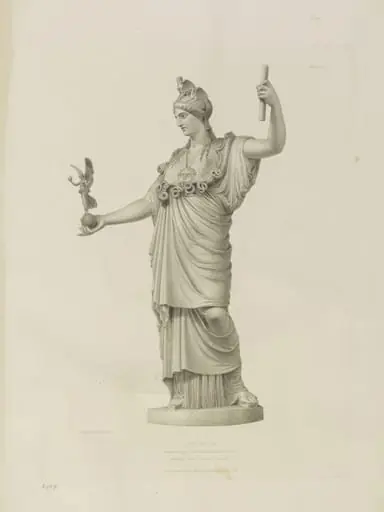 Statue of Minerva
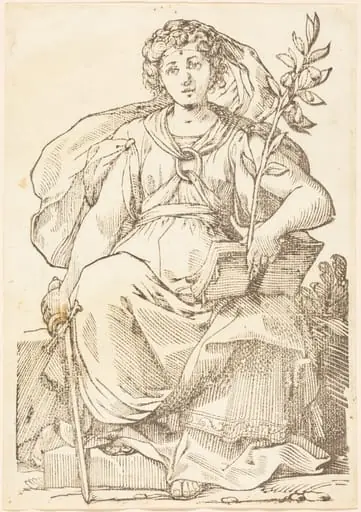 Sibylla Europa
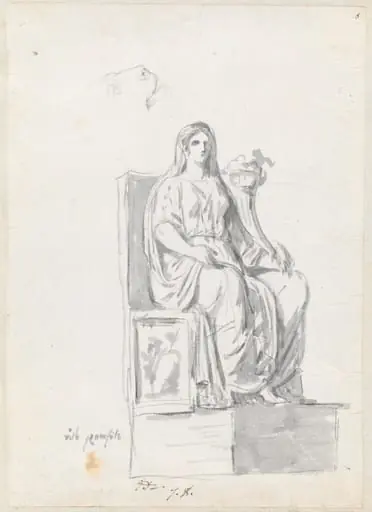 Abundance and the Face of a Lion, from the Villa Pamphili
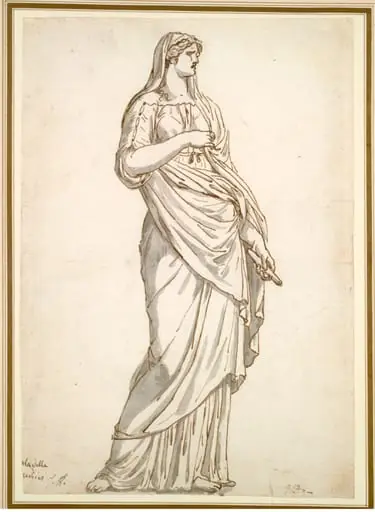 Study of the Sabine Statue from the Villa Medici
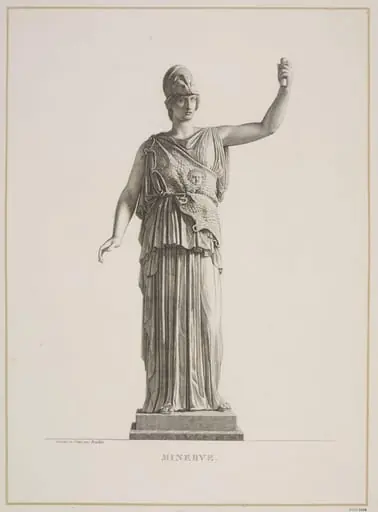 Statue of Minerva
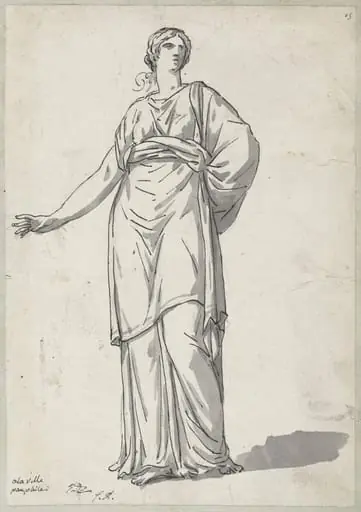 Woman from the Villa Pamphili
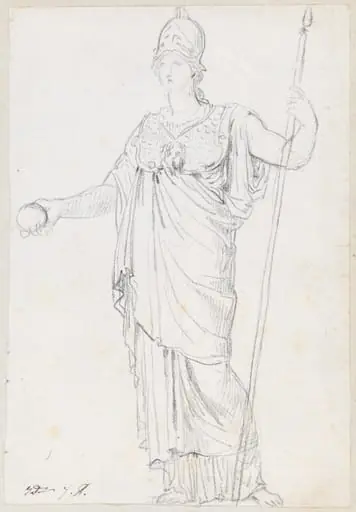 Statue of Minerva
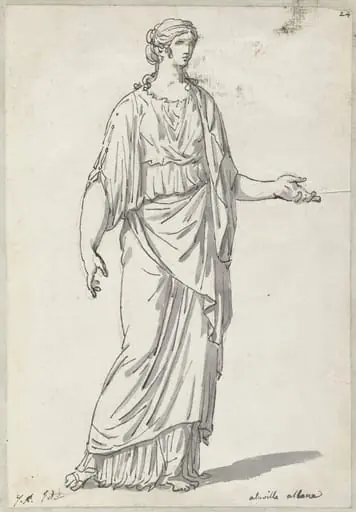 Classical Sculpture of a Woman with an Outstretched Arm
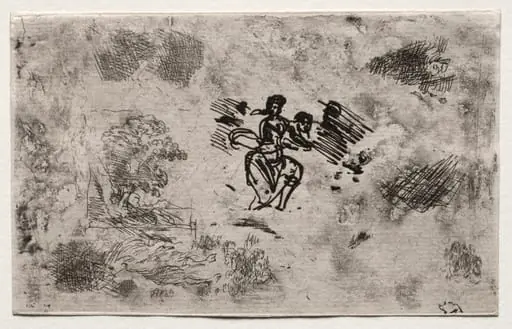 Study of a Seated Woman and other Sketches