Artwork
Decorative painting for Kedleston Hall
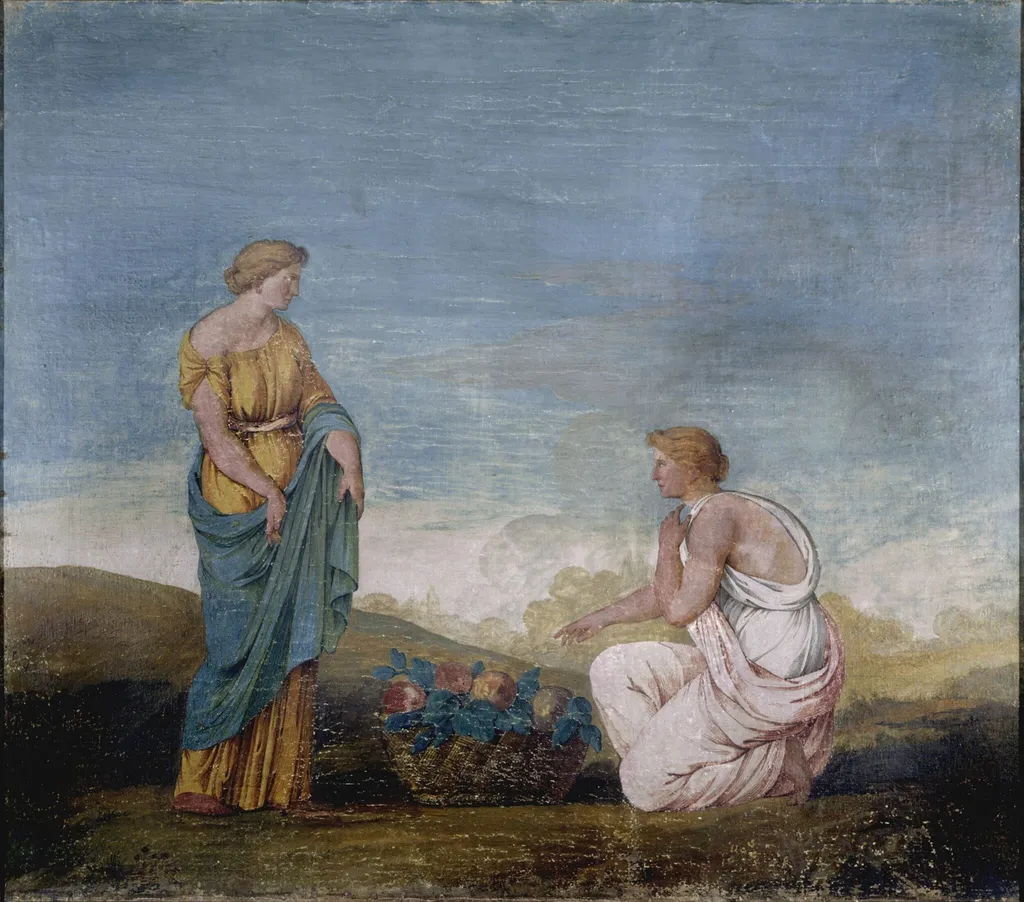
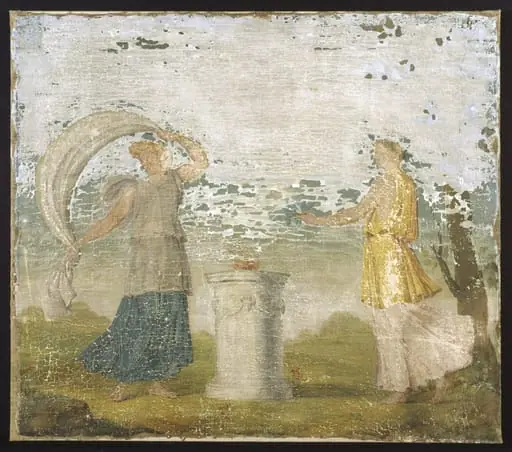
Decorative painting for Kedleston Hall is a paint painting by the Rococo painting artist Agostino Brunias. It dates from 1761 and is held in the collection of the Victoria and Albert Museum. The decorative panel was created in 1761 for the Breakfast Room of Kedleston Hall.
About this work
This 1761 painting shows a sunny outdoor scene with people in bright clothes.
This 1761 painting shows a sunny outdoor scene with people in bright clothes.
The figures lounge on grass while a few stand near a simple building.
Robed men and women wear loose whites and blues, like they’re on vacation.
Adam hired Brunias to paint these for his breakfast room at Kedleston Hall.
The colors pop—pinks, greens, and whites—against dark shadows.
Look up this artist next: Agostino Brunias
Overview
The decorative panel was created in 1761 for the Breakfast Room of Kedleston Hall. Designed by the Scottish architect Robert Adam, the work was painted by the Italian artist Agostino Brunias, who had recently arrived in Britain after meeting Adam on his Italian Grand Tour. The finished set was mounted in gilt frames by the carver Sefferin Alken and installed as part of the room’s interior scheme.
Subject & Meaning
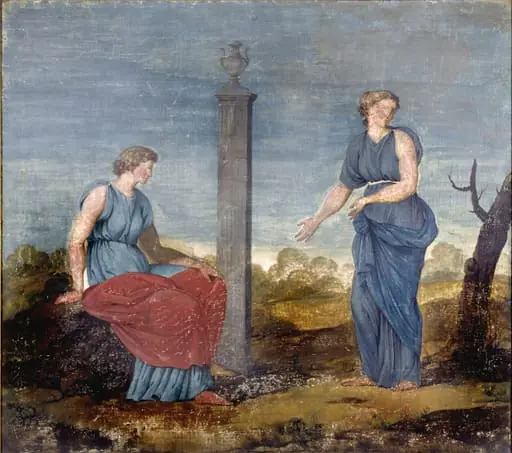
The composition depicts a sunlit outdoor setting populated by elegantly dressed figures in loose white and blue garments. Two women recline on the grass while others stand near a modest building, their bright clothing—pinks, greens and whites—contrasting with the surrounding shade. The scene conveys a leisurely, almost idyllic atmosphere, reflecting the fashionable taste for classical, pastoral themes in mid‑eighteenth‑century interior decoration.
Technique & Style
Brunias attempted to reproduce the appearance of fresco on canvas, using an experimental medium that mimicked the matte, wall‑bound quality of true fresco. Although the approach achieved a vivid, luminous palette, the technique proved unstable; the paint began to deteriorate soon after installation, leading to a loss of surface integrity and colour saturation.
History & Provenance
The panels were installed in Kedleston Hall in 1761, but by 1766 the Duchess of Northumberland criticized their execution, noting their rapid decline. The works were subsequently removed from the walls and the Breakfast Room was redecorated. After leaving Britain, Brunias relocated to the Lesser Antilles in 1764, where he continued to produce paintings for patrons such as Sir William Young.
Context
The commission reflects Robert Adam’s practice of integrating architecture, ornament, and painting to create unified interiors. Brunias’s classical training at Rome’s Accademia di San Luca informed the composition, which shares formal similarities with his later Caribbean scenes that idealised colonial life while masking its harsher realities.
Own this work as a print
Artist & collection
Artist
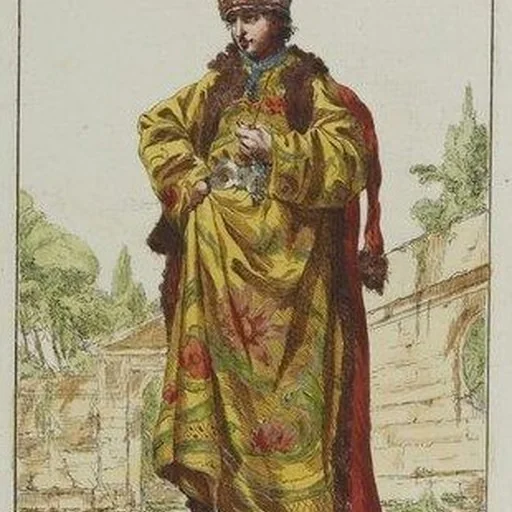
Agostino Brunias (c. 1730 – 2 April 1796) was an Italian painter who was primarily active in the West Indies. Born in Rome around 1730, Brunias spent his early career as a painter after graduating from the Accademia di…

 Landscape with Polyphemus
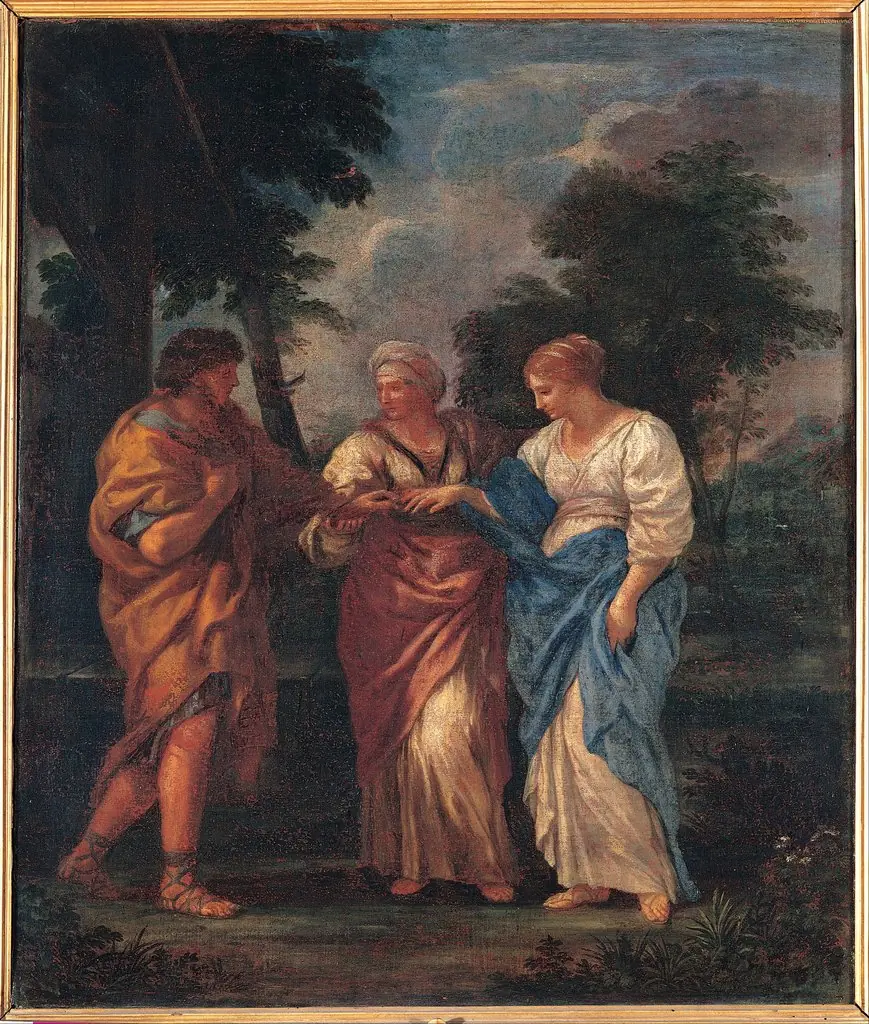 Biblical Wedding
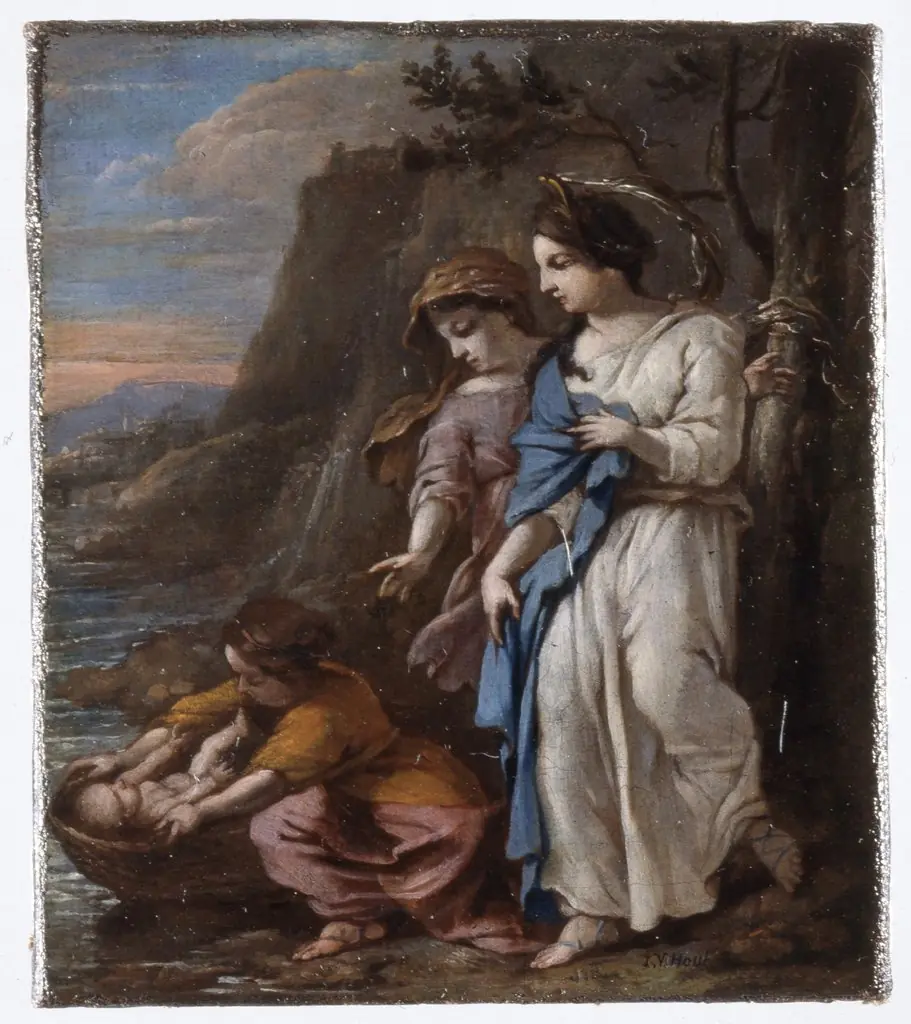 Pharaoh's Daughter Finds Moses
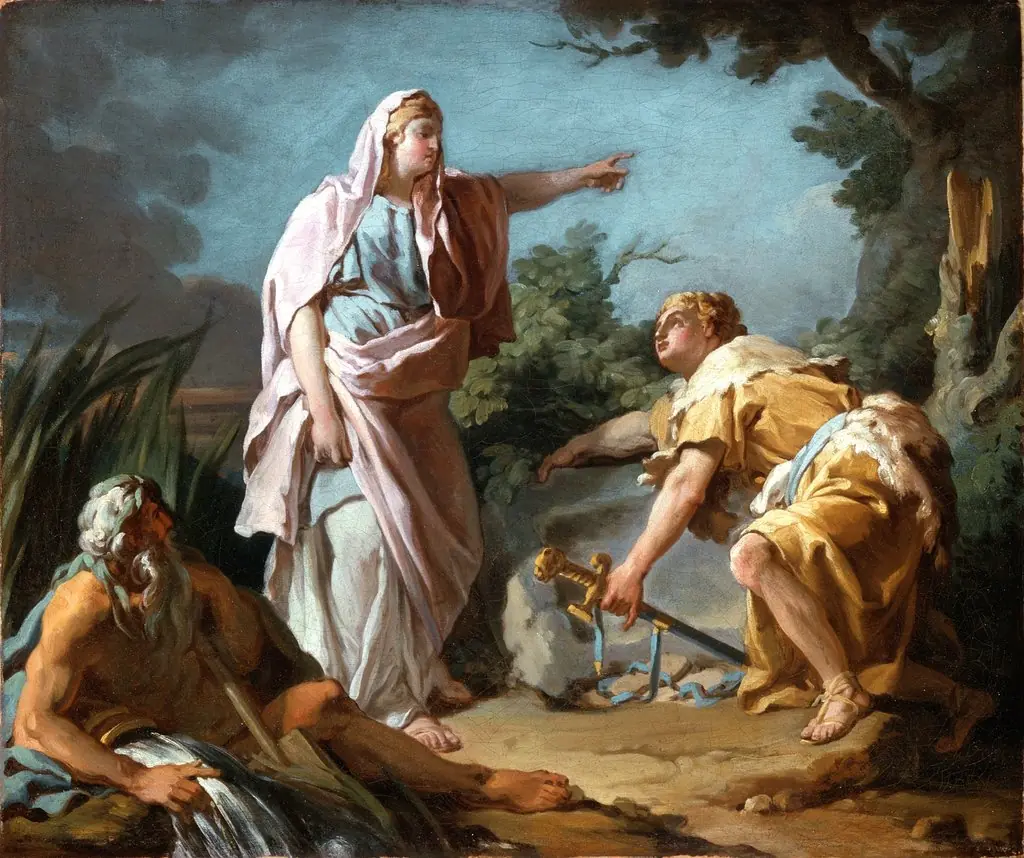 Aethra Showing her Son Theseus the Place Where his Father had Hidden his Arms
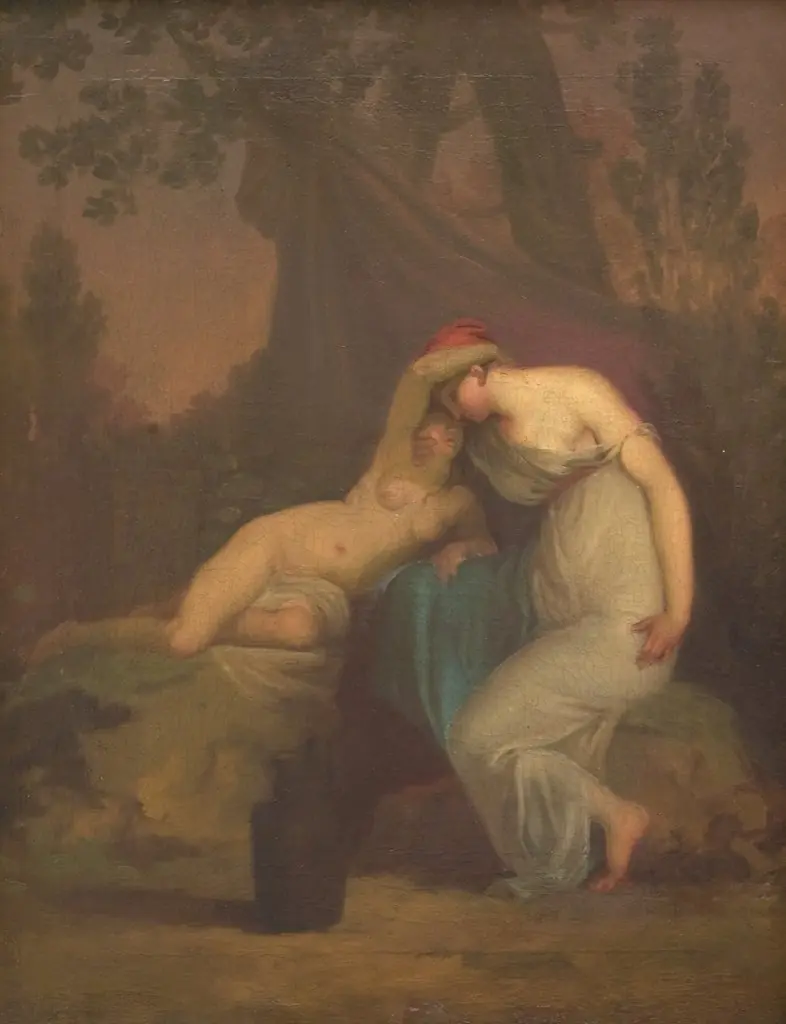 The Greek Poet Sappho and the Girl from Mytilene
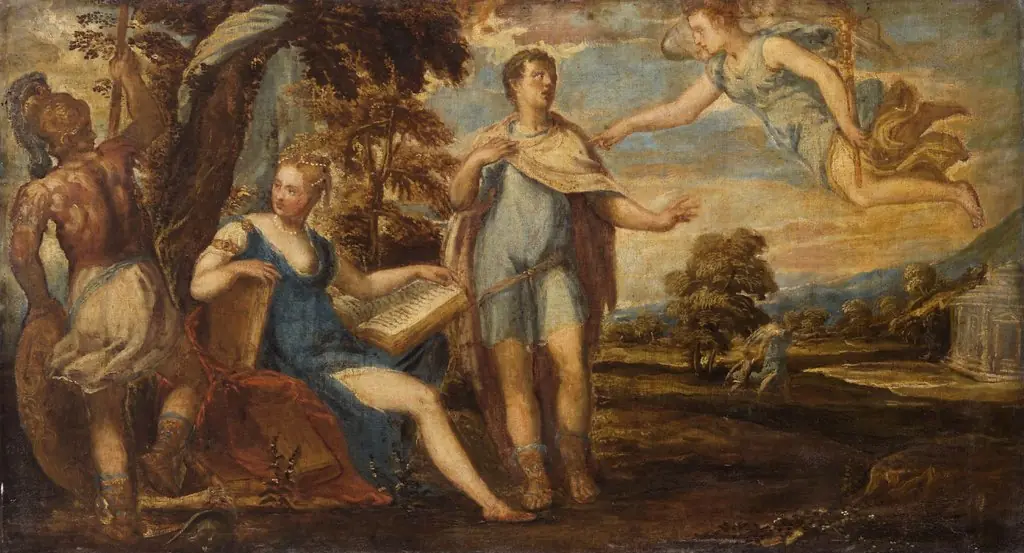 Aeneas called away from Dido
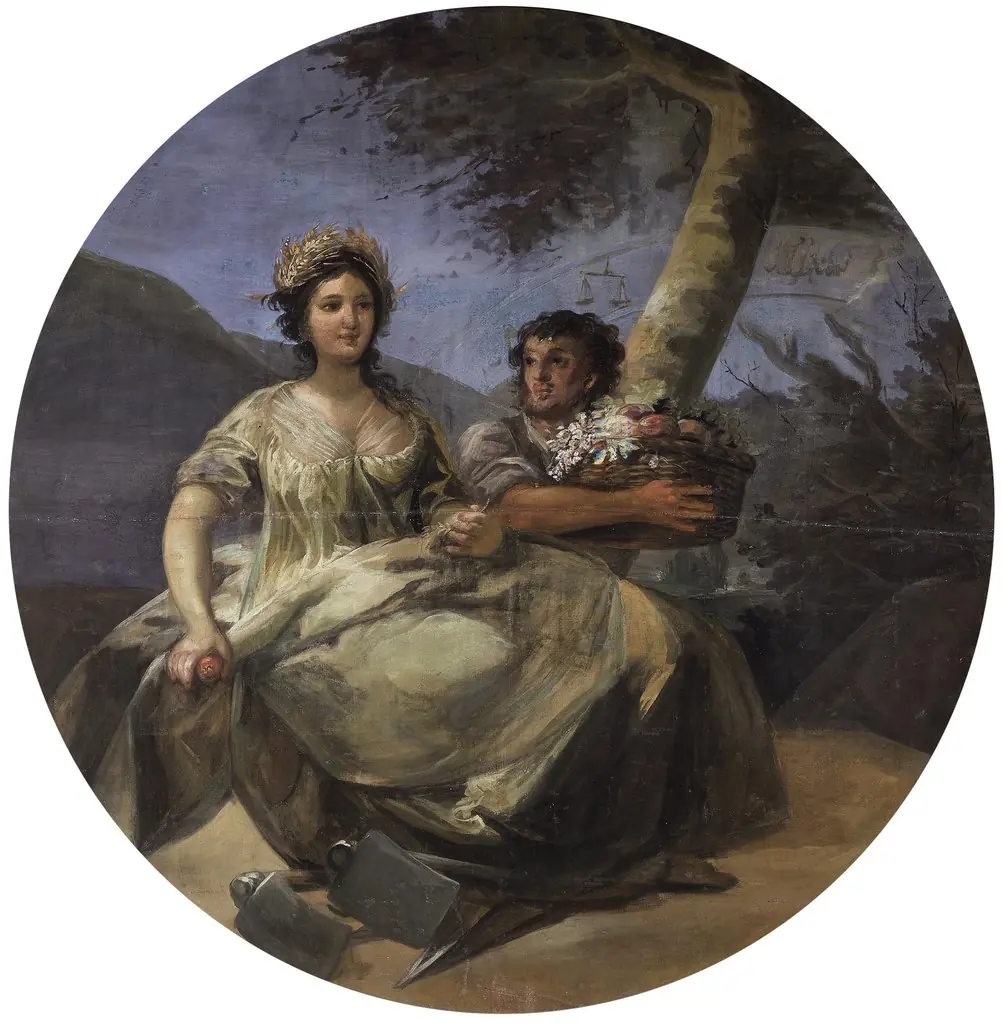 Agriculture
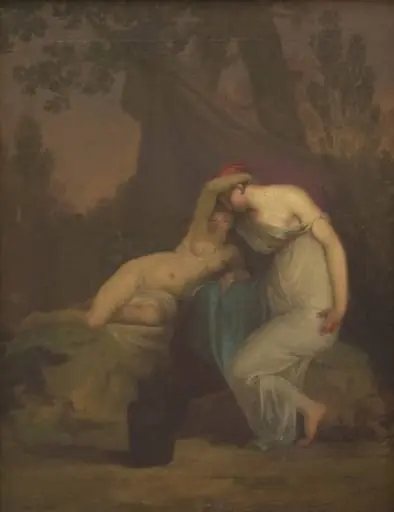 The Greek Poet Sappho and the Girl from Mytilene
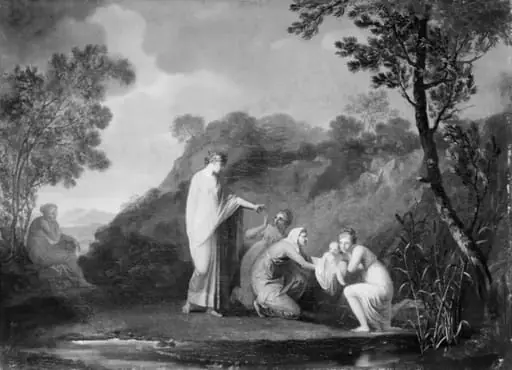 The Finding of the Infant Moses
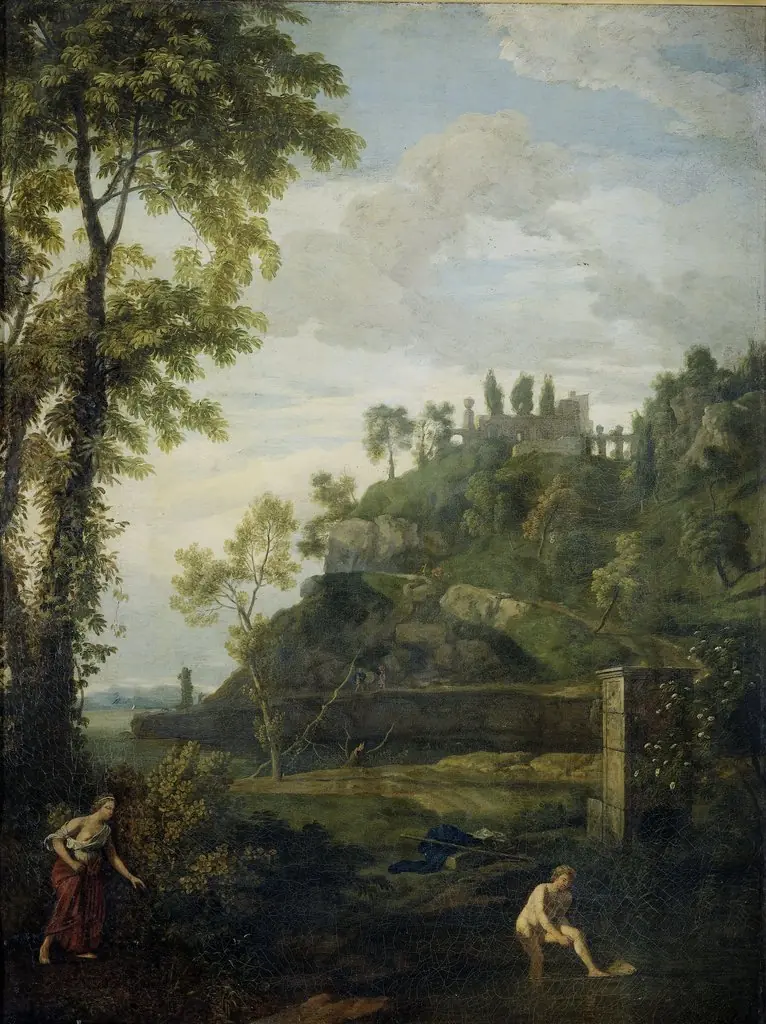 Arcadian landscape with Salmacis and Hermaphroditus
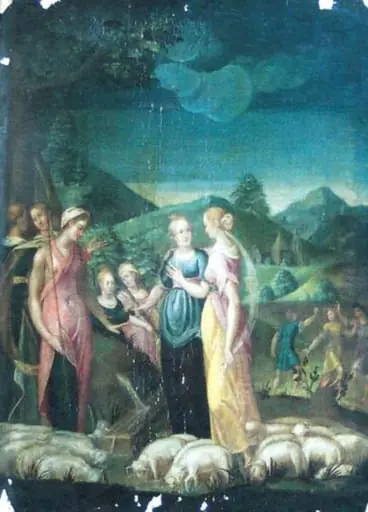 Scenă alegorică