Artwork
Frederick Henry, Prince of Orange
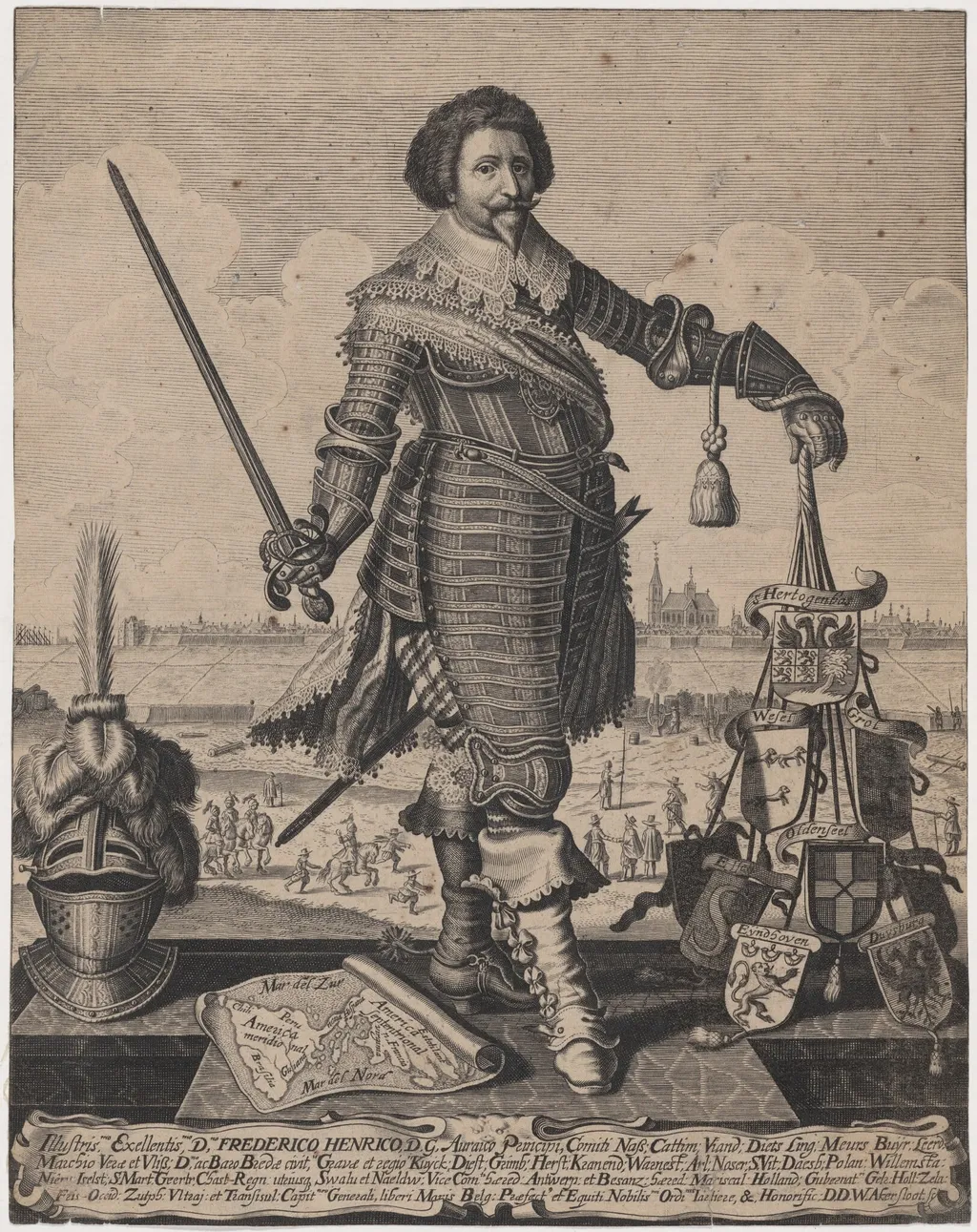
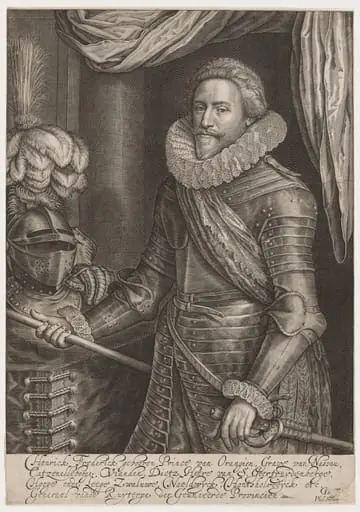
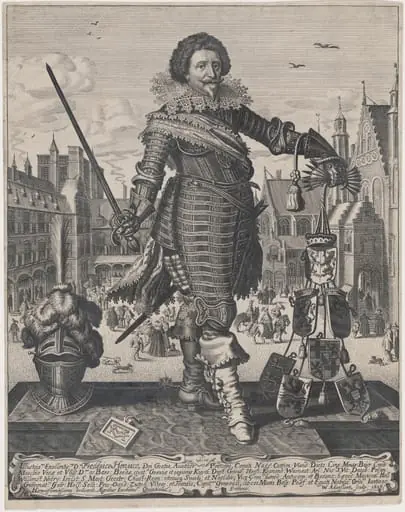
Frederick Henry, Prince of Orange is an ink print by the Renaissance artist Willem Outgertsz Akersloot. It dates from 1617 and is held in the collection of the National Gallery of Art.
About this work
Overview
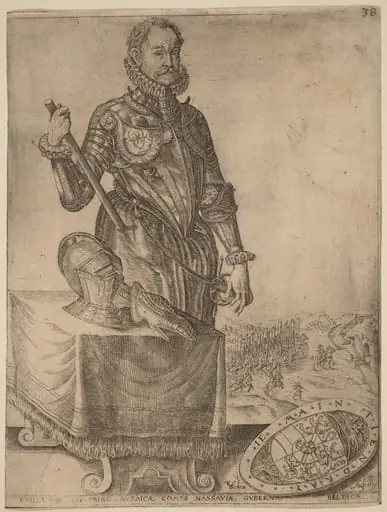
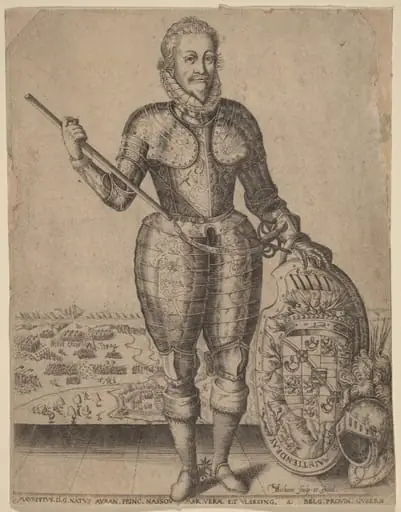
This 1617 engraving by Willem Outgertsz Akersloot depicts Frederick Henry, Prince of Orange, as a figure of authority.
This 1617 engraving by Willem Outgertsz Akersloot depicts Frederick Henry, Prince of Orange, as a figure of authority. Rendered in fine linear detail, the portrait emphasizes his status through regalia and symbolic elements. The composition is tightly controlled, with the prince centered amid heraldic motifs and a subdued background scene, reflecting the conventions of early 17th-century noble portraiture in the Dutch Republic.
Subject & Meaning
Frederick Henry is portrayed in full armor, bearing a sword and scepter—symbols of military command and sovereign power. The fur-lined cloak and multiple coats of arms on surrounding shields reinforce his noble lineage and political role. A distant battle or hunt scene alludes to his leadership in conflict, while the orderly cityscape suggests stability under his governance. The image functions as a visual assertion of legitimacy and dynastic continuity.
Technique & Style
Akersloot employed engraving, a method involving incised lines on a copper plate to create fine, precise impressions. The armor’s textured rings, the intricate patterns of the shields, and the delicate rendering of the background landscape demonstrate technical mastery. The composition balances monumental frontality with subtle spatial depth, characteristic of Northern European printmaking of the period.
History & Provenance
Created in 1617, the engraving likely served to circulate Frederick Henry’s image among political allies and courtly circles during his early years as stadtholder. It was produced shortly after his father’s death, possibly to affirm his succession. No known original plate survives, but multiple impressions were distributed, indicating its use as a tool of political representation.
Context
In the early 1600s, the Dutch Republic was consolidating its independence from Spain, and noble leaders like Frederick Henry were central to national identity. Portraits in print became vital for projecting authority beyond courtly spaces. Akersloot’s work aligns with a broader trend of using engraved imagery to legitimize leadership in a republic where traditional monarchy was absent.
Legacy
The engraving remains a key example of how visual media supported political messaging in the Dutch Republic. Though not widely reproduced today, it reflects the era’s reliance on print to shape public perception of leadership. Its formal precision and symbolic density influenced later portraiture in both print and painting across Northern Europe.
Artist & collection