Artwork
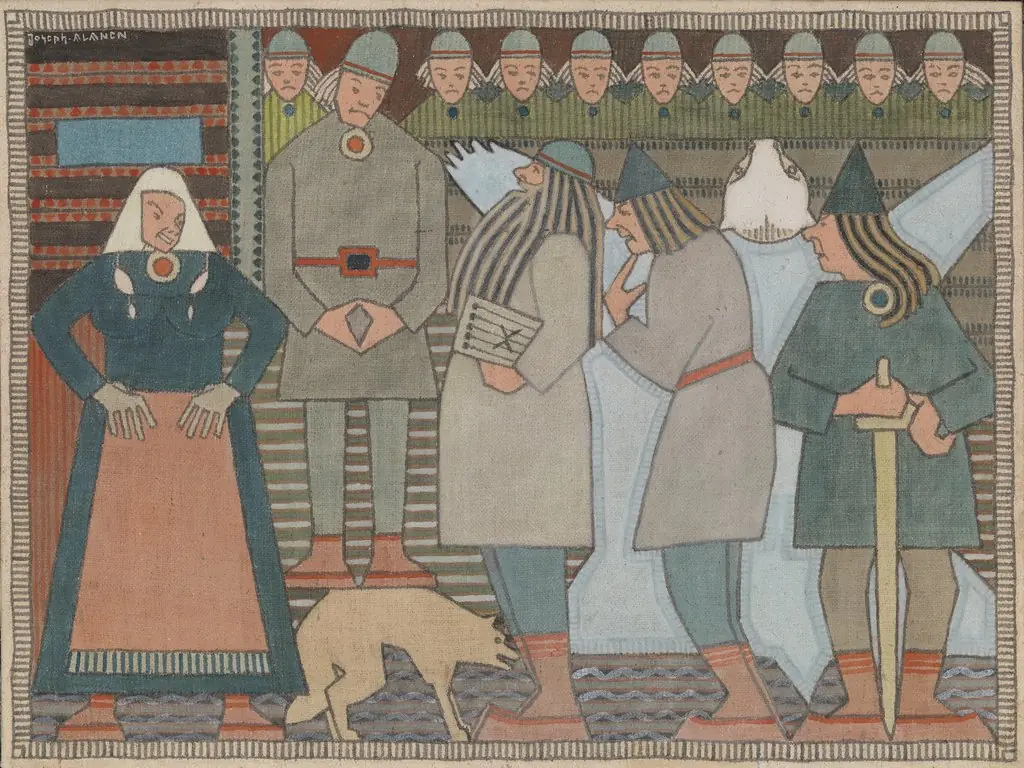
Väinämöisen, Ilmarisen ja Lemminkäisen tulo Pohjolaan
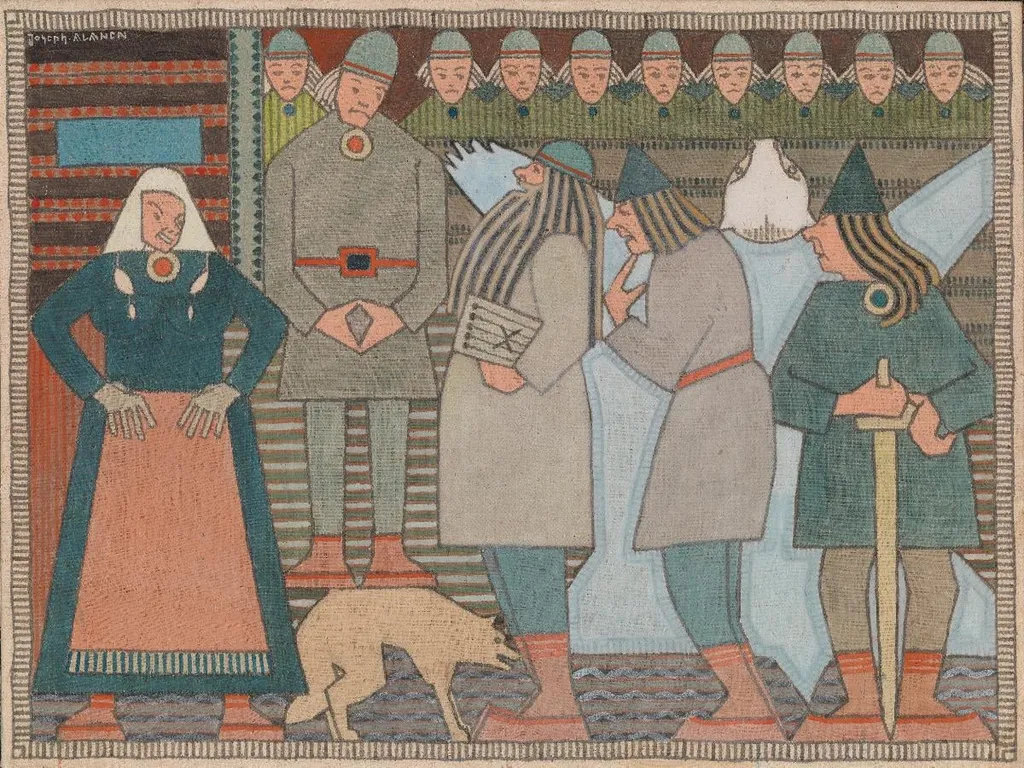
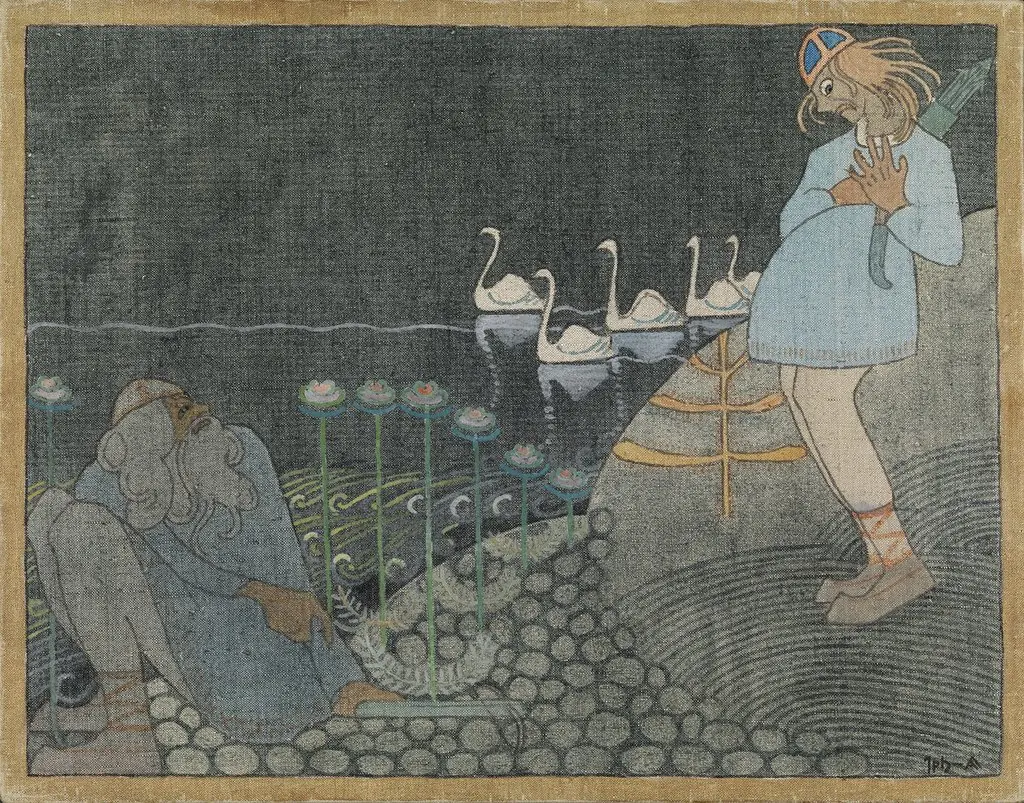
Väinämöisen, Ilmarisen ja Lemminkäisen tulo Pohjolaan is an unspecified painting by Joseph Alanen. It is held in the collection of the Finnish National Gallery.
About this work
Overview
The figures move deliberately through a silent, snow-draped terrain, their forms defined by careful observation rather than dramatic flourish.
This tempera-on-canvas work depicts the arrival of three legendary figures from Finnish mythology—Väinämöinen, Ilmarinen, and Lemminkäinen—into the icy realm of Pohjola. Rendered in a quiet, wintry landscape, the scene emphasizes stillness and solemnity. The medium lends a matte, granular texture to the surface, enhancing the tactile quality of the snow and garments. The figures move deliberately through a silent, snow-draped terrain, their forms defined by careful observation rather than dramatic flourish.
Subject & Meaning
The trio represents archetypal heroes from the Kalevala, Finland’s national epic, journeying to Pohjola, a mystical northern land ruled by a powerful sorceress. Their arrival signals a pivotal moment in mythic narrative: a quest for magic, marriage, or wisdom. The painting captures their collective resolve, not as warriors but as travelers bound by fate. Their traditional attire anchors them in cultural memory, reinforcing the myth’s ties to ancestral identity and oral tradition.
Technique & Style
Tempera paint, applied in thin, layered strokes, creates a subdued, earthy palette and a slightly grainy surface that mimics the texture of snow and wool. The artist avoids chiaroscuro or sfumato, favoring flat planes of color and crisp outlines to preserve the folkloric tone. Details in clothing—embroidery, fur trim, and headwear—are rendered with precision, suggesting reverence for cultural authenticity rather than idealized beauty.
History & Provenance
The painting was produced in the late 19th or early 20th century, during a period of renewed interest in Finnish national identity and mythological revival. It likely emerged from a circle of artists and intellectuals seeking to visually articulate the Kalevala’s stories. Its provenance remains unrecorded in major collections, suggesting it may have been privately commissioned or exhibited regionally, reflecting local rather than international artistic currents.
Context
Created amid the rise of Finnish nationalism, the work aligns with broader cultural efforts to define a distinct national aesthetic separate from Swedish and Russian influences. Artists turned to the Kalevala as a source of indigenous symbolism, using myth to assert cultural autonomy. This painting participates in that movement, translating oral poetry into visual form with deliberate restraint, avoiding romantic exaggeration in favor of quiet dignity.
Legacy
Though not widely reproduced or exhibited today, the painting contributes to a lesser-known strand of Finnish visual culture that prioritized mythic narrative over spectacle. Its use of tempera and attention to folk detail influenced regional illustrators and muralists working in the early 20th century. It remains a quiet testament to how myth was visually preserved during a time of national self-definition.
Artist & collection