Artwork
An Allegorical Figure: Virtutis Praemium
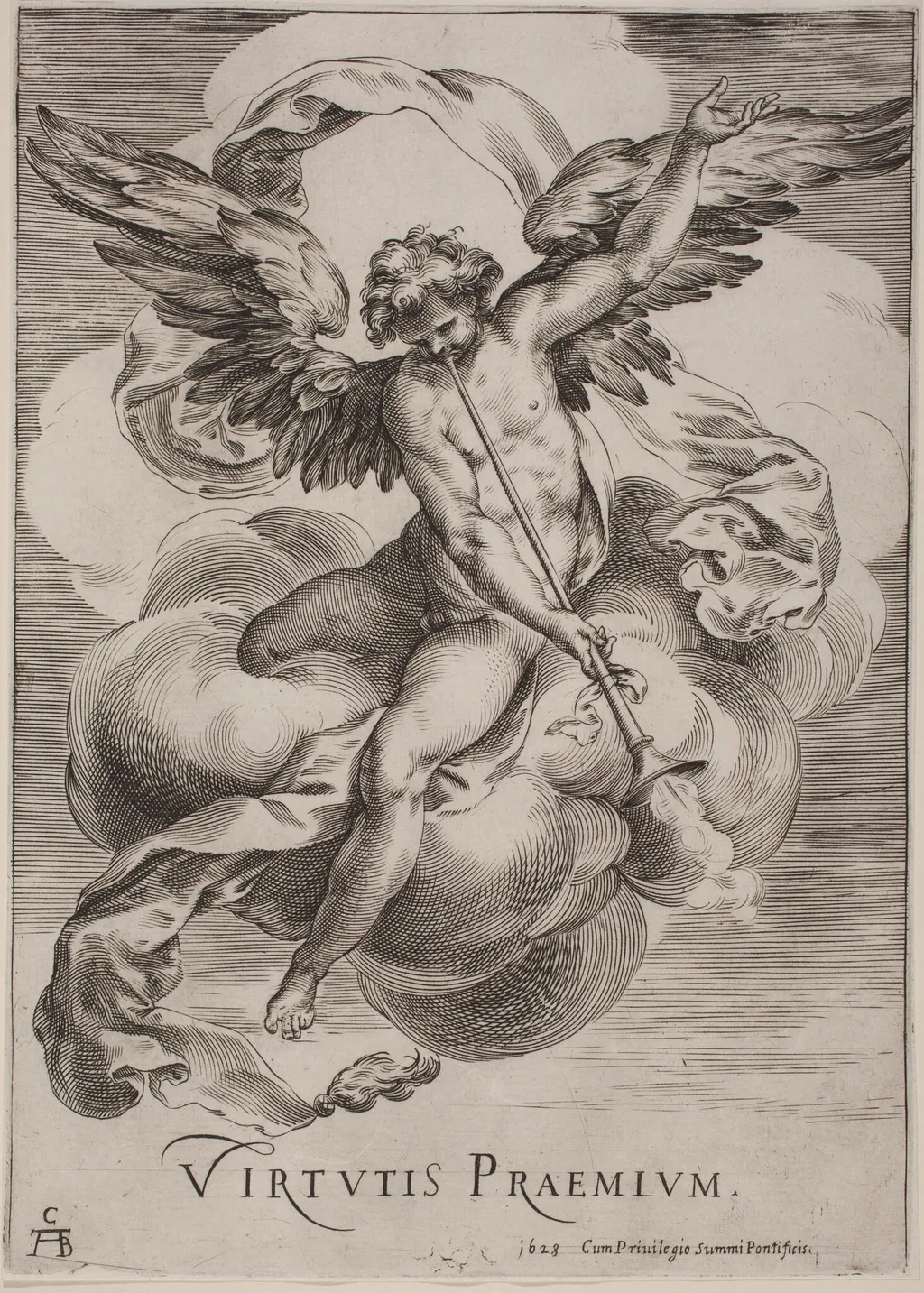
An Allegorical Figure: Virtutis Praemium is an ink print by the Baroque artist Cherubino Alberti. It dates from 1628 and is held in the collection of the National Gallery of Art.
About this work
Overview
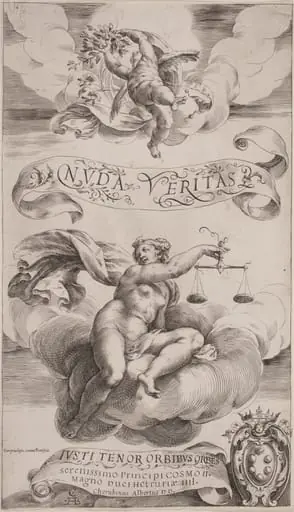
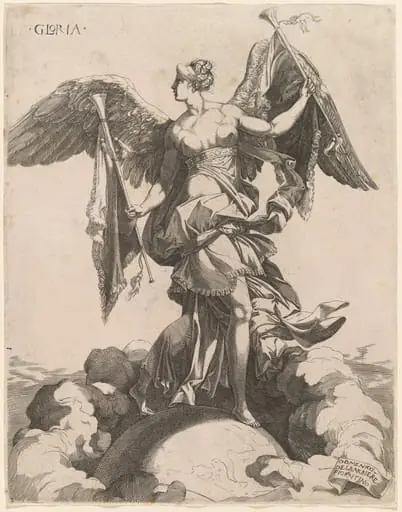
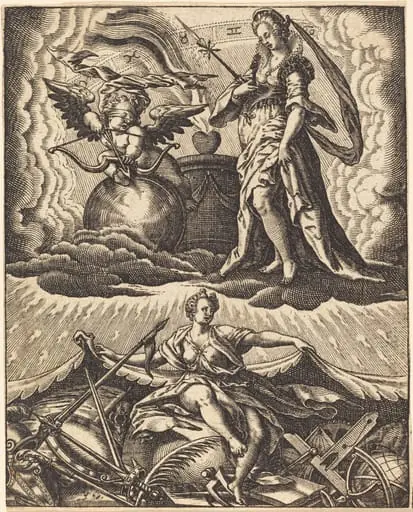
Created in 1628 by Cherubino Alberti, this etching depicts a single allegorical figure in black and white. The work is titled Virtutis Praemium, Latin for 'Reward of Virtue,' suggesting a moral or philosophical theme. Rendered with precision, the image balances dynamic movement with serene stillness, using fine linear detail to define form and atmosphere without color.
Subject & Meaning
The central figure, winged and floating amid swirling clouds, embodies an abstract ideal rather than a mythological character.
The central figure, winged and floating amid swirling clouds, embodies an abstract ideal rather than a mythological character. Its poised posture—staff in one hand, arm resting on the hip—conveys authority and calm. The title implies this figure represents the reward earned through moral strength, possibly personifying Virtue itself or its divine recompense, inviting contemplation over literal narrative.
Technique & Style
Alberti employed etching to achieve intricate texture, particularly in the feathers of the wings and the undulating clouds. Fine, controlled lines build volume and motion, while the absence of tone or shading relies entirely on line weight and density. The background’s rhythmic, wavy strokes enhance the sense of ethereal flight, demonstrating mastery of the medium’s capacity for subtle gradation and movement.
History & Provenance
The print was produced during Alberti’s later career, a period when he focused on reproductive and allegorical subjects after training under the Mannerist tradition. Though no early ownership records are widely documented, the work circulated among collectors of Northern Italian prints, valued for its technical finesse and classical allusions rather than its rarity.
Context
In early 17th-century Italy, allegorical prints served both decorative and intellectual purposes, often commissioned by educated patrons interested in humanist themes. Alberti’s work reflects the enduring influence of Renaissance ideals, where moral virtues were visualized through classical forms. This piece aligns with broader trends in printmaking that prioritized symbolic clarity and refined draftsmanship over dramatic intensity.
Legacy
Though not widely reproduced in modern scholarship, the etching remains a representative example of Alberti’s skill in translating allegory into linear form. It contributes to the understanding of how moral concepts were visually encoded in Baroque print culture, preserving a quiet, contemplative strand of artistic expression distinct from the era’s more theatrical tendencies.
Own this work as a print
Artist & collection


![Prudence [recto], by Cherubino Alberti](https://artifactworldgallery.com/img/cherubino-alberti--prudence-recto--3f44e6d72db5eb8c-w320.webp)