Artwork
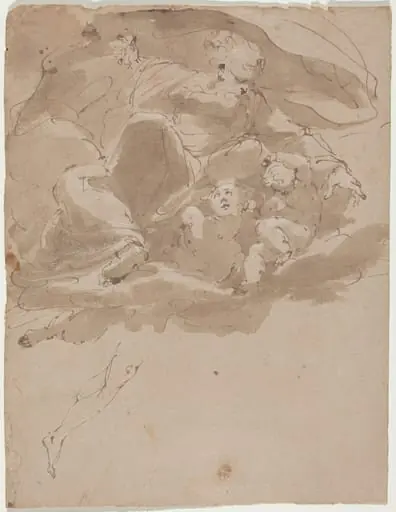
A Group of Angels in Glory
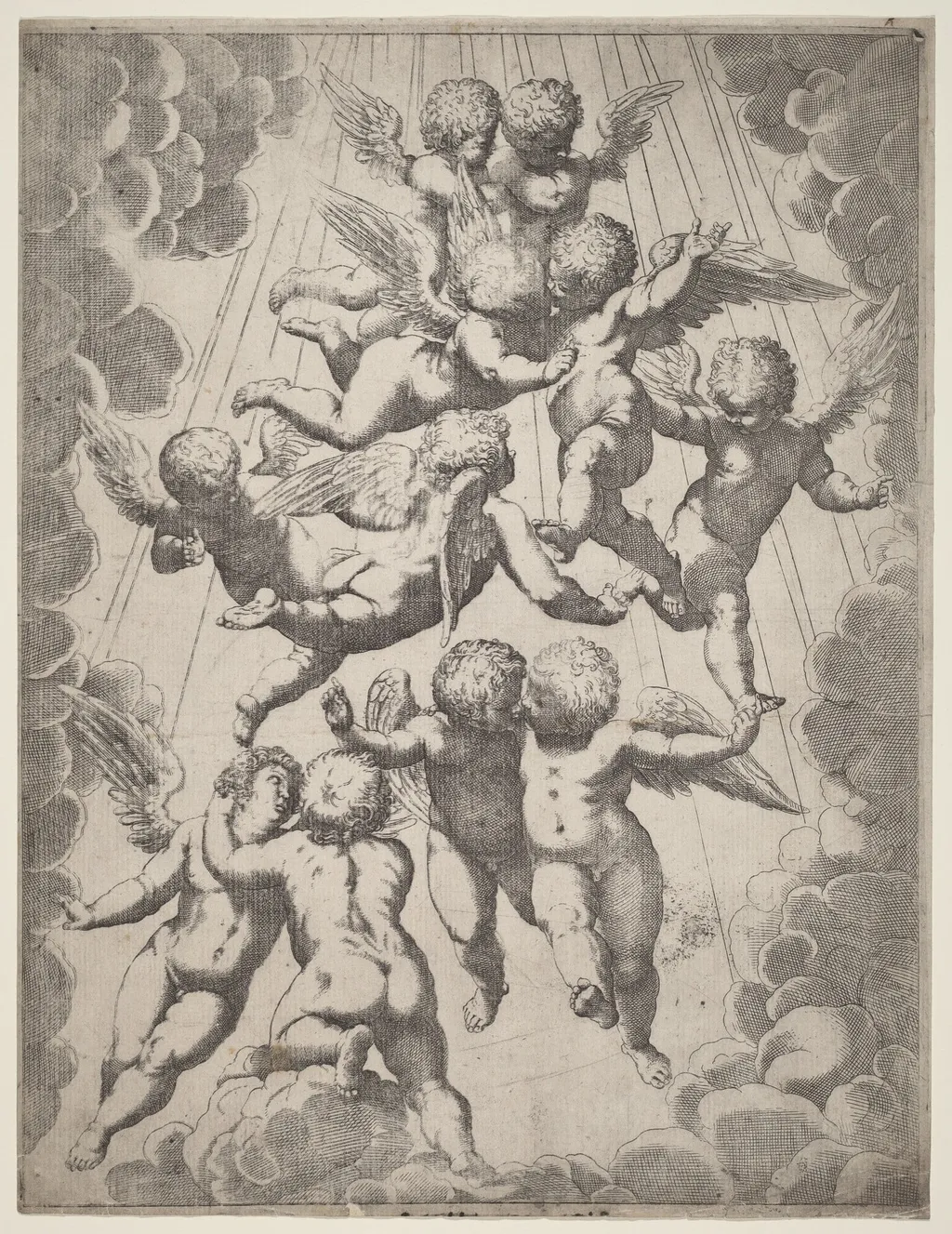
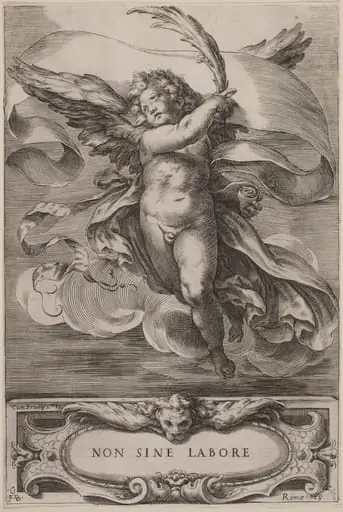
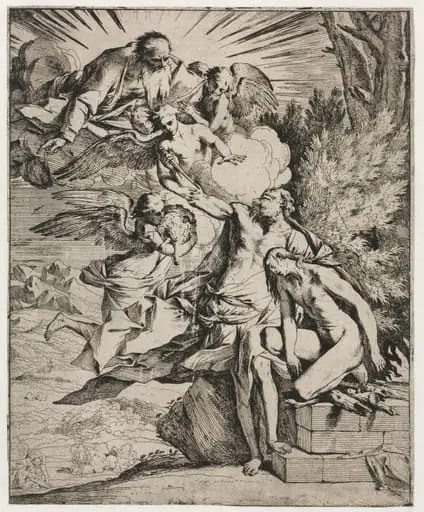
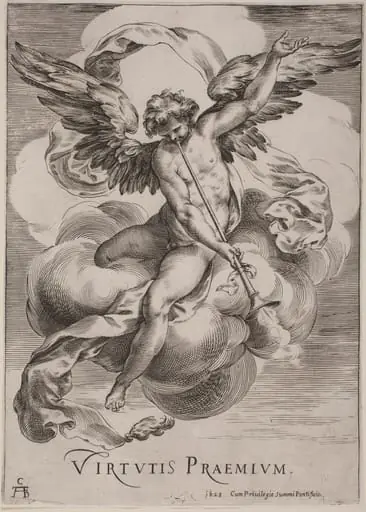
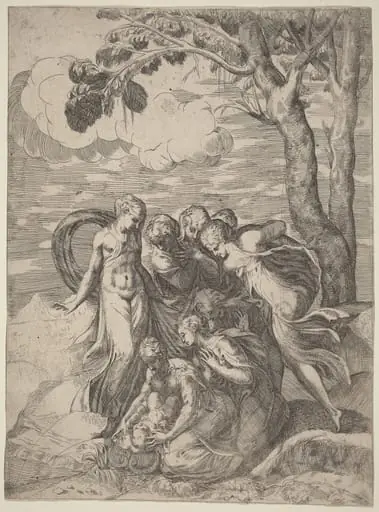
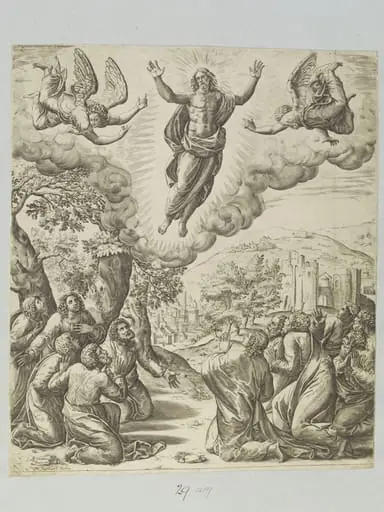
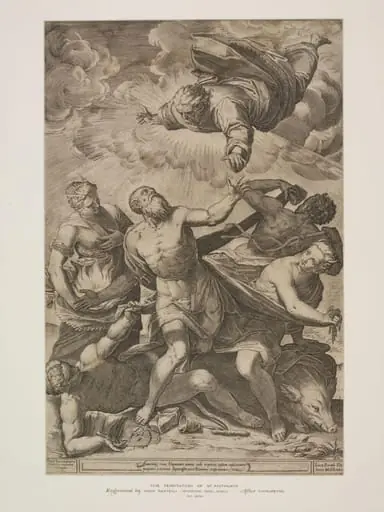
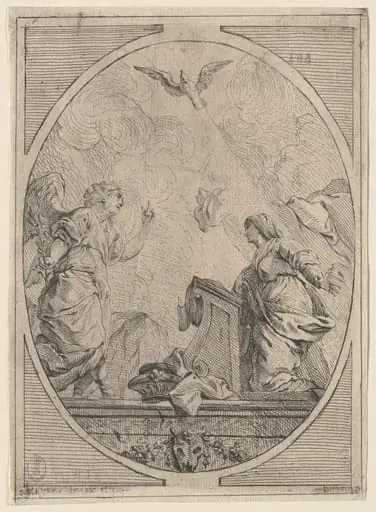
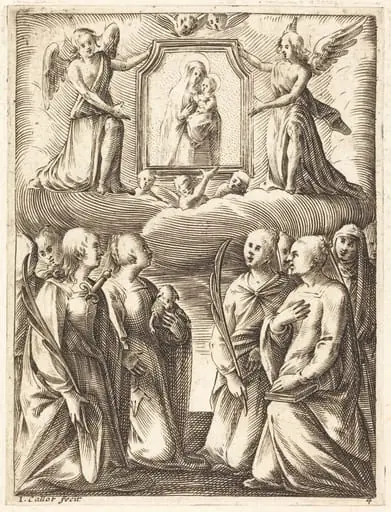
A Group of Angels in Glory is an ink print by the Baroque artist Italian 17th Century. It dates from 1607 and is held in the collection of the National Gallery of Art. This etching depicts a dynamic assembly of angels in motion, rendered through the drypoint technique.
About this work
Overview
This etching depicts a dynamic assembly of angels in motion, rendered through the drypoint technique. The composition emphasizes movement and luminosity, with wings and halos catching light against a dark, indistinct background. The artist’s hand is evident in the textured lines—scratched, scraped, and pushed into the plate—creating a sense of ethereal turbulence rather than static form.
Subject & Meaning
The angels appear as a collective force, their individual features dissolved into the surrounding darkness. This abstraction suggests transcendence, as if the figures are emerging from or returning to the divine realm. Their blurred faces and swirling forms convey spiritual presence rather than human identity, focusing attention on movement and radiance as expressions of the sacred.
Technique & Style
The artist employed scratching and scraping to build texture, with tiny dots and uneven strokes suggesting fluttering wings and glancing light.
Drypoint was used to carve fine, irregular lines directly into the metal plate, producing rich, velvety blacks and delicate halos of burr. The artist employed scratching and scraping to build texture, with tiny dots and uneven strokes suggesting fluttering wings and glancing light. Unlike clean engraving, the hand-worn marks preserve the immediacy of the artist’s gesture, enhancing the sense of motion.
History & Provenance
The work’s origin and early ownership are not documented in the provided details. As an etching, it likely existed in a limited edition, possibly intended for private collectors or devotional use in the 17th or 18th century. Its survival suggests it was preserved as a study or devotional object, though no specific provenance or exhibition history is known.
Context
Drypoint etchings of angelic subjects were common in religious art of early modern Europe, often used to illustrate theological themes of heavenly hierarchy and divine presence. This piece aligns with a tradition that favored expressive, tactile mark-making over idealized form, reflecting a shift toward emotional intensity and atmospheric effect in sacred imagery.
Legacy
The work exemplifies how printmaking could convey spiritual dynamism through material process rather than detailed representation. Its emphasis on texture and motion influenced later artists exploring abstraction in religious subjects. While not widely reproduced, it remains a quiet testament to the expressive potential of hand-carved print techniques.
Artist & collection

Artist
This Italian artist worked in the 17th century, making engravings, ink drawings, and oil paintings.