Artwork
Untitled
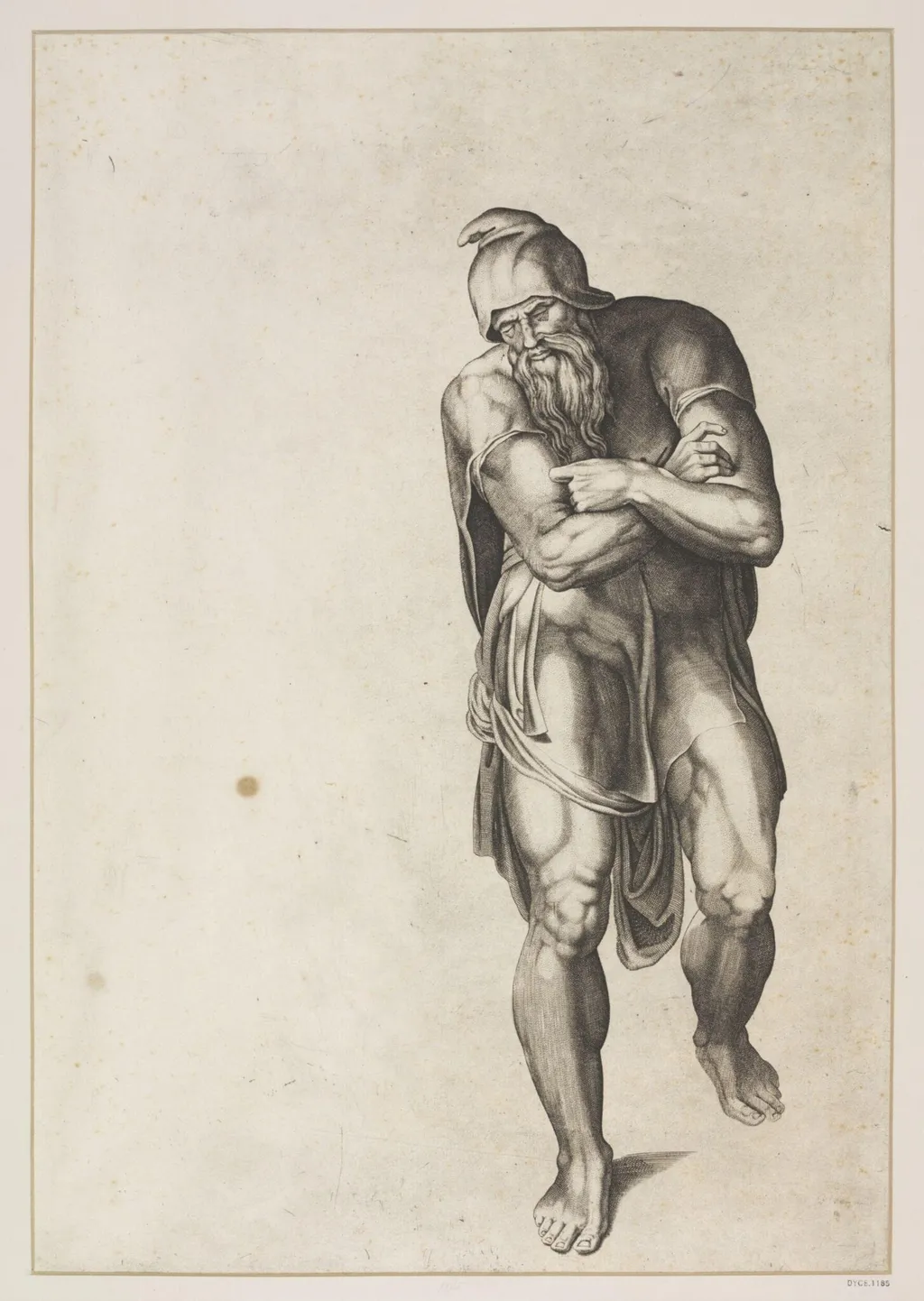
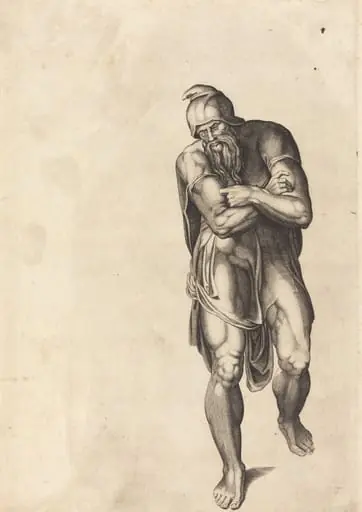
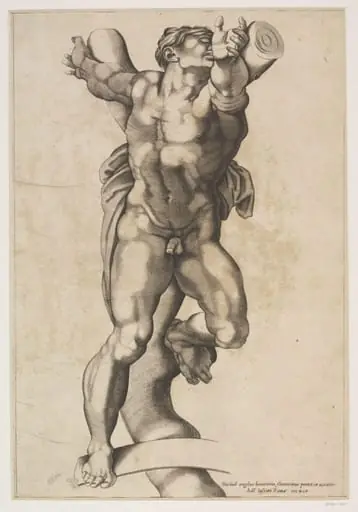
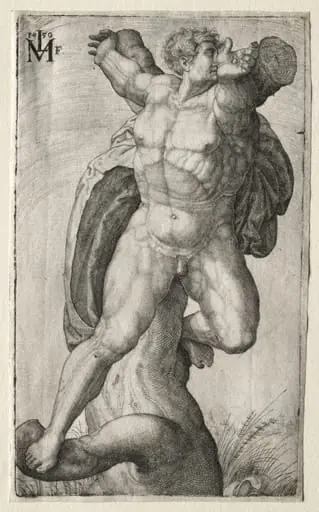
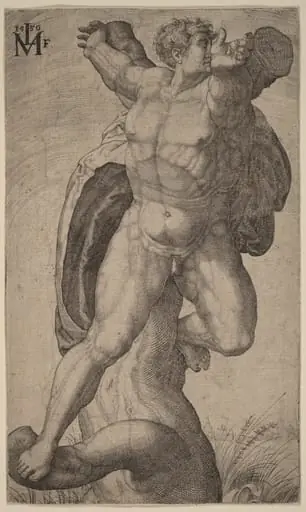
Untitled is a print by the Renaissance artist Nicolas Beatrizet. It dates from 1520 and is held in the collection of the Victoria and Albert Museum. This black-and-white print on paper presents a solitary male figure in a dynamic, introspective pose.
About this work
Overview
Derived from a larger composition by Michelangelo, it isolates a single form to emphasize physical presence and emotional gravity.
This black-and-white print on paper presents a solitary male figure in a dynamic, introspective pose. Derived from a larger composition by Michelangelo, it isolates a single form to emphasize physical presence and emotional gravity. The work is credited to Nicolas Beatrizet, based on historical cataloging by Dr. Wellesley, and exemplifies the Renaissance practice of reinterpreting monumental sculpture through printmaking.
Subject & Meaning
The figure, identified as Saint Peter, is shown in a moment of quiet endurance, his arms folded and head turned away. The posture suggests resignation rather than anguish, focusing on inner resolve over outward drama. The draped cloth and muscular form evoke classical ideals, while the absence of narrative context invites contemplation of personal fortitude rather than religious spectacle.
Technique & Style
The artist employs strong contrasts of light and shadow—chiaroscuro—to model the figure’s form with precision. Bold, clean lines define musculature and drapery, while the plain background eliminates distraction, heightening the figure’s sculptural presence. The print’s tonal depth is achieved through controlled engraving, reflecting the technical discipline typical of 16th-century reproductive prints.
History & Provenance
Attributed to Nicolas Beatrizet, the print was documented in the 19th-century catalog of Dr. Wellesley’s collection of Italian prints. Beatrizet, a French engraver active in Rome, was known for translating Michelangelo’s designs into print. This work likely dates to the mid-1500s, produced as part of a broader effort to disseminate Renaissance imagery beyond original frescoes and sculptures.
Context
In mid-16th-century Italy, prints served as accessible vehicles for disseminating the compositions of major artists like Michelangelo. Engravers such as Beatrizet bridged the gap between monumental art and private collections, allowing patrons to engage with sacred and classical themes in domestic settings. This print reflects the period’s reverence for anatomical precision and emotional restraint.
Legacy
Though not widely exhibited today, the print remains a documented example of how Renaissance ideals were reproduced and preserved through printmaking. It illustrates the role of engravers in shaping the visual culture of the era, ensuring that Michelangelo’s figures continued to influence artistic practice long after their original creation.
Artist & collection


![Castello S. Angelo di Roma [Castel Sant'Angelo in Rome], by Nicolas Beatrizet](https://artifactworldgallery.com/img/nicolas-beatrizet--castello-s-angelo-di-roma-castel-sant-angelo-in-rome--6c77d3bfe127c436-w320.webp)
![Pantheum Romanum [The Roman Pantheon], by Nicolas Beatrizet](https://artifactworldgallery.com/img/nicolas-beatrizet--pantheum-romanum-the-roman-pantheon--8069db7dd8e6f190-w320.webp)
![The Farnese Hercules, three-quarter view turned to left [plate 3], by François Perrier](https://artifactworldgallery.com/img/francois-perrier--the-farnese-hercules-three-quarter-view-turned-to-left-plate--b0564bebaad016fa-w320.webp)