Artwork
Ecce Homo
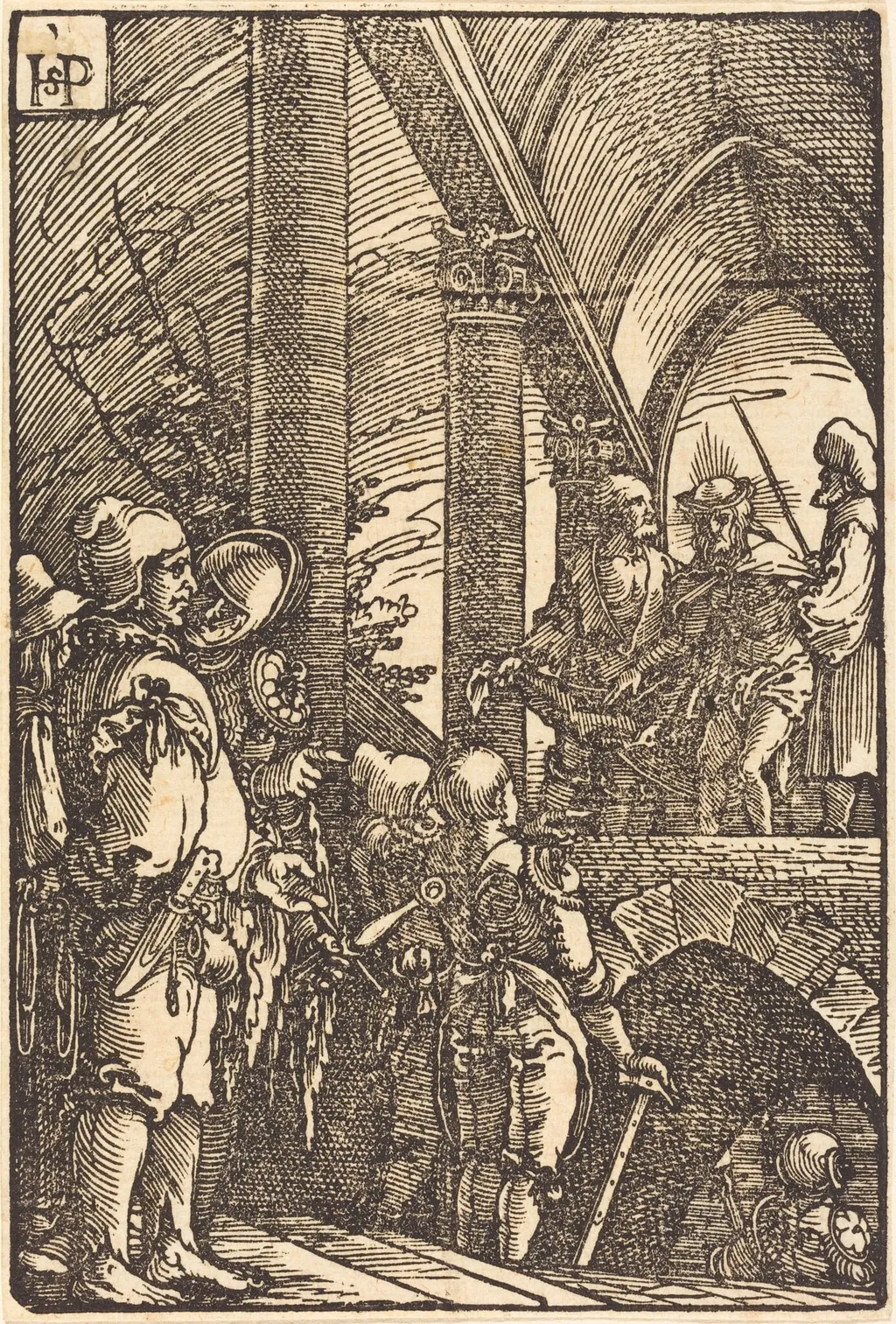
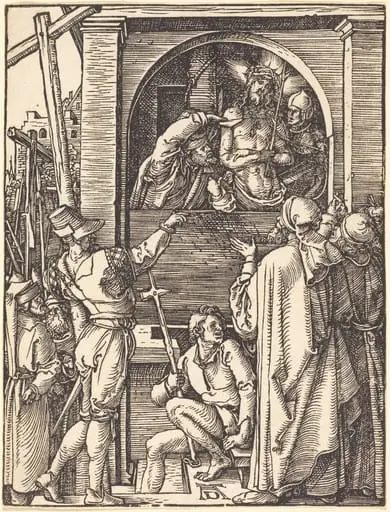
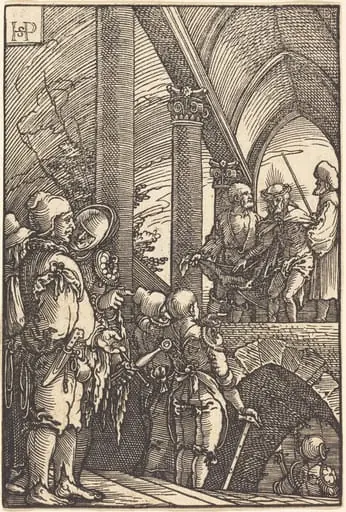
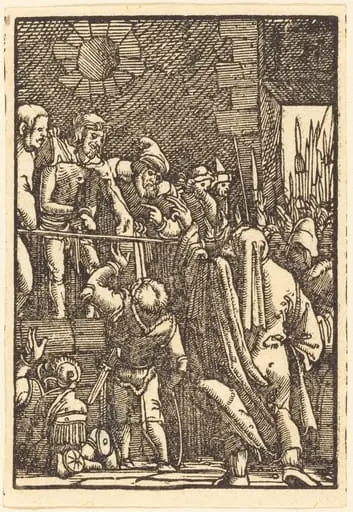
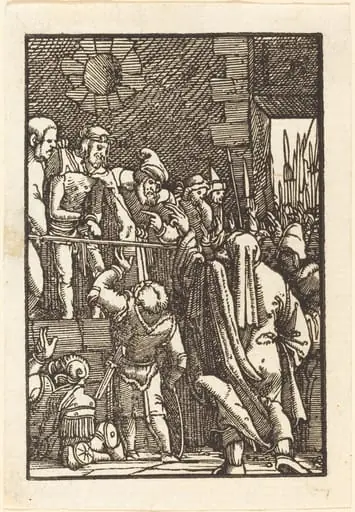
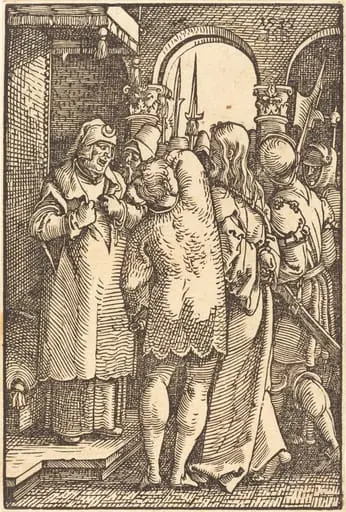
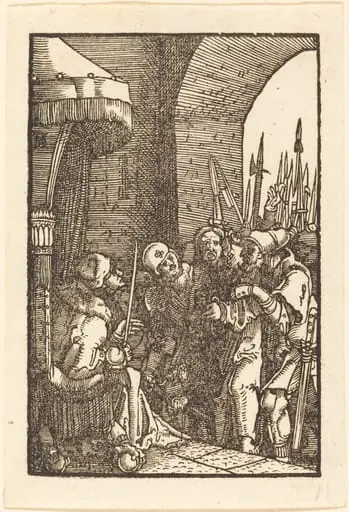
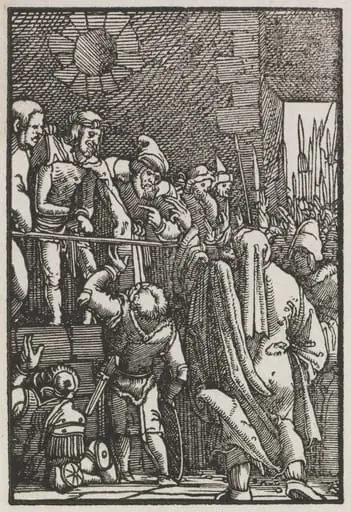
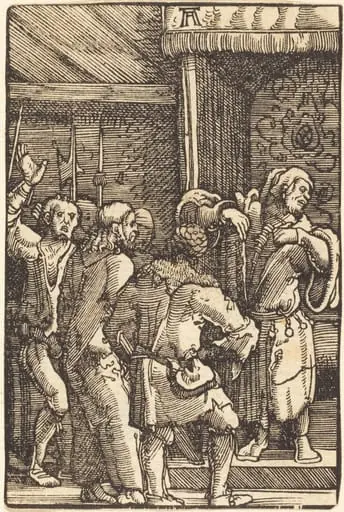
Ecce Homo is an ink print by the Renaissance artist Sebald Beham. It dates from 1522 and is held in the collection of the National Gallery of Art.
About this work
Overview
Ecce Homo is a 1522 woodcut by German artist Sebald Beham, a prominent figure among the 'Little Masters'. Characterized by its small size and intricate detail, the work exemplifies Beham's prolific output of over 1,500 woodcuts.
Subject & Meaning
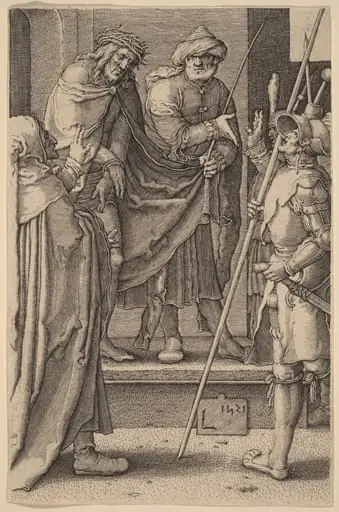
The print depicts a densely populated religious scene, identifiable by a central figure bound to a pillar, wearing a crown of thorns and threatened by a spear-wielding soldier. This imagery suggests the moment before Jesus' crucifixion, with a robed figure on the left possibly representing a religious or biblical character amidst a crowd of reactors.
Technique & Style
Beham employed sharp lines and heavy shading in this woodcut to achieve dramatic depth. The dark, textured background underscores the somber mood, while the detailed compositions reflect the post-Dürer printmaking traditions in Germany.
History & Provenance
Created in 1522, Ecce Homo was produced during Beham's time in Nuremberg, before his relocation to Frankfurt. The work's current location and ownership history are not specified in available records.
Context
Ecce Homo sits within the broader context of early 16th-century German printmaking, following in the footsteps of Albrecht Dürer. Beham's work, along with other 'Little Masters', is notable for its miniature yet intricately detailed engravings.
Legacy
As part of Beham's extensive corpus, Ecce Homo contributes to the artist's reputation for prolific and detailed woodcut production, influencing subsequent generations of printmakers with its technical and compositional achievements.
Artist & collection
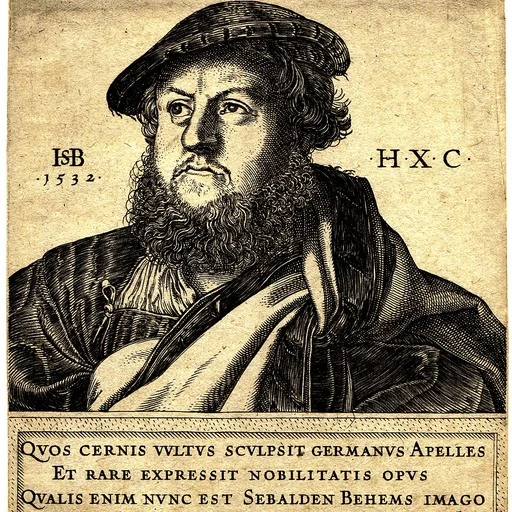
Artist
Sebald Beham (1500–1550) was a German painter and printmaker, mainly known for his very small engravings.