Artwork
Intemperance
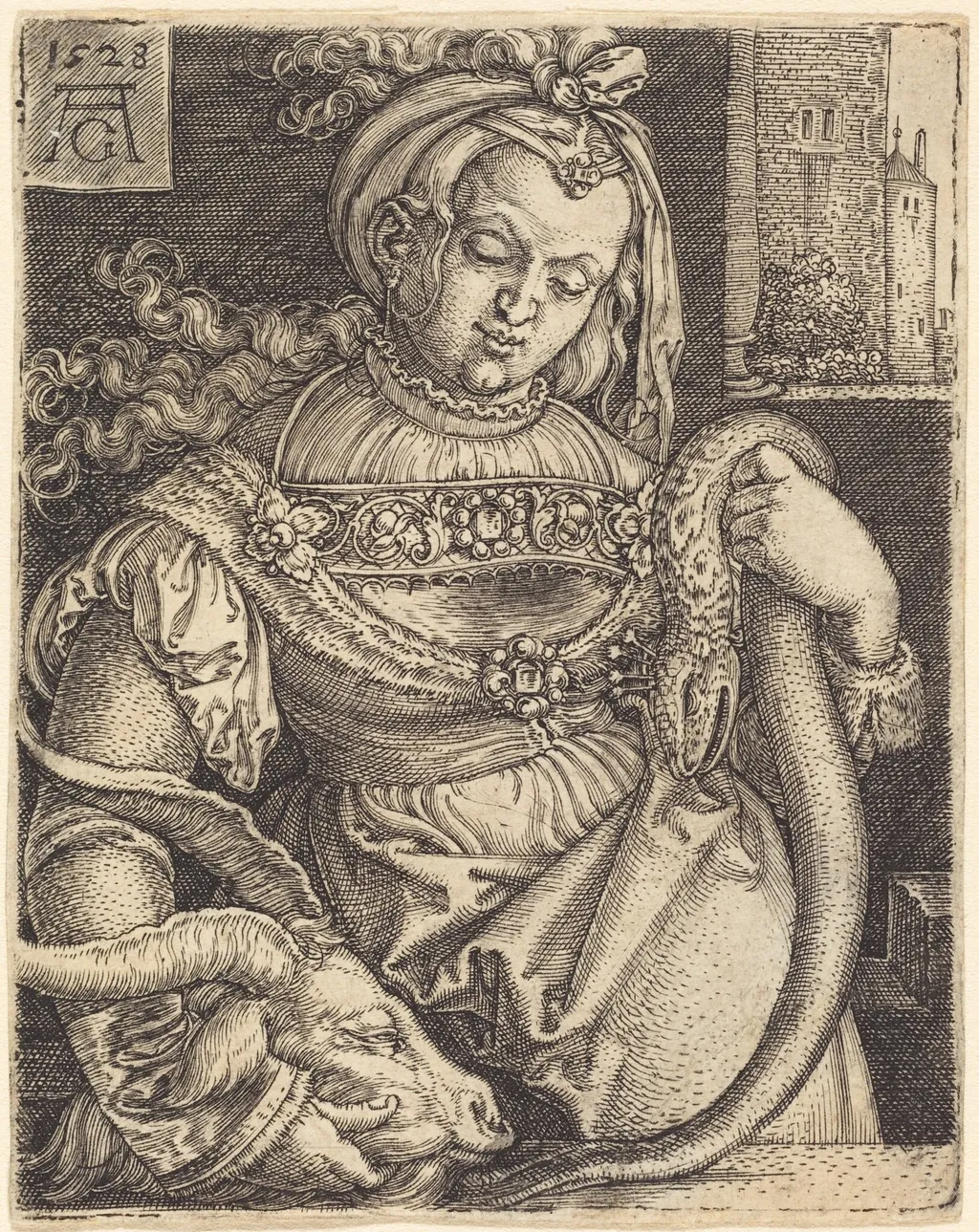
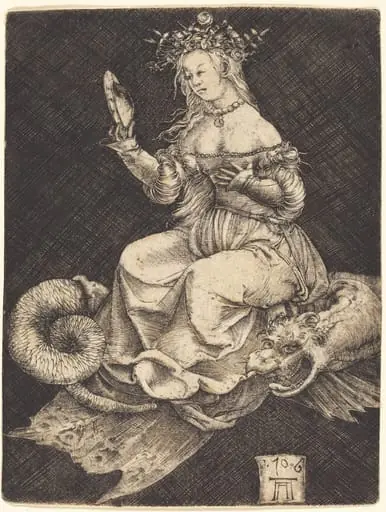
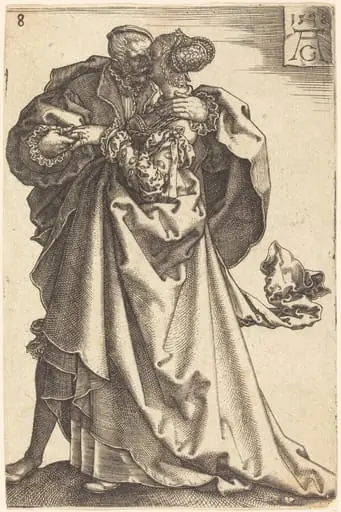
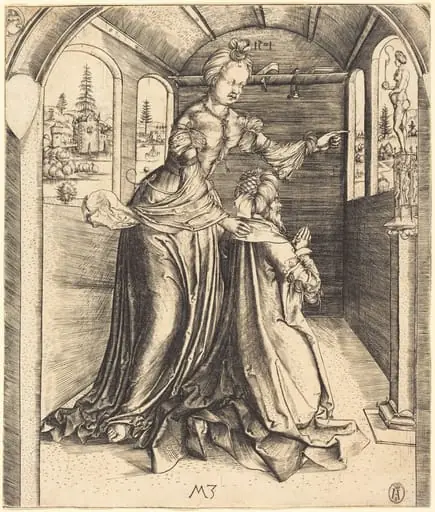
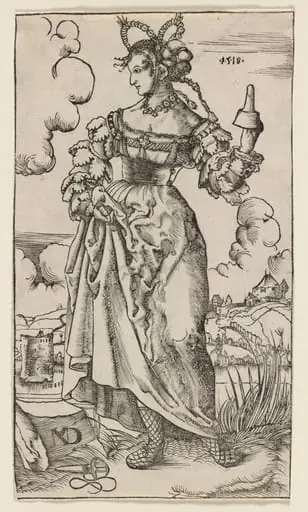
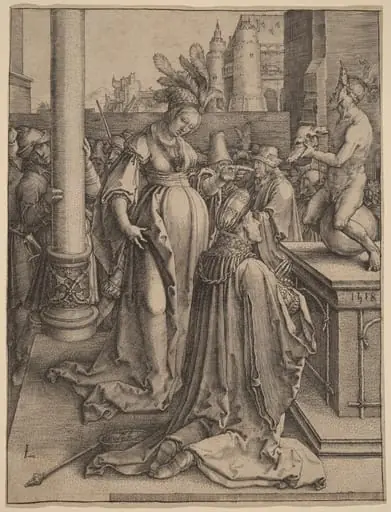
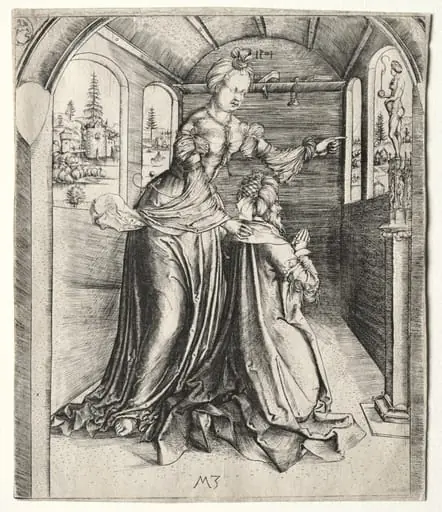
Intemperance is an ink print by the Northern Renaissance artist Heinrich Aldegrever. It dates from 1528 and is held in the collection of the National Gallery of Art.
About this work
Overview
Heinrich Aldegrever, a German artist active in the early 16th century, produced *Intemperance* in 1528 as a detailed engraving.
Heinrich Aldegrever, a German artist active in the early 16th century, produced *Intemperance* in 1528 as a detailed engraving. A member of the group known as the 'Little Masters,' he focused on small-scale prints with intricate linework. This work exemplifies the Northern Renaissance interest in moral allegory, rendered through precise metal engraving techniques that allowed for fine control and tonal variation.
Subject & Meaning
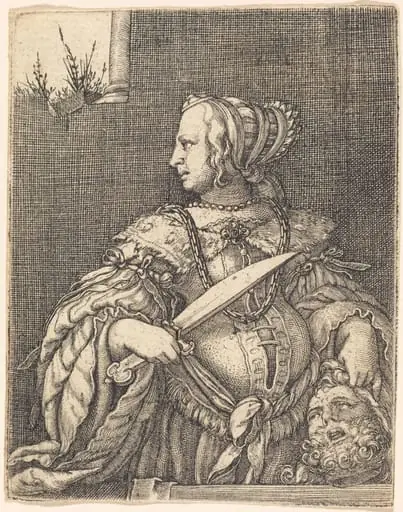
The figure is a woman crowned and draped in flowing garments, holding a goblet that overflows with liquid. Behind her, a decaying tower suggests the collapse brought by excess. Her calm expression contrasts with the tension in her posture, implying inner conflict. The image functions as a moral warning against indulgence, aligning with contemporary religious and civic critiques of vice during the Reformation era.
Technique & Style
Aldegrever employed sharp, controlled engraving lines to define textures: the folds of fabric, the strands of hair, and the fractured stonework of the ruin. The density of lines creates depth and volume, while the contrast between smooth skin and rough surfaces enhances visual tension. His technique reflects the precision typical of Northern Renaissance engravers, prioritizing detail over broad composition.
History & Provenance
Created in 1528, the engraving emerged during Aldegrever’s most active period in Westphalia. It was likely circulated among educated patrons familiar with humanist and moralizing themes. Though no early ownership records are widely documented, its survival in multiple museum collections indicates its recognition among collectors of small prints in the centuries following its creation.
Context
In the decades after Dürer, German artists turned to small, portable engravings as vehicles for moral and religious instruction. *Intemperance* fits within a broader tradition of allegorical prints addressing vices and virtues, influenced by both Catholic moral teachings and emerging Protestant critiques of excess. The crumbling architecture mirrors contemporary anxieties about societal decay linked to personal misconduct.
Legacy
Aldegrever’s *Intemperance* remains a representative example of the Little Masters’ contribution to print culture. Its combination of technical finesse and symbolic clarity influenced later Northern European engravers. Though not widely known outside specialist circles, it continues to be studied for its embodiment of Renaissance moral iconography and the evolution of printmaking as a medium for ethical discourse.
Artist & collection

Artist
Heinrich Aldegrever or Aldegraf was a German painter and engraver. He was one of the "Little Masters", the group of German artists making small old master prints in the generation after Albrecht Dürer.