Artwork
The Annunciation
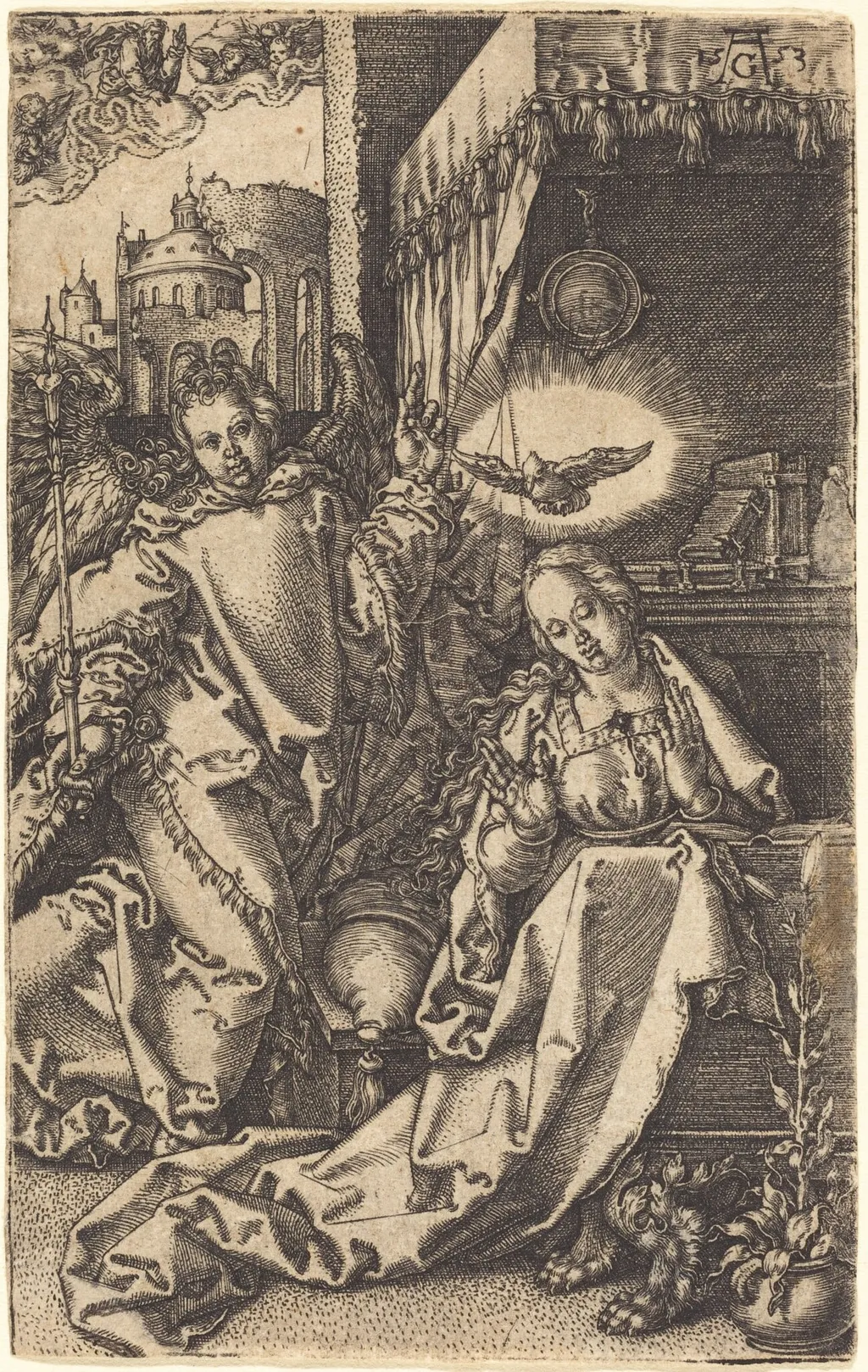
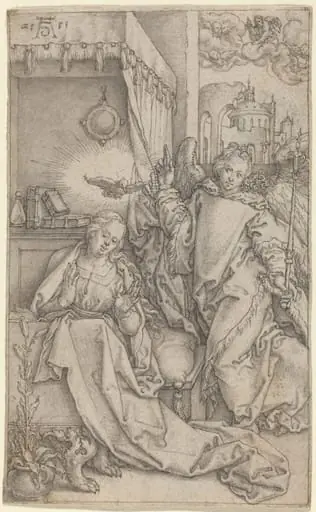
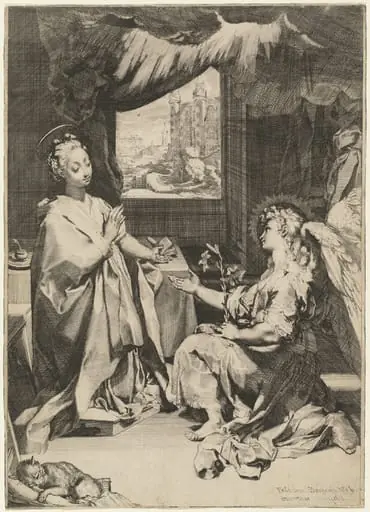
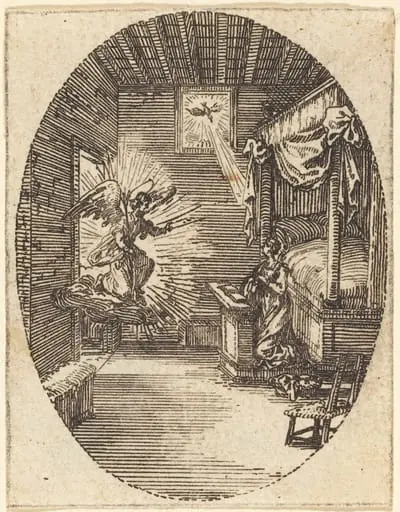
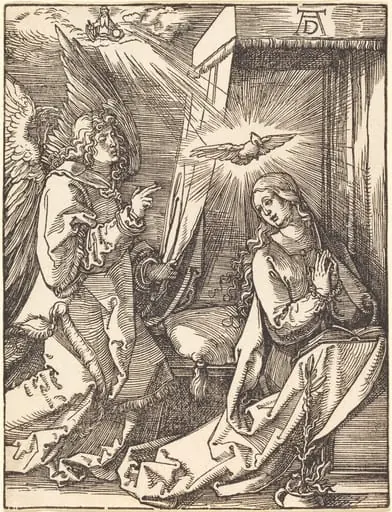
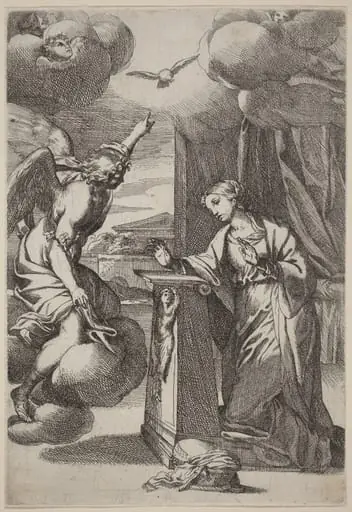
The Annunciation is an ink print by the Northern Renaissance artist Heinrich Aldegrever. It dates from 1553 and is held in the collection of the National Gallery of Art.
About this work
Overview
Working in the wake of Albrecht Dürer, he specialized in intricate, finely detailed engravings intended for private devotion.
Heinrich Aldegrever, a German artist of the mid-16th century, produced this small-scale engraving in 1553 as part of a series of religious prints influenced by the tradition of the Little Masters. Working in the wake of Albrecht Dürer, he specialized in intricate, finely detailed engravings intended for private devotion. The work captures a pivotal moment from the Gospel of Luke with precision and restraint, reflecting the devotional culture of Northern European Protestant regions.
Subject & Meaning
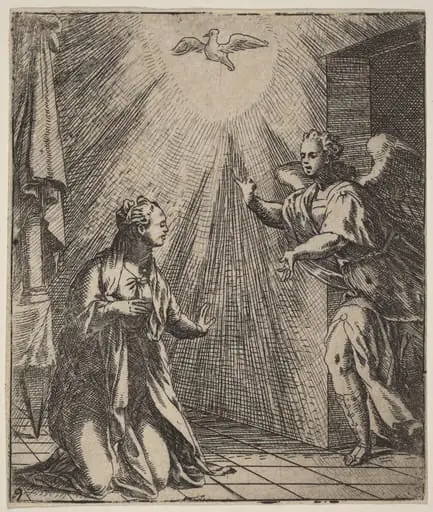
The scene illustrates the angel Gabriel’s announcement to the Virgin Mary that she will conceive the Son of God. Gabriel, depicted mid-air with flowing garments, gestures toward Mary, who stands below, attentive and composed. A dove, symbolizing the Holy Spirit, hovers between them, signaling divine presence. The inclusion of a distant city and celestial elements situates the sacred event within a tangible world, reinforcing its historical and spiritual reality for the viewer.
Technique & Style
Aldegrever employed fine, controlled lines to render texture and volume, particularly in the folds of the angel’s robes and the suggestion of cloud mass. The engraving’s small size belies its complexity, with delicate cross-hatching creating depth and shadow. The background features a stylized cityscape and star-strewn sky, rendered with minimal detail yet evoking spatial recession. The precision of the toolwork reflects the technical mastery expected of printmakers in this tradition.
History & Provenance
Created in 1553 during Aldegrever’s active years in Paderborn, the engraving circulated among educated lay audiences in the Holy Roman Empire. As a Protestant region, the area favored modest religious imagery, making such prints suitable for private contemplation. While specific early ownership records are sparse, the work aligns with known print runs from his workshop, which were widely distributed through regional dealers and religious networks.
Context
Aldegrever worked in a period of religious upheaval, where Catholic iconography was being reevaluated in Protestant territories. His engravings avoided overtly devotional excess, instead offering restrained biblical narratives suitable for domestic use. The focus on clarity and detail, rather than emotional drama, reflects the broader shift toward personal piety and textual fidelity in post-Reformation visual culture.
Legacy
Though less celebrated than Dürer, Aldegrever’s prints contributed to the dissemination of religious imagery in early modern Germany. His technical discipline influenced later generations of engravers who prioritized precision over grandeur. *The Annunciation* remains a representative example of how small-scale prints served as tools of spiritual instruction, bridging the gap between liturgical tradition and private devotion in a changing religious landscape.
Artist & collection

Artist
Heinrich Aldegrever or Aldegraf was a German painter and engraver. He was one of the "Little Masters", the group of German artists making small old master prints in the generation after Albrecht Dürer.