Artwork
The Holy Family with Two Angels
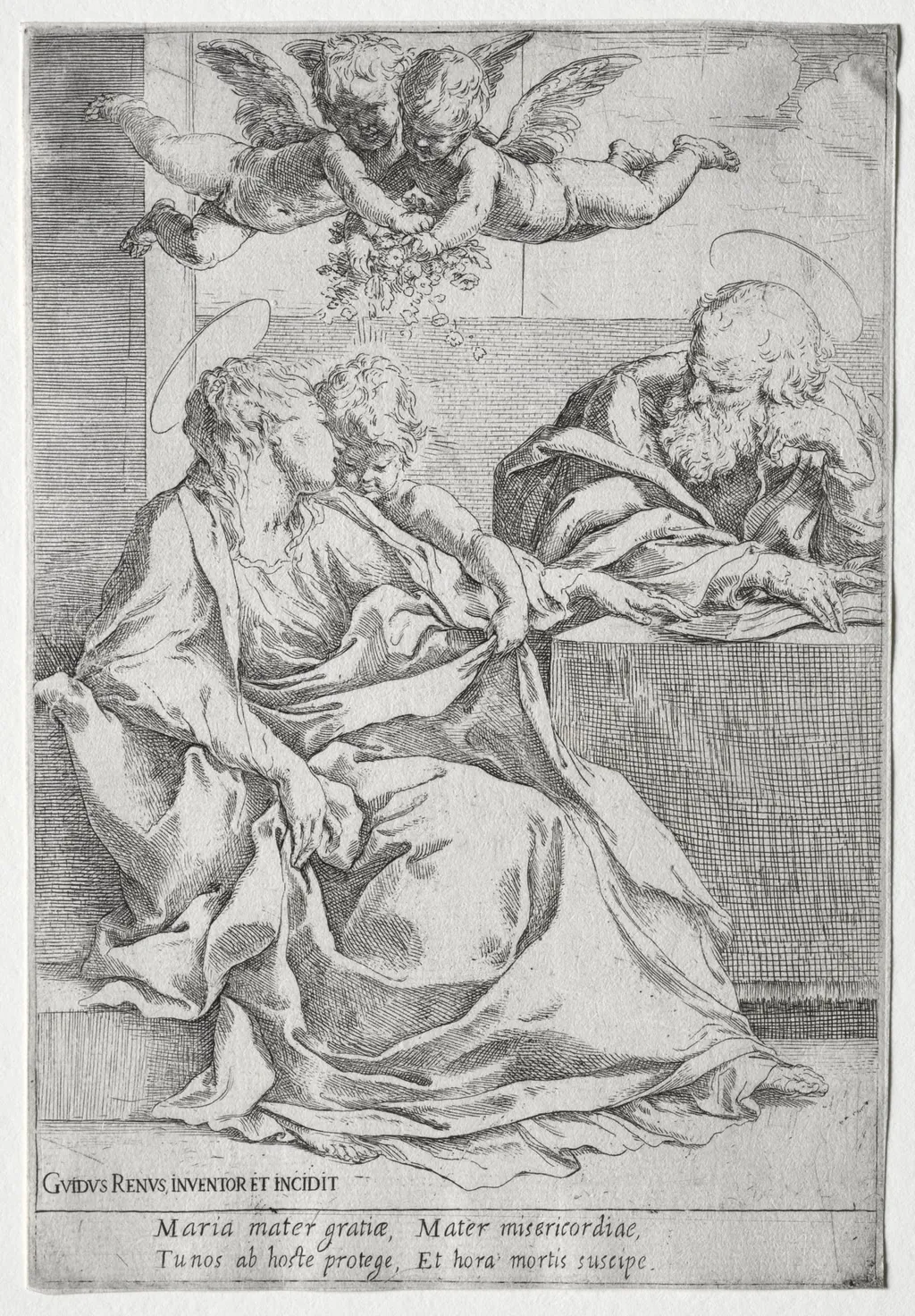
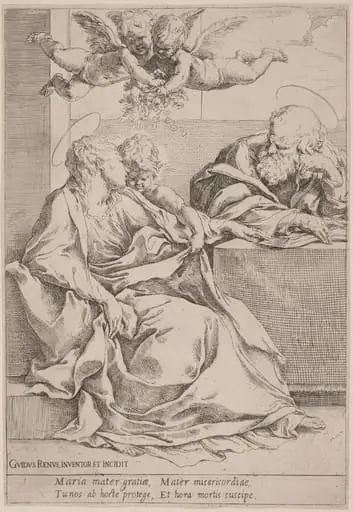
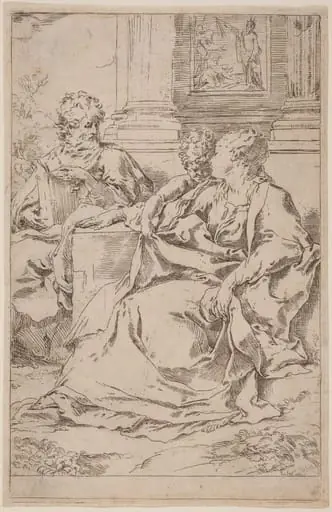
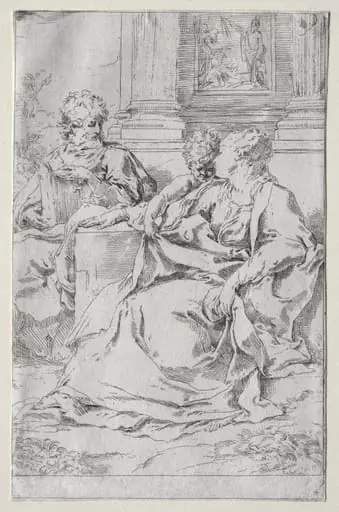
The Holy Family with Two Angels is a print by the Renaissance artist Guido Reni. It dates from 1600 and is held in the collection of the Cleveland Museum of Art.
About this work
Overview
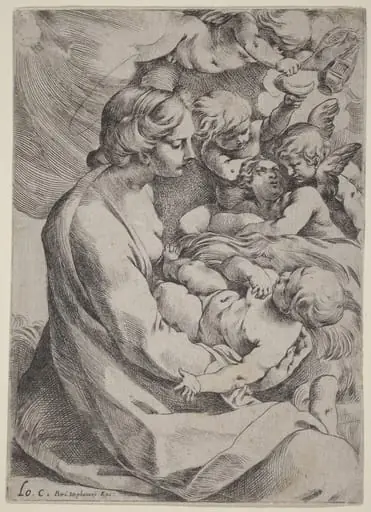
Created around 1600, this print by Guido Reni depicts the Holy Family accompanied by two angels. Executed in a delicate linear style, it emphasizes quiet reverence through soft tonal gradations and precise drapery. The work is part of the collection at The Cleveland Museum of Art and bears the artist’s Latin signature, affirming its early 17th-century origin and scholarly intent.
Subject & Meaning
The composition centers on Mary, Joseph, and the infant Jesus, framed by two hovering angels who hold a leafy wreath. The scene evokes a moment of tender stillness rather than dramatic narrative, suggesting divine protection and familial harmony. The wreath may symbolize eternal life or Christ’s future sacrifice, subtly reinforcing theological themes without overt symbolism.
Technique & Style
Reni employed fine, controlled lines to define fabric folds and facial features, using subtle shading to model form without heavy contrast. The angels’ wings and flowing robes are rendered with rhythmic precision, enhancing the sense of calm movement. The print’s clarity and restraint reflect Reni’s classical training and his alignment with early Baroque ideals of grace and order.
History & Provenance
The work entered The Cleveland Museum of Art’s collection as part of its broader acquisition of early modern European prints. Its attribution to Guido Reni is supported by stylistic analysis and the artist’s Latin signature, consistent with his practice. No earlier provenance is documented, but its preservation suggests it was valued by collectors in the centuries following its creation.
Context
Produced during Reni’s formative years in Bologna, the print aligns with the Counter-Reformation emphasis on accessible, emotionally restrained religious imagery. While oil paintings dominated altarpieces, prints like this served devotional and educational purposes, circulating among clergy and educated laypeople who sought spiritual reflection through refined imagery.
Legacy
Though less known than Reni’s large-scale canvases, this print exemplifies his mastery of line and composition in smaller formats.
Though less known than Reni’s large-scale canvases, this print exemplifies his mastery of line and composition in smaller formats. It contributed to the dissemination of his style across Europe and influenced later generations of printmakers who sought to merge classical harmony with devotional clarity. Its continued presence in museum collections underscores its enduring role in religious art history.
Artist & collection
Artist
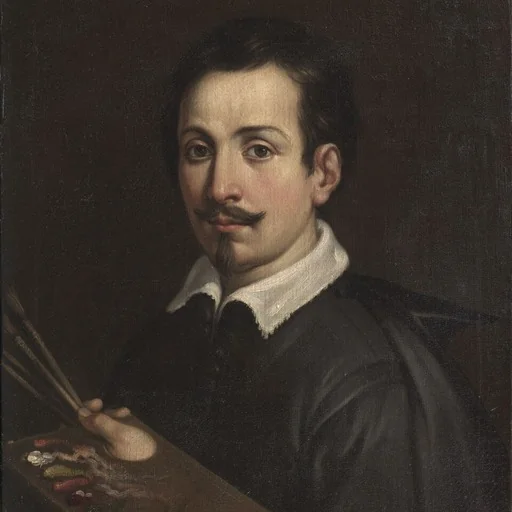
Guido Reni was an Italian Baroque painter, although his works showed a classical manner, similar to Simon Vouet, Nicolas Poussin, and Philippe de Champaigne.