Artwork
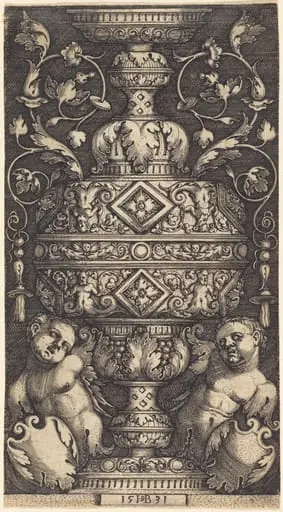
Double Cup with Two Genii Riding on Dolphins
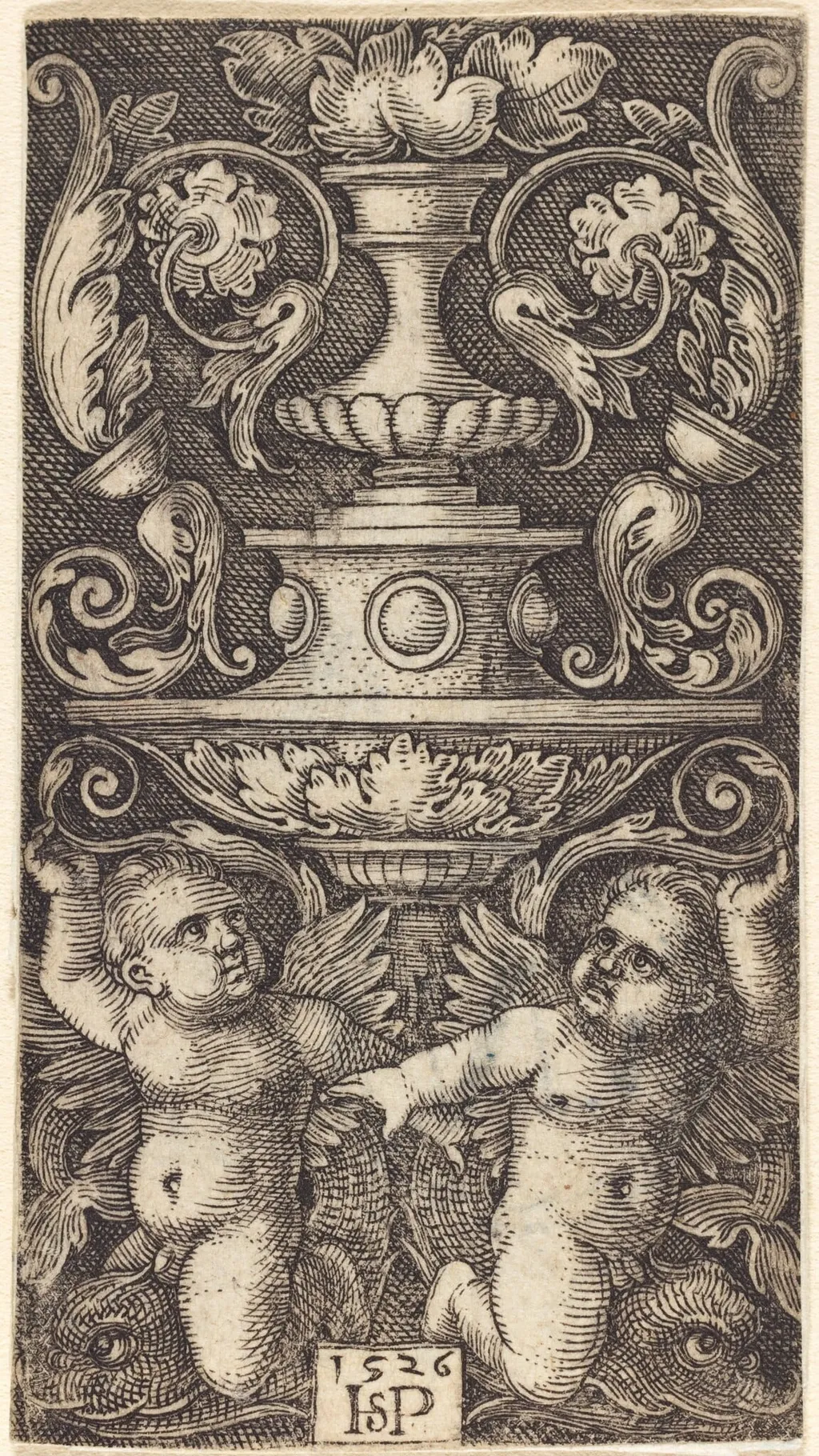
Double Cup with Two Genii Riding on Dolphins is an ink print by the Renaissance artist Sebald Beham. It dates from 1526 and is held in the collection of the National Gallery of Art.
About this work
This engraving shows a fancy silver cup with two tiny figures riding dolphins on top.
This engraving shows a fancy silver cup with two tiny figures riding dolphins on top. The craftsmanship is precise, with fine lines and tiny details.
Sebald Beham made this in 1526. It’s a small print made for collectors who liked intricate designs. The dolphins look playful, not scary.
See how he uses cross-hatching to create shadows and texture? It makes the metal look real.
Look up Beham, Sebald.
Overview
Created in 1526 by Sebald Beham, this small engraving depicts a decorative silver cup adorned with two genii riding dolphins. Executed with meticulous precision, the work exemplifies Beham’s mastery of miniature printmaking. As part of the German 'Little Masters,' he specialized in finely detailed engravings intended for private collectors rather than public display, emphasizing craftsmanship over scale.
Subject & Meaning
The scene portrays two slender, mythological figures seated atop playful dolphins, surmounting an ornate vessel. The imagery evokes classical themes of water, movement, and divine whimsy, likely symbolizing abundance or leisure. The dolphins, rendered with fluid grace, suggest harmony rather than threat, aligning with Renaissance ideals of balanced, elegant mythology adapted for intimate decorative objects.
Technique & Style
Beham employed fine-line engraving with dense cross-hatching to model form and simulate the reflective surface of silver. The intricate textures of the cup’s ornamentation and the dolphins’ scales are rendered with extraordinary control, demonstrating his skill in translating three-dimensional objects into minute, linear compositions. The composition is tightly contained, maximizing detail within a small format.
History & Provenance
Produced during Beham’s most active period in Nuremberg, this engraving belongs to a series of small-scale prints circulated among educated collectors in early 16th-century Germany. While no specific early ownership records are documented, its style and subject align with other works from his oeuvre that were widely traded and admired for their technical refinement.
Context
In the decades following Albrecht Dürer, German printmakers like Beham refined the art of the small engraving for private connoisseurs. This work reflects the period’s fascination with classical motifs, domestic luxury, and the intellectual appeal of intricate craftsmanship. Such prints were often collected as artistic curiosities, valued for their skill rather than monumental scale.
Legacy
Beham’s engravings, including this one, helped define the aesthetic of the Little Masters, influencing later generations of printmakers who prioritized detail and miniature composition. Though overshadowed by larger contemporaries, his technical precision and imaginative subject matter remain significant in the history of Northern Renaissance printmaking.
Artist & collection
Artist
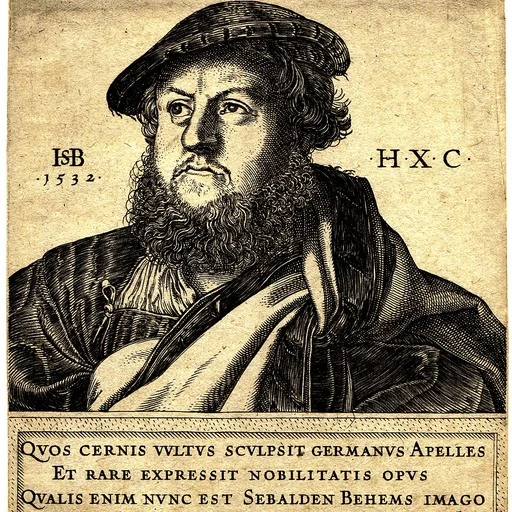
Sebald Beham (1500–1550) was a German painter and printmaker, mainly known for his very small engravings.


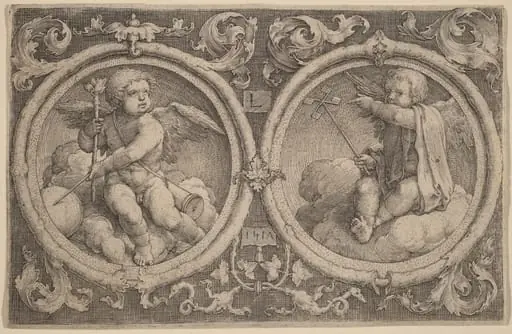 Two Cupids Seated on Clouds in Two Circles
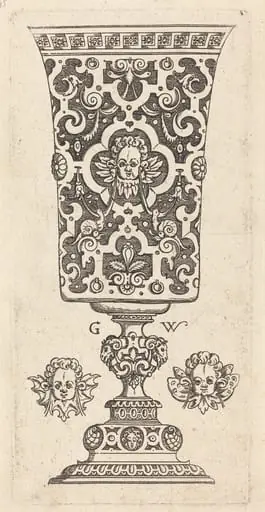 Cup
Cup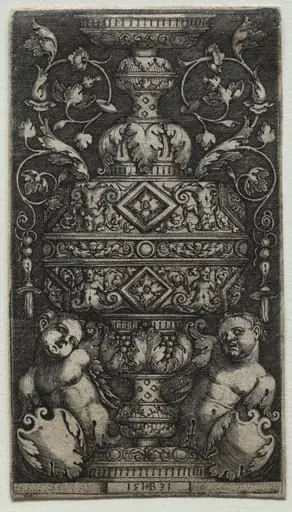 Vase Orné d'Enfans
 Three Cupids and a Bear
 A Vase between Two Chimeric Figures
 Three Cupids and a Bear
 New ABC Booklet: Q
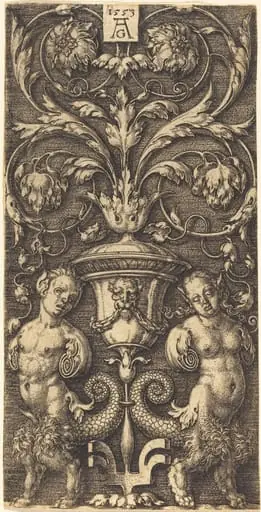 Ornament with Vase and Two Female Figures
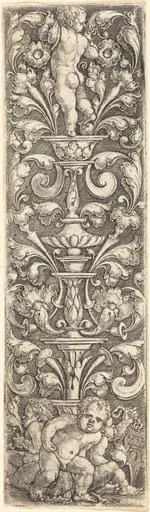 High Ornament
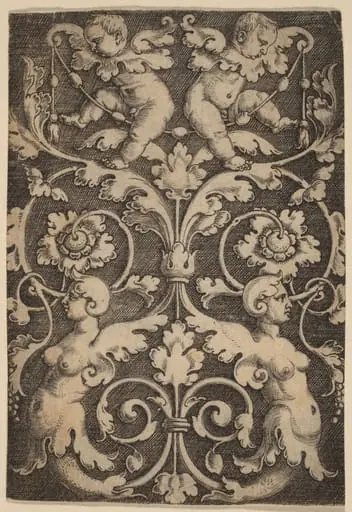 Upright Ornament with Two Sirens
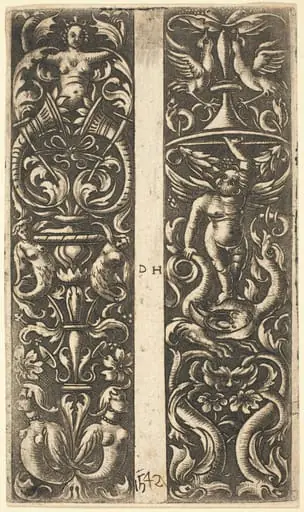 Ornament with Sirens and Ornament with Genius
 Double Goblet with Two Genii at the Base