Artwork
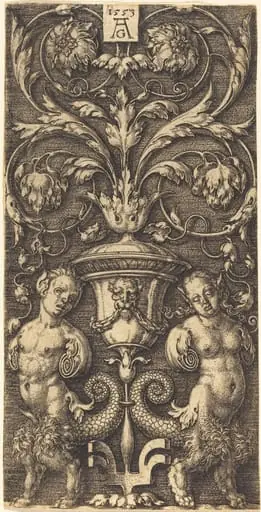
A Vase between Two Chimeric Figures
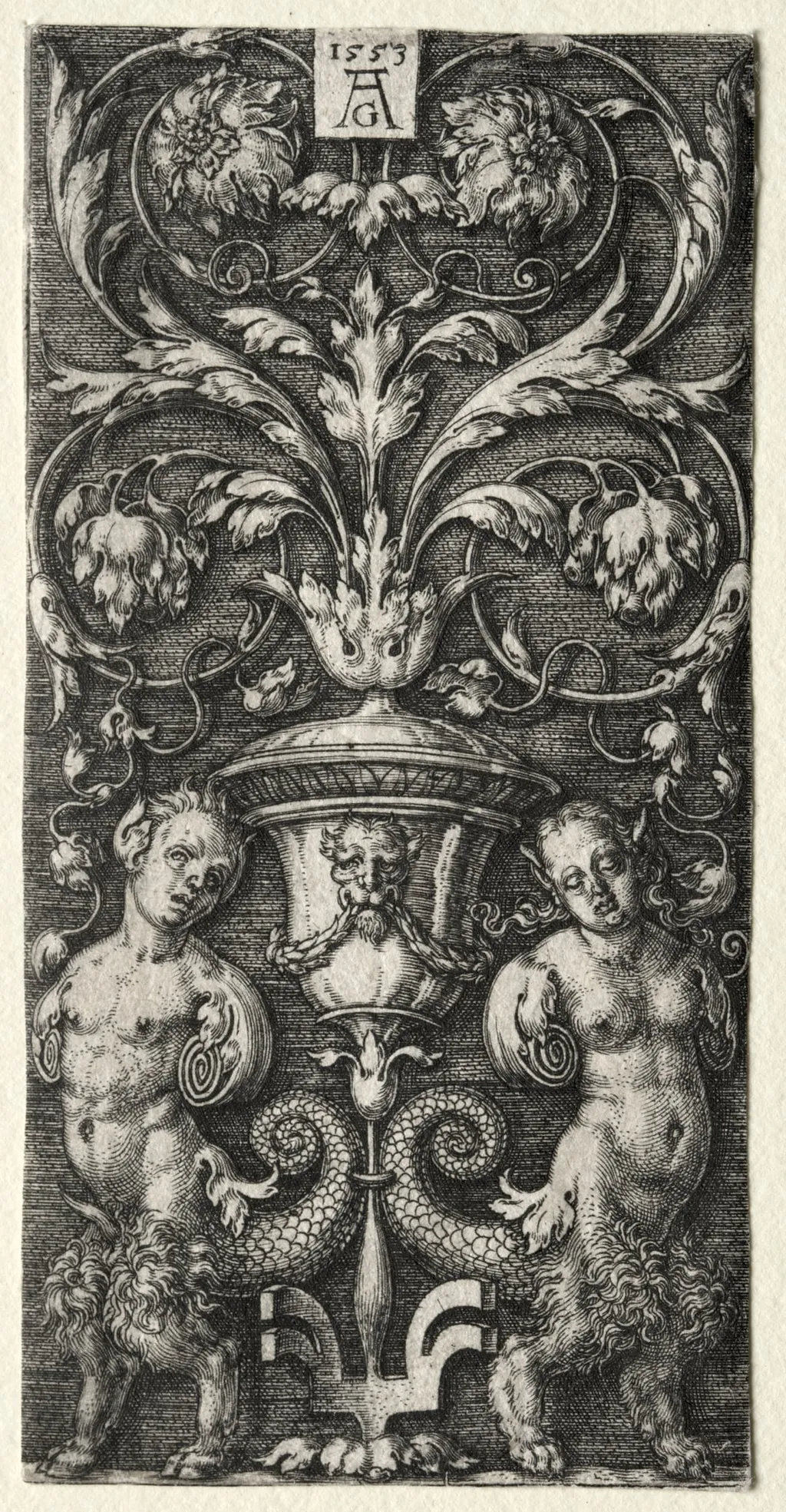
A Vase between Two Chimeric Figures is a print by the Renaissance artist Heinrich Aldegrever. It dates from 1553 and is held in the collection of the Cleveland Museum of Art.
About this work
Overview
The composition is enclosed by intricate vines and floral motifs, with small cherubs emerging from behind the vessel.
Created in 1553 by Heinrich Aldegrever, this print depicts a tall, ornate vase flanked by two hybrid figures. The composition is enclosed by intricate vines and floral motifs, with small cherubs emerging from behind the vessel. Rendered in fine line engraving, the work balances elaborate detail with a controlled sense of structure, reflecting Northern Renaissance fascination with fantastical forms and symbolic ornamentation.
Subject & Meaning
The two kneeling figures combine human heads with animal traits—feathers, scales, and fur—suggesting mythological or allegorical beings. Their posture around the vase may imply reverence or guardianship. The cherubs, partially hidden, introduce a playful or divine presence. Together, the elements evoke a symbolic space where nature, the supernatural, and human artifice converge, possibly reflecting Renaissance themes of order amid chaos.
Technique & Style
Aldegrever employed precise engraving to define each texture—feathers, scales, and foliage—with sharp, incised lines. Contrasts of light and shadow, achieved through dense hatching and open areas, create volume and depth. The use of chiaroscuro enhances the three-dimensionality of the figures and vase, while the intricate borders unify the composition into a cohesive, almost architectural frame.
History & Provenance
The print was produced in the mid-16th century during Aldegrever’s active period in Westphalia. It entered the collection of The Cleveland Museum of Art through documented acquisition, likely as part of a broader interest in Northern European prints from the Renaissance. Its preservation reflects its status as a well-preserved example of Aldegrever’s graphic work, valued for its craftsmanship rather than widespread fame.
Context
Aldegrever worked alongside other Northern engravers who drew inspiration from classical mythology and Mannerist aesthetics. This print aligns with contemporary trends in decorative arts, where hybrid creatures and ornamental borders appeared in metalwork, textiles, and book illustrations. The emphasis on intricate detail and symbolic hybridity resonated with intellectual circles interested in natural philosophy and allegory.
Legacy
Though not widely reproduced in popular culture, the print remains a significant example of Aldegrever’s technical mastery and imaginative vision. It contributes to scholarly understanding of how Renaissance artists reinterpreted classical motifs through local traditions. Its presence in a major museum collection ensures continued study of Northern printmaking’s role in shaping visual symbolism during the Reformation era.
Artist & collection

Artist
Heinrich Aldegrever or Aldegraf was a German painter and engraver. He was one of the "Little Masters", the group of German artists making small old master prints in the generation after Albrecht Dürer.

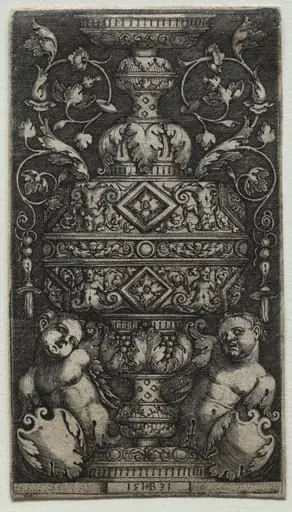 Vase Orné d'Enfans
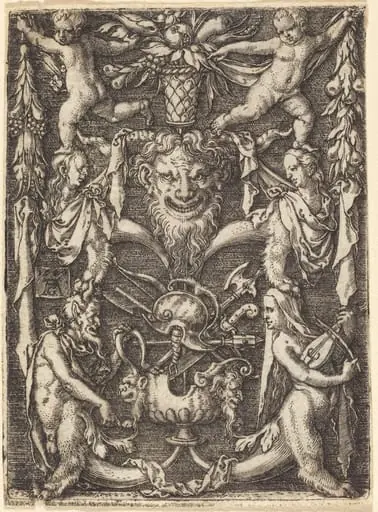 Ornament with Mask
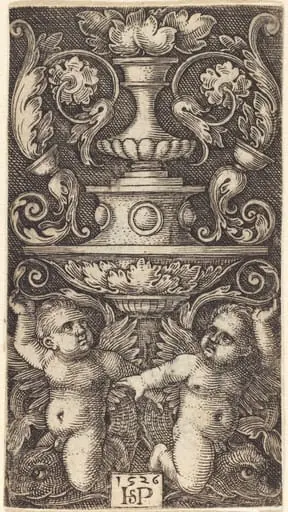 Double Cup with Two Genii Riding on Dolphins
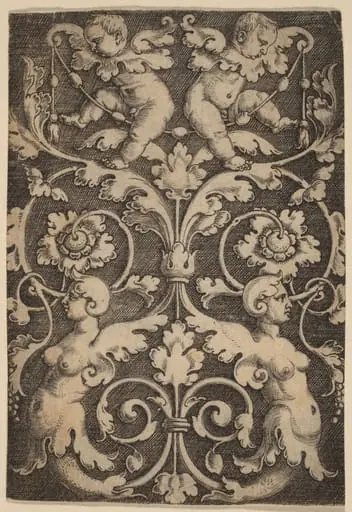 Upright Ornament with Two Sirens
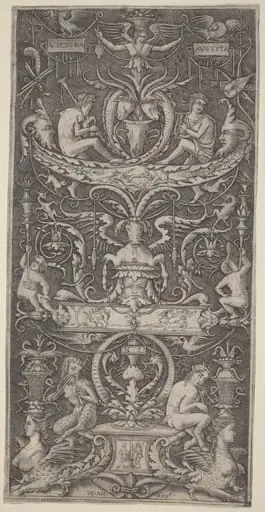 Ornamental Panel Inscribed "Victoria Augusta"
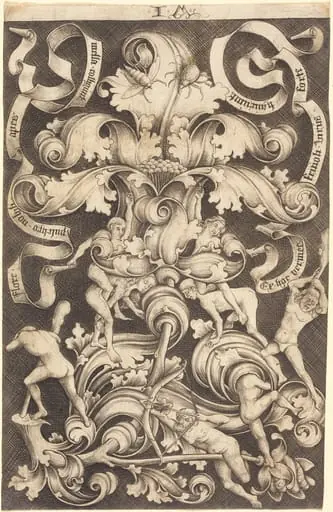 Ornament with Flower and Eight Wild Folk
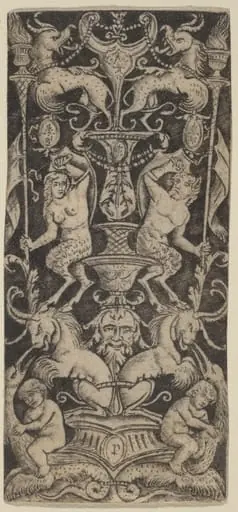 Panel of Ornament with Two Naked Children on Monstrous Beasts
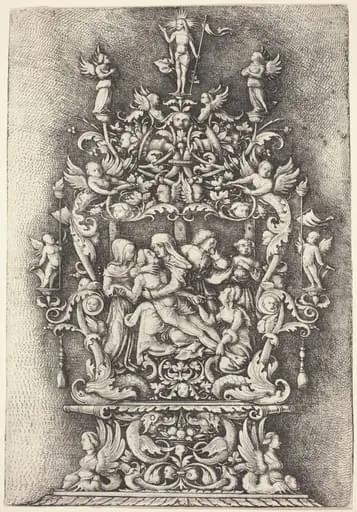 Reliquary with Pietà
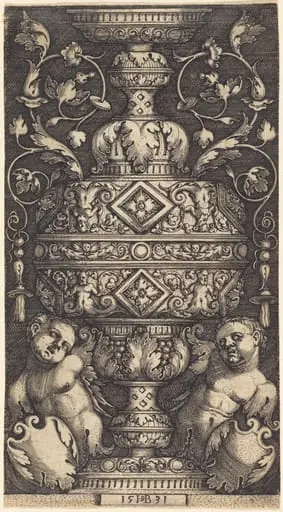 Double Goblet with Two Genii at the Base
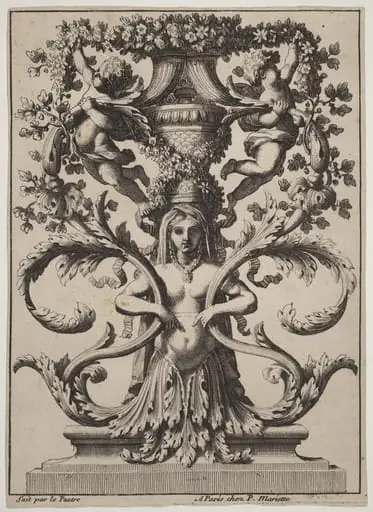 Ornament with a Woman Turning to Foliage
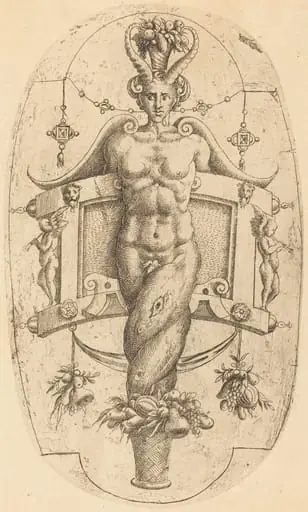 Horned Genius
 Ornament with Vase and Two Female Figures