Artwork
The Presentation of the Infant Christ in the Temple
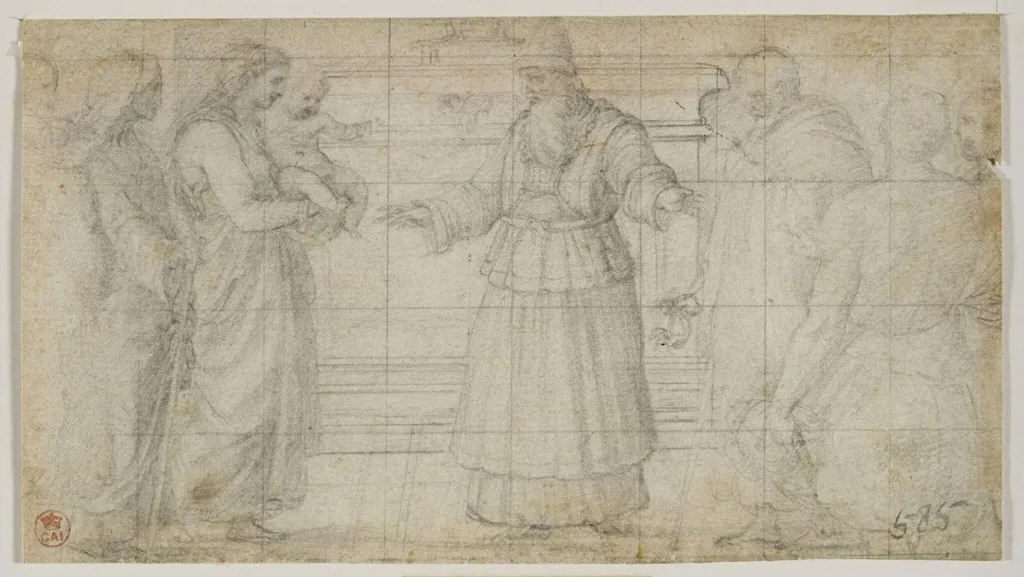
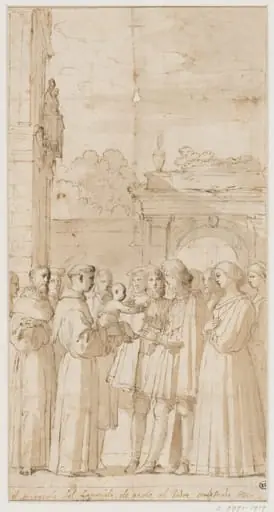
The Presentation of the Infant Christ in the Temple is a drawing by Alessandro Allori. It dates from 1550 and is held in the collection of the Victoria and Albert Museum.
About this work
Overview
Light, precise lines define forms, with subtle shading suggesting volume and textile texture, typical of Renaissance draftsmanship.
This 1550 drawing by Alessandro Allori captures the biblical moment of Christ’s presentation in the Temple. Executed in pen and ink on paper, it features two robed figures and an infant swaddled in cloth. The composition is structured by a faint grid, indicating its function as a preparatory study. Light, precise lines define forms, with subtle shading suggesting volume and textile texture, typical of Renaissance draftsmanship.
Subject & Meaning
The scene illustrates the ritual presentation of the infant Jesus at the Temple in Jerusalem, as described in the Gospel of Luke. One figure, likely Joseph, holds the child, while the other, possibly Simeon, extends a hand in blessing or recognition. The intimate grouping emphasizes the sacred nature of the moment, focusing attention on the child as the spiritual center of the narrative.
Technique & Style
Allori employed fine pen lines and controlled cross-hatching to model fabric folds and spatial depth. The grid overlay, drawn in faint pencil, served as a proportional guide for transferring the composition to a larger format. The restrained use of tone and clarity of line reflect a methodical, studio-based approach, characteristic of Florentine drawing practices of the mid-16th century.
History & Provenance
Created in 1550, the drawing likely originated in Allori’s Florence workshop during a period of active commission for religious subjects. Its survival as a study suggests it was retained for reference or pedagogical use. While its early ownership is undocumented, it entered a major collection by the 19th century, where it remains as a testament to Renaissance preparatory methods.
Context
In mid-16th century Florence, religious themes dominated artistic production, and detailed drawings were essential for large-scale altarpieces or frescoes. Allori, trained in the workshop of Bronzino, adhered to the Mannerist emphasis on refined line and intellectual composition. This sketch reflects the disciplined process by which artists translated devotional narratives into finished works.
Legacy
The drawing exemplifies the importance of preparatory studies in Renaissance art, revealing how artists refined form and gesture before executing final works. Though not a finished painting, it preserves the artist’s thought process and technical discipline. It continues to inform scholarship on Florentine drawing practices and the transmission of religious imagery in the Counter-Reformation era.
Artist & collection
Artist
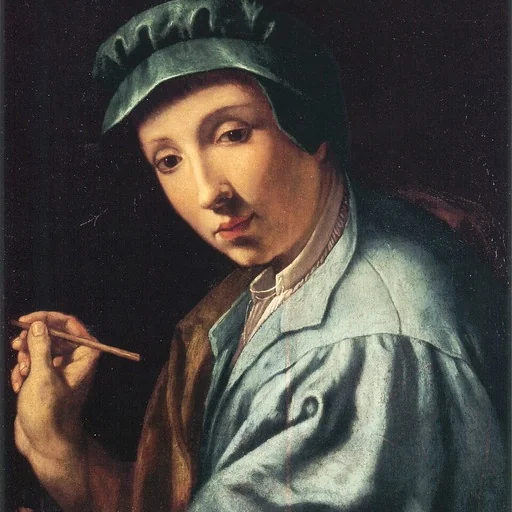
Alessandro di Cristofano di Lorenzo del Bronzino Allori (Florence, 31 May 1535 – 22 September 1607) was an Italian painter of the late Mannerist Florentine school.

 Untitled
 The Holy Family with Saint Philip Neri in Adoration, an Angel, and Putti
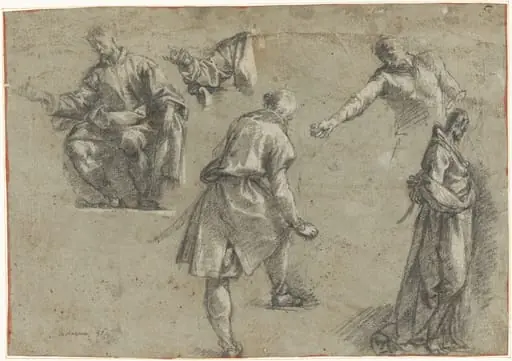 Studies for Christ Before Caiaphas
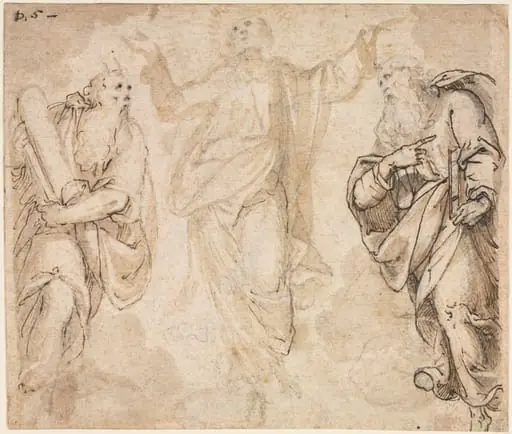 The Transfiguration (recto)
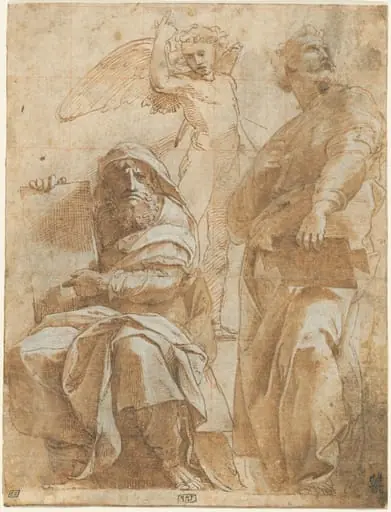 The Prophets Hosea and Jonah
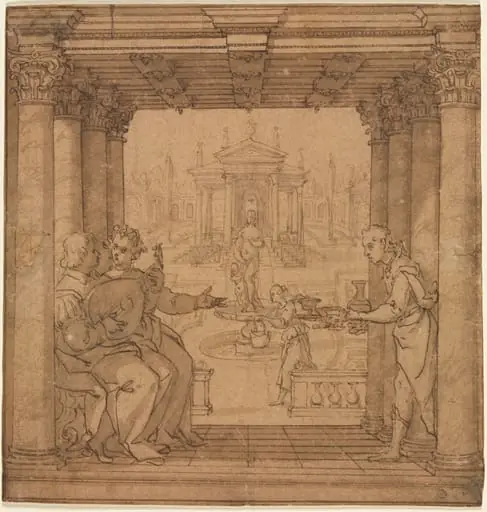 Illustration from Torquato Tasso's Gerusalemme Liberata
![Joseph and His Brother in Egypt [verso], by Italian 17th Century](https://artifactworldgallery.com/img/italian-17th-century--joseph-and-his-brother-in-egypt-verso--86cfb4fbb2662a76-w320.webp) Joseph and His Brother in Egypt [verso]
Joseph and His Brother in Egypt [verso]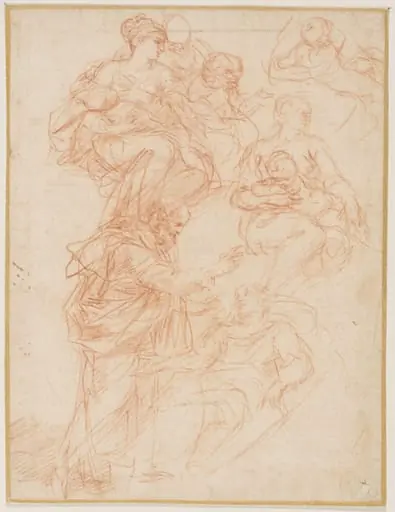 St Peter healing the lame man
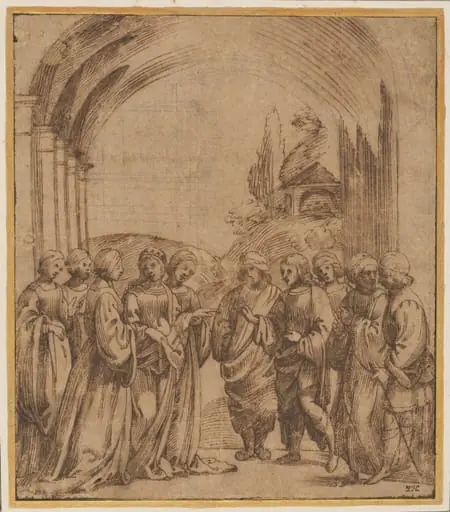 A Betrothal
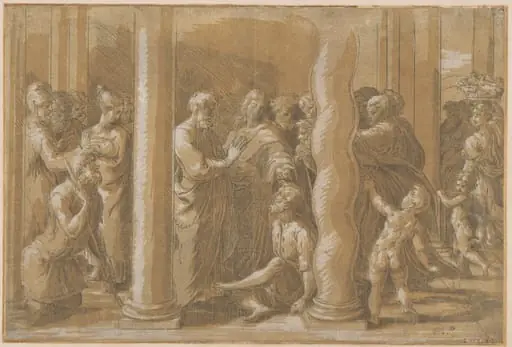 Saints Peter and John Healing the Lame Man at the Golden Gate
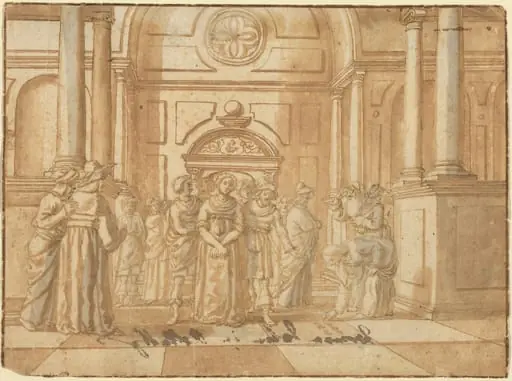 Christ and the Woman Taken in Adultery
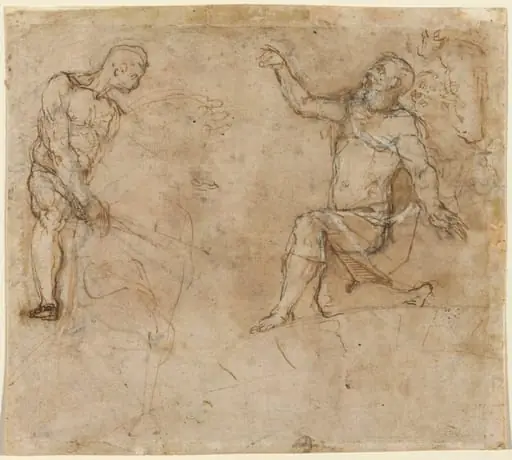 Figure Studies