Artwork
A Standing Woman Holding a Child, a Seated Male at her Feet
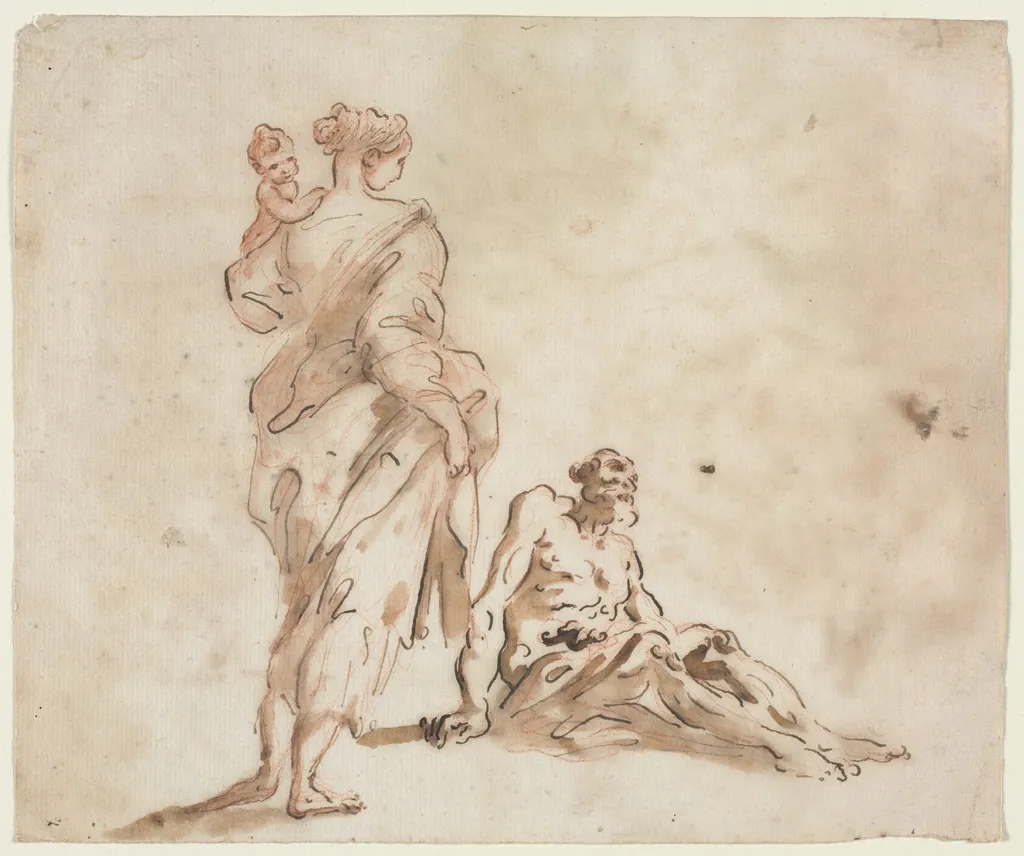
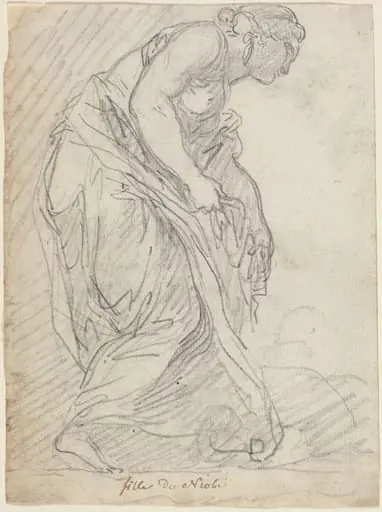
A Standing Woman Holding a Child, a Seated Male at her Feet is a drawing by the Baroque artist Alessandro Magnasco. It dates from 1724 and is held in the collection of the Cleveland Museum of Art.
About this work
Overview
Created in 1724 by Alessandro Magnasco, this drawing captures a quiet, intimate moment with minimal detail.
Created in 1724 by Alessandro Magnasco, this drawing captures a quiet, intimate moment with minimal detail. Executed in soft brown ink, it presents a standing woman with a child and a seated man at her feet. The work reflects Magnasco’s preference for spontaneous, gestural mark-making over polished finish, aligning with his broader practice of using rapid strokes to evoke emotional atmosphere rather than precise representation.
Subject & Meaning
The figures suggest a domestic or marginalized scene: a woman cradling a child, while a man sits bowed and withdrawn before her. Their postures imply emotional distance or exhaustion, though no narrative is explicitly stated. Magnasco avoids moralizing or idealizing; instead, he isolates a moment of stillness amid implied hardship, characteristic of his interest in the lives of the overlooked.
Technique & Style
Magnasco rendered the scene with loose, fluid lines and muted tonal shifts, avoiding definition in favor of suggestive form. Shadows and contours are implied through layered strokes, not outlined. The absence of fine detail and the emphasis on mass and motion reflect his approach to drawing as a means of capturing transient presence, not anatomical accuracy.
History & Provenance
The drawing is one of many studies Magnasco produced during his active years in northern Italy, likely created as a preparatory sketch or independent exercise. Its survival suggests it was valued by contemporaries or later collectors for its expressive quality. No documented ownership history before the 19th century is known, but its style aligns with other autograph works from his mature period.
Context
In early 18th-century Italy, academic drawing emphasized clarity and ideal form. Magnasco diverged by embracing ambiguity and emotional texture, influenced by the theatricality of late Baroque painting and the growing interest in everyday life. His sketches, often dismissed as unfinished, now reveal a unique sensitivity to human vulnerability outside conventional narratives.
Legacy
Magnasco’s drawings, including this one, contributed to a shift in how sketching was perceived—not merely as preparation but as a legitimate expression of artistic vision. Later artists, particularly those drawn to expressive line and psychological depth, found resonance in his unpolished, evocative style, influencing 19th-century approaches to figural study.
Artist & collection
Artist
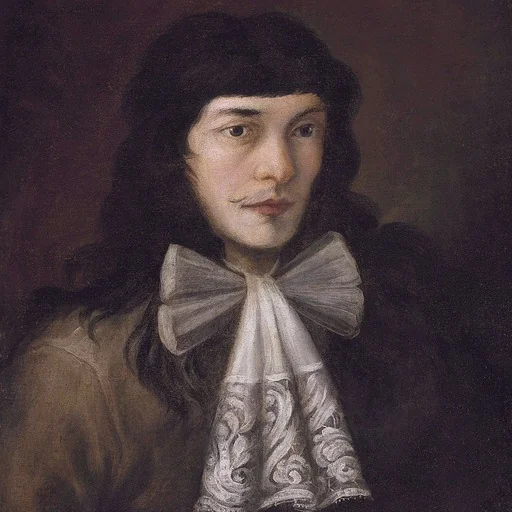
Alessandro Magnasco (February 4, 1667 – March 12, 1749), also known as il Lissandrino, was an Italian late-Baroque painter active mostly in Milan and Genoa.

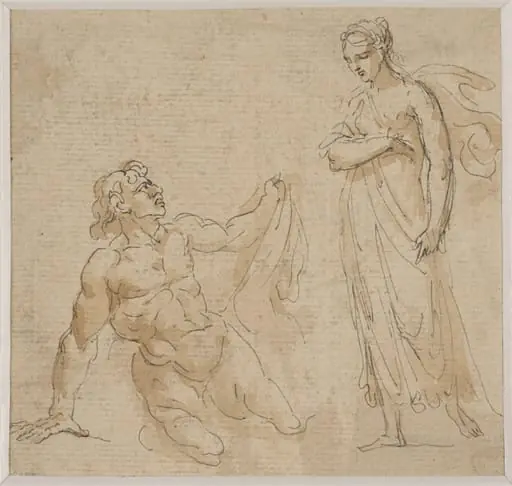 A woman approaching a kneeling man
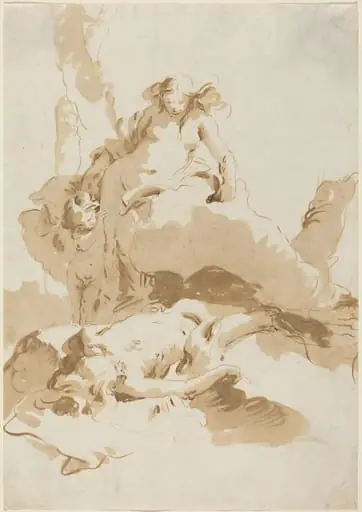 Venus and Cupid Discovering the Body of Adonis
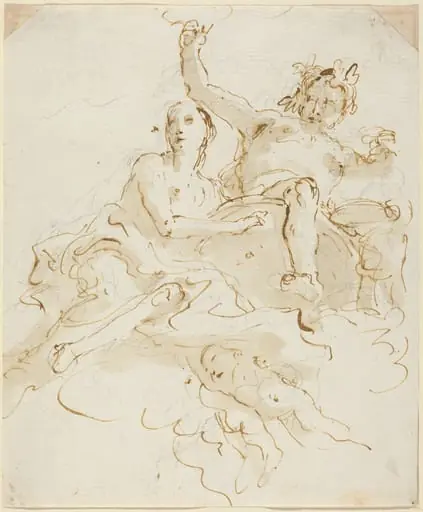 Bacchus and Ariadne
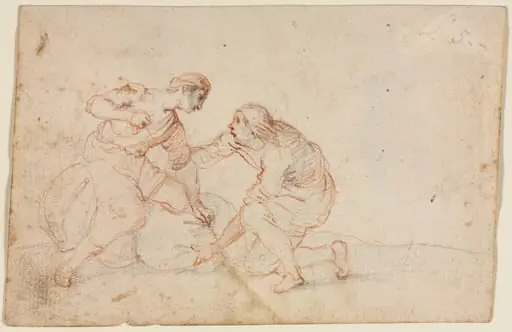 Two Men Tying a Bundle (recto)
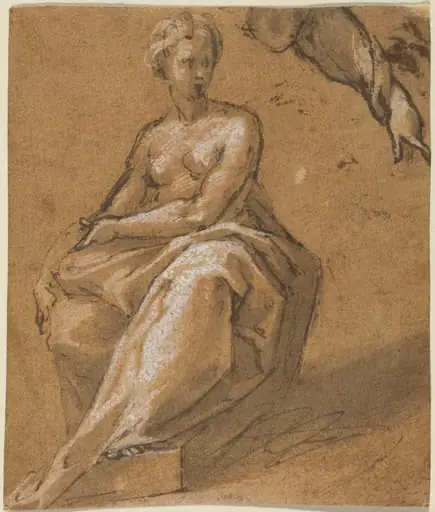 Seated Nude with Drapery
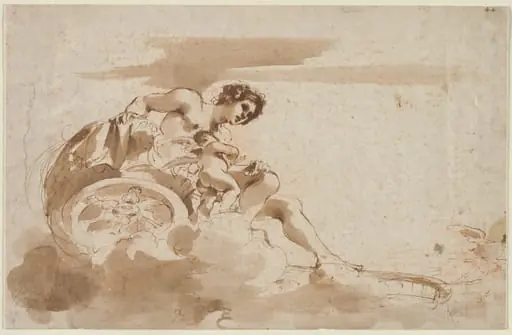 Venus and Cupid in a Chariot
 Angelica and Medoro
![Two Studies of the Statue of Alexander and Bucephalus [verso], by Hubert Robert](https://artifactworldgallery.com/img/hubert-robert--two-studies-of-the-statue-of-alexander-and-bucephalus-verso--c8baec3f622cceea-w320.webp) Two Studies of the Statue of Alexander and Bucephalus [verso]
Two Studies of the Statue of Alexander and Bucephalus [verso] Apollo with Erato and Cupid
 The Adoration of the Shepherds
 Jupiter
 One of Niobe's Daughters