Artwork
Untitled
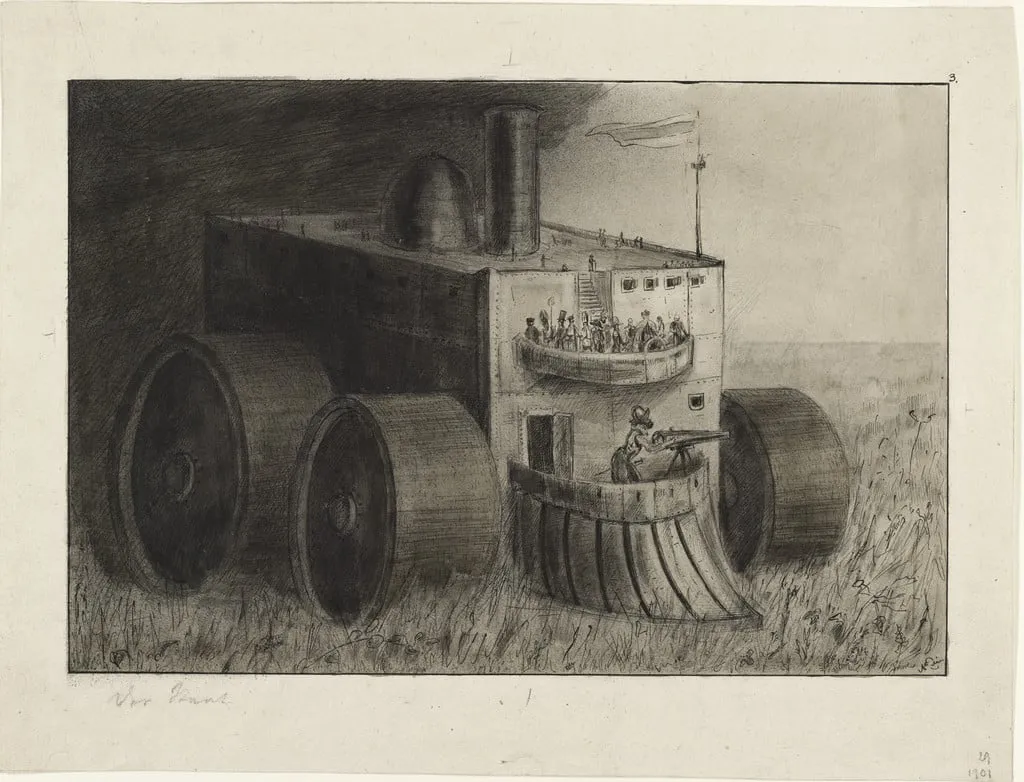
Untitled is a watercolor drawing by Alfred Kubin. It dates from 1901 and is held in the collection of the Museum of Modern Art.
About this work
Overview
Created in 1901, this ink and watercolor drawing by Alfred Kubin is a solitary work on paper, unnumbered and untitled.
Created in 1901, this ink and watercolor drawing by Alfred Kubin is a solitary work on paper, unnumbered and untitled. It exemplifies his focus on fantastical, mechanized forms rendered with precise draftsmanship. The piece belongs to a body of work that bridges Symbolist introspection and early Expressionist intensity, emerging from a period when Kubin was deeply engaged with literary and visual explorations of the subconscious.
Subject & Meaning
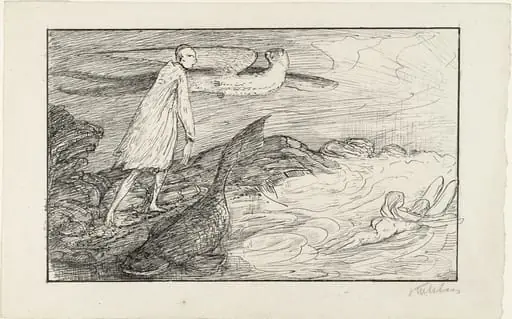
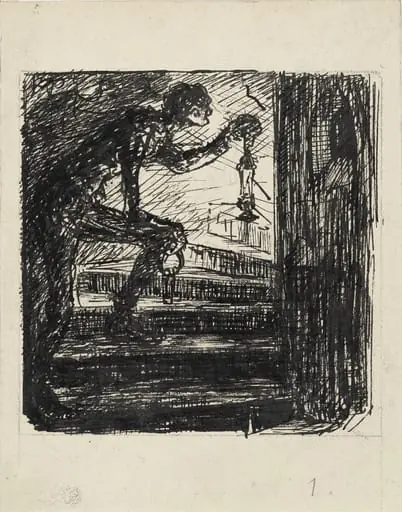
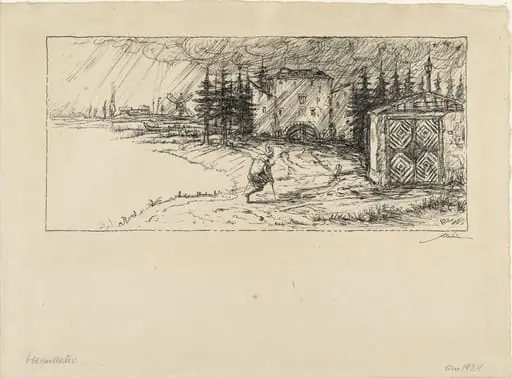
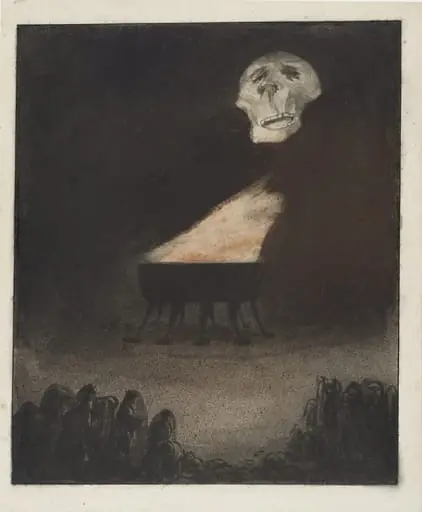
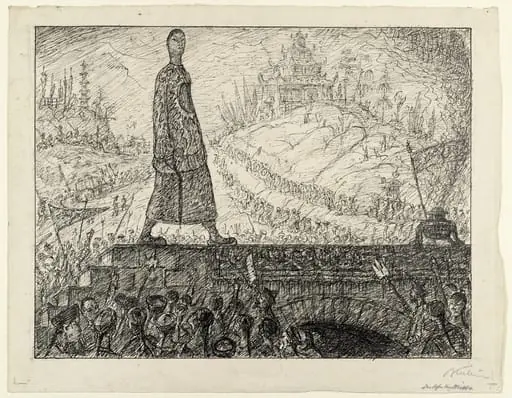
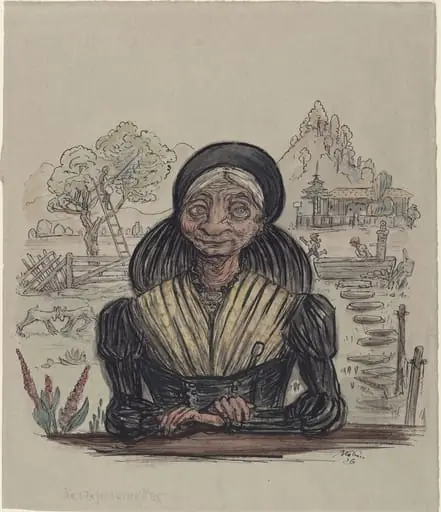
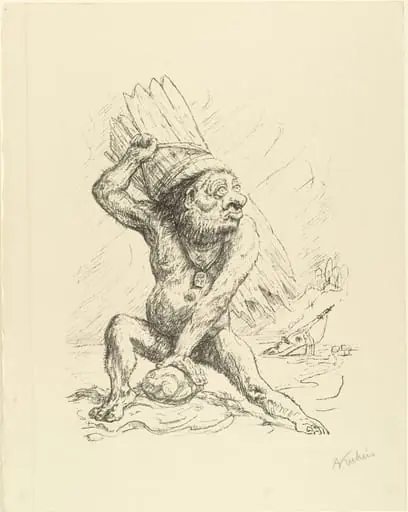
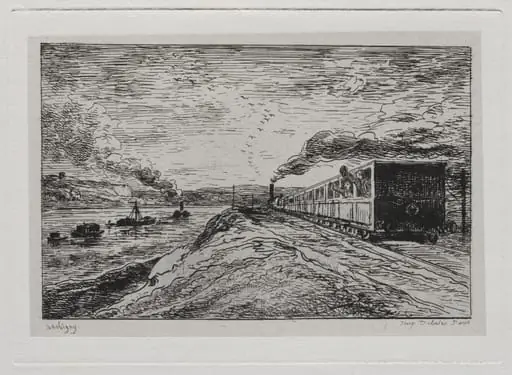
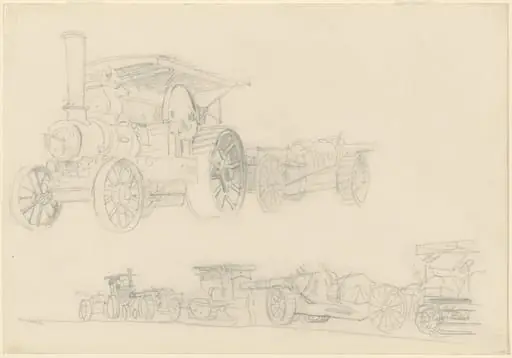
The drawing depicts a heavy, industrial apparatus with wheels, a chimney, and a narrow platform occupied by small, figure-like forms. Surrounded by tall grass, the machine appears alien in the landscape, suggesting a tension between nature and mechanization. The figures, dressed in period attire, seem passive, reinforcing an atmosphere of isolation and quiet unease. The scene evokes a dreamlike unease, characteristic of Kubin’s preoccupation with psychological and existential themes.
Technique & Style
Kubin employed ink for sharp, linear definition and watercolor for muted, translucent washes to model form and atmosphere. The dark, metallic structure is rendered with dense hatching, contrasting against the pale, airy background. The precision of the lines suggests technical control, while the ethereal washes introduce ambiguity. This interplay of clarity and vagueness enhances the surreal quality of the imagery, aligning with Symbolist aesthetics.
History & Provenance
This work dates from the early phase of Kubin’s career, shortly after his collaboration with the Vienna Secession and before his illustrated edition of Kafka’s 'The Metamorphosis.' It was likely produced during a time of intense personal and artistic exploration, though its specific provenance prior to institutional acquisition remains undocumented. No record indicates it was exhibited publicly during Kubin’s lifetime.
Context
In early 20th-century Central Europe, artists like Kubin responded to industrialization and psychological theories with imagery that questioned rational progress. His work resonated with contemporaries such as Klimt and Schiele, who also delved into inner states through symbolic form. This drawing reflects broader cultural anxieties about technology’s encroachment on human and natural realms, filtered through a distinctly personal vision.
Legacy
Though not widely exhibited in his lifetime, Kubin’s drawings gained recognition posthumously for their haunting, visionary quality. This piece contributes to his reputation as a bridge between 19th-century Romanticism and 20th-century Surrealism. Institutions such as MoMA hold his works as important examples of early modernist graphic expression, valued for their psychological resonance rather than formal innovation alone.
Artist & collection
Artist
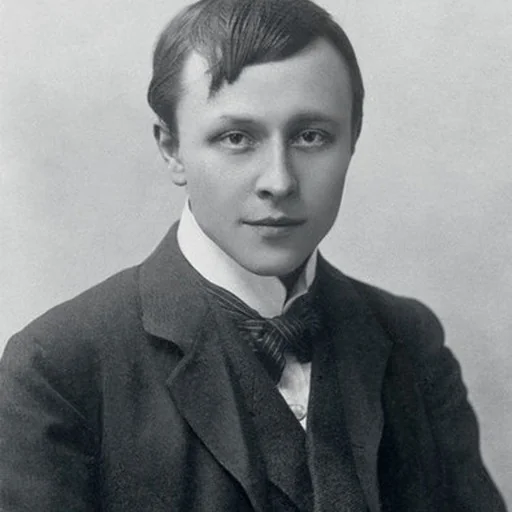
Alfred Leopold Isidor Kubin (10 April 1877 – 20 August 1959) was an Austrian artist, printmaker, illustrator, and writer of a single novel, The Other Side. Kubin is considered an important exponent of Symbolism and Expressionism.