Artwork
Dance of Death: Death the Strangler
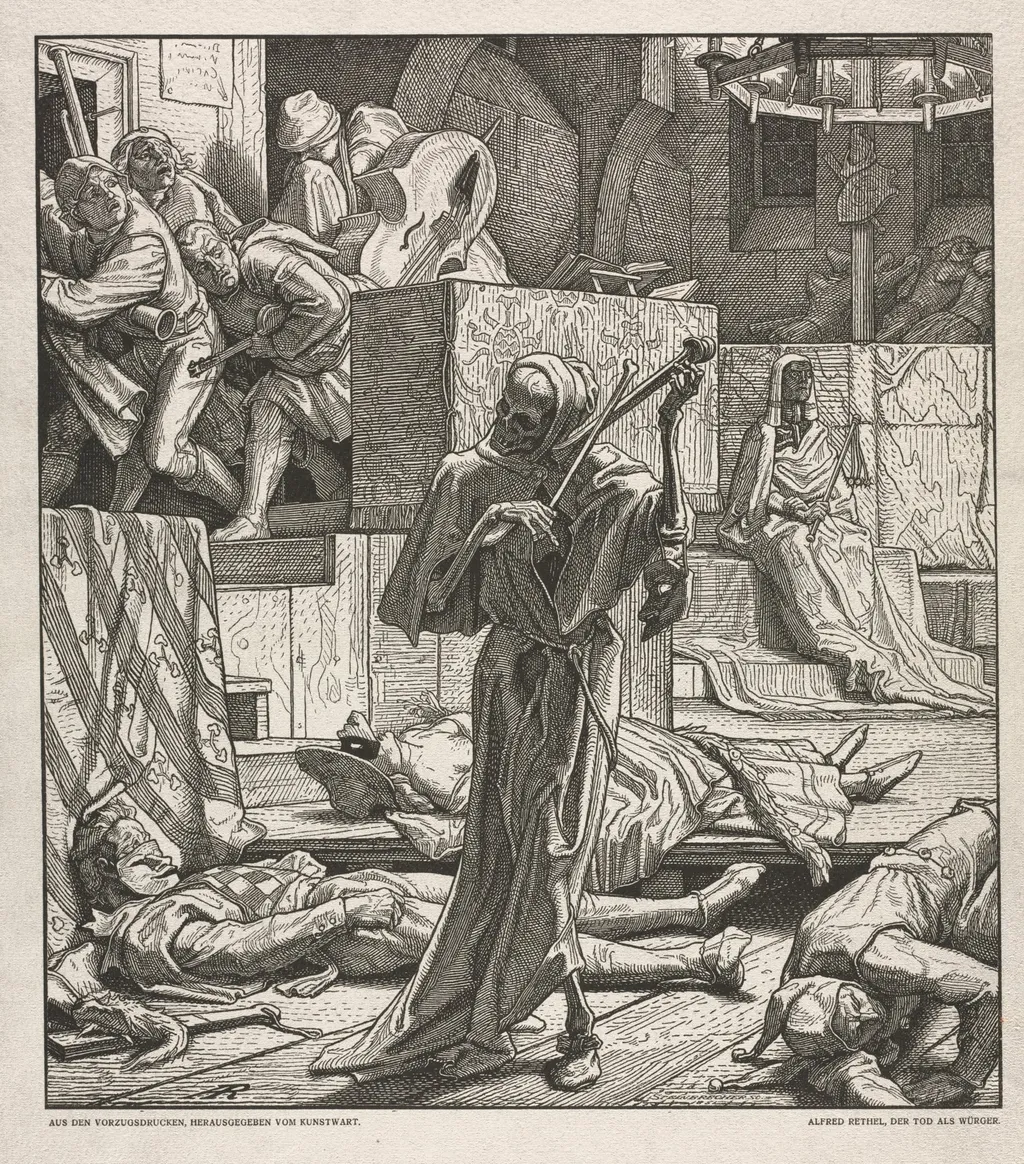
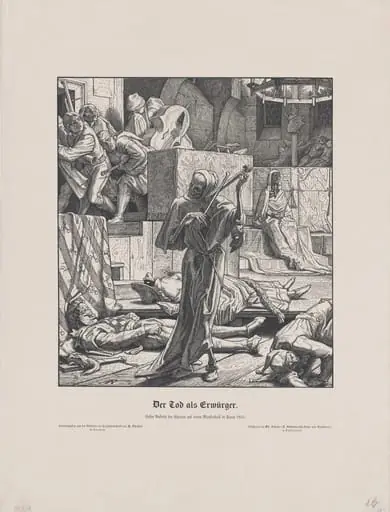
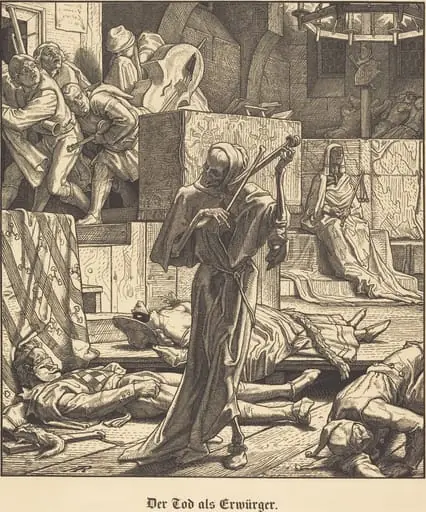
Dance of Death: Death the Strangler is a print by the Impressionist artist Alfred Rethel. It dates from 1850 and is held in the collection of the Cleveland Museum of Art.
About this work
Check out Albrecht Dürer’s Apocalypse: The Four Horsemen at the Cleveland Museum of Art.
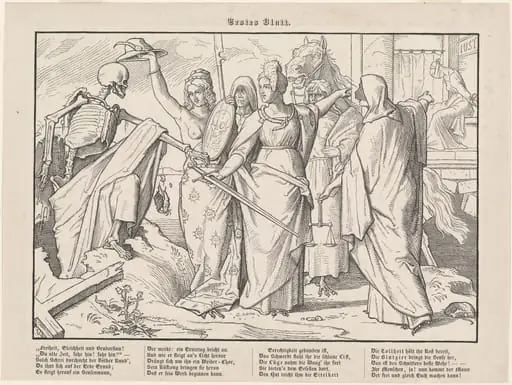
In this dark print a skeletal figure in black clutches a man’s throat on a dance floor. Gas lamps flicker as party guests freeze. A woman drops her fan in shock.
Rethel shows death as a real threat, not a joke. The scene comes from a 1831 Paris ball where cholera killed dozens. Heavy shadows make the moment feel sudden and heavy.
This reminds me of how Dürer drew death in his Apocalypse series. Check out Albrecht Dürer’s Apocalypse: The Four Horsemen at the Cleveland Museum of Art.
Overview
This print, titled Dance of Death: Death the Strangler, depicts a chilling moment from the 1831 cholera outbreak in Paris, captured during a masked ball. The artist, Alfred Rethel, transforms a historical tragedy into a symbolic confrontation between mortality and human vanity. The scene is rendered in stark monochrome, emphasizing the abrupt intrusion of death into a moment of revelry.
Subject & Meaning
A skeletal figure, embodying death as a suffocating force, grips the throat of a man amid dancing guests. The frozen expressions and dropped fan suggest paralysis in the face of sudden doom. Unlike earlier allegories that treated death as a jest, Rethel presents it as an inescapable, violent reality. The work underscores the fragility of life amid social pretense, drawing from the real terror of cholera’s rapid spread.
Technique & Style
Rethel employs high-contrast etching to create deep shadows and sharp highlights, heightening the drama of the scene. The skeletal figure emerges from darkness with unnatural clarity, while the partygoers dissolve into indistinct silhouettes. The flickering gas lamps are rendered with minimal lines, suggesting instability and impending darkness. The composition channels the expressive intensity of Northern Renaissance printmaking.
History & Provenance
Created in the 1840s, the print responds to the 1831 cholera epidemic in Paris, which claimed thousands and disrupted social order. Rethel, influenced by earlier Northern European traditions, reimagined death not as a distant figure but as an intimate, violent intruder. The work was part of a larger series reflecting on mortality, commissioned during a period of political and public health anxiety in Europe.
Context
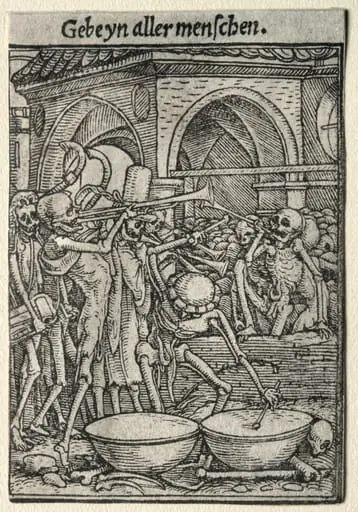
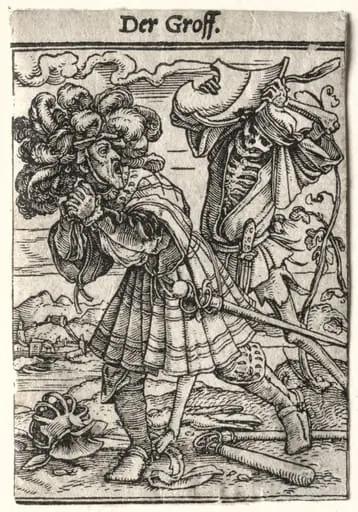
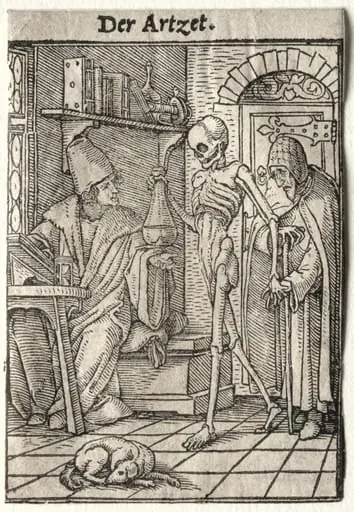
Rethel drew from medieval and early Renaissance motifs, particularly Hans Holbein’s Dance of Death and Albrecht Dürer’s Four Horsemen of the Apocalypse. These sources framed death as an unstoppable force, not a moral lesson. In the context of 19th-century urban epidemics and rising industrialization, the print resonated as a warning against complacency in the face of invisible, indiscriminate threats.
Legacy
The print contributed to a broader 19th-century revival of death-as-metaphor in visual culture, influencing later Symbolist and Expressionist artists. Its unflinching portrayal of mortality, stripped of romanticism, marked a shift toward psychological realism in printmaking. Though not widely exhibited in its time, its emotional weight ensured its place in studies of death imagery in modern art.
Artist & collection