Artwork
Cléo de Mérode
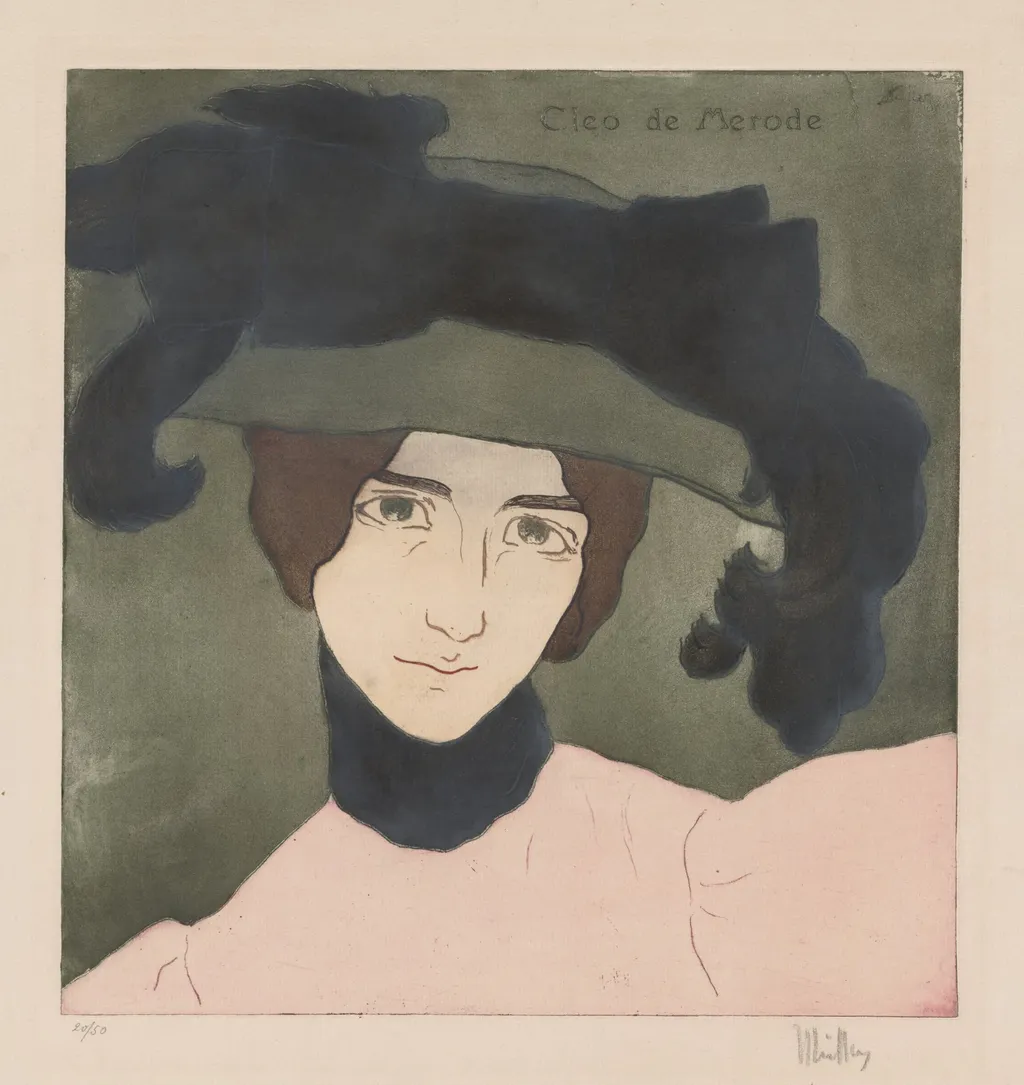
Cléo de Mérode is a print by the Impressionist artist Alfredo Müller. It dates from 1903 and is held in the collection of the Cleveland Museum of Art.
About this work
Overview
Cléo de Mérode is a color etching portrait of the renowned dancer, created by Müller. Characterized by its use of densely bitten aquatint and irregular wiping, the work exemplifies the late 19th-century penchant for rich, painterly effects in printmaking.
Subject & Meaning
The subject, Cléo de Mérode (1875-1966), was a fashionable dancer of her time. The portrait captures her in a fancy outfit, conveying her elegance and status as a public figure.
Technique & Style
Müller employed a innovative technique for the era, combining densely bitten aquatint with irregularly wiped plates. This method produced broad, flat planes of color, simplifying the figure, emphasizing surface texture, and creating a shallow spatial depth.
History & Provenance
Part of Müller's corpus of approximately 100 color etchings, Cléo de Mérode represents the burgeoning popularity of color etching in the 1890s, following initial experiments in the 1870s.
Own this work as a print
Artist & collection

Artist
Alfredo Müller (June 30, 1869 – February 7, 1939) was a Franco-Italian painter and printmaker of Swiss nationality.

 Bust of Mademoiselle Marcelle Lender (Mademoiselle Marcelle Lender, en buste)
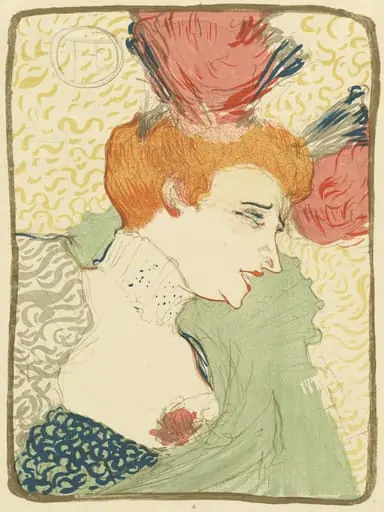 Bust of Mademoiselle Marcelle Lender (Mademoiselle Marcelle Lender, en buste)
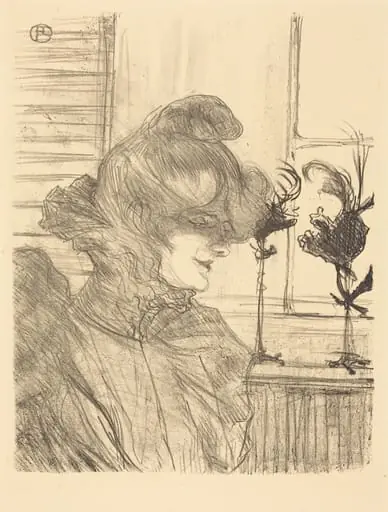 Mme. Le Marguoin, Milliner (Mme. Le Marguoin, modiste)
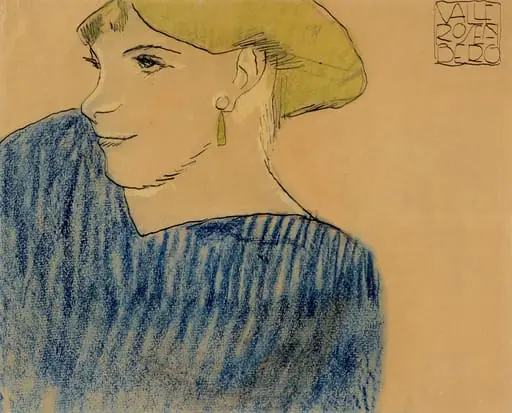 Vihreähiuksinen tyttö
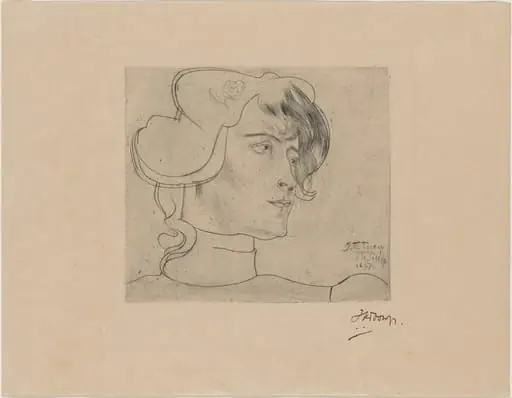 Head of a Woman (Marguérite Adolphine Helfrich)
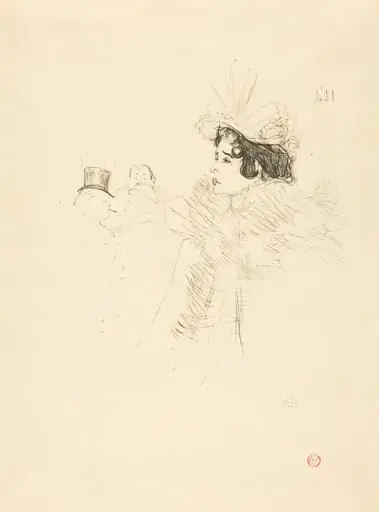 Miss May Belfort in the Irish and American Bar, rue Royale (Miss Belfort Belfort au Irish and American Bar, Rue Royale)
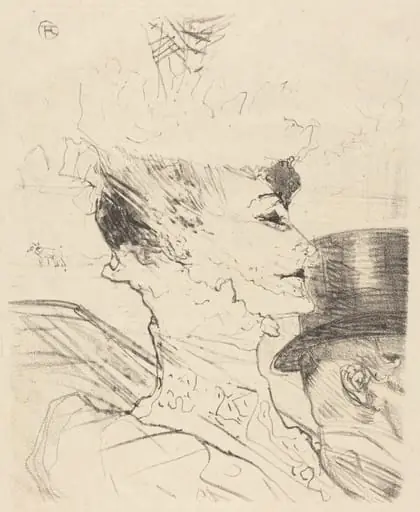 Yvette Guilbert?
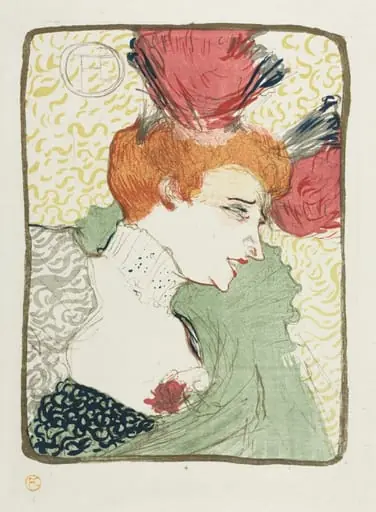 Bust of Mademoiselle Lender
 Untitled
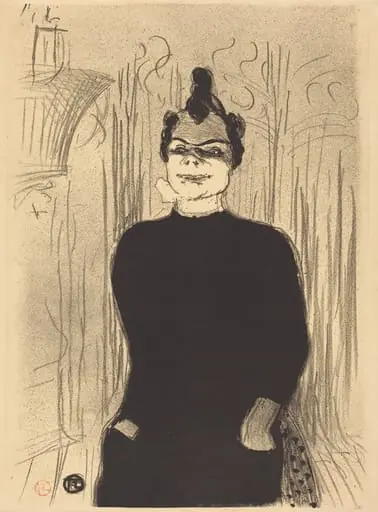 At La Gaiete Rochechouart: Nicolle (A La Gaieté Rochechouart: Nicolle)
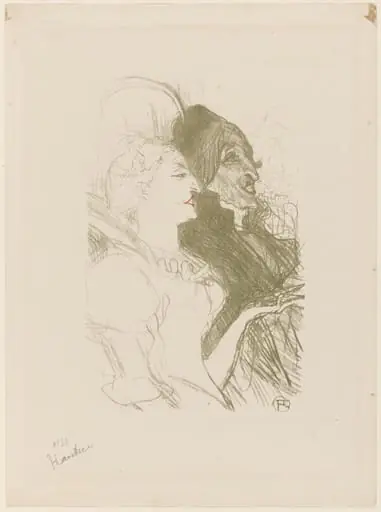 Carnival (Carnaval)
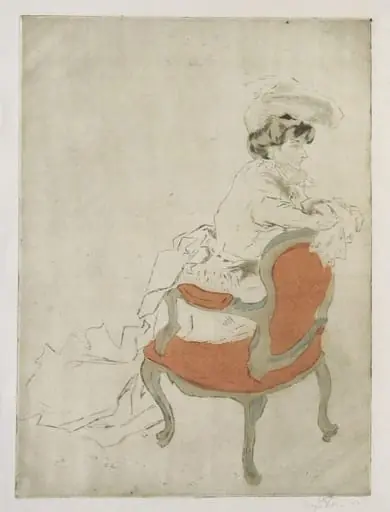 Untitled