Artwork
Untitled
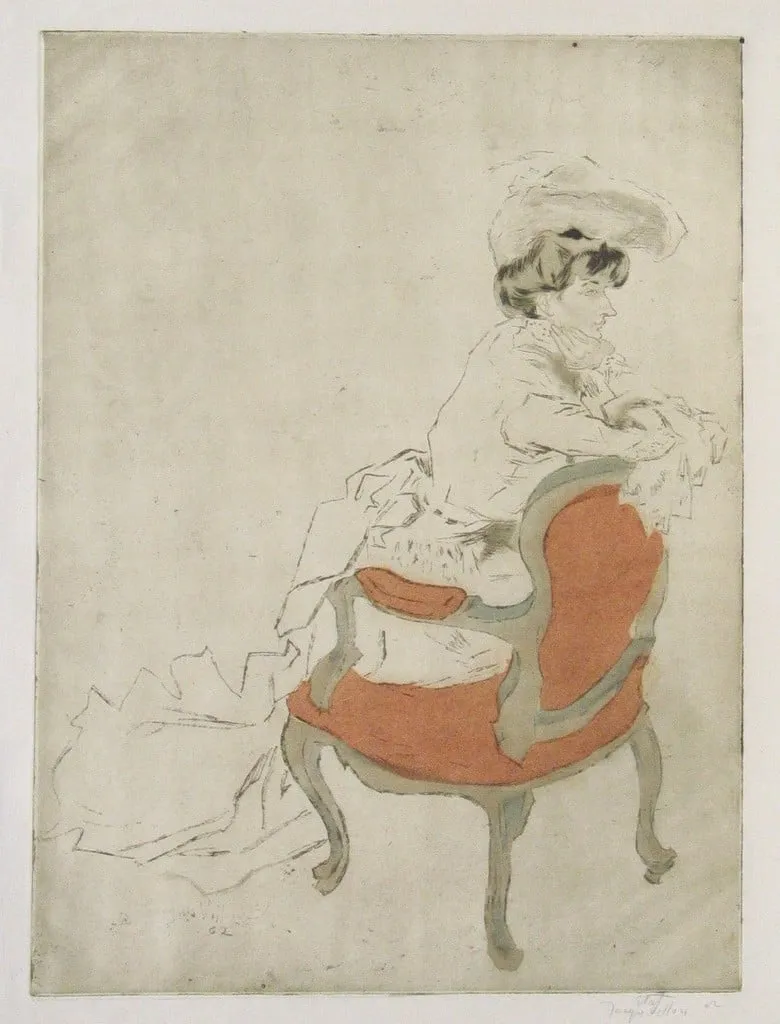
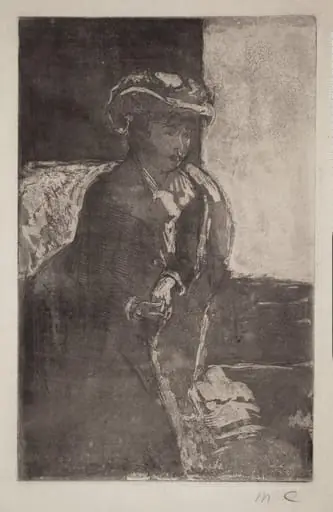
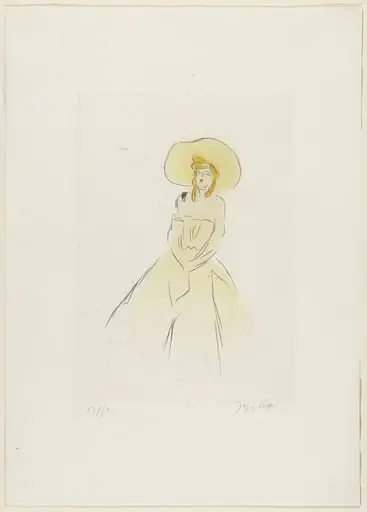
Untitled is an ink print by Jacques Villon. It dates from 1902 and is held in the collection of the Museum of Modern Art.
About this work
Overview
Executed on a metal plate and printed on cream paper, the work presents a restrained tonal range, emphasizing subtle gradations of gray.
Created in 1902, this print by Jacques Villon is among his earliest explorations in etching. Combining aquatint, etching, and drypoint, it demonstrates his early engagement with intaglio methods. Executed on a metal plate and printed on cream paper, the work presents a restrained tonal range, emphasizing subtle gradations of gray. It is currently held in the collection of The Museum of Modern Art.
Subject & Meaning
The image depicts a woman’s profile, rendered with minimal yet precise lines. Her high collar and simple hat suggest a modest, everyday figure, while the slight turn of her head implies a fleeting moment of awareness. There is no narrative context, and the absence of detail invites contemplation rather than storytelling. The figure feels transient, as if captured in an unguarded glance.
Technique & Style
Villon employed aquatint to achieve soft, atmospheric tones, allowing acid to etch fine textures into the plate’s surface. Etching defined the sharper contours of the face and hat, while drypoint added delicate, grainy lines for texture. The result is a quiet interplay between precision and ambiguity, with the woman emerging from a field of muted gray rather than being sharply outlined.
History & Provenance
This print was made during Villon’s formative years as a printmaker, before his association with the Cubist movement. It remained in private hands until acquired by The Museum of Modern Art, where it entered the collection as part of a broader effort to document early 20th-century printmaking. Its provenance reflects its status as a significant early work in his oeuvre.
Context
In early 1900s Paris, printmaking was undergoing a revival among artists seeking alternatives to painting. Villon, influenced by Whistler and Japanese woodcuts, turned to etching for its intimacy and tonal possibilities. This work aligns with a broader interest in quiet, observational imagery, distinct from the more dramatic styles of the time.
Legacy
Though not widely exhibited, this print marks a critical step in Villon’s artistic development. It reveals his early mastery of print techniques that would later inform his more abstract works. As one of his first successful experiments in aquatint, it stands as a quiet but important document of his transition from traditional to modernist approaches.
Artist & collection

Artist
Jacques Villon, also known as Gaston Duchamp, was a French Cubist and abstract painter and printmaker.

 The Corner of the Sofa (No. 3)
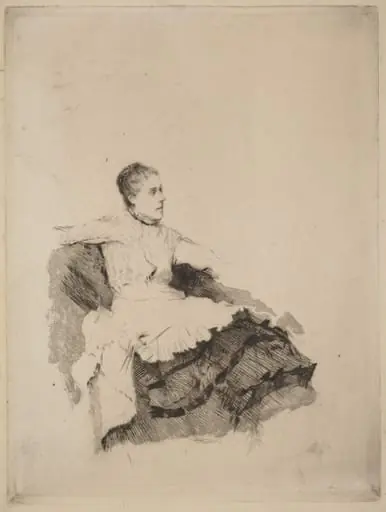 Portrait of Madame de Nittis ("Attenzione")
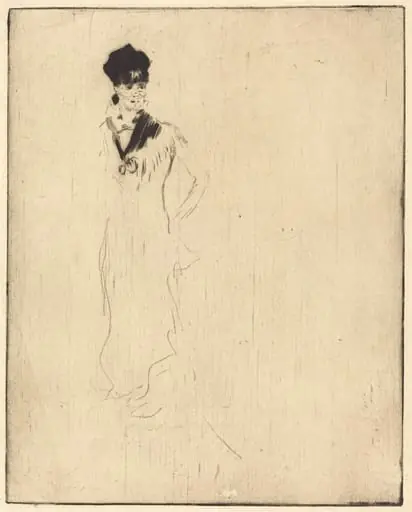 Sketch of a Young Lady in Violet (Esquisse de jeune femme a la violette)
 Figure Study in Colors
 Study
Study Woman Seated
 La Robe Rouge
 Young Woman Standing
 Miss May Belfort, Large Plate (Miss May Belfort, grande planche)
 Needlework
 Souvenir de Voyage
 Untitled