Artwork
Reynard the Fox: Reynard Disguised as a Monk
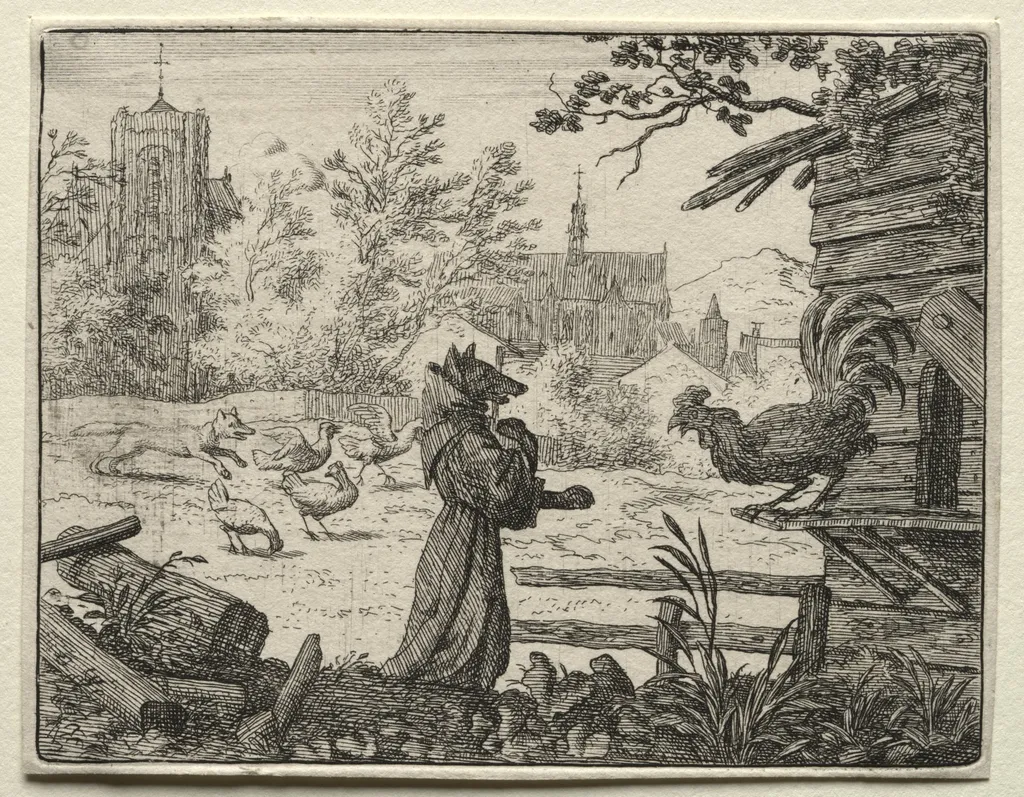
Reynard the Fox: Reynard Disguised as a Monk is a print by the Baroque artist Allart van Everdingen. It dates from 1662 and is held in the collection of the Cleveland Museum of Art.
About this work
Overview
Van Everdingen, a Dutch artist known for his landscape prints and graphic work, applied his technical precision to this satirical narrative.
Created in 1662 by Allart van Everdingen, this etching is part of a series illustrating the medieval Reynard the Fox tales. Van Everdingen, a Dutch artist known for his landscape prints and graphic work, applied his technical precision to this satirical narrative. The image captures a moment of deception, blending folkloric humor with the visual language of 17th-century Northern European printmaking.
Subject & Meaning
The fox, dressed as a monk, moves through a village with calculated stealth, exploiting religious authority to evade consequences. Chickens scatter in alarm, a dog observes warily, and a distant church underscores the irony. The scene draws from a widespread European tradition in which Reynard, a trickster figure, mocks societal hierarchies—here, the corruption of spiritual roles by cunning and deceit.
Technique & Style
Van Everdingen employed fine, controlled etching lines to render texture and motion: the fox’s fur, the folds of the robe, the ripples of water. Contrasts of light and shadow heighten the drama without overt theatricality. The composition guides the eye along the fox’s path, from foreground animals to the church steeple, balancing detail with narrative clarity typical of Dutch graphic art of the period.
History & Provenance
The print was produced during the height of the Dutch Golden Age, a time when illustrated books and satirical prints circulated widely among urban audiences. While the original series is rare, surviving impressions suggest it was part of a broader cultural fascination with Reynard’s tales, adapted for moral and social commentary in print form rather than manuscript.
Context
Reynard stories had been popular in Europe since the Middle Ages, often used to critique clergy and nobility. In 17th-century Netherlands, where literacy and print culture flourished, such tales found renewed relevance amid religious and political tensions. Van Everdingen’s version reflects a secular, visual adaptation of these enduring fables, aligned with the era’s interest in everyday satire.
Legacy
Though not widely exhibited today, the print contributes to the understanding of how folk narratives were visually translated in early modern printmaking. Van Everdingen’s treatment influenced later illustrators of animal fables, preserving Reynard’s role as a symbol of subversive wit. The work remains a quiet example of how art could encode social critique within seemingly simple scenes.
Own this work as a print
Artist & collection
Artist
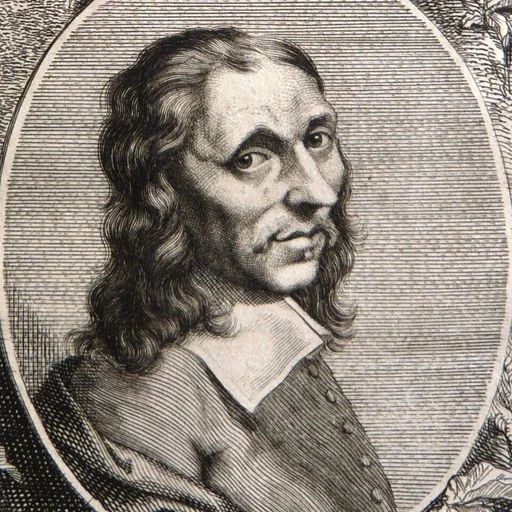
Allaert van Everdingen (Dutch pronunciation: ; bapt. 18 June 1621 – 8 November 1675 (buried)), was a Dutch Golden Age painter and printmaker in etching and mezzotint.


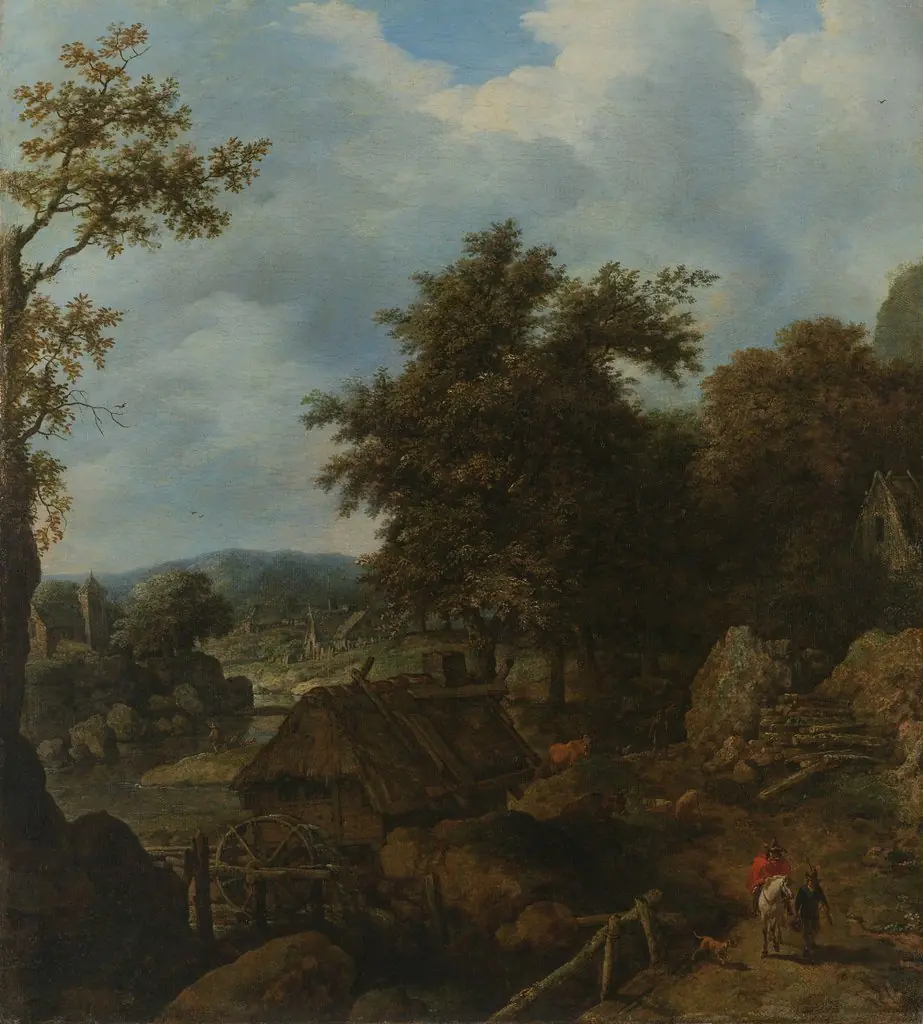
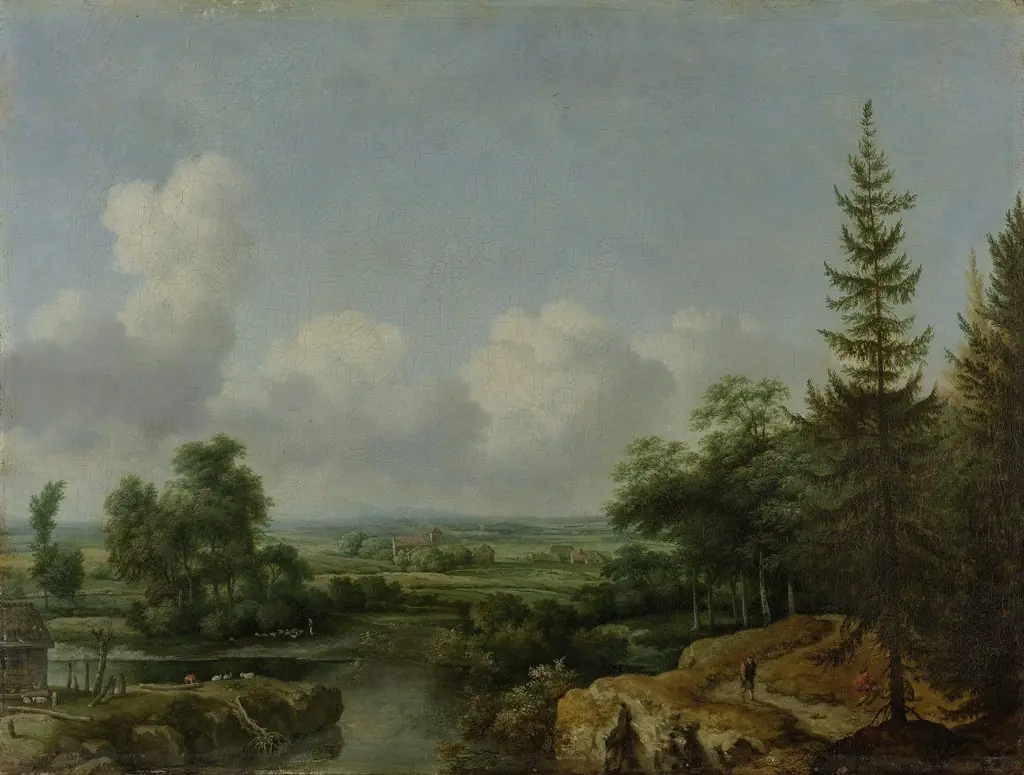
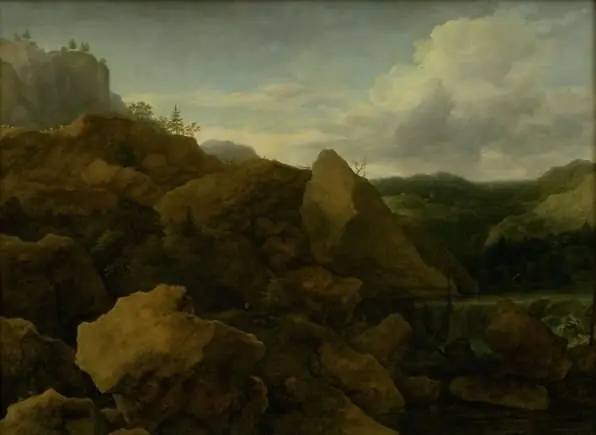
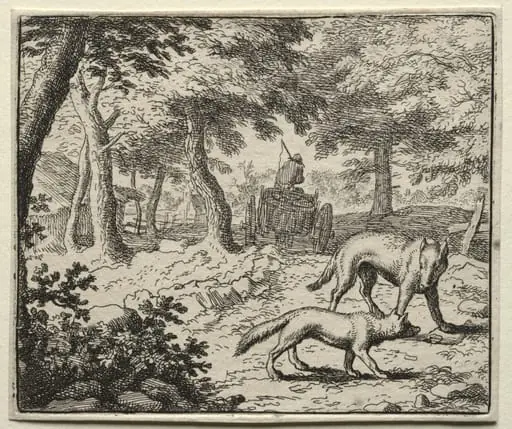 Reynard the Fox: The Badger's Defense of Reynard
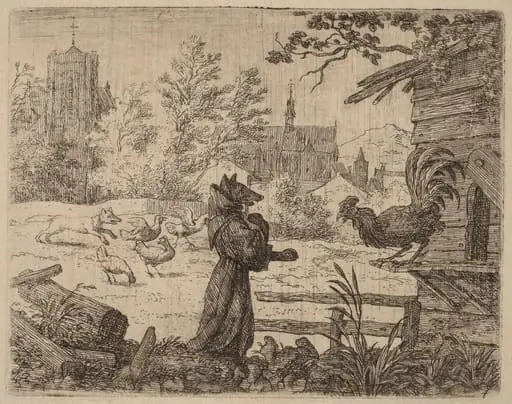 Reynard Disguised as a Monk
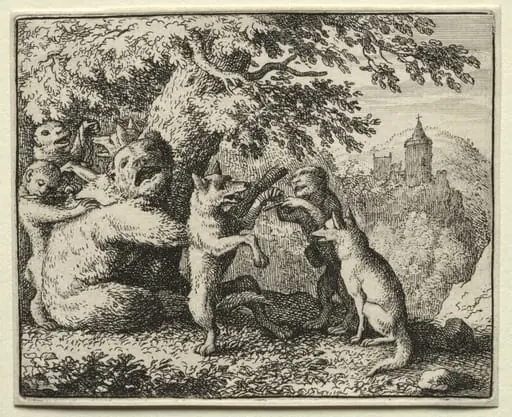 Reynard the Fox: Reynard Equipped for his Pilgrimage
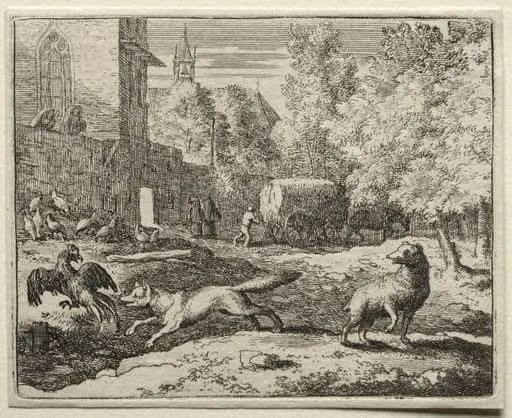 Reynard the Fox: Reynard Chasing Hens
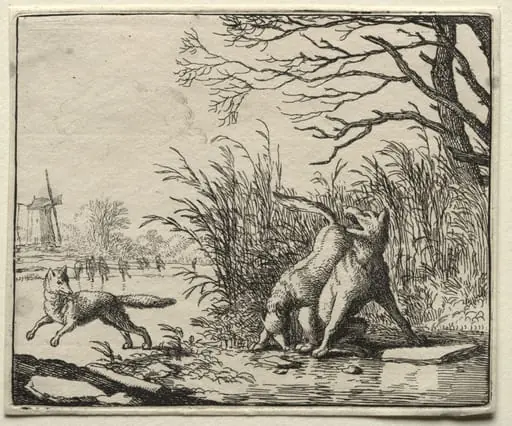 Reynard the Fox: A New Accusation by the Wolf
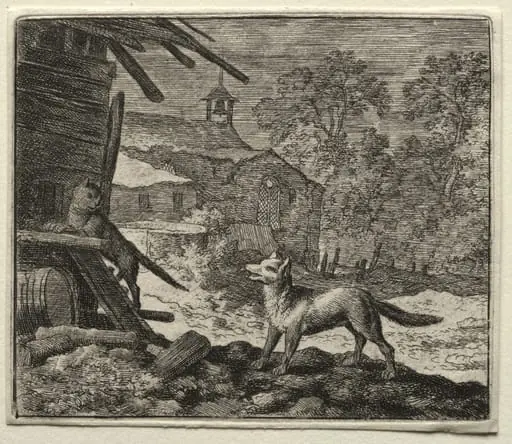 Reynard the Fox: Reynard Deceives the Cat
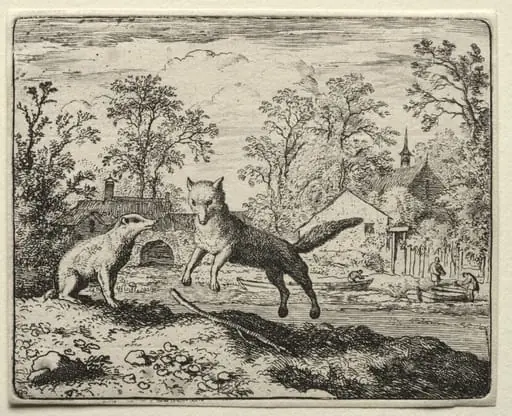 Reynard the Fox: Reynard Doing Penance
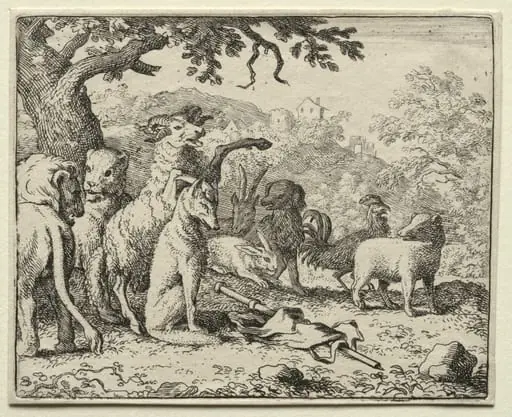 Reynard the Fox: The Benediction Given to Reynard
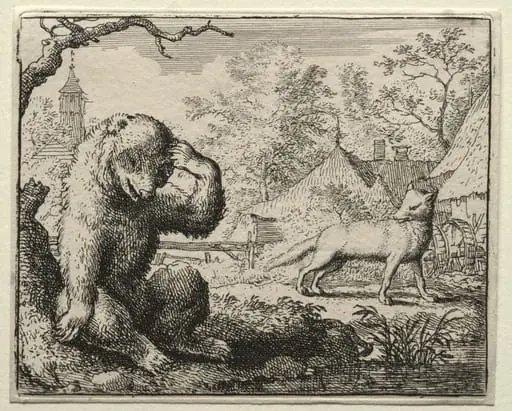 Reynard the Fox: Reynard Chides the Injured Bear
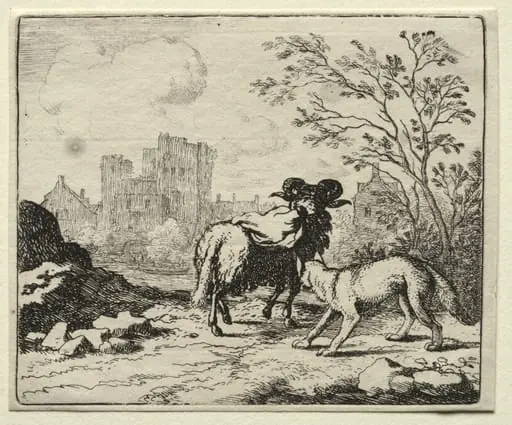 Reynard the Fox: Reynard Sends a Packet to the Lion