Artwork
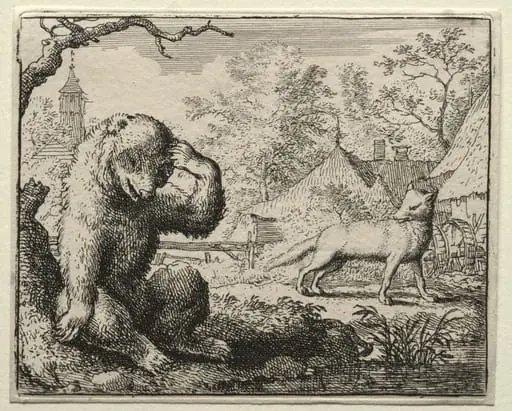
Reynard the Fox: The Bear Calls Reynard to Court
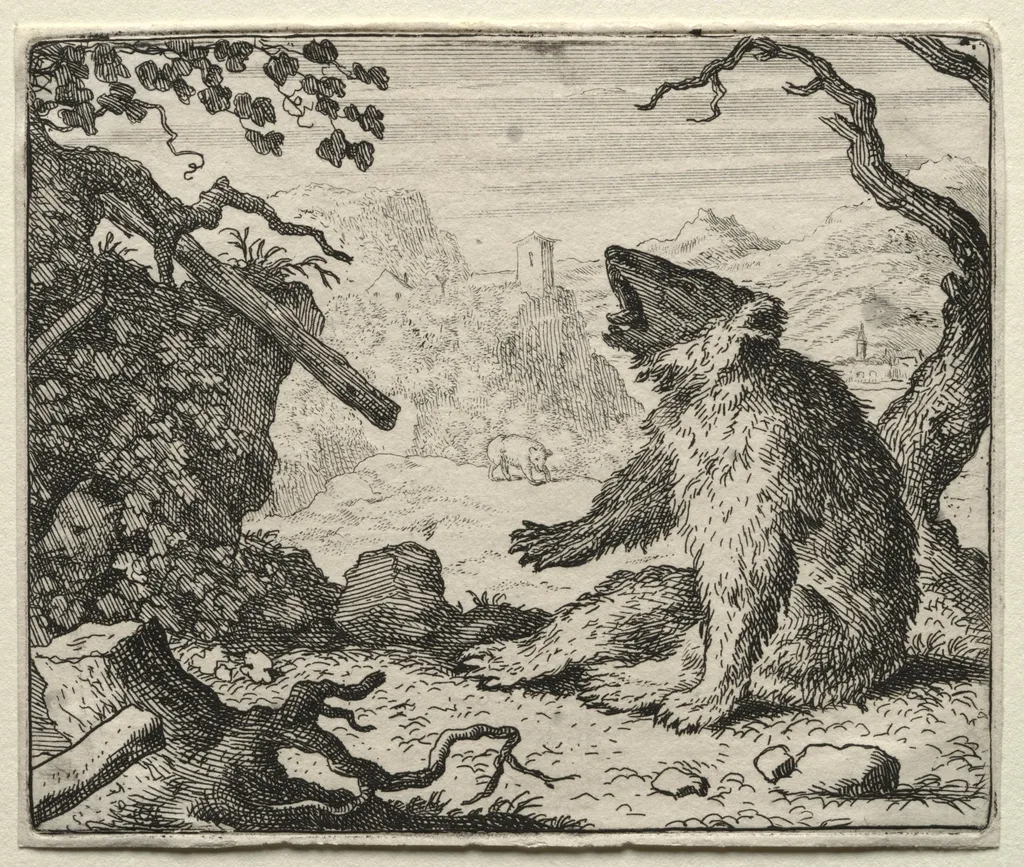
Reynard the Fox: The Bear Calls Reynard to Court is a print by the Baroque artist Allart van Everdingen. It dates from 1662 and is held in the collection of the Cleveland Museum of Art.
About this work
The bear appears to be calling out to someone or something in the distance, its mouth open and its front paws raised.
This painting depicts a scene from an allegory, with a large bear standing on its hind legs in the foreground. The bear appears to be calling out to someone or something in the distance, its mouth open and its front paws raised. In the background, a small building or structure can be seen, surrounded by trees and hills.
The painting is done in a style that suggests a sense of drama and tension, with bold brushstrokes and vivid colors. The bear is rendered in great detail, with its fur and muscles visible beneath its skin. The background is more subdued, with softer colors and less detail.
The painting is an example of Baroque art, characterized by its use of chiaroscuro and dramatic lighting. The artist, Allart van Everdingen, was a Dutch painter who was active in the 17th century. This painting is held at The Cleveland Museum of Art.
Overview
Allart van Everdingen’s 1662 etching, *Reynard the Fox: The Bear Calls Reynard to Court*, presents a moment from the medieval Reynard cycle, a satirical narrative in which anthropomorphic animals embody human traits. The composition centers on a towering bear, upright on its hind legs, mouth open as it summons an unseen figure, while a modest structure and a wooded landscape recede into the distance.
Subject & Meaning
The scene captures the bear’s summons to the cunning fox, a pivotal episode that underscores themes of authority and deceit within the Reynard tradition. By portraying the bear in a commanding pose, the work visualizes the tension between brute power and sly intelligence that drives the cycle’s moral commentary.
Technique & Style
Executed as an etching, the image employs fine line work to render the bear’s fur and muscular form with considerable precision, contrasting with the softer, less detailed background. The chiaroscuro effects and dramatic lighting reflect Baroque sensibilities, heightening the sense of immediacy and tension.
History & Provenance
Created during van Everdingen’s productive period of literary and allegorical prints, the work aligns with his broader output of etchings and mezzotints that circulated in the Dutch Republic. Its survival in museum collections attests to the continued interest in both the artist’s technical skill and the enduring appeal of the Reynard narrative.
Context
The print belongs to the Dutch Golden Age, when artists frequently turned to classic and folk literature for subject matter. The Reynard cycle, popular across Europe, offered a vehicle for social satire, allowing van Everdingen to engage with contemporary tastes for moralizing yet entertaining imagery.
Artist & collection
Artist
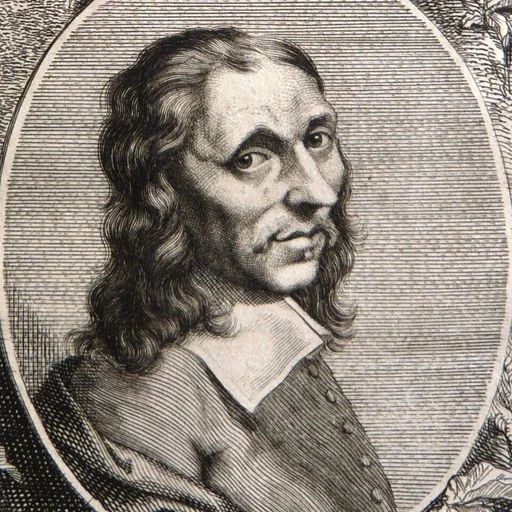
Allaert van Everdingen (Dutch pronunciation: ; bapt. 18 June 1621 – 8 November 1675 (buried)), was a Dutch Golden Age painter and printmaker in etching and mezzotint.

 Reynard the Fox: Reynard Chides the Injured Bear
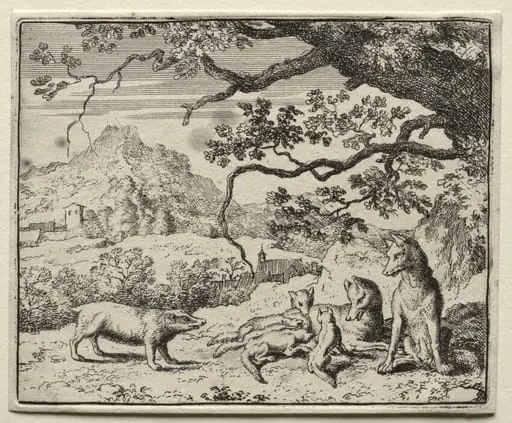 Reynard the Fox: The Badger Calls Reynard to Court
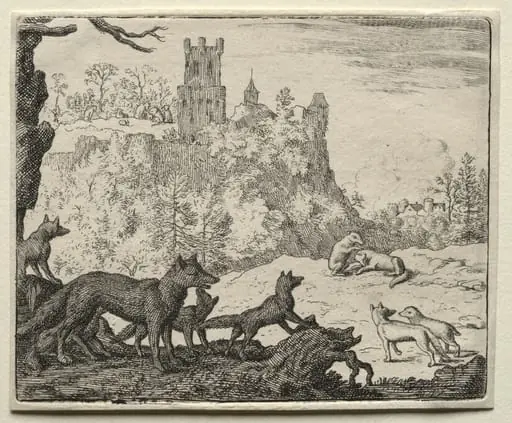 Reynard the Fox: Reynard and the Badger Depart for Court
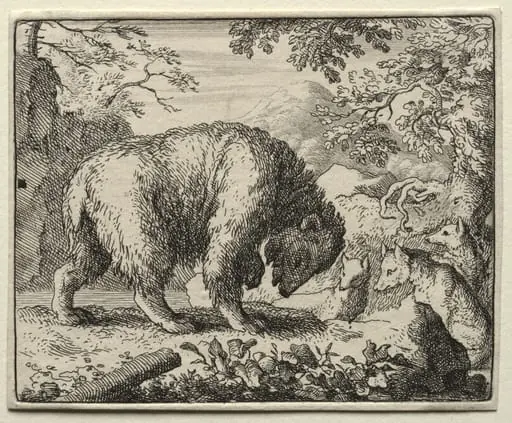 Reynard the Fox: Reynard Promises Honey to the Bear
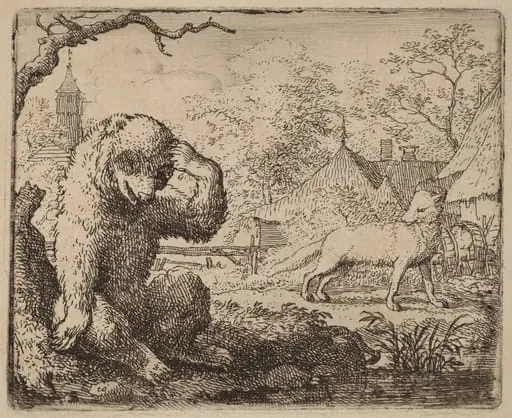 Reynard Mocks the Woeful Bear
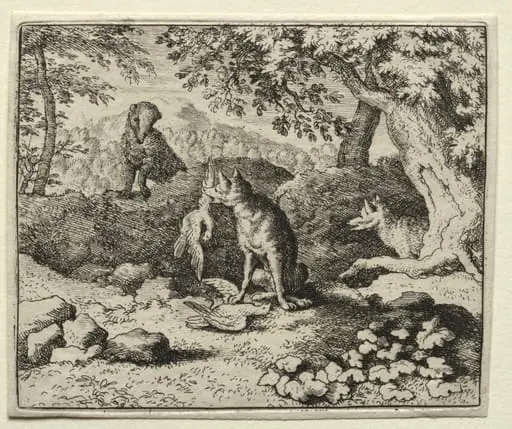 Reynard the Fox: Badger Comes to Warn Reynard
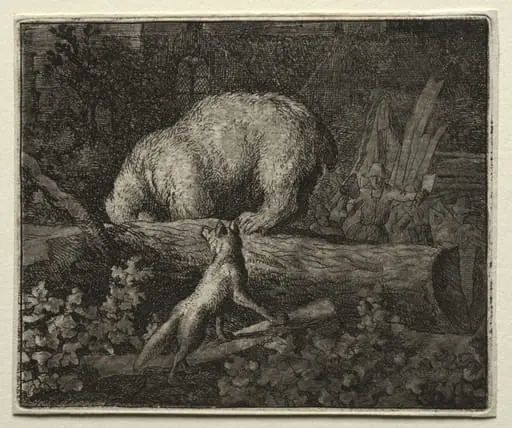 Reynard the Fox: Trapping the Bear
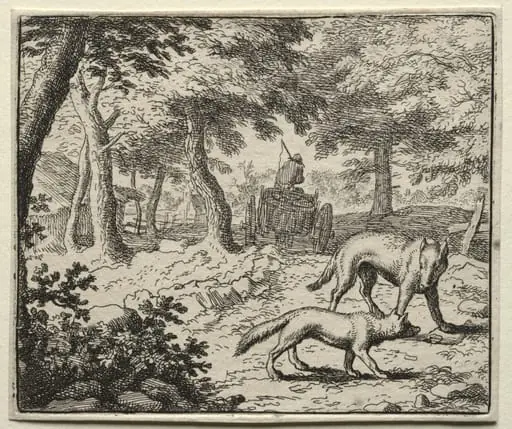 Reynard the Fox: The Badger's Defense of Reynard
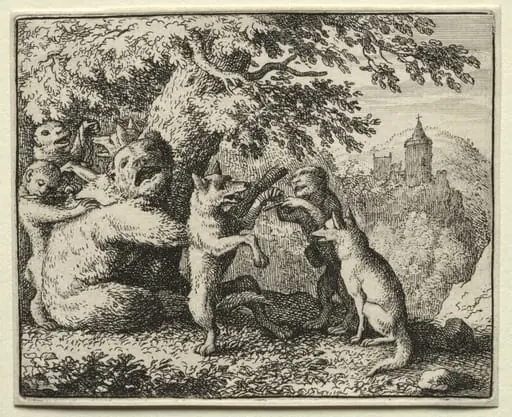 Reynard the Fox: Reynard Equipped for his Pilgrimage
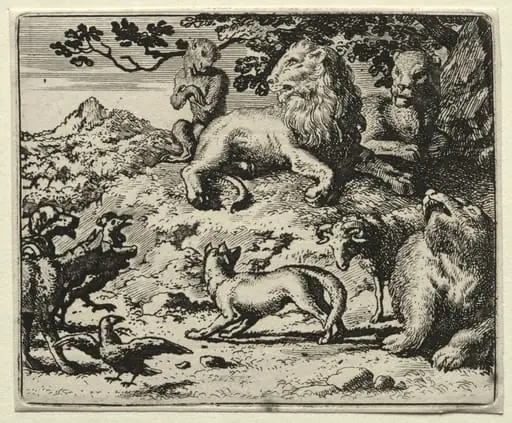 Reynard the Fox: The Animals Complain of Reynard's Pardon