Artwork
Art of the Lithograph: Three Designs from Dürer’s Prayer Book, Plate V
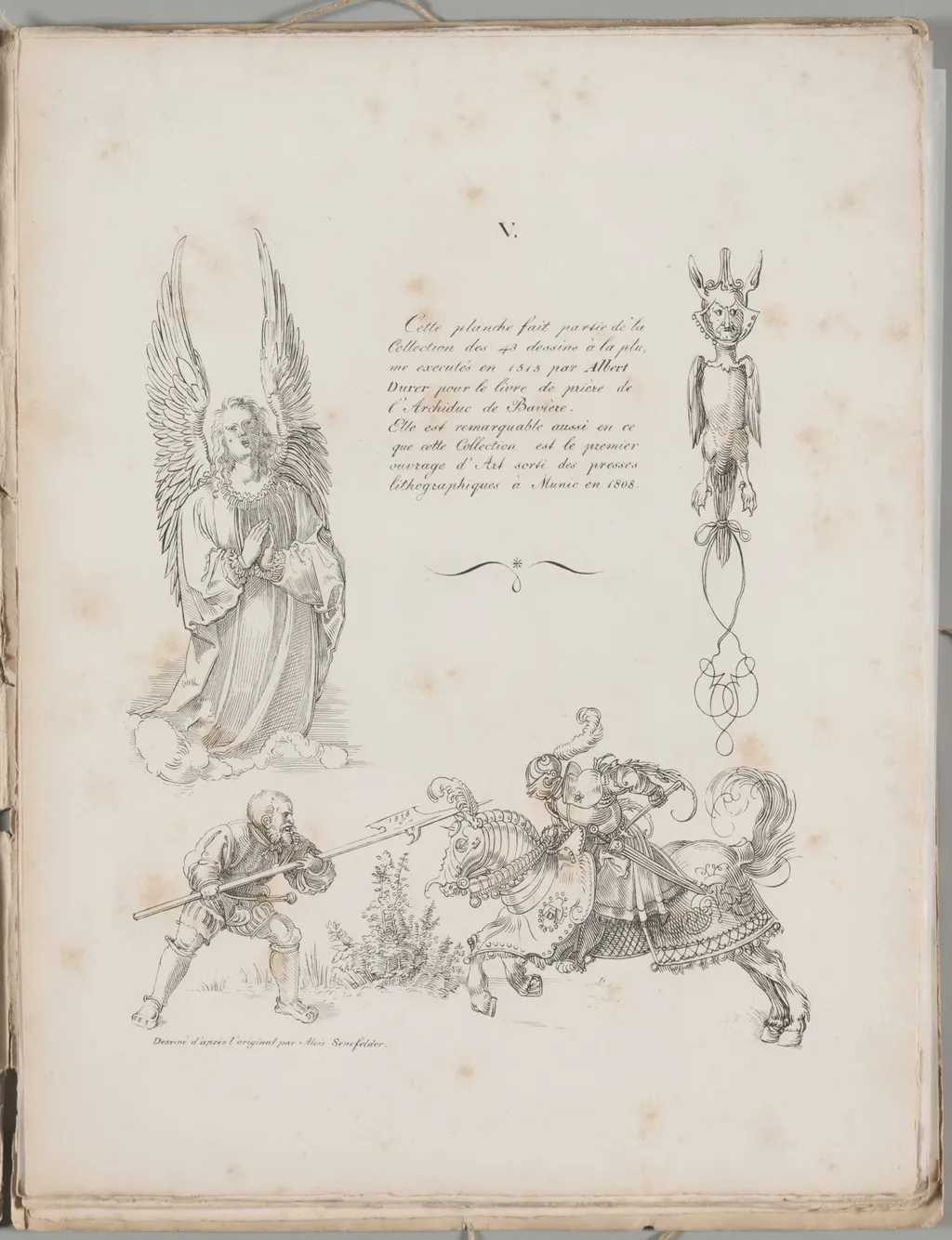
Art of the Lithograph: Three Designs from Dürer’s Prayer Book, Plate V is a work on paper by the Romanticist artist Alois Senefelder. It dates from 1819 and is held in the collection of the Cleveland Museum of Art.
About this work
Overview
The plate preserves the intimate, hand-drawn quality of Dürer’s originals while demonstrating the technical potential of lithography for fine art replication.
This lithographic plate, produced by Alois Senefelder in 1819, reproduces three ink drawings originally found in Albrecht Dürer’s personal prayer book. Created as part of a portfolio showcasing early lithographic reproduction, it reflects Senefelder’s pioneering use of the medium to translate Renaissance sketches into printed form. The plate preserves the intimate, hand-drawn quality of Dürer’s originals while demonstrating the technical potential of lithography for fine art replication.
Subject & Meaning
The three sketches depict symbolic figures: an angel with expansive wings, a horned, tail-bearing demon, and a mounted armored knight wielding a spear. These images likely served as devotional or moral illustrations in Dürer’s private devotional practice, contrasting divine protection with earthly struggle and spiritual threat. Their placement on a single page suggests a meditative sequence, inviting contemplation of faith, virtue, and the presence of evil.
Technique & Style
Senefelder employed lithography to capture the delicate linework and tonal variations of Dürer’s original ink drawings. The process allowed for fine detail and subtle gradations, preserving the sketchbook’s spontaneous character. The page is framed by flowing cursive script, rendered in the same hand as the originals, reinforcing its authenticity as a facsimile. The composition retains the informal, unpolished aesthetic of a personal manuscript rather than a formal publication.
History & Provenance
The drawings originated in Albrecht Dürer’s 16th-century prayer book, a private devotional object now lost. Senefelder, seeking to demonstrate lithography’s capacity for scholarly reproduction, selected these images for inclusion in his 1819 portfolio. The plate was later acquired by The Cleveland Museum of Art, where it remains as a key example of early 19th-century printmaking’s engagement with Renaissance art.
Context
In the early 1800s, lithography emerged as a revolutionary method for reproducing drawings with unprecedented fidelity. Senefelder’s portfolio was part of a broader movement to elevate printmaking beyond commercial use into the realm of art historical preservation. This plate reflects a growing interest in medieval and Renaissance manuscripts among Romantic-era scholars and artists, who valued their spiritual and aesthetic intimacy.
Legacy
Senefelder’s reproduction helped establish lithography as a legitimate medium for art historical scholarship. By faithfully translating Dürer’s sketches, he bridged centuries of artistic practice and demonstrated the medium’s capacity for cultural preservation. The plate remains a significant artifact in the history of print, illustrating how new technologies could serve the study and dissemination of older artistic traditions.
Artist & collection

Artist
Johann Alois Senefelder was a German actor and playwright who invented the printing technique of lithography in the 1790s.

 Art of the Lithograph: Dedication Sheet, Plate VII
 L'art de la lithographie: Head of an Amazon
 L'art de la litographie:Four Subjects after Falger
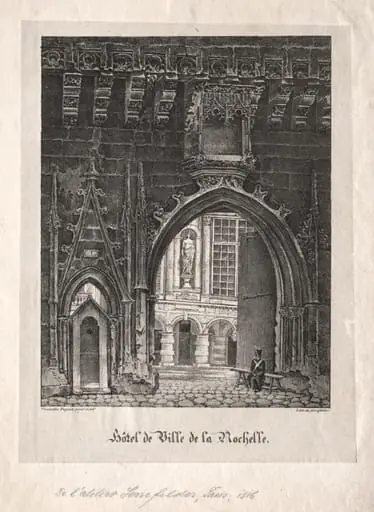 Hotel da Ville de la Rochelle, France
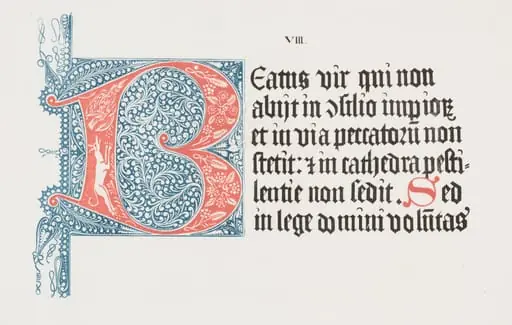 Art of the Lithograph: Psalter- Initial B, Plate VIII
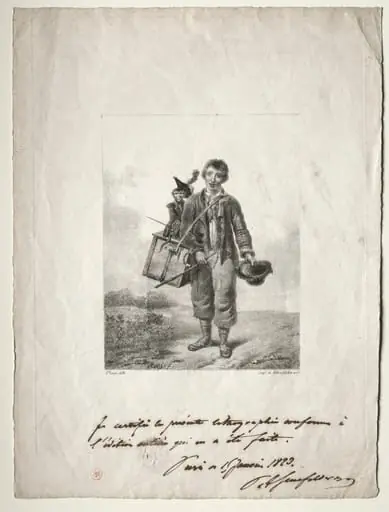 Organ-Grinder Boy
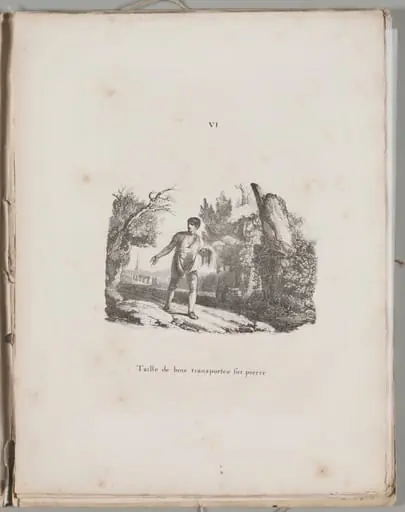 Art of the Lithograph: Transfer of a Wood Engraving, Plate VI
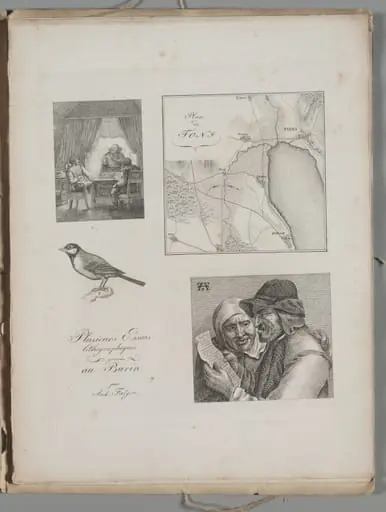 Art of the Lithograph: Four Engraving Samples, War Tent, Map of Toni, Bird, Dutch Farmer and Woman
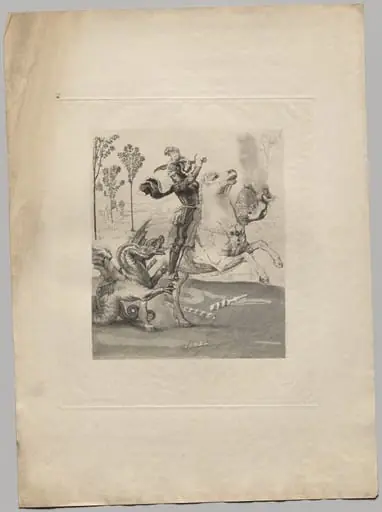 St. George and the Dragon (2)
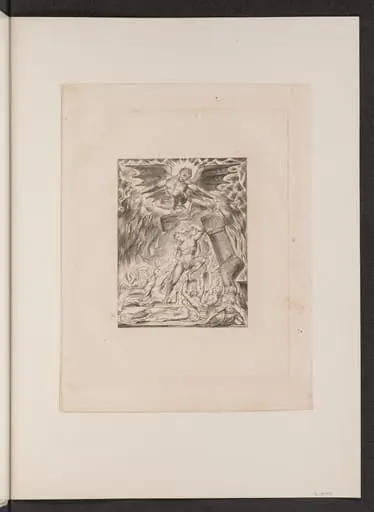 Job's Sons and Daughters Overwhelmed by Satan
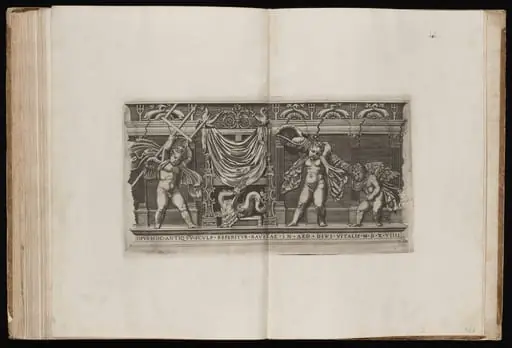 The Throne of Neptune from San Vitale in Ravenna
![Fragments from Ancient Cameos in the Grimani Collection [Plate II], by Enea Vico](https://artifactworldgallery.com/img/enea-vico--fragments-from-ancient-cameos-in-the-grimani-collection-plat--6333de7ba7491db7-w320.webp) Fragments from Ancient Cameos in the Grimani Collection [Plate II]
Fragments from Ancient Cameos in the Grimani Collection [Plate II] Satan Before the Throne of God
 Satan Before the Throne of God
 Satan Before the Throne of God
 Satan Before the Throne of God