Artwork
The lamentation over the dead Christ
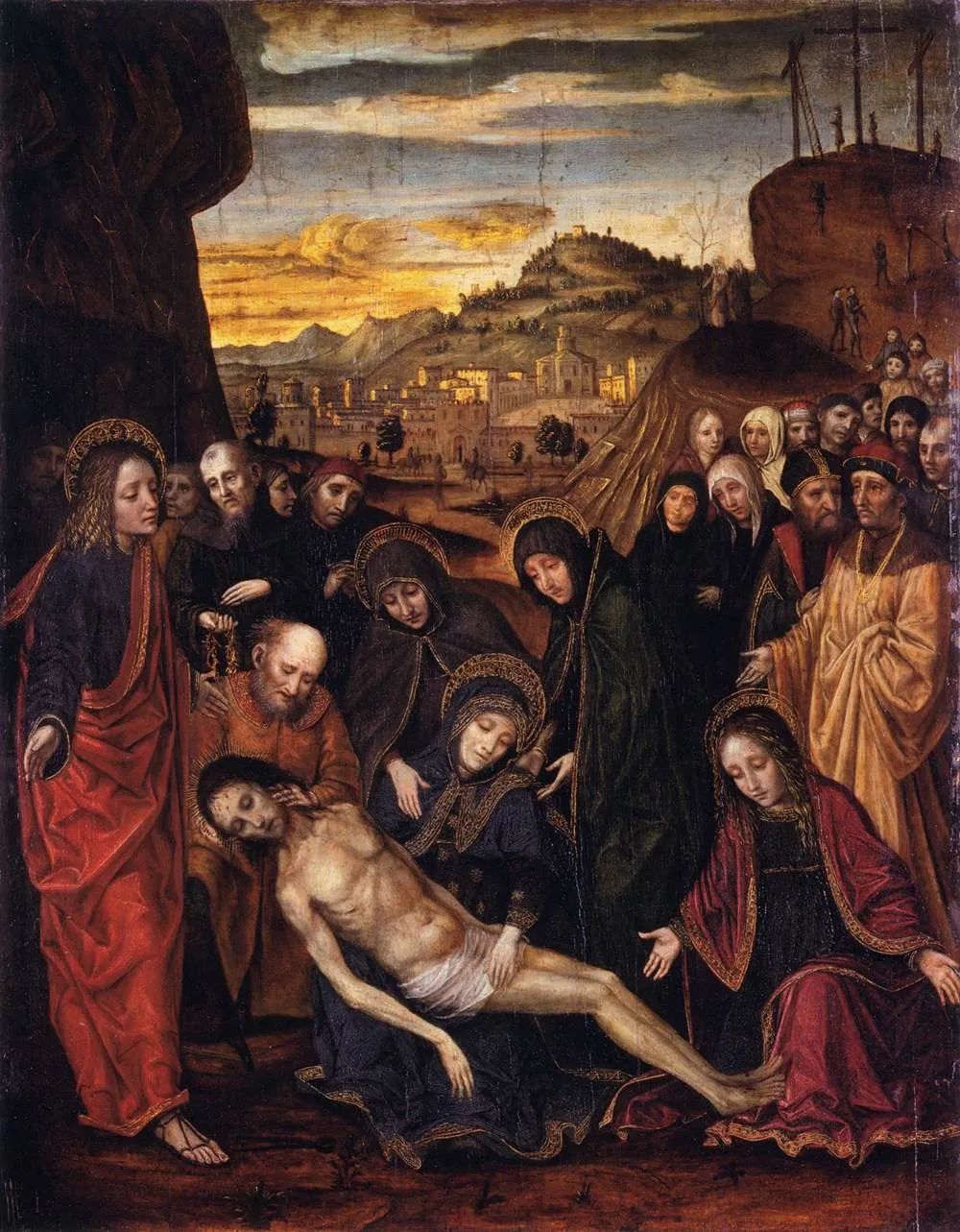
The lamentation over the dead Christ is an unspecified painting by the Early Renaissance artist Ambrogio Bergognone. It dates from 1493 and is held in the collection of the Museum of Fine Arts, Budapest.
About this work
Overview
Painted in 1493 by Ambrogio Bergognone, this work captures the moment after Christ’s crucifixion, as mourners gather around his body. Executed in oil on panel, it reflects the devotional priorities of late 15th-century Lombard art. The painting resides today in the Museum of Fine Arts, Budapest, where it stands as a key example of regional Renaissance religious imagery.
Subject & Meaning
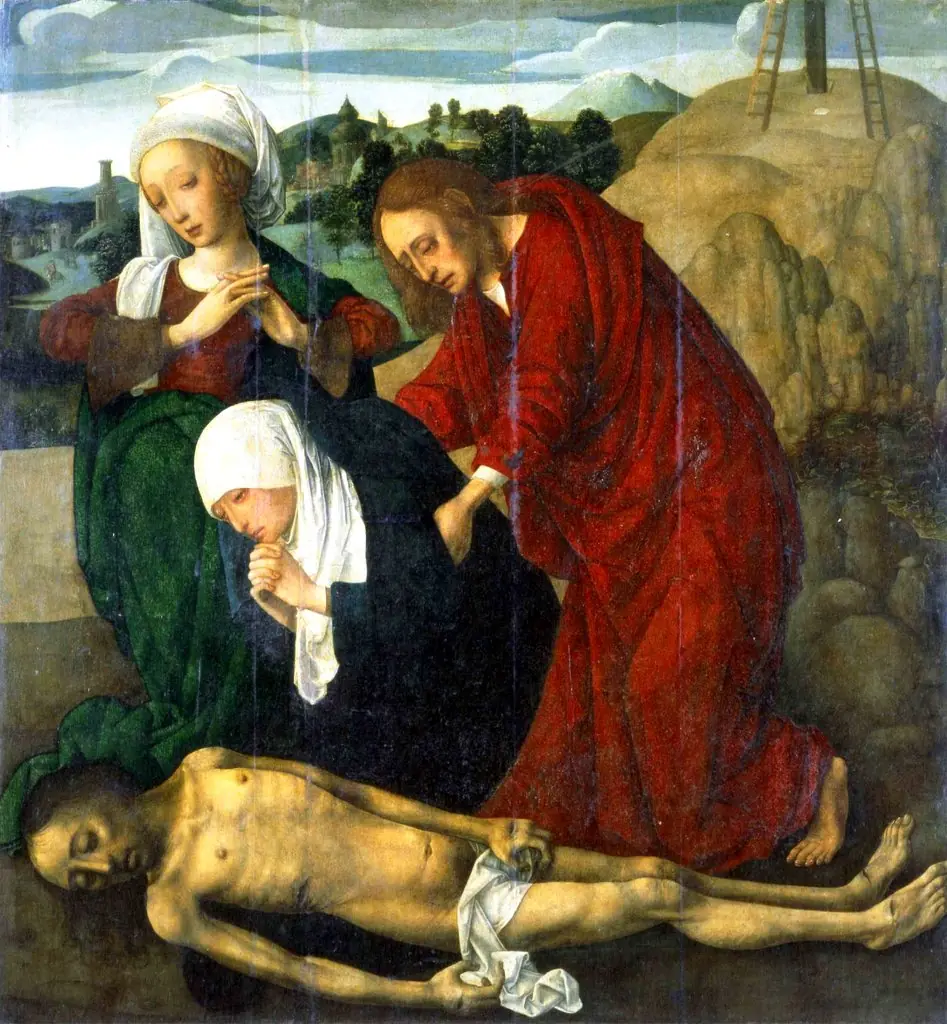
Mary, John the Evangelist, and Mary Magdalene express grief through lowered heads and clasped hands, their sorrow rendered without theatricality.
The scene centers on Christ’s lifeless form, laid horizontally on the earth, surrounded by figures in quiet mourning. Mary, John the Evangelist, and Mary Magdalene express grief through lowered heads and clasped hands, their sorrow rendered without theatricality. The absence of angels or divine light emphasizes human loss, reinforcing the emotional weight of Christ’s death as a moment of communal mourning rather than supernatural triumph.
Technique & Style
Bergognone employs subtle chiaroscuro to model the figures, giving their forms a quiet solidity against a muted background. The palette is restrained—deep blues, browns, and grays—enhancing the scene’s gravity. The distant cityscape and rolling hills are rendered with delicate precision, grounding the sacred event in a tangible, earthly setting without distracting from the central tragedy.
History & Provenance
Commissioned likely for a private devotional setting, the painting entered the Budapest collection in the 19th century. Its attribution to Bergognone is supported by stylistic parallels with his other works, particularly in the treatment of drapery and facial expression. No early documentation survives, but its condition and composition align with Lombard workshop practices of the 1490s.
Context
In Milan and its surroundings, artists like Bergognone blended Flemish attention to detail with Italian compositional clarity. This painting reflects the influence of both local traditions and northern European models, particularly in its intimate scale and emotional restraint. Such works were intended for personal meditation, inviting viewers to contemplate Christ’s sacrifice through quiet, humanized grief.
Legacy
Though less widely known than major Florentine or Venetian contemporaries, Bergognone’s work contributed to the development of Lombard religious painting. His focus on psychological realism and subdued emotion influenced later regional artists. The painting remains a quiet but significant testament to the devotional culture of late 15th-century northern Italy.
Artist & collection
Artist
Ambrogio Bergognone (variously known as Ambrogio da Fossano, Ambrogio di Stefano da Fossano, Ambrogio Stefani da Fossano or as il Bergognone or Ambrogio Egogni, c.