Artwork
Birds - U.S.P.R.R. Exp. & Surveys, 35th Parallel
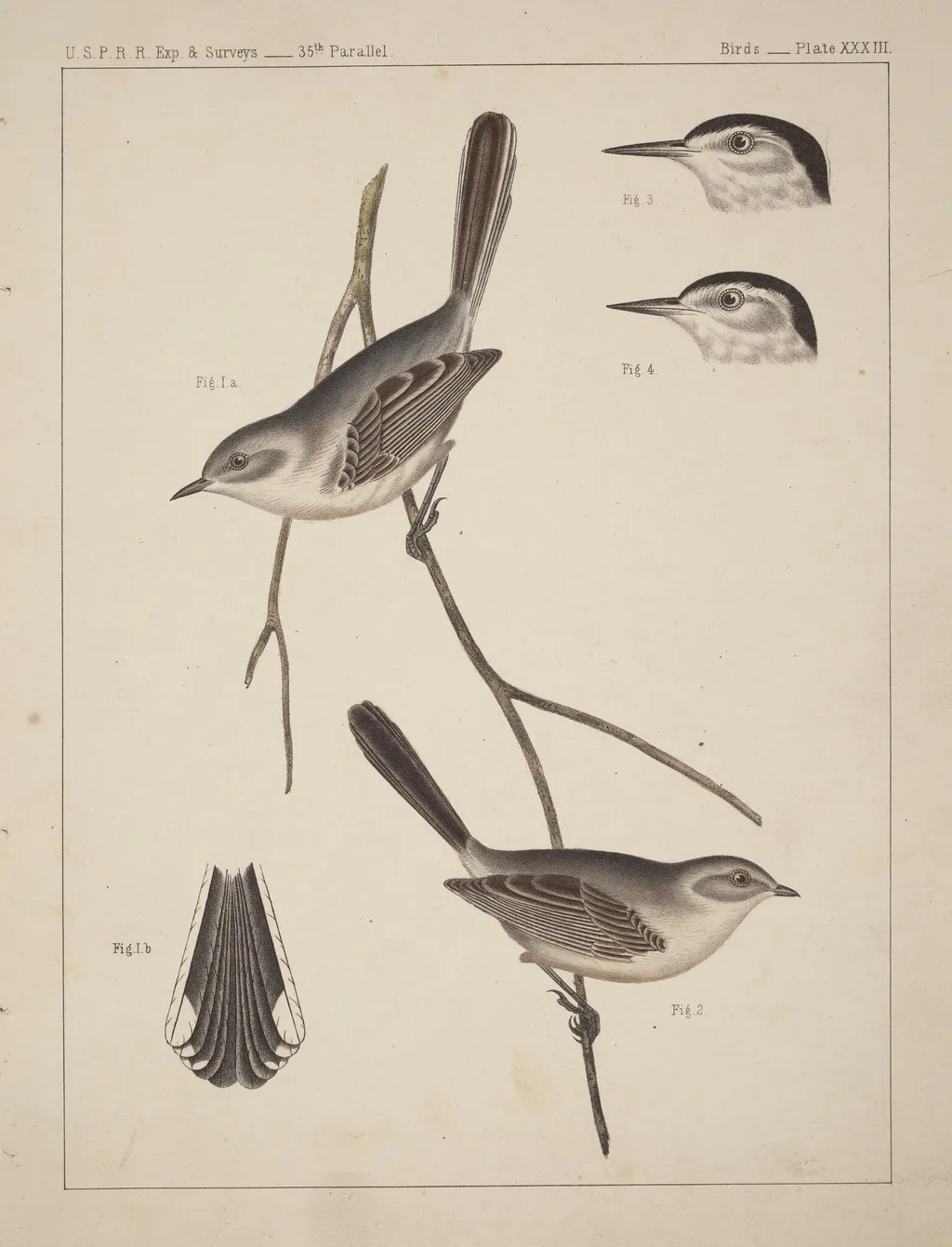
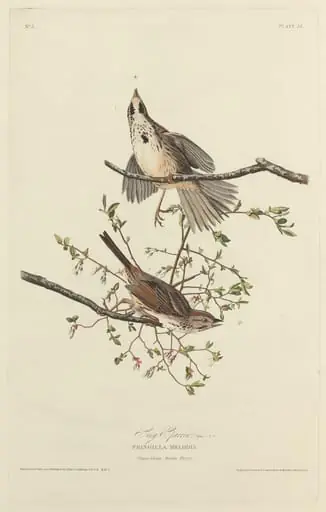
Birds - U.S.P.R.R. Exp. & Surveys, 35th Parallel is an ink print by the Romanticist artist American 19th Century. It dates from 1850 and is held in the collection of the National Gallery of Art. This color lithograph presents a diminutive bird perched on a slender twig, rendered with meticulous attention to anatomical detail.
About this work
Overview
The bird’s plumage is rendered in muted gray tones, accented by subtle striping, while its beak is depicted with a crisp, pointed line.
This color lithograph presents a diminutive bird perched on a slender twig, rendered with meticulous attention to anatomical detail. The bird’s plumage is rendered in muted gray tones, accented by subtle striping, while its beak is depicted with a crisp, pointed line. Adjacent to the main figure are auxiliary views—a lateral profile and a close-up of the head—plus an enlarged illustration of the tail feathers spread in fan shape.
Subject & Meaning
The work functions as a scientific illustration, intended to convey precise morphological information rather than aesthetic expression. By isolating the bird and providing multiple perspectives, the image serves as a reference for identification and comparative study, supporting ornithological surveys conducted along the 35th parallel of the United States.
Technique & Style
Executed as a color lithograph, the piece employs the layered printing process typical of early 20th‑century natural history documentation. Fine line work defines the bird’s contours, while carefully applied washes of gray and muted hues differentiate feather patterns. The inclusion of detailed inset plates reflects a systematic, diagrammatic approach common to taxonomic illustration.
History & Provenance
The lithograph originates from a governmental or academic survey of avian species distributed across the 35th parallel, a longitudinal band crossing the United States. Produced for the United States Pacific Railway’s experimental and survey program, the print was likely circulated among researchers and field biologists involved in the project.
Context
During the period of extensive railway expansion, scientific surveys accompanied infrastructure development to catalog regional flora and fauna. This illustration exemplifies the collaboration between artists and naturalists, where accurate visual records were essential for documenting biodiversity in newly accessible territories.
Legacy
Such lithographic studies laid groundwork for modern field guides and contributed to baseline data on species distribution. The methodical visual standards established by these prints continue to influence contemporary ornithological illustration and the presentation of scientific information in museum collections.
Artist & collection

Artist
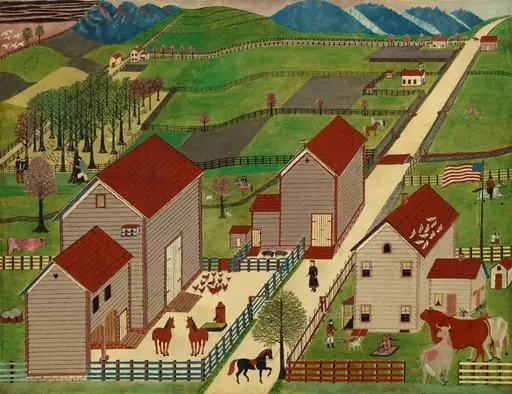
This artist painted everyday American life in the 1800s. Look at *Farmhouse in Mahantango Valley*—a quiet, sunlit scene of rural Pennsylvania. *Boy and Girl* shows two children standing close, their faces turned toward…

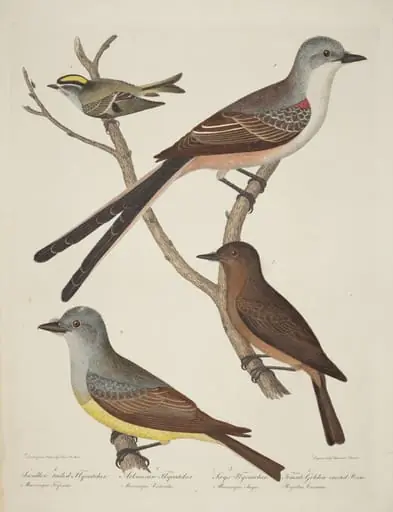 Swallow-tailed Flycatcher, Arkansas Flycatcher, Say's Flycatcher, and Female Golden-crested Wren
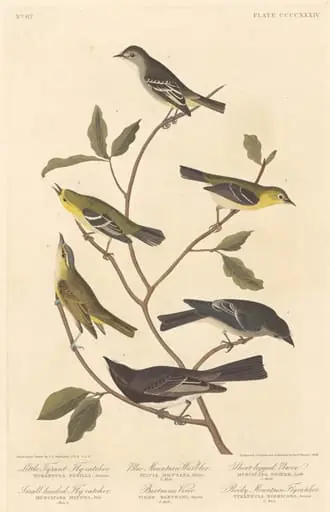 Little Tyrant Flycatcher, Small-Headed Flycatcher, Blue Mountain Warbler, Bartram's Vireo, Short-Legged Pewee, and Rocky Mountain Flycatcher
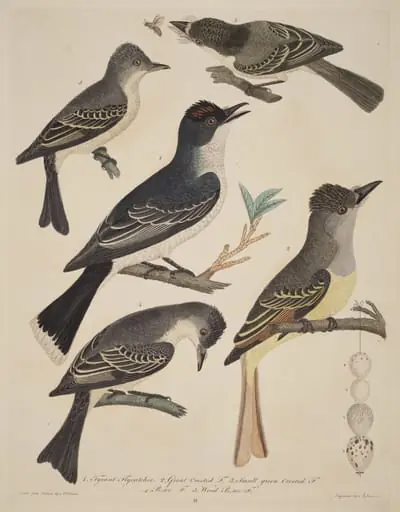 Five Birds with Their Eggs and an Insect
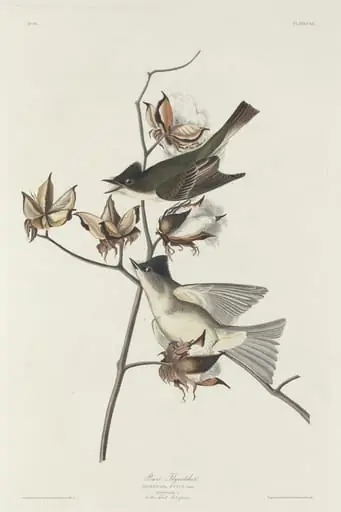 Pewit Flycatcher
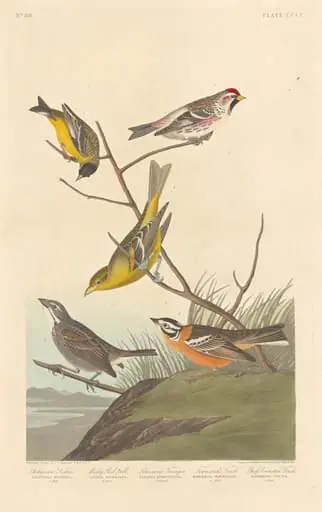 Arkansaw Siskin, Mealy Red-poll, Louisiana Tanager, Townsend's Finch and Buff-breasted Finch
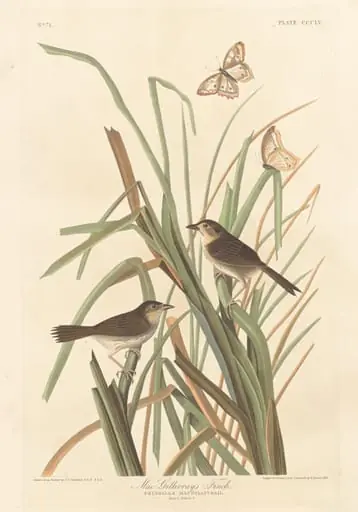 MacGillivray's Finch
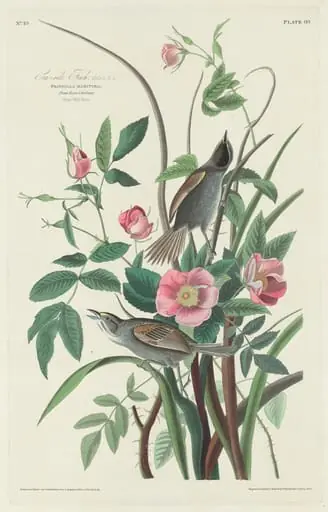 Sea-side Finch
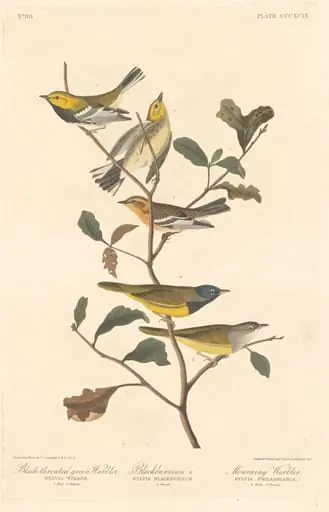 Black-throated Green Warbler, Blackburnian Warbler and Mourning Warbler
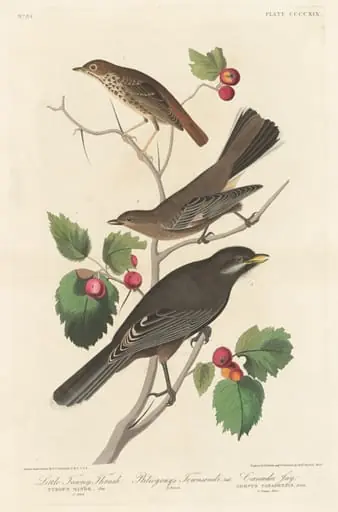 Little Tawny Thrush
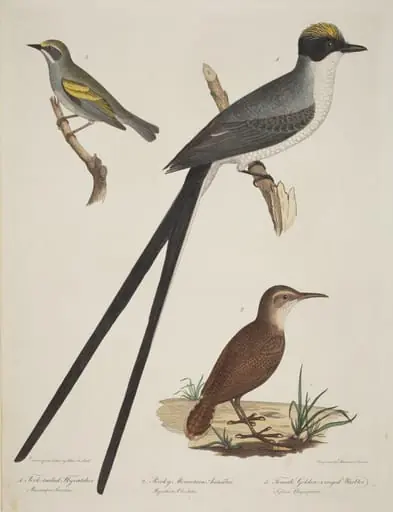 Fork-tailed Flycatcher, Rocky Mountain Anteater, and Female Golden-winged Warbler
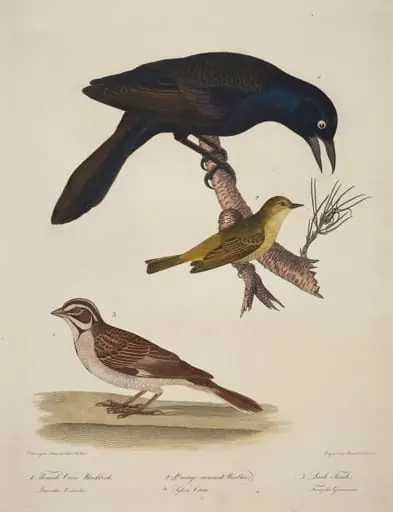 Female Crow Blackbird, Orange-Crowned Warbler, Lark Finch
 Song Sparrow