Artwork
Fork-tailed Flycatcher, Rocky Mountain Anteater, and Female Golden-winged Warbler
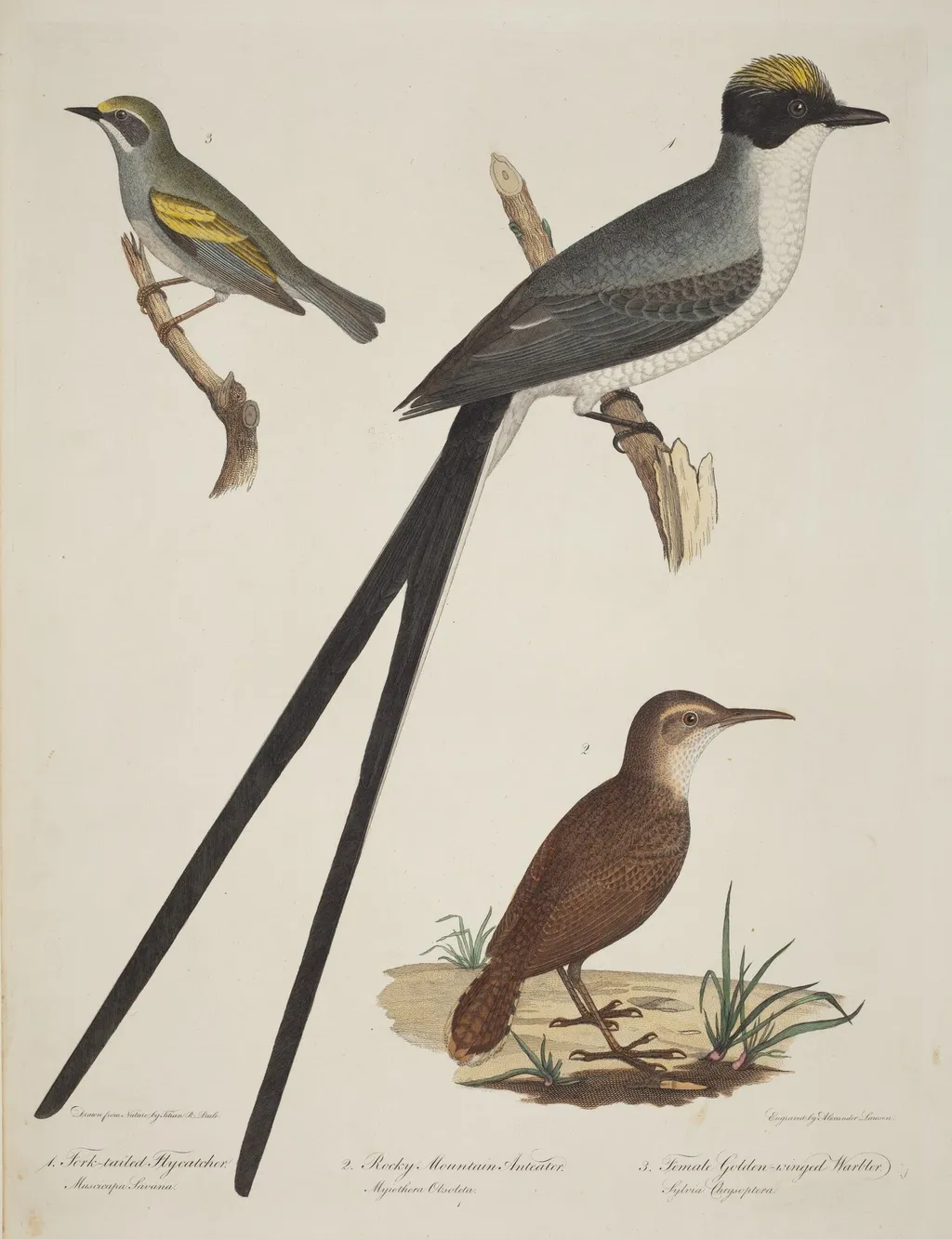
Fork-tailed Flycatcher, Rocky Mountain Anteater, and Female Golden-winged Warbler is an ink print by the Romanticist artist Alexander Lawson. It dates from 1810 and is held in the collection of the National Gallery of Art.
About this work
Overview
Created in 1810 by British printmaker Alexander Lawson, this hand‑coloured engraving presents three avian subjects rendered with meticulous attention to plumage. Executed on wove paper, the work combines etching and subsequent colour application, resulting in a vivid yet restrained natural illustration that reflects early‑19th‑century scientific illustration practices.
Subject & Meaning
The arrangement underscores comparative anatomy and habitat diversity.
The composition features a fork‑tailed flycatcher on the left, distinguished by a grey torso and bright yellow wing and tail markings; a Rocky Mountain anteater—mistakenly identified as a bird—occupies the centre with a black head, white throat and long dark tail; and a female golden‑winged warbler on the right, brown overall with a white neck patch and a comparatively short tail. The arrangement underscores comparative anatomy and habitat diversity.
Technique & Style
Lawson employed a fine etching line to delineate feather texture before applying hand‑applied water‑colour washes. The use of wove paper provides a smooth surface that captures subtle tonal variations, while the realistic rendering aligns with the period's emphasis on empirical observation, echoing the detailed natural histories produced by contemporaneous Romantic naturalists.
History & Provenance
The print was issued in London as part of a series of ornithological plates intended for collectors and scholars. Though specific ownership records are scarce, similar Lawson works circulated among natural history societies and private cabinets of curiosity during the early 1800s, indicating its role as both educational material and decorative object.
Artist & collection


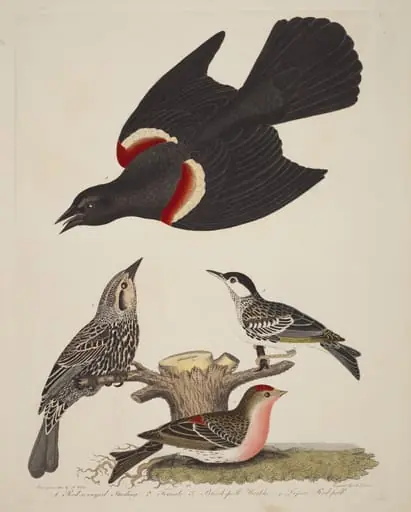 Red-winged Starling, Female Red-winged Starling, Black-poll Warbler, and Lesser Red-poll
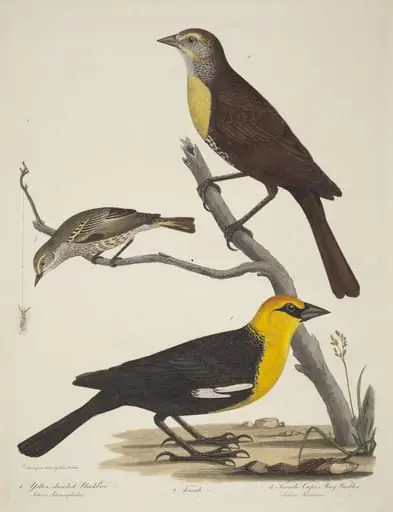 Yellow-headed Blackbird, Female Blackbird, and Female Cape May Warbler
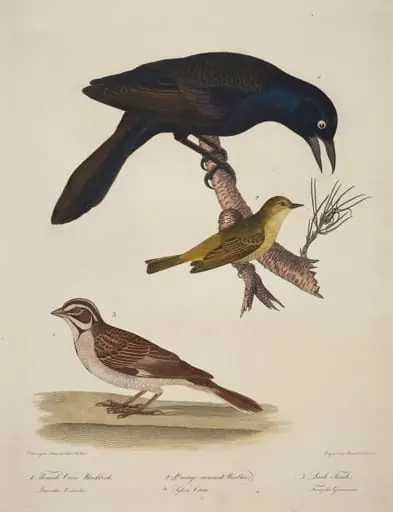 Female Crow Blackbird, Orange-Crowned Warbler, Lark Finch
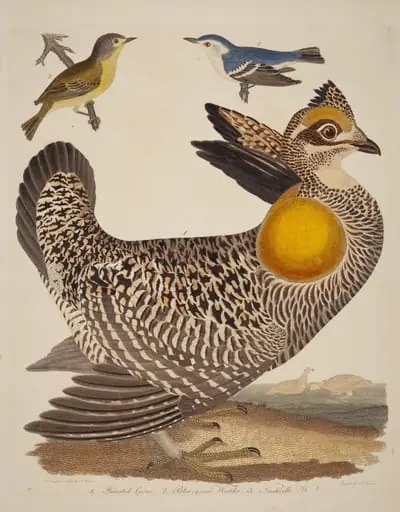 Pinnated Grous, Blue-green Warbler, and Nashville Warbler
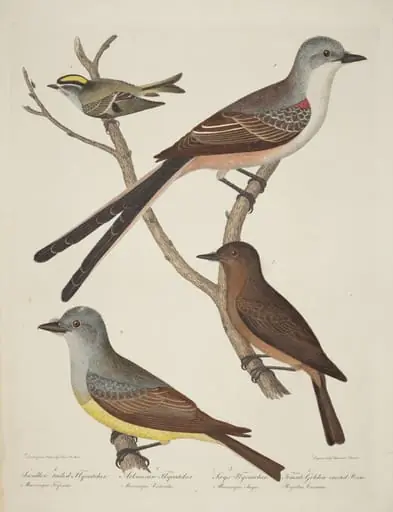 Swallow-tailed Flycatcher, Arkansas Flycatcher, Say's Flycatcher, and Female Golden-crested Wren
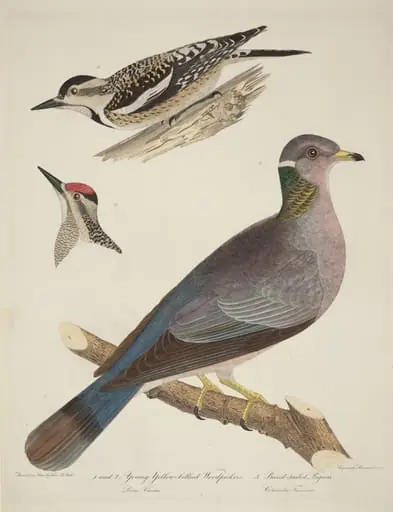 Young Yellow-bellied Woodpeckers and Band-tailed Pigeon
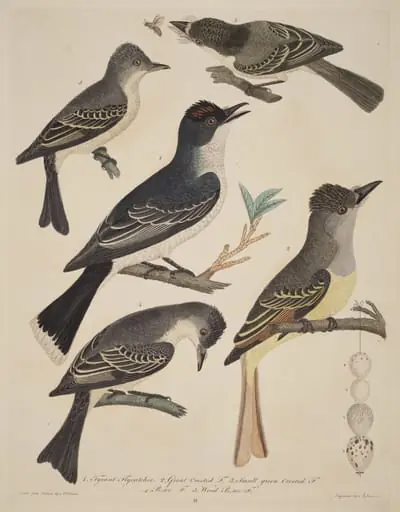 Five Birds with Their Eggs and an Insect
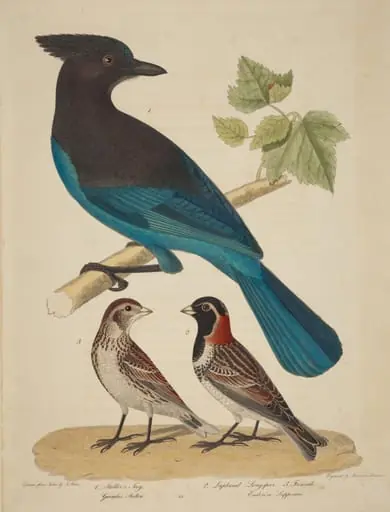 Stellar's Jay, Lapland Longspur and Female
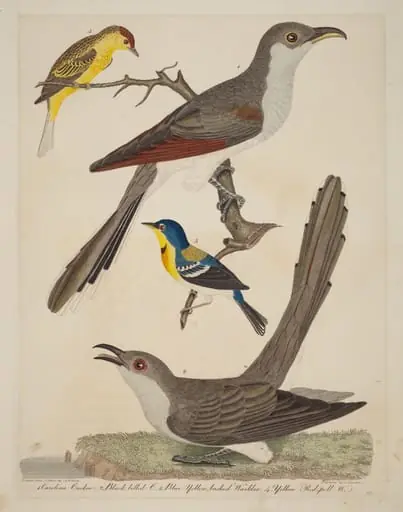 Carolina Cuckoo, Black-billed Cuckoo, Blue Yellow-backed Warbler, and Yellow Red-poll Warbler
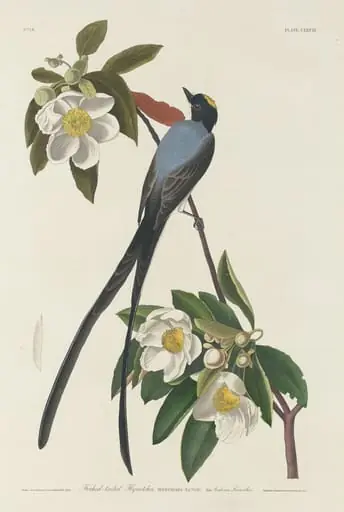 Forked-tail Flycatcher
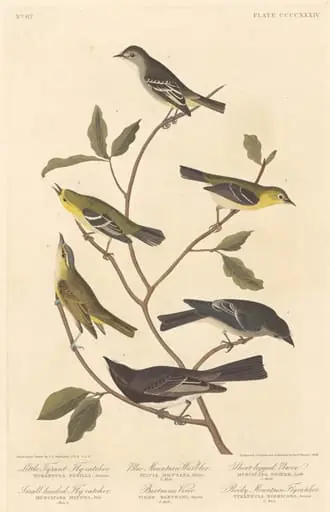 Little Tyrant Flycatcher, Small-Headed Flycatcher, Blue Mountain Warbler, Bartram's Vireo, Short-Legged Pewee, and Rocky Mountain Flycatcher
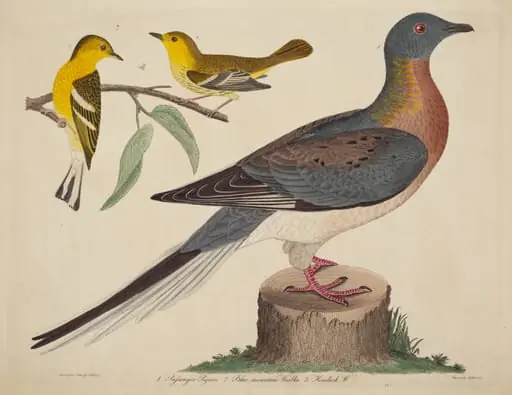 Passenger Pigeon, Blue-mountain Warbler, and Hemlock Warbler
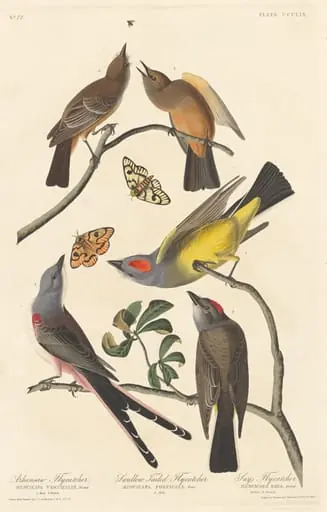 Arkansaw Flycatcher, Swallow-tailed Flycatcher and Says Flycatcher
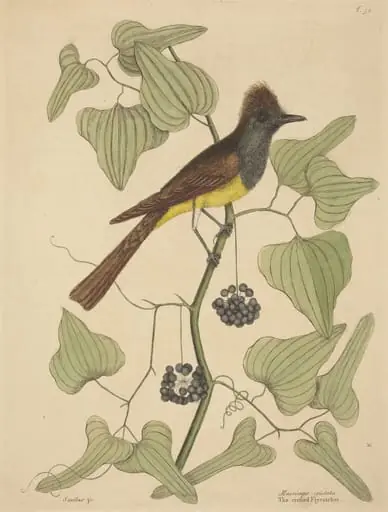 The Crested Flycatcher (Muscicapa cristata)
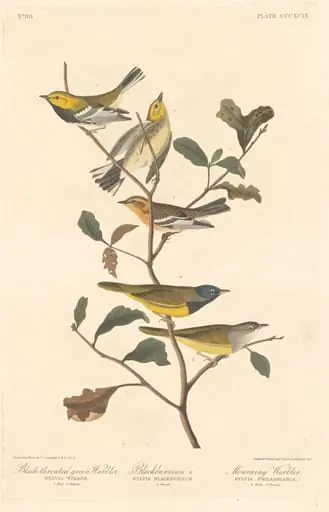 Black-throated Green Warbler, Blackburnian Warbler and Mourning Warbler
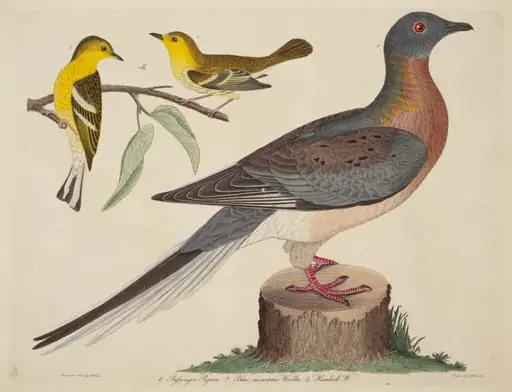 Passenger Pigeon, Blue-mountain Warbler, and Hemlock Warbler
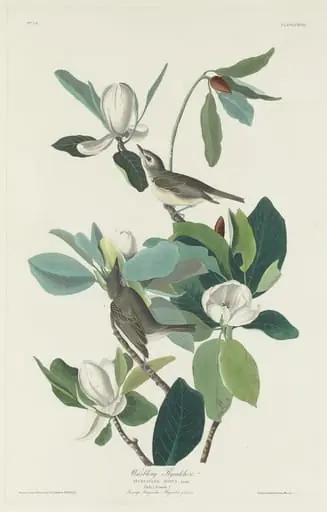 Warbling Flycatcher