Artwork
Five Birds with Their Eggs and an Insect
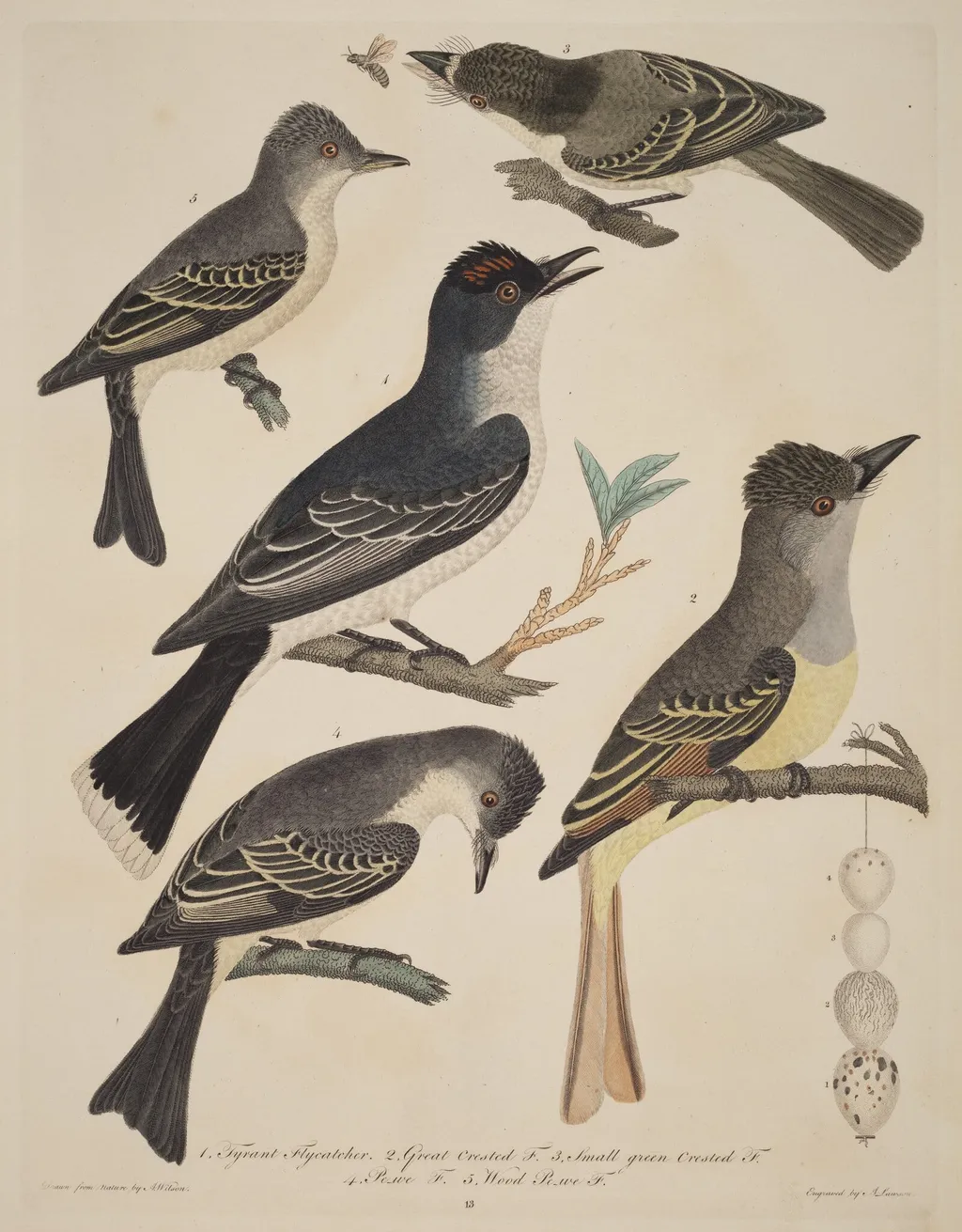
Five Birds with Their Eggs and an Insect is an ink print by the Romanticist artist Alexander Lawson. It dates from 1811 and is held in the collection of the National Gallery of Art.
About this work
Overview
Alexander Lawson’s 1811 color etching titled Five Birds with Their Eggs and an Insect presents a quiet tableau of avian life. Five distinct birds sit on separate branches, each accompanied by a clutch of eggs. The composition is rendered in muted tones of gray, brown and green, punctuated by the pale whites and yellows of the eggs and occasional highlights on the birds’ eyes and beaks.
Subject & Meaning
The work functions as a naturalistic study, pairing each bird with its reproductive material to emphasize the cycles of breeding. An insect, captured in the beak of one bird, introduces a subtle reference to the food chain and the role of insects in avian diets. The careful placement of each element invites contemplation of the interdependence of species within a shared habitat.
Technique & Style
This method allows precise detail alongside the atmospheric softness characteristic of early 19th‑century naturalist prints.
Executed as a color etching, the image relies on multiple copper plates inked in layered washes to achieve tonal variation. Lawson’s line work delineates feather texture and egg surface with fine incisions, while the soft palette emerges from delicate hand‑applied color washes after printing. This method allows precise detail alongside the atmospheric softness characteristic of early 19th‑century naturalist prints.
History & Provenance
Created in 1811, the print was likely produced for the burgeoning market of scientific illustration and private collectors interested in ornithology. While specific ownership records are scarce, similar Lawson prints circulated among natural history societies and were used as reference material in early studies of bird morphology.
Artist & collection


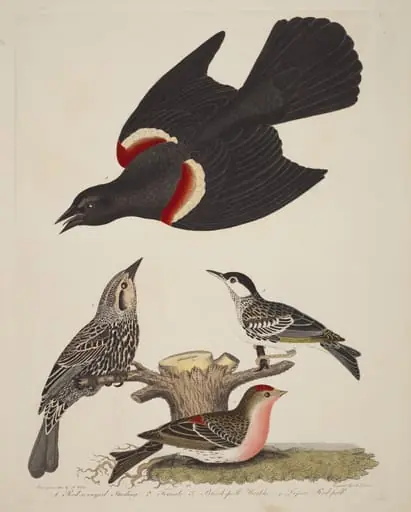 Red-winged Starling, Female Red-winged Starling, Black-poll Warbler, and Lesser Red-poll
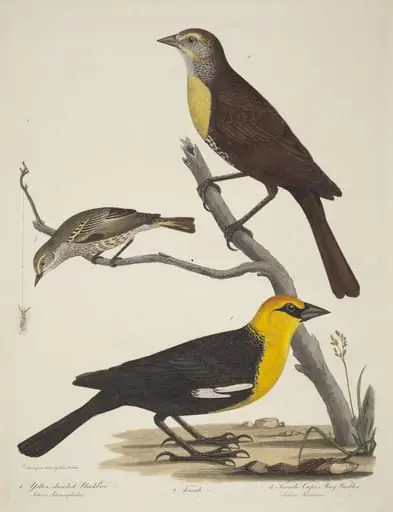 Yellow-headed Blackbird, Female Blackbird, and Female Cape May Warbler
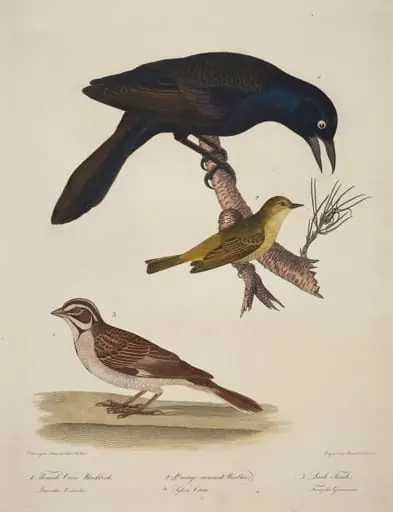 Female Crow Blackbird, Orange-Crowned Warbler, Lark Finch
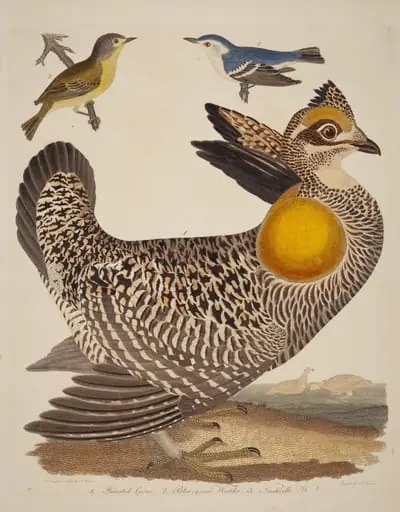 Pinnated Grous, Blue-green Warbler, and Nashville Warbler
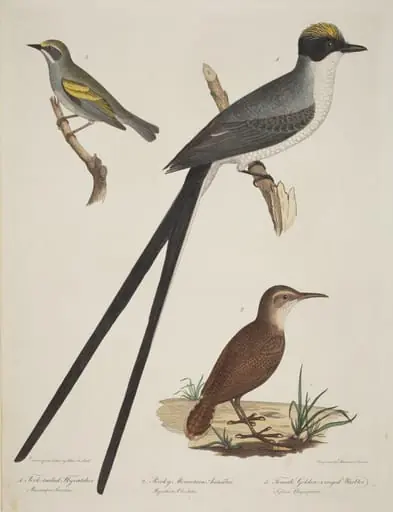 Fork-tailed Flycatcher, Rocky Mountain Anteater, and Female Golden-winged Warbler
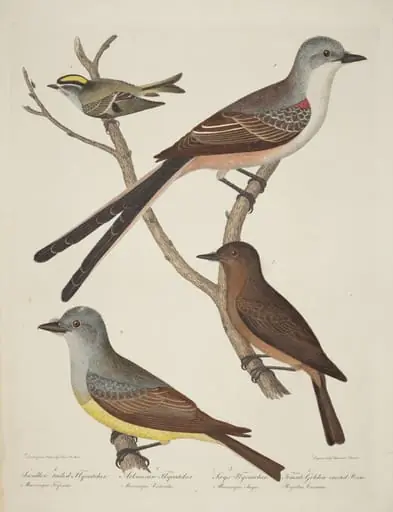 Swallow-tailed Flycatcher, Arkansas Flycatcher, Say's Flycatcher, and Female Golden-crested Wren
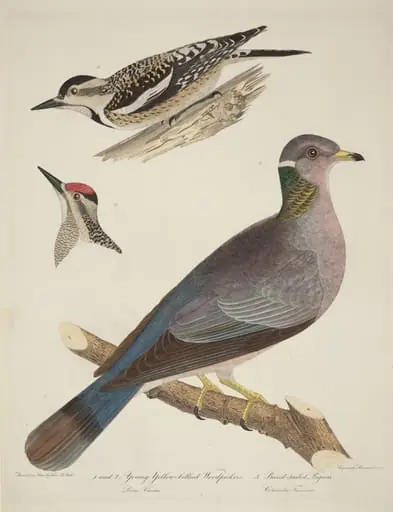 Young Yellow-bellied Woodpeckers and Band-tailed Pigeon
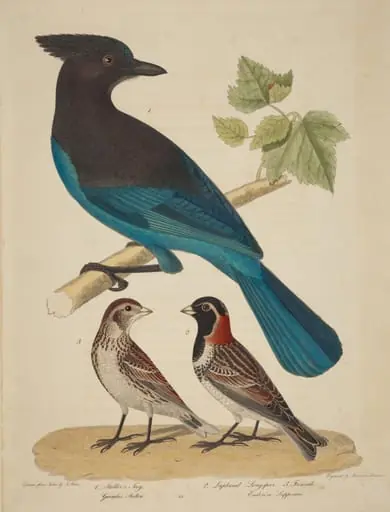 Stellar's Jay, Lapland Longspur and Female
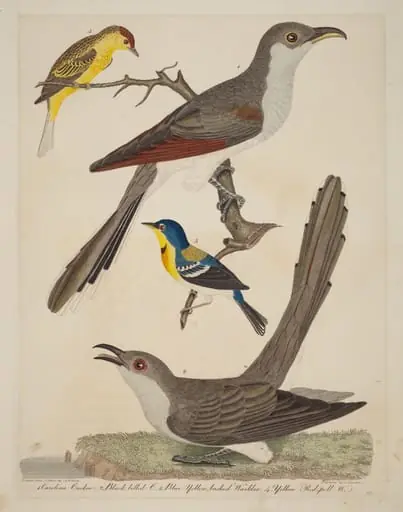 Carolina Cuckoo, Black-billed Cuckoo, Blue Yellow-backed Warbler, and Yellow Red-poll Warbler
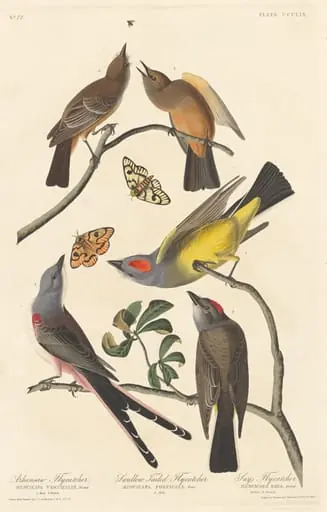 Arkansaw Flycatcher, Swallow-tailed Flycatcher and Says Flycatcher
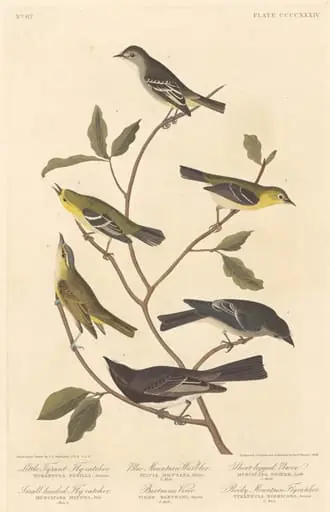 Little Tyrant Flycatcher, Small-Headed Flycatcher, Blue Mountain Warbler, Bartram's Vireo, Short-Legged Pewee, and Rocky Mountain Flycatcher
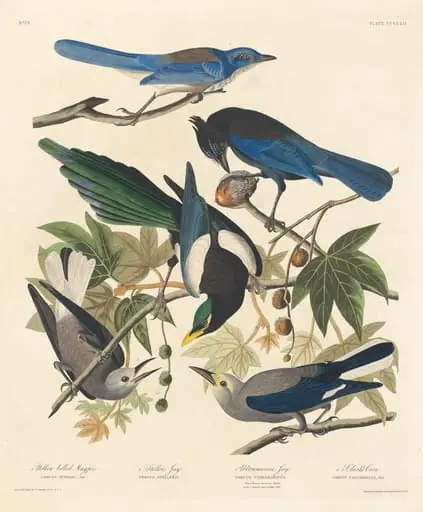 Yellow-billed Magpie, Stellers Jay, Ultramarine Jay and Clark's Crow
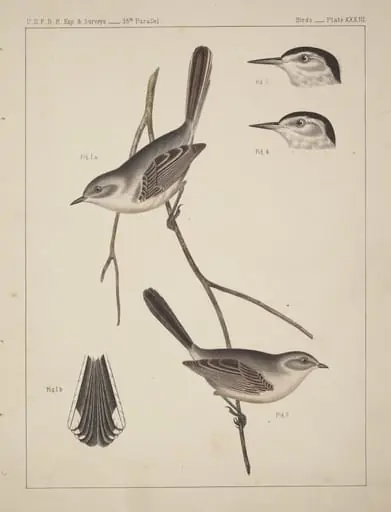 Birds - U.S.P.R.R. Exp. & Surveys, 35th Parallel
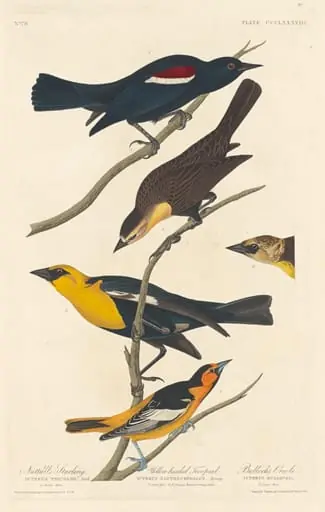 Nuttall's Starling, Yellow-headed Troopial and Bullock's Oriole