Artwork
Song Sparrow
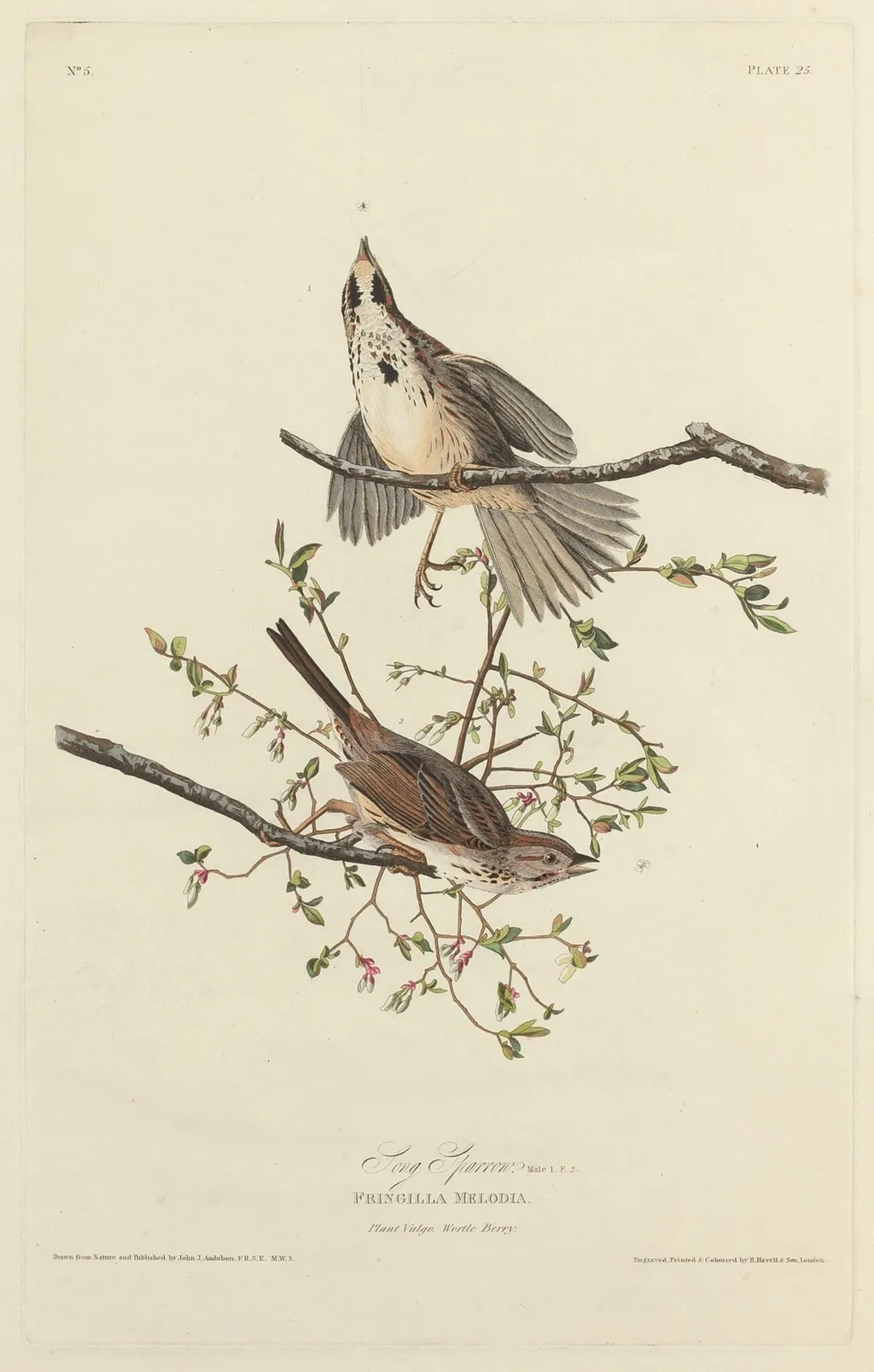
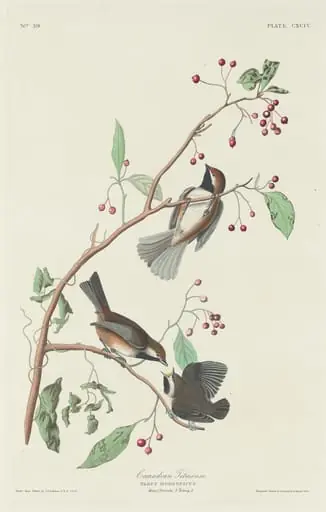
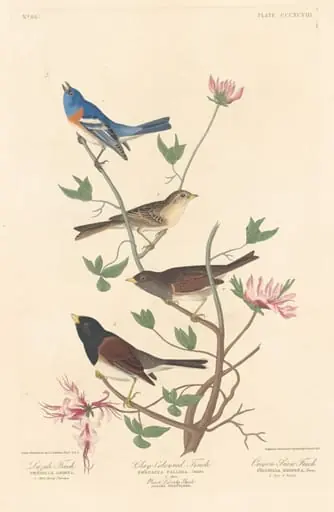
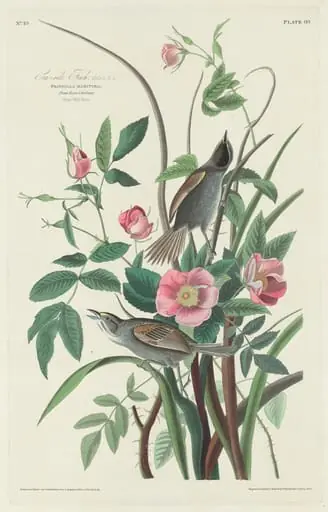
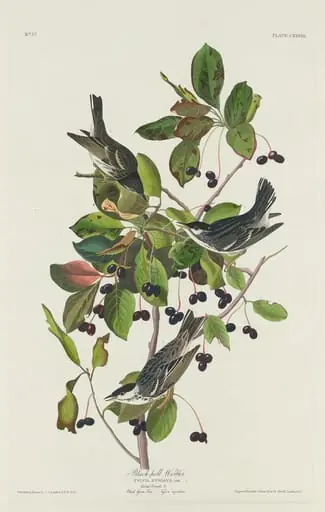
Song Sparrow is an ink print by the Romanticist artist Robert Havell Jr.. It dates from 1827 and is held in the collection of the National Gallery of Art.
About this work
Overview
Created in 1827, the work titled Song Sparrow is a hand‑colored engraving combined with aquatint on a sheet of Whatman wove paper. The piece belongs to the output of the Havell family, a lineage of British printmakers active in the late eighteenth and early nineteenth centuries. The print presents a North American song sparrow rendered with delicate tonal transitions and subtle coloration.
Subject & Meaning
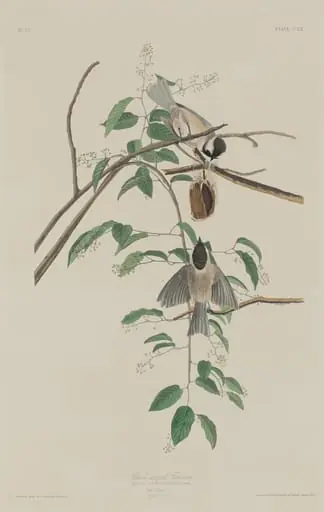
The image captures two sparrows on slender twigs; one bird is poised mid‑flight with wings fully extended, while the other rests, turned to the left. Small green leaves and buds punctuate the branches, providing a natural setting. The birds’ plumage is depicted in muted browns and grays, accented by darker markings on the heads, emphasizing their realistic appearance.
Technique & Style
The print employs aquatint to achieve a range of soft tonal washes, a method that allows gradual shading across the surface. Fine lines incised into a copper plate define the feather details, while hand‑applied watercolor adds precise, restrained hues. This combination of mechanical printing and manual coloration results in a nuanced, lifelike representation.
History & Provenance
Robert Havell Jr. produced the piece during his active period following the careers of his father, Robert Havell Sr., and his uncle, Luke Havell, both noted for work in England and abroad. The Havell workshop was renowned for its contributions to natural history illustration, and this print reflects the family’s continued engagement with scientific subjects in the early nineteenth century.
Artist & collection

Artist
The Havell family of Reading, Berkshire, England, included a number of notable engravers, etchers and painters, as well as writers, publishers, educators, and musicians.