Artwork
Little Tawny Thrush
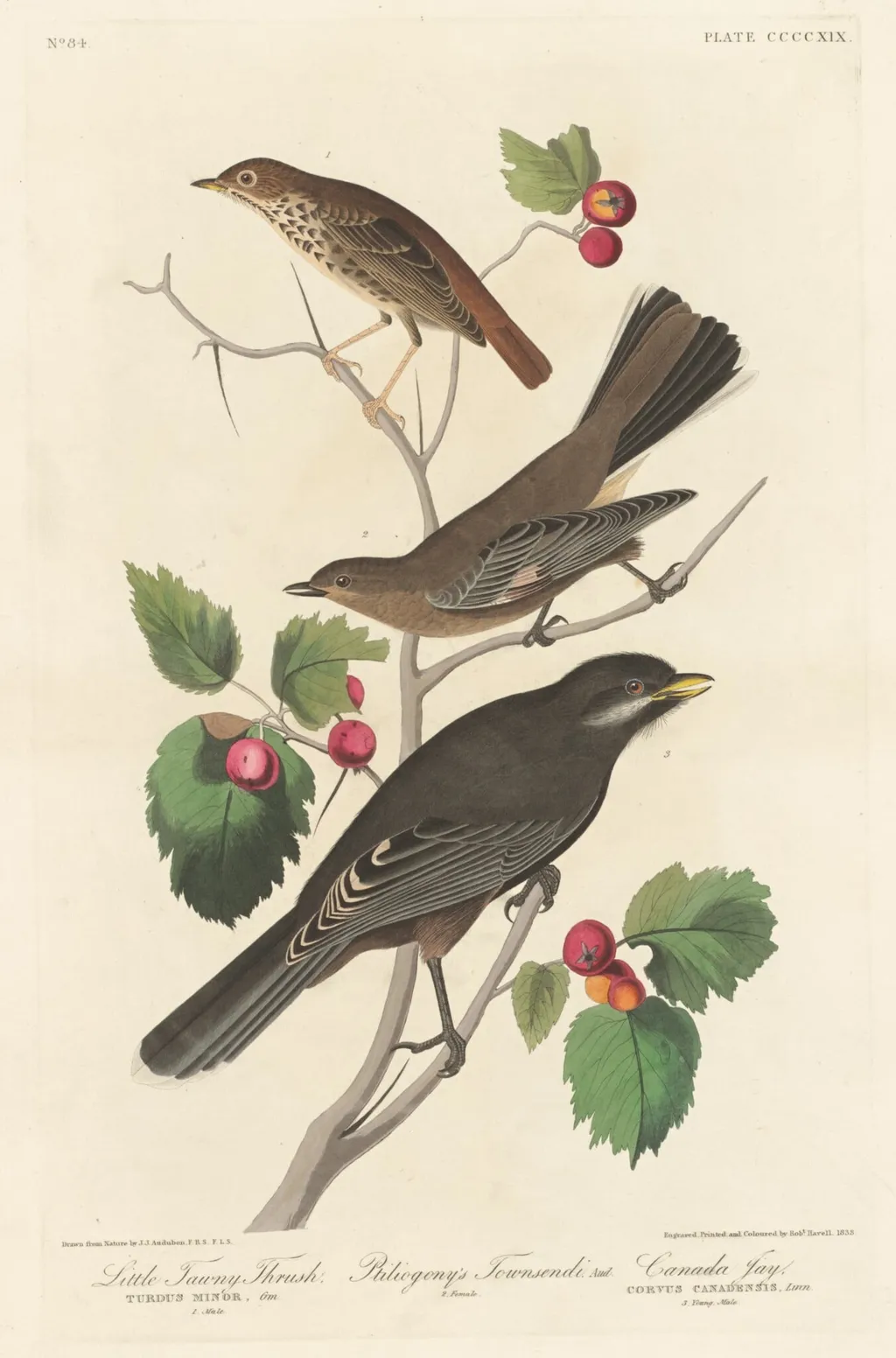
Little Tawny Thrush is an ink print by the Romanticist artist Robert Havell Jr.. It dates from 1838 and is held in the collection of the National Gallery of Art.
About this work
Overview
Little Tawny Thrush is a hand-colored engraving and aquatint print created by Robert Havell Jr. in 1838 on Whatman wove paper, exemplifying the Havell family's technical prowess in aquatint and their interest in Indian art and culture.
Subject & Meaning
The print depicts three tawny thrushes on a branch amidst leaves and berries, blending scientific observation with aesthetic appeal, characteristic of the natural history illustration tradition.
Technique & Style
Havell Jr. utilized the aquatint technique, a specialty of his family, to achieve detailed, nuanced renderings of the birds' feathers, beaks, and the natural surroundings, with earthy tones dominating the palette.
History & Provenance
Part of a family of English artists (including Robert Havell the Elder and Luke Havell), Robert Havell Jr.'s work reflects both his lineage's artistic legacy and their engagement with Indian cultural influences.
Context
Created within the broader context of natural history illustration, which merged scientific accuracy with refined printmaking, Little Tawny Thrush also touches on the Romantic era's emphasis on nature, though more scientifically inclined.
Legacy
While not directly linked to a specific movement like Romanticism, the piece contributes to the tradition of detailed, scientifically informed natural history art of the 19th century, with its meticulous attention to natural detail.
Artist & collection

Artist
The Havell family of Reading, Berkshire, England, included a number of notable engravers, etchers and painters, as well as writers, publishers, educators, and musicians.

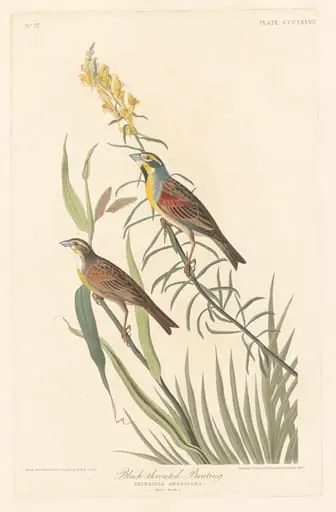
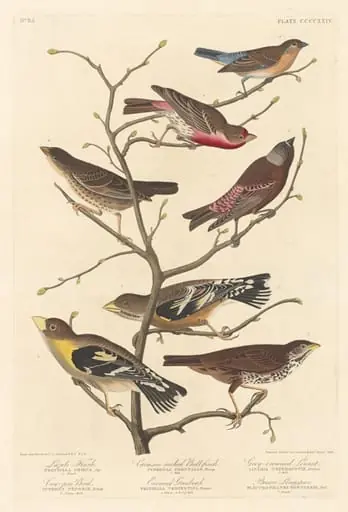 Lazuli Finch
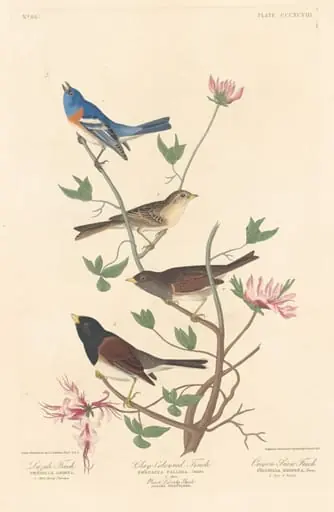 Lazuli Finch, Clay-colored Finch and Oregon Snow Finch
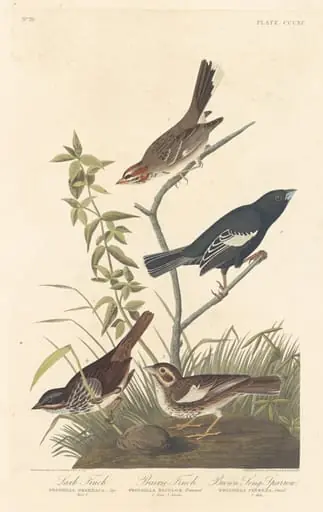 Lark Finch, Prairie Finch and Brown Song Sparrow
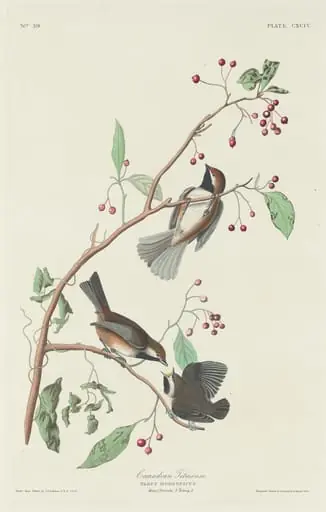 Canadian Titmouse
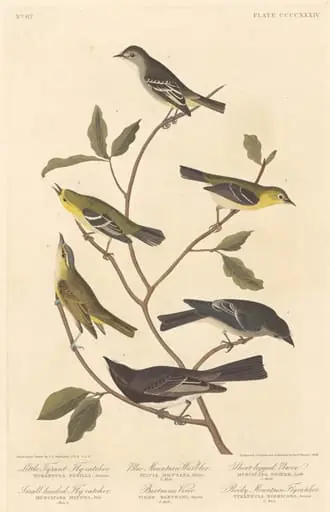 Little Tyrant Flycatcher, Small-Headed Flycatcher, Blue Mountain Warbler, Bartram's Vireo, Short-Legged Pewee, and Rocky Mountain Flycatcher
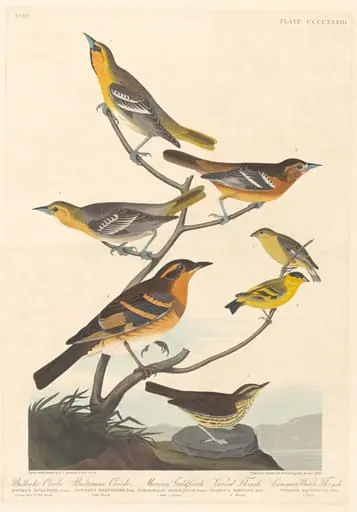 Bullock's Oriole, Baltimore Oriole, Mexican Goldfinch and Varied Thrush
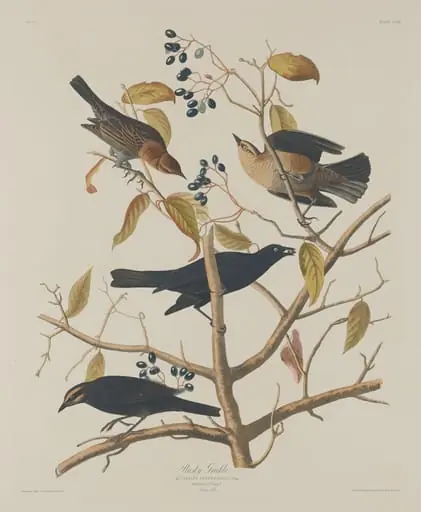 Rusty Grakle
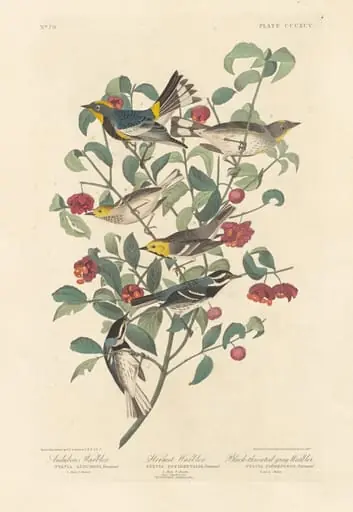 Audubon's Warbler, Hermit Warbler and Black-throated Gray Warbler