Artwork
Arkansaw Siskin, Mealy Red-poll, Louisiana Tanager, Townsend's Finch and Buff-breasted Finch
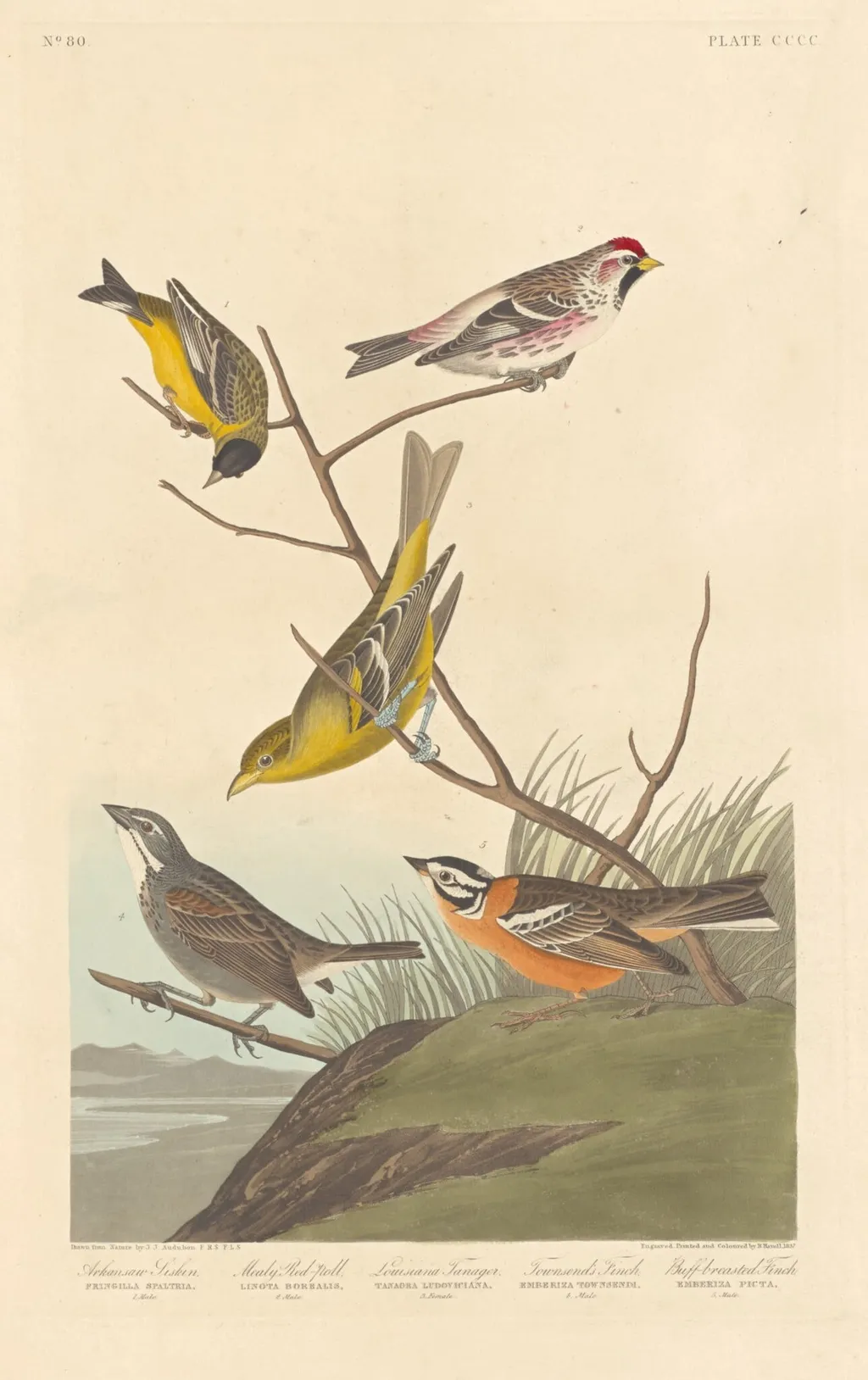
Arkansaw Siskin, Mealy Red-poll, Louisiana Tanager, Townsend's Finch and Buff-breasted Finch is an ink print by the Romanticist artist Robert Havell Jr.. It dates from 1837 and is held in the collection of the National Gallery of Art.
About this work
Overview
The composition presents five North American bird species arranged across a naturalistic setting, each rendered with botanical and anatomical care.
Created in 1837 by Robert Havell Jr., this print is one of five avian studies produced as part of a larger natural history project. Executed in hand-colored engraving and aquatint on Whatman wove paper, it exemplifies the technical precision and color fidelity for which the Havell workshop was known. The composition presents five North American bird species arranged across a naturalistic setting, each rendered with botanical and anatomical care.
Subject & Meaning
The print depicts five distinct bird species native to North America: the Arkansaw Siskin, Mealy Red-poll, Louisiana Tanager, Townsend’s Finch, and Buff-breasted Finch. Each is labeled with its scientific name, reflecting the period’s emphasis on classification. The birds are shown perched on branches and grasses, suggesting their natural habitats. The inclusion of multiple species underscores a documentary intent rather than aesthetic display alone.
Technique & Style
Havell employed aquatint to achieve subtle tonal gradations in the sky and foliage, while fine-line engraving defined the birds’ plumage and branches. Hand-coloring was applied with precision to match observed hues, enhancing realism without exaggeration. The use of Whatman paper, prized for its durability and smooth surface, allowed for crisp detail and layered washes. Background elements are softly rendered, drawing focus to the birds’ form and color.
History & Provenance
This print originated from a collaborative natural history endeavor, likely linked to John James Audubon’s ornithological publications, for which Havell was the principal engraver. The Havell family had established a reputation for high-quality reproductive prints in early 19th-century London. The work was produced during a period when scientific illustration was increasingly valued for its accuracy, and such prints were distributed to institutions and private collectors across Europe and America.
Context
In the 1830s, natural history illustration was a vital bridge between science and public curiosity. European and American audiences sought detailed visual records of newly documented species. Havell’s work aligned with this trend, contributing to a growing body of visual knowledge. Unlike earlier decorative ornithology, these prints prioritized fidelity to observation, reflecting Enlightenment ideals of empirical study and classification.
Legacy
Havell’s prints remain significant as historical records of avian biodiversity in early 19th-century North America. Their technical rigor set a standard for scientific illustration, influencing later naturalist artists. Though no longer used for taxonomic identification, these images are preserved in museum collections as artifacts of a time when art and science converged to document the natural world with care and precision.
Artist & collection

Artist
The Havell family of Reading, Berkshire, England, included a number of notable engravers, etchers and painters, as well as writers, publishers, educators, and musicians.

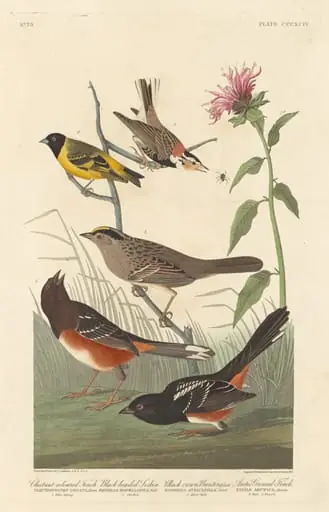 Chestnut-colored Finch, Black-headed Siskin, Black Crown Bunting and Arctic Ground Finch
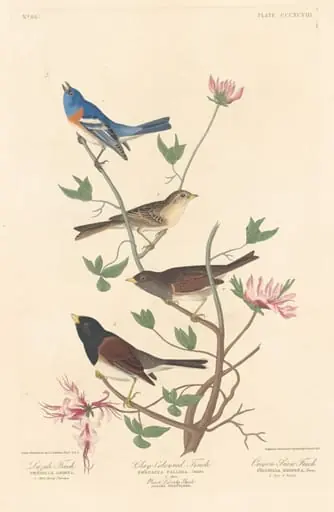 Lazuli Finch, Clay-colored Finch and Oregon Snow Finch
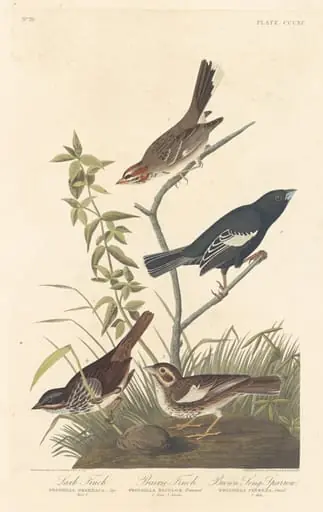 Lark Finch, Prairie Finch and Brown Song Sparrow
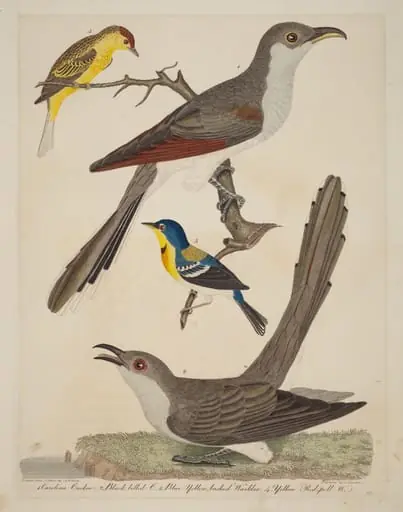 Carolina Cuckoo, Black-billed Cuckoo, Blue Yellow-backed Warbler, and Yellow Red-poll Warbler
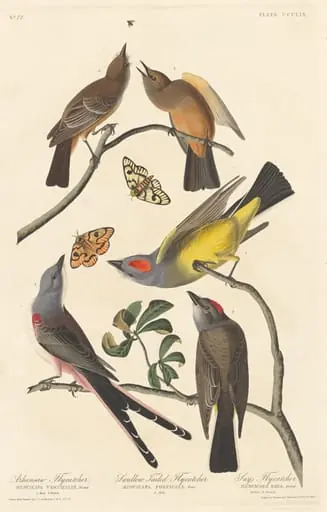 Arkansaw Flycatcher, Swallow-tailed Flycatcher and Says Flycatcher
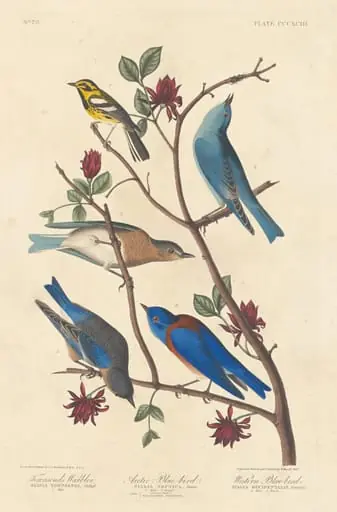 Townsend's Warbler, Arctic Blue Bird and Western Blue Bird
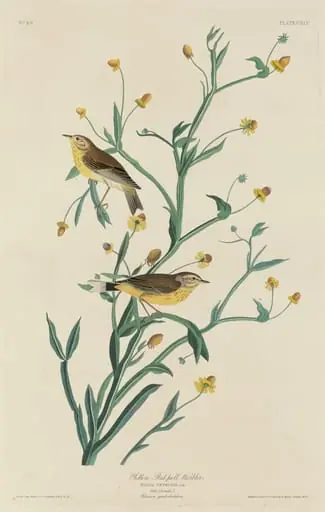 Yellow Red-Poll Warbler
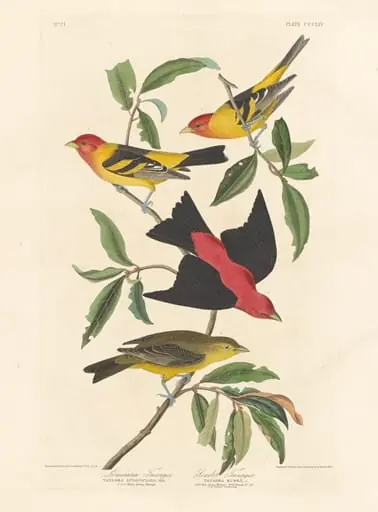 Louisiana Tanager and Scarlet Tanager
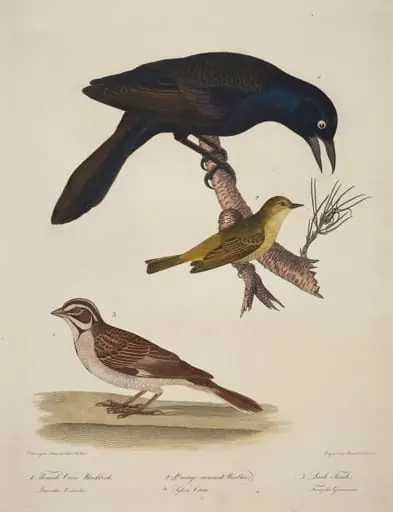 Female Crow Blackbird, Orange-Crowned Warbler, Lark Finch
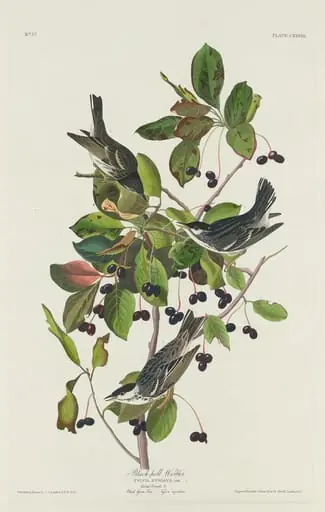 Black-Poll Warbler