Artwork
Sea-side Finch
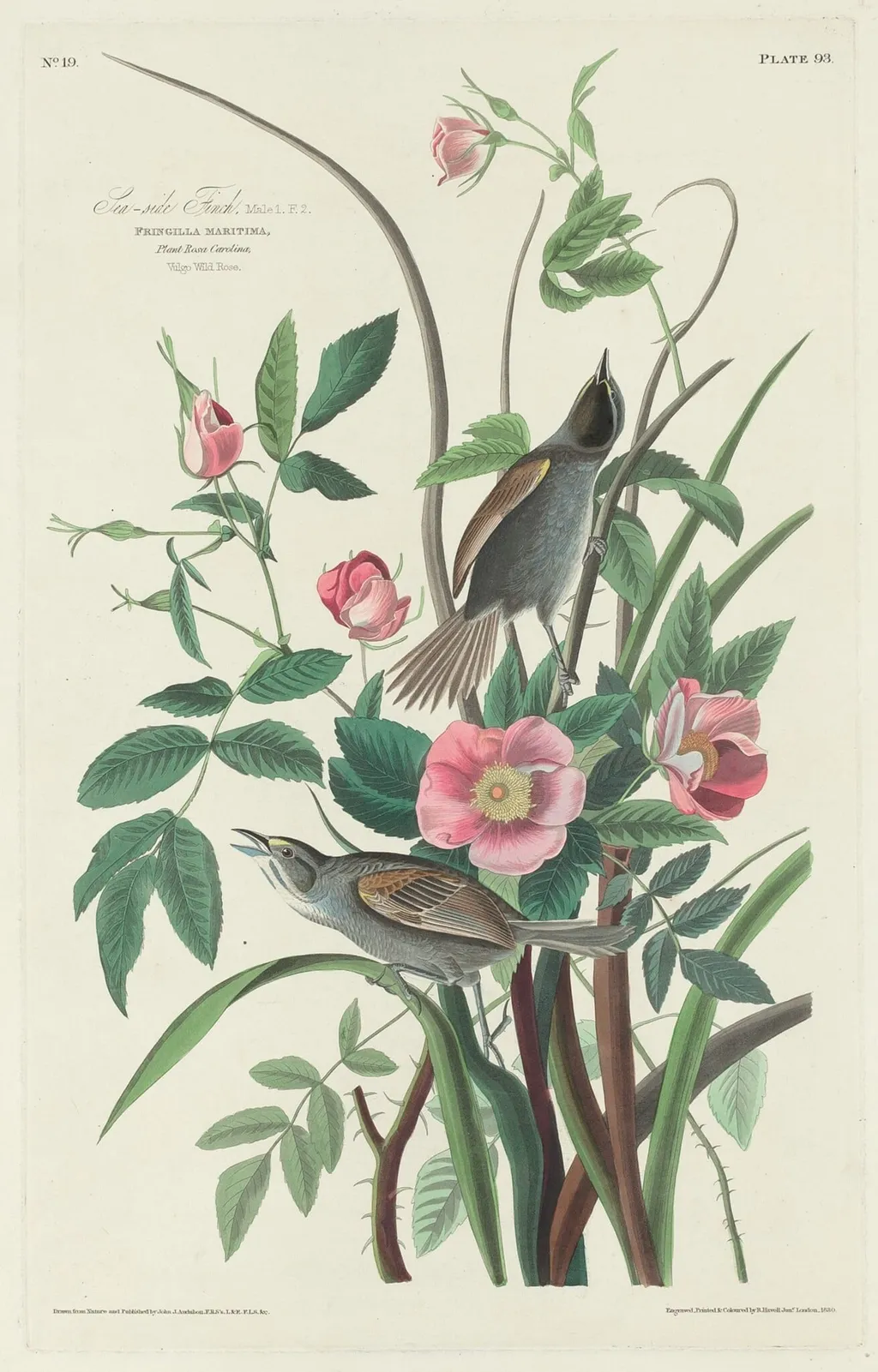
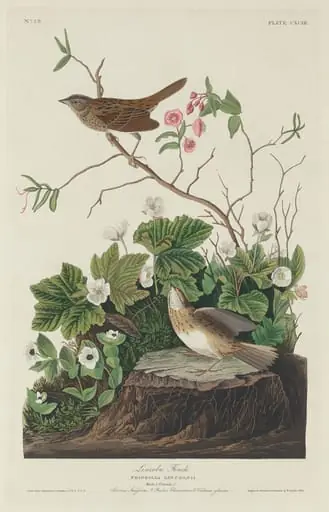
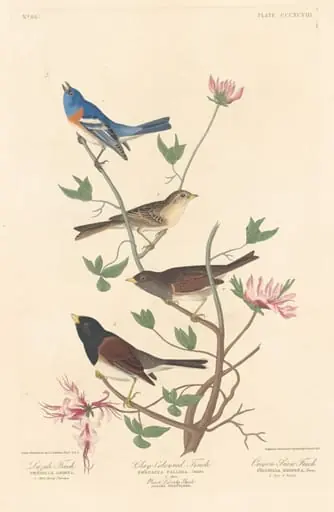
Sea-side Finch is an ink print by the Romanticist artist Robert Havell Jr.. It dates from 1830 and is held in the collection of the National Gallery of Art.
About this work
Overview
It belongs to a tradition of British natural history illustration, where precision and delicate coloration were essential.
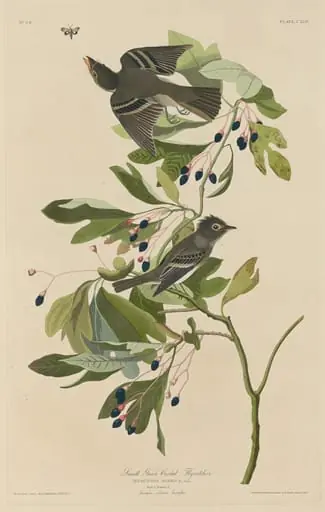
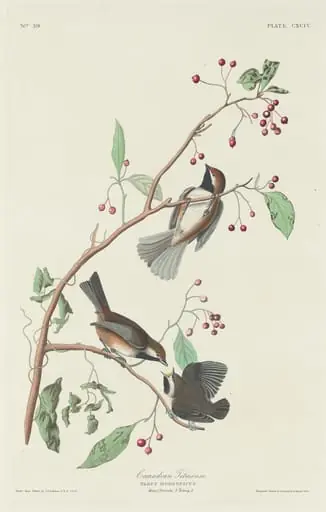
Created in 1830 by Robert Havell Jr., *Sea-side Finch* is a hand-colored engraving and aquatint on Whatman wove paper. It belongs to a tradition of British natural history illustration, where precision and delicate coloration were essential. Havell, trained in a family of engravers, applied technical skill to capture the subtle textures of avian and botanical forms, reflecting the era’s scientific interest in documenting nature with accuracy.
Subject & Meaning
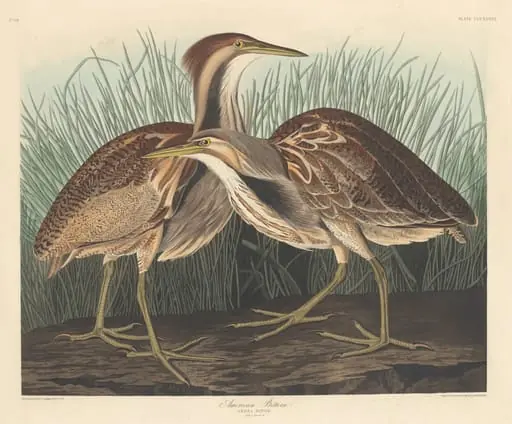
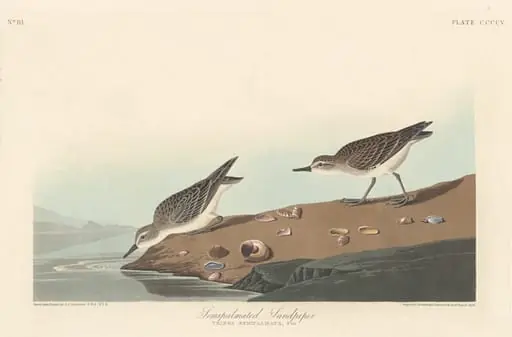
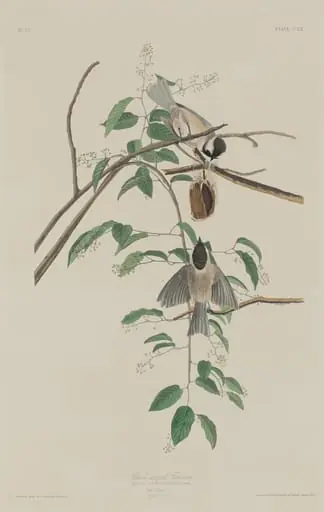
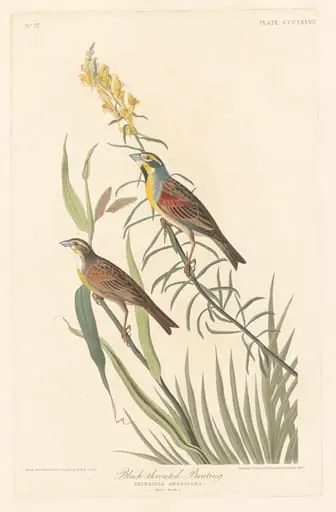
The print depicts two finches perched on a branching stem adorned with pink blossoms and green foliage. The birds face opposite directions, their postures suggesting quiet alertness. Rather than symbolic narrative, the work emphasizes observational fidelity—each feather, petal, and vein rendered with care. It serves as a record of species and habitat, aligning with early 19th-century naturalist practices that valued visual documentation over artistic embellishment.
Technique & Style
Havell employed engraving and aquatint to achieve fine detail and tonal gradation. The feathers are rendered with tightly spaced lines, while the petals and leaves use soft washes of color to suggest volume. Hand-coloring with water-based pigments in muted pinks, greens, and browns enhances realism without overt drama. The use of Whatman paper, known for its smooth texture, allowed for precise ink hold and delicate color application, typical of high-quality natural history prints.
History & Provenance
Robert Havell Jr. inherited a legacy of printmaking from his father, Robert Havell the Elder, and uncle Luke Havell, both established engravers in Reading, Berkshire. The family was active in publishing natural history works and maintained ties to Indian artistic traditions through colonial-era commissions. *Sea-side Finch* emerged from this context, produced during a period when illustrated natural history was gaining popularity among scientific and amateur audiences in Britain.
Context
In the early 1800s, illustrated natural history publications flourished as exploration and taxonomy expanded. Artists like Havell worked closely with scientists to produce accurate depictions of flora and fauna. *Sea-side Finch* reflects this collaboration, aligning with projects such as Audubon’s *Birds of America*, though on a smaller scale. Its production underscores the role of printmaking in disseminating scientific knowledge to a broader public.
Legacy
Havell’s work contributed to the standardization of natural history illustration, where technical precision and aesthetic restraint were valued. While not widely known today, his prints remain important examples of early 19th-century printmaking techniques and the intersection of art and science. Collections preserving his work continue to inform studies on the history of biological illustration and the evolution of visual documentation in natural sciences.
Artist & collection

Artist
The Havell family of Reading, Berkshire, England, included a number of notable engravers, etchers and painters, as well as writers, publishers, educators, and musicians.