Artwork
Madonna and child
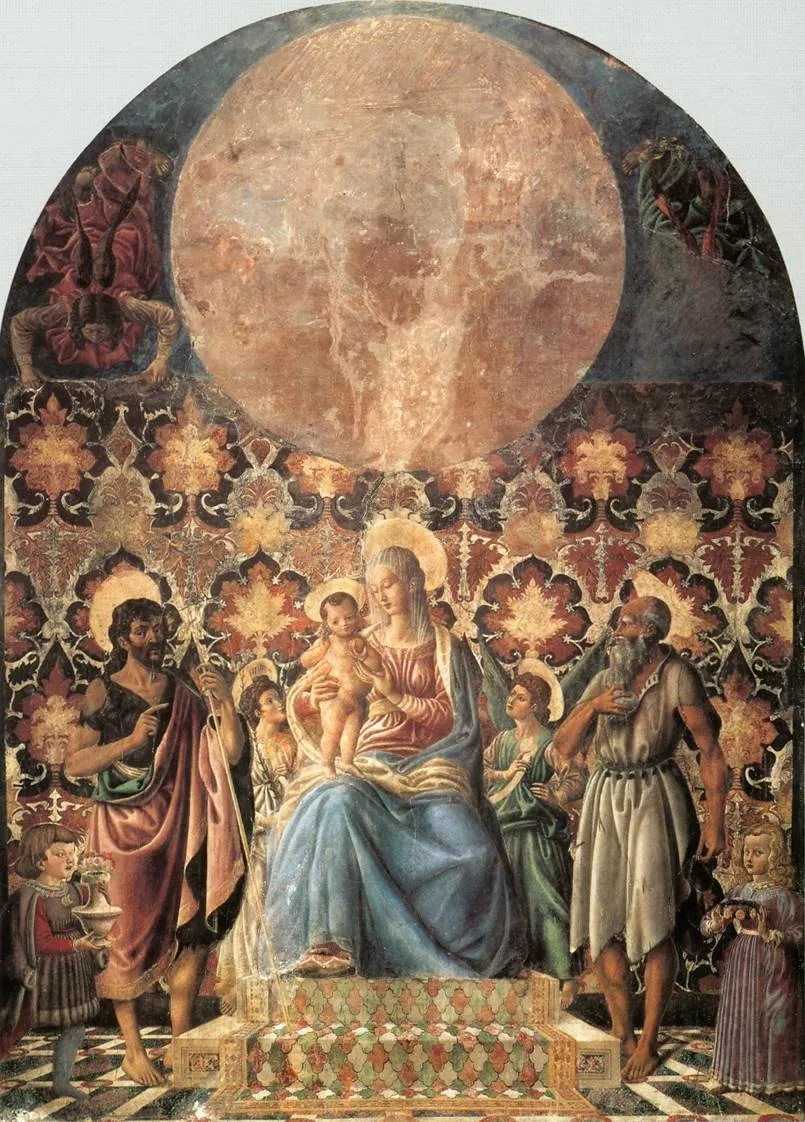
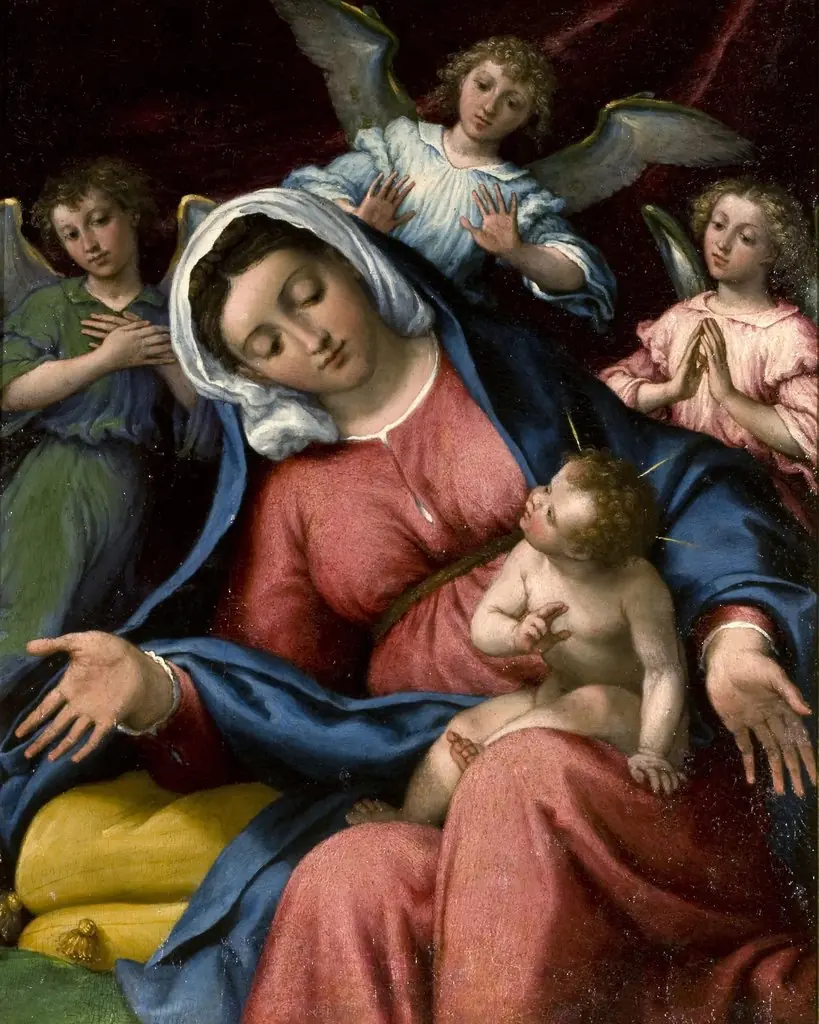
Madonna and child is a fresco painting by the Early Renaissance artist Andrea del Castagno. It dates from 1443 and is held in the collection of the Uffizi Gallery.
About this work
Overview
The Casa Pazzi Madonna is a 1443 fresco fragment by Andrea del Castagno, originally the altarpiece of Santa Brigida chapel at Castello del Trebbio. Now in the Uffizi's Contini Bonacossi collection, it depicts the Virgin Mary with the Christ child surrounded by five attendants.
Subject & Meaning
The painting portrays the Madonna and Child as the central figures, accompanied by three standing and two kneeling figures, all in flowing robes. The composition suggests a scene of anticipatory attention focused on the child, with the Madonna's calm demeanor contrasting with the child's averted gaze.
Technique & Style
Executed in fresco, the work features a predominantly deep blue, red, and green palette with pervasive gold accents. A golden background with a prominent pale circular motif above the central figures adds to the overall luminosity.
History & Provenance
Originally part of the Castello del Trebbio's chapel, the fresco was later owned by Andrea de' Pazzi. Removed from its original location in the 19th century, it is now preserved in the Uffizi Gallery as part of the Contini Bonacossi collection.
Context
Created for a chapel, this fresco reflects the religious art patronage of the time, blending devotional themes with the artistic innovations of the early Renaissance.
Legacy
As a preserved fragment of a Renaissance altarpiece, the Casa Pazzi Madonna provides insight into the artistic practices and religious culture of 15th-century Italy, though its current state as a fragment limits its original contextual impact.
Artist & collection

Artist
Andrea del Castagno had a quick, sharp career in 15th-century Florence. He wasn’t the most famous painter of his time, but he stood out for his bold, almost sculptural figures that looked ready to step off the wall. His…

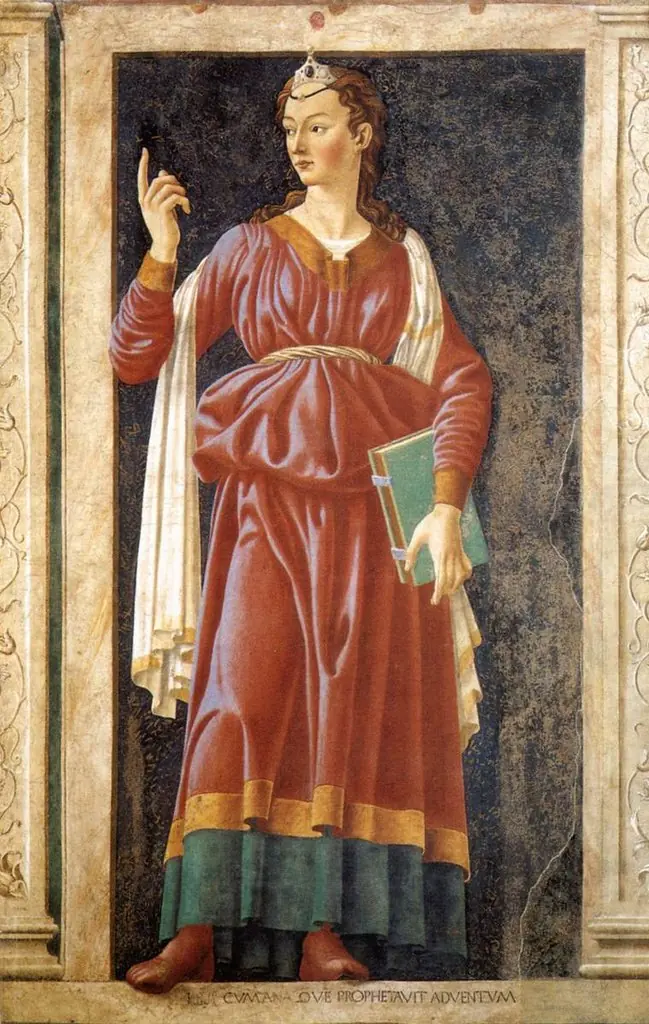
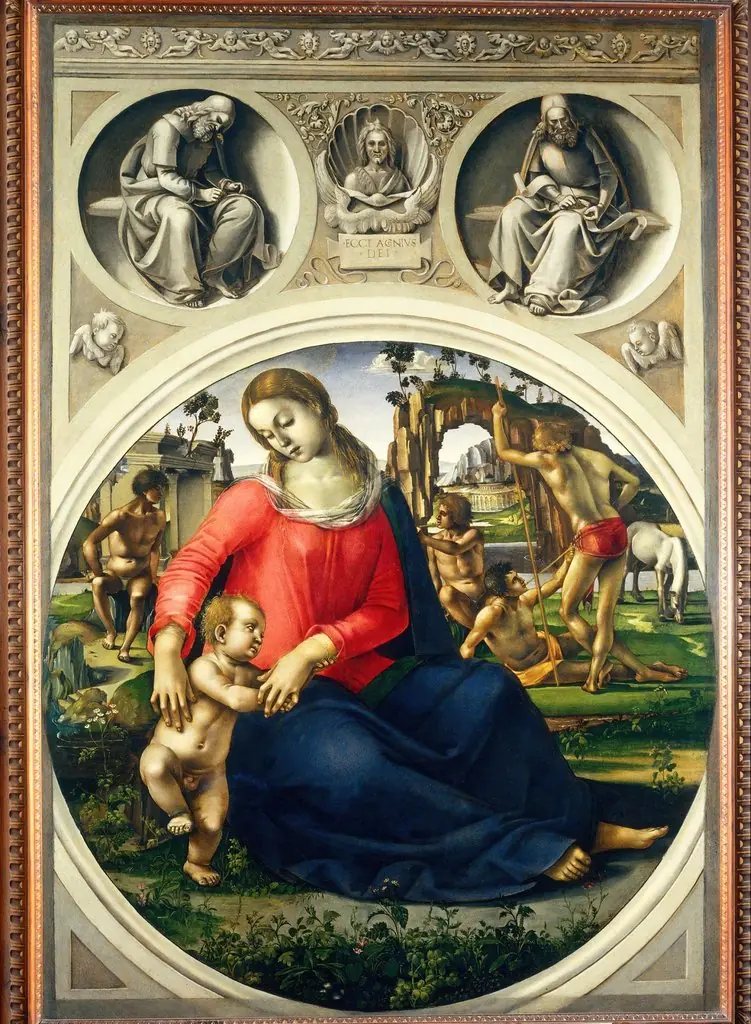 Madonna and Child
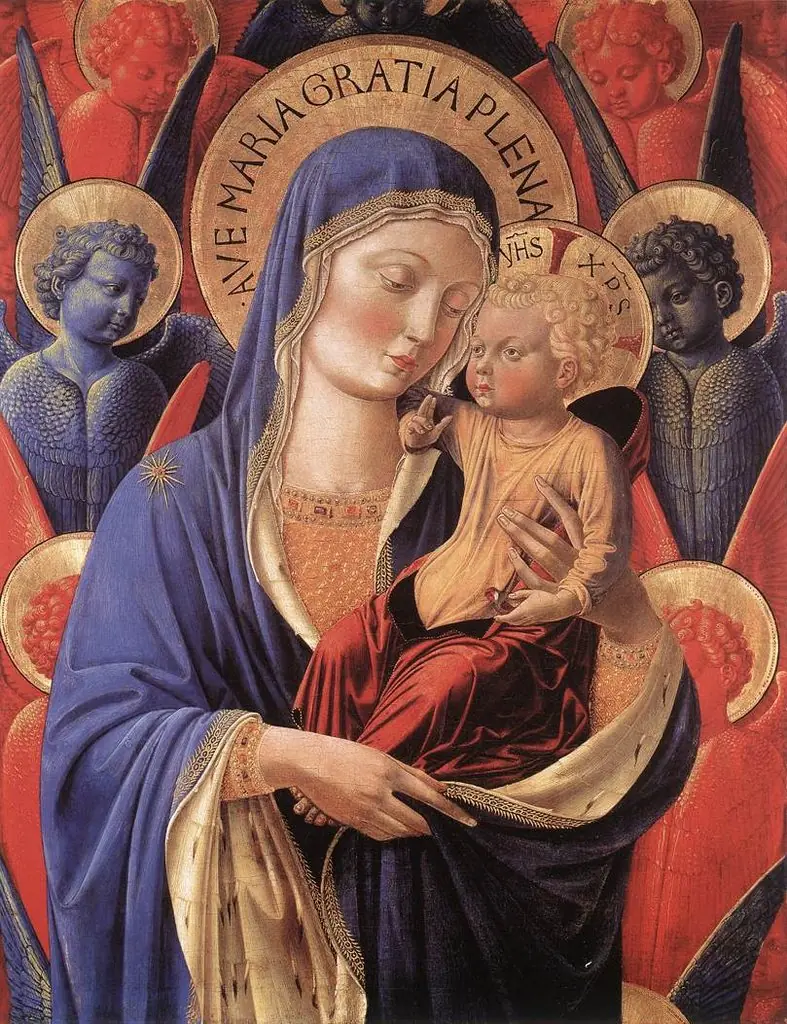 Madonna and Child
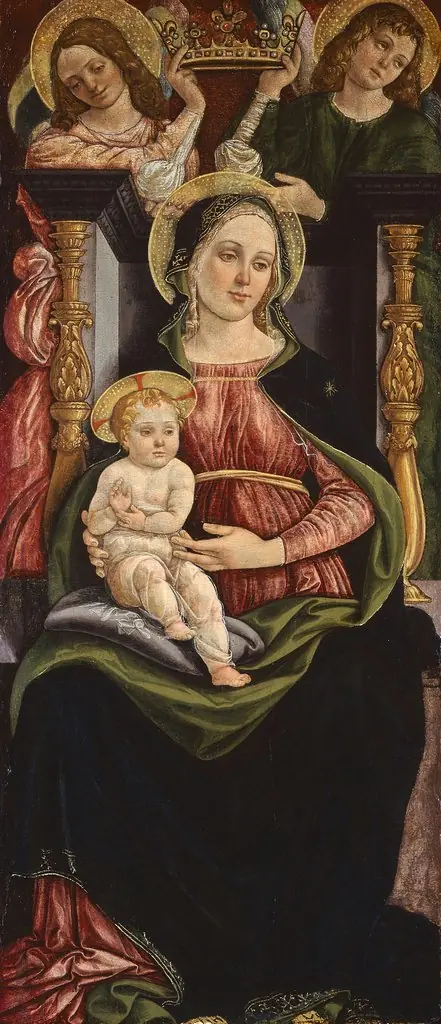 Virgin and Child Enthroned with Two Angels Holding a Crown
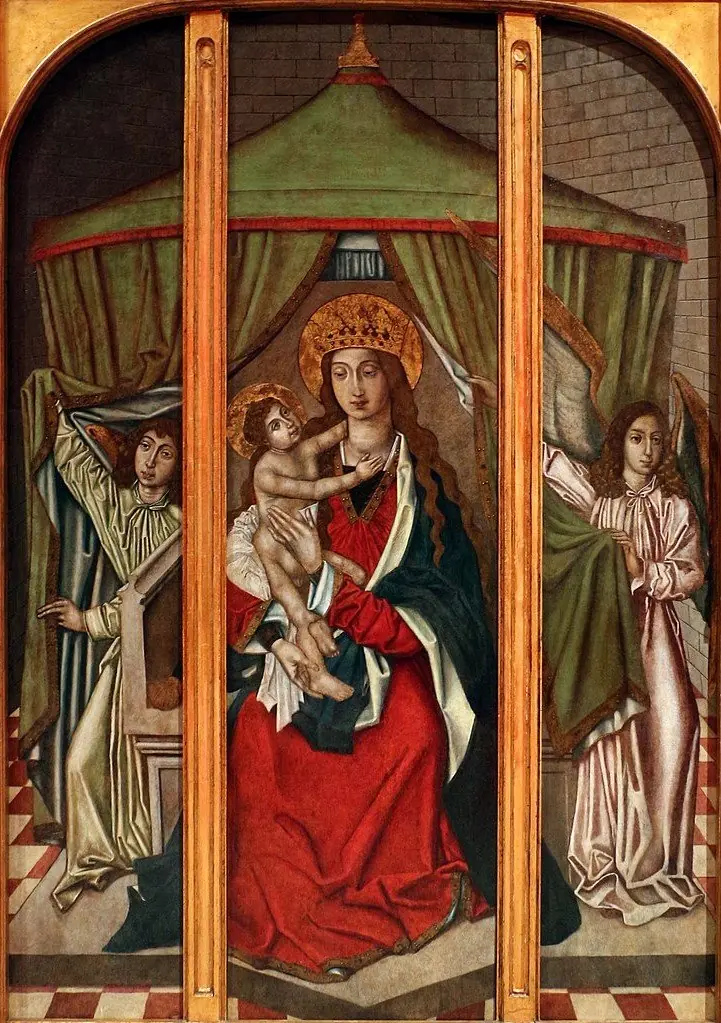 A Virgem Maria e o Menino Jesus com dois Anjos
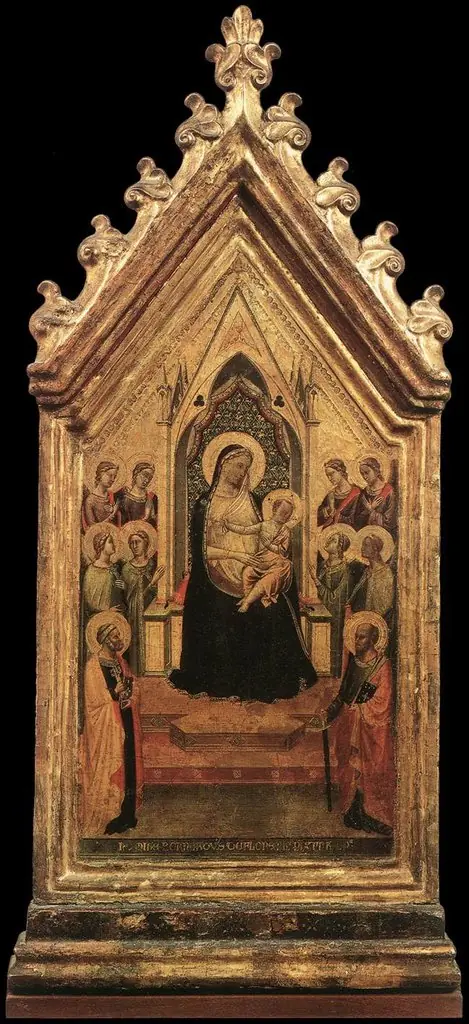 Madonna and Child Enthroned with Angels and Saints
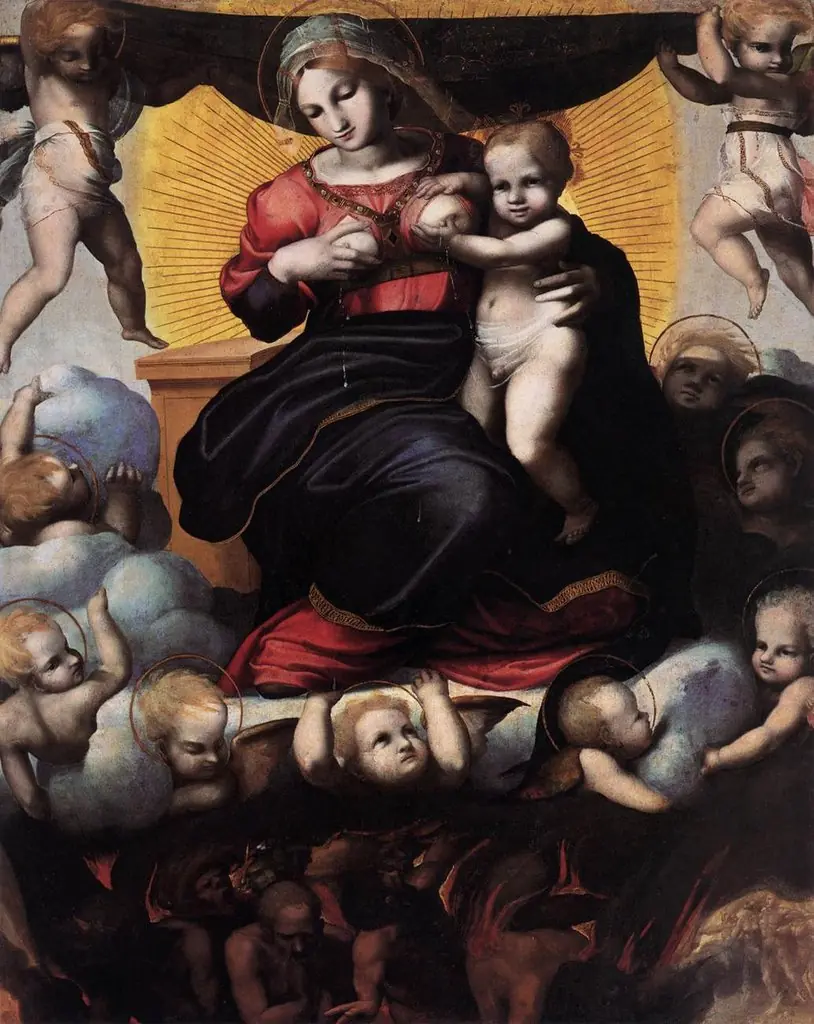 The Virgin and the Souls of Purgatory
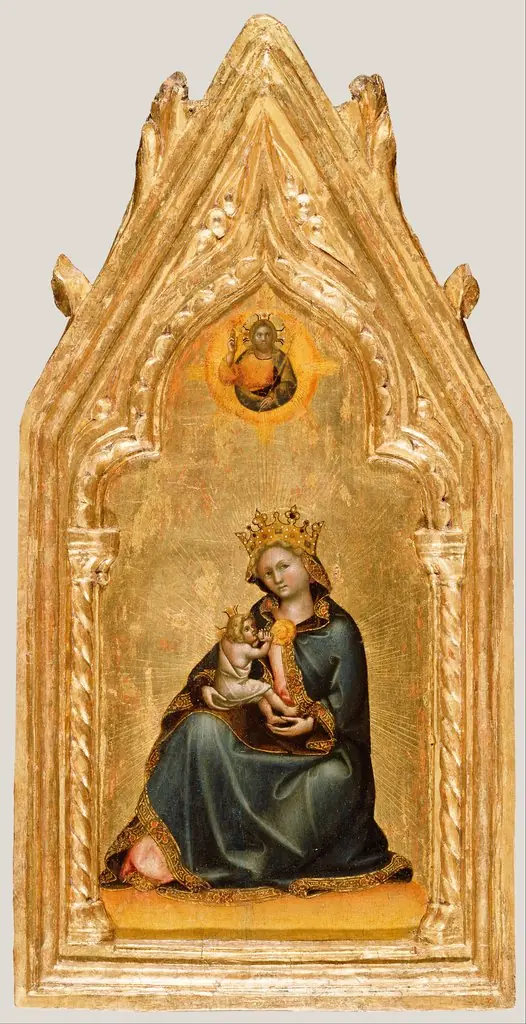 Madonna of Humility
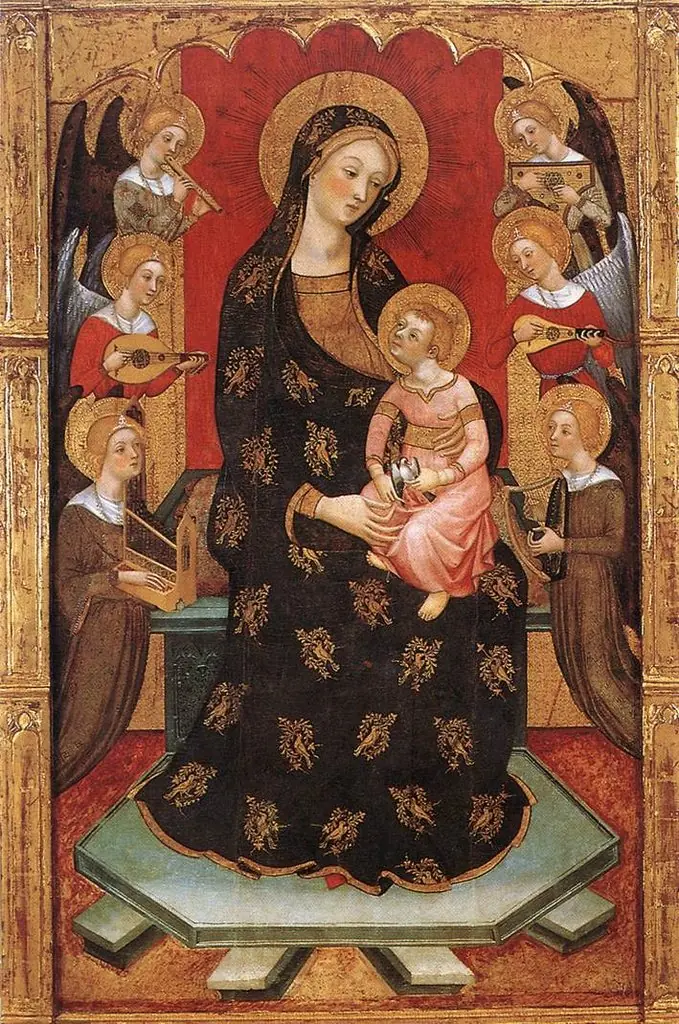 Virgin of the Angels
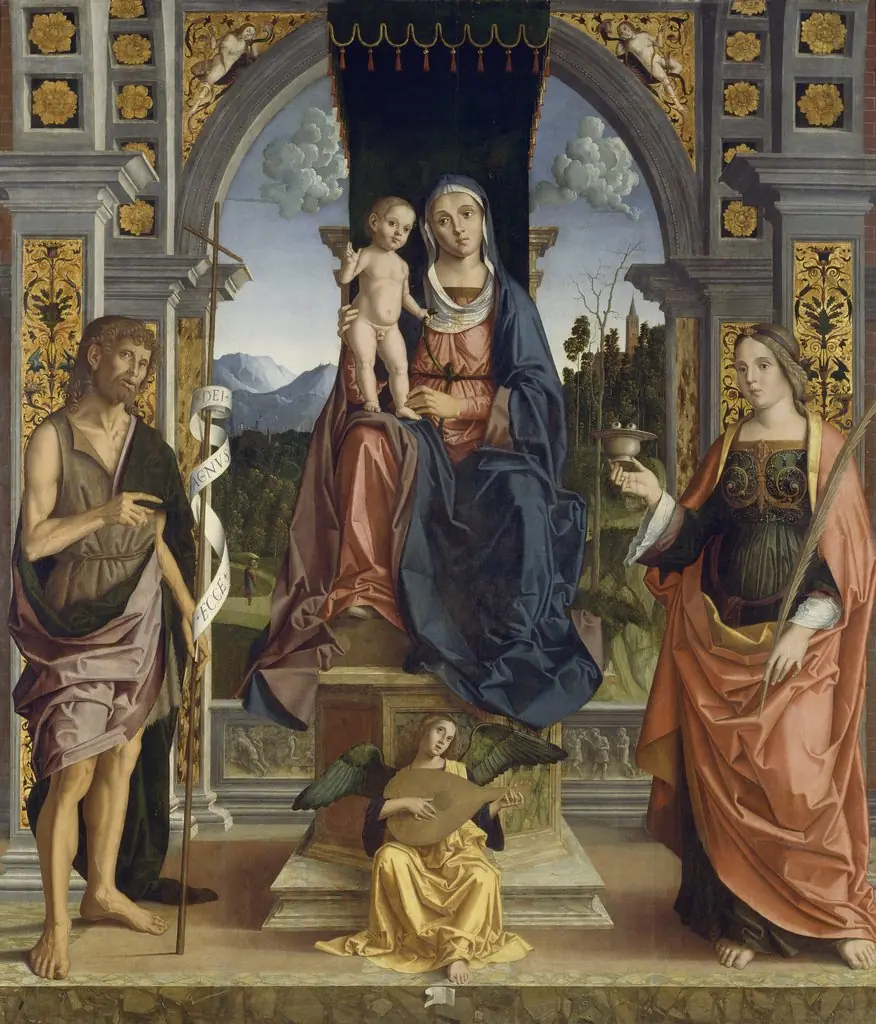 The Virgin and Child Enthroned, with Saints John the Baptist and Lucy
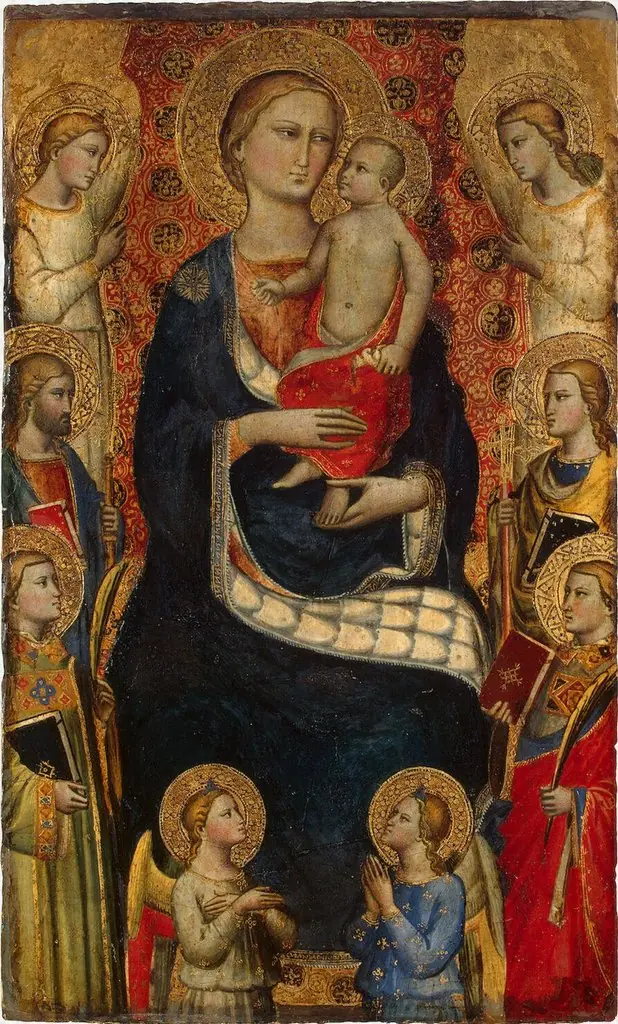 Madonna and Child, Four Saints and Four Angels
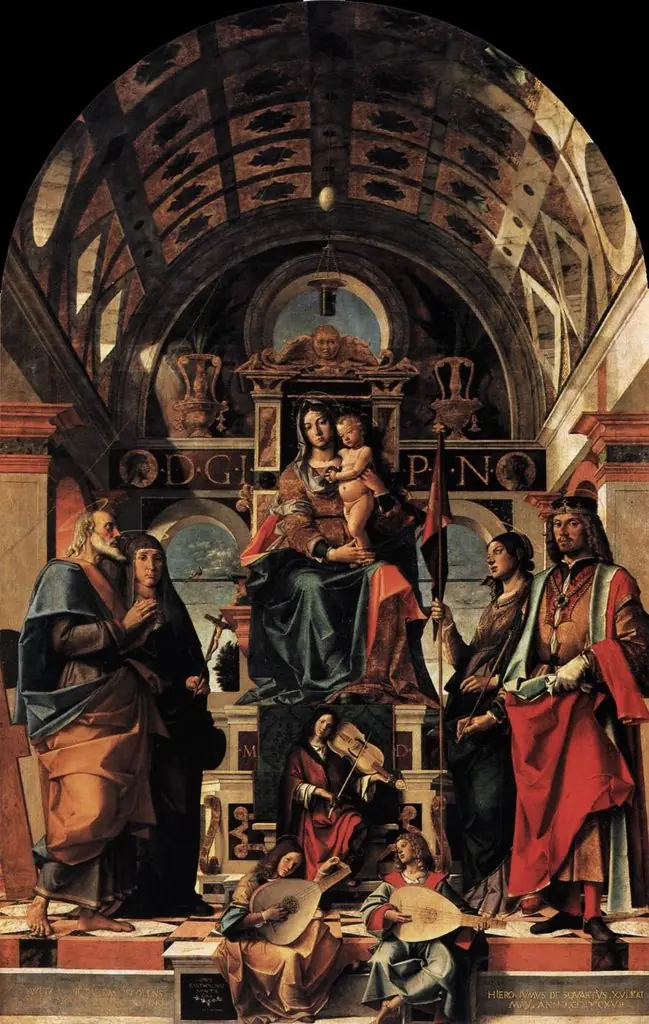 Madonna and Child enthroned with Saints
 Madonna della Grazie