Artwork
Famous Persons: The Cumean Sibyl
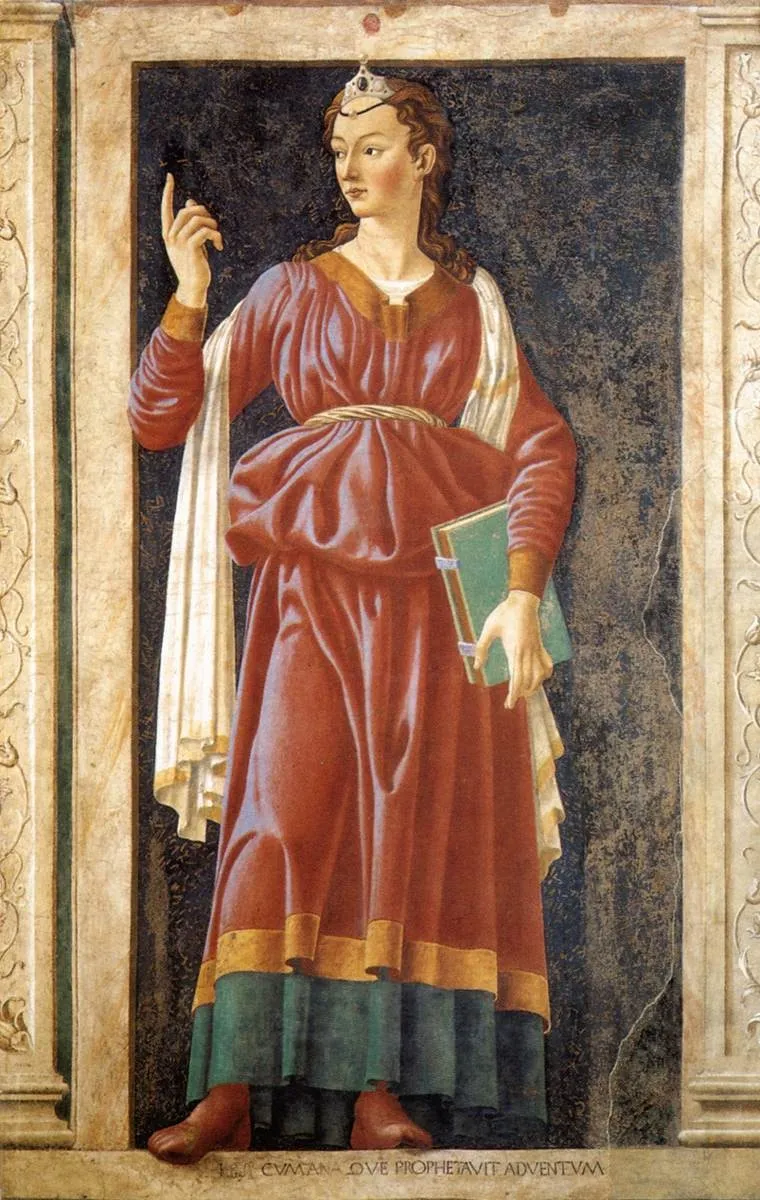
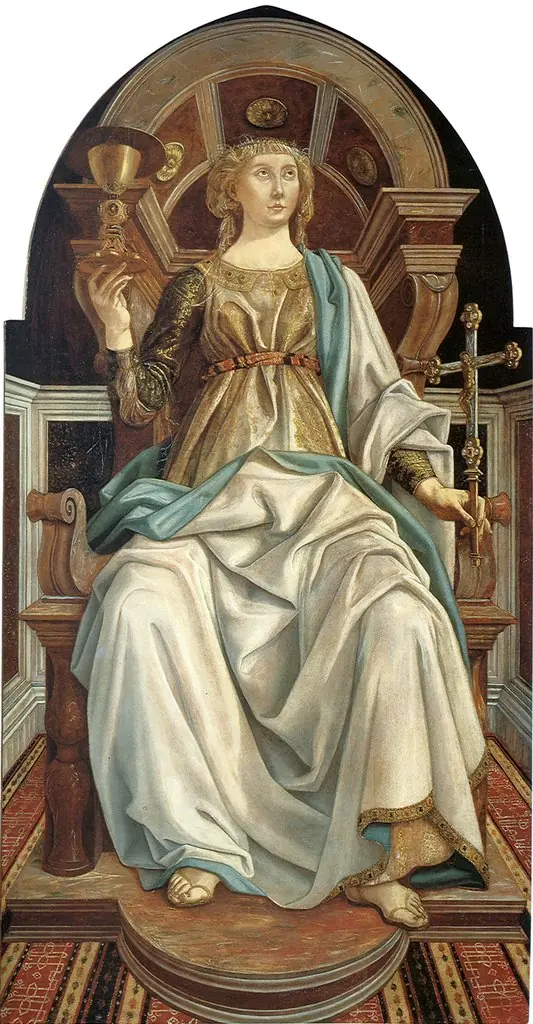
Famous Persons: The Cumean Sibyl is a fresco painting by the Early Renaissance artist Andrea del Castagno. It dates from 1450 and is held in the collection of the Uffizi Gallery.
About this work
Overview
Created around 1450, the fresco known as The Cumean Sibyl belongs to the oeuvre of Andrea del Castagno and is presently displayed in the Uffizi Gallery. The work depicts a solitary female figure rendered against a dark backdrop, her attire and gestures drawing attention to her prophetic role within the tradition of classical sibyls.
Subject & Meaning
The figure is identified as the Cumean Sibyl, a legendary prophetess from ancient lore. She is shown in a red robe with a gold belt, a white mantle draped over her shoulders, and a crown, holding a green book in her right hand while her left hand points upward, suggesting the transmission of divine knowledge.
Technique & Style
Executed in true fresco, the pigment was applied to wet plaster, allowing the colors to become integral to the wall surface. Del Castagno employs a stark chiaroscuro, juxtaposing the luminous garments and decorative frame against a deep, unlit background, thereby emphasizing the sitter’s three‑dimensional presence.
History & Provenance
The painting has remained in the Florentine collection since its early acquisition, eventually becoming part of the Uffizi Gallery’s holdings. Its attribution to del Castagno is based on stylistic analysis and documentary evidence linking the work to his mid‑15th‑century production.
Artist & collection

Artist
Andrea del Castagno had a quick, sharp career in 15th-century Florence. He wasn’t the most famous painter of his time, but he stood out for his bold, almost sculptural figures that looked ready to step off the wall. His…