Artwork
Maria mit dem Jesusknaben
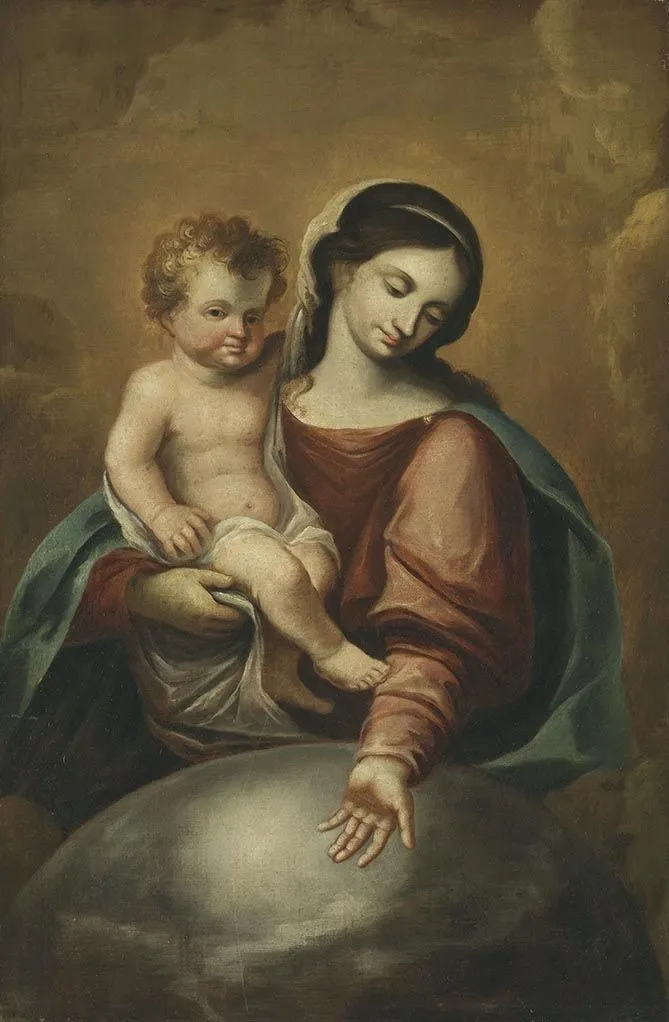
Maria mit dem Jesusknaben is an unspecified painting by the Flemish Baroque painting artist Andreas Wolff. It dates from 1672 and is held in the collection of the Bavarian State Painting Collections.
About this work
Overview
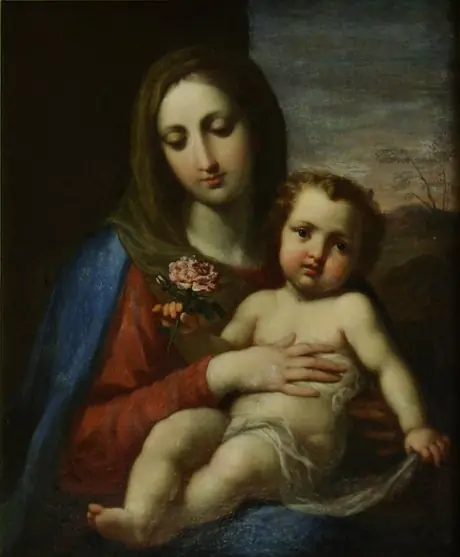
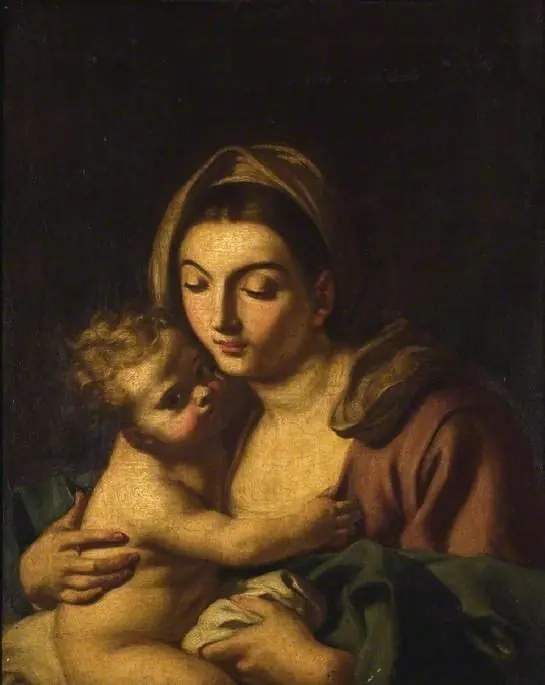
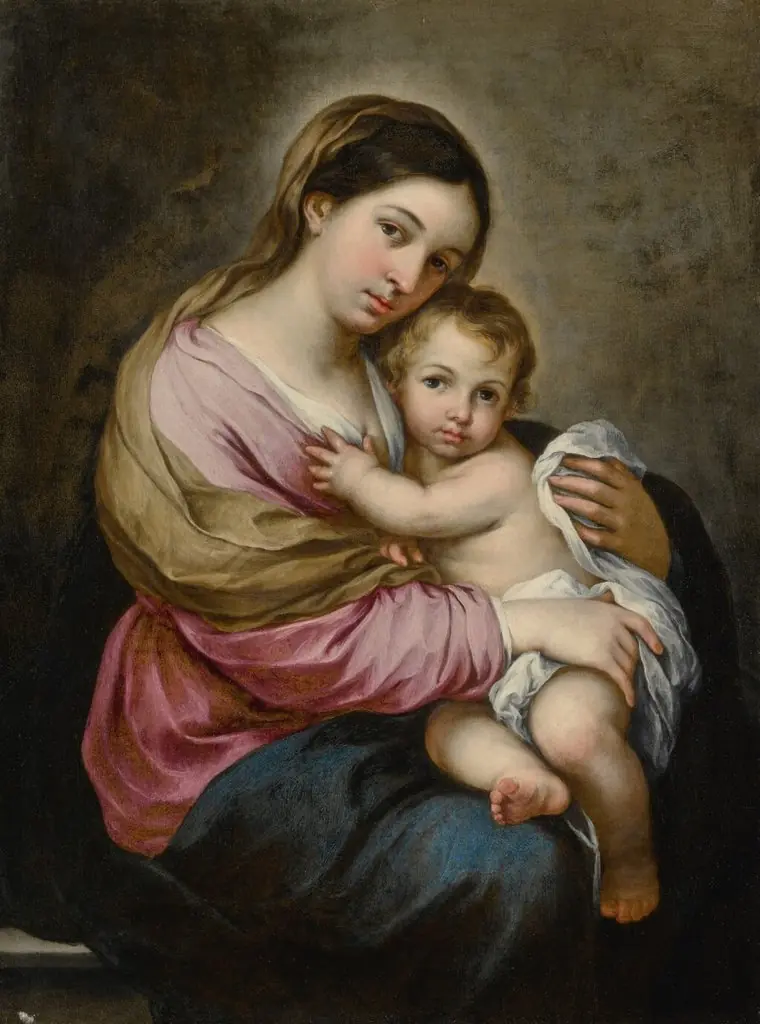
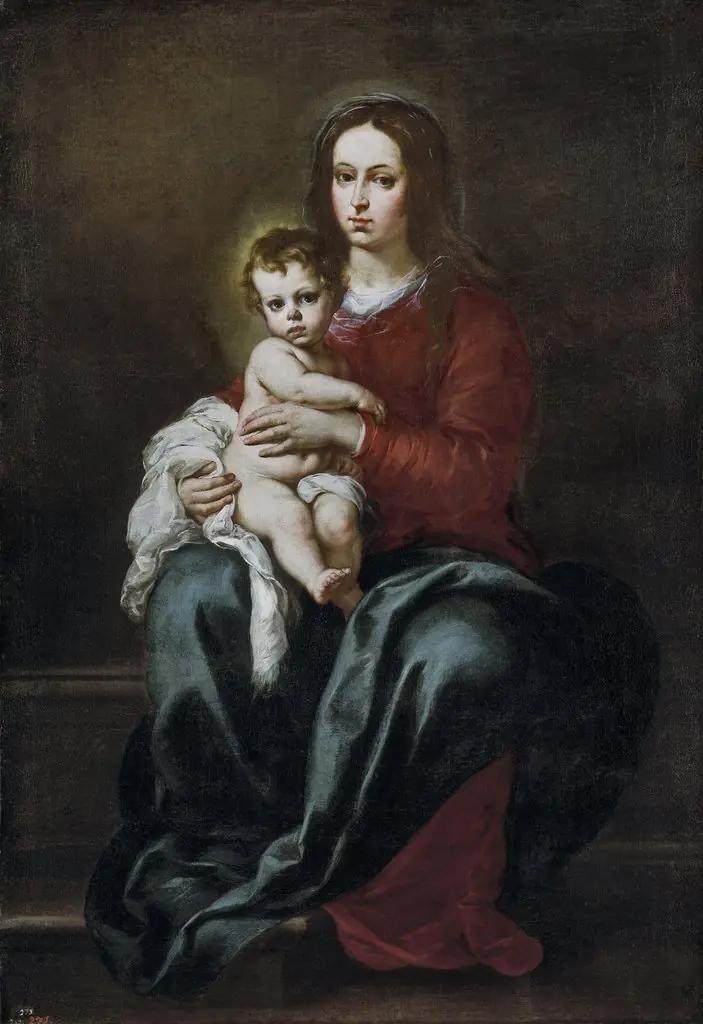
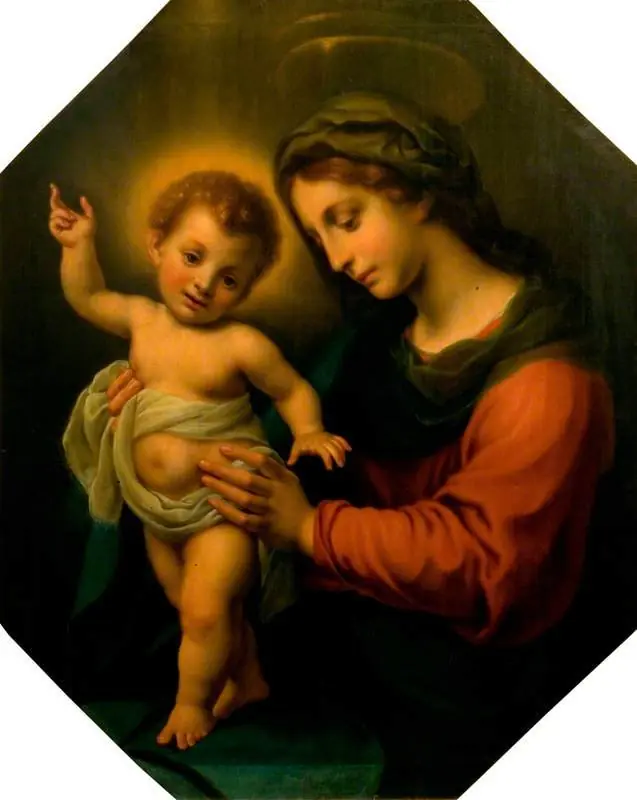
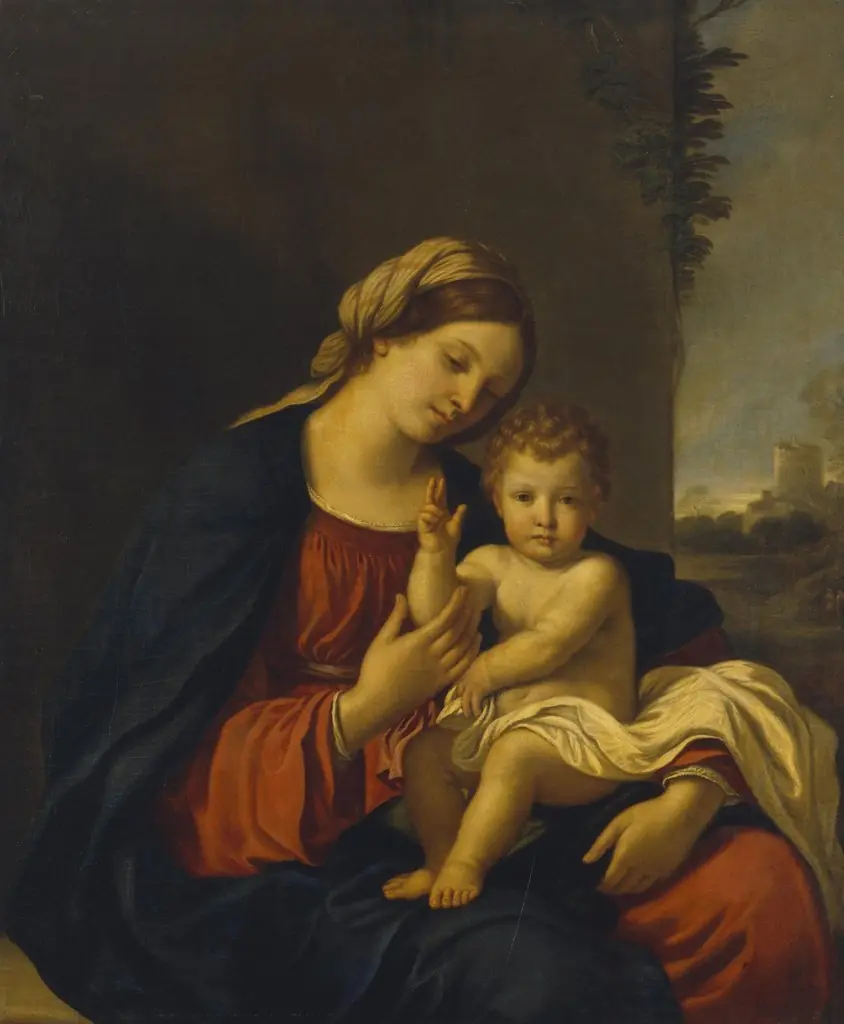
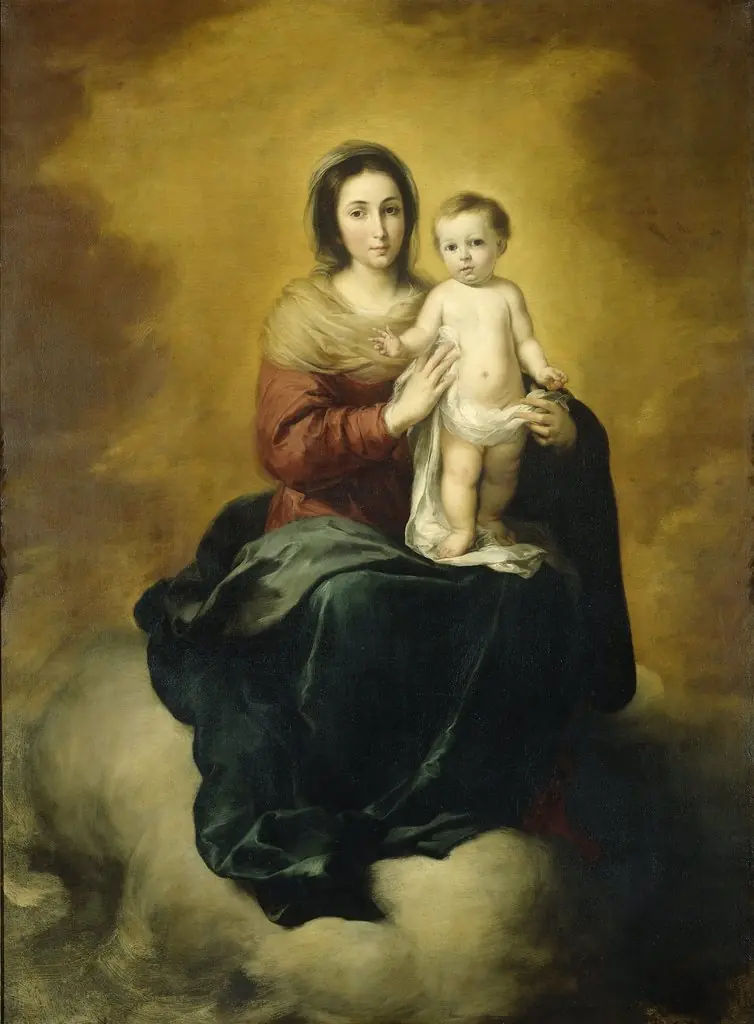
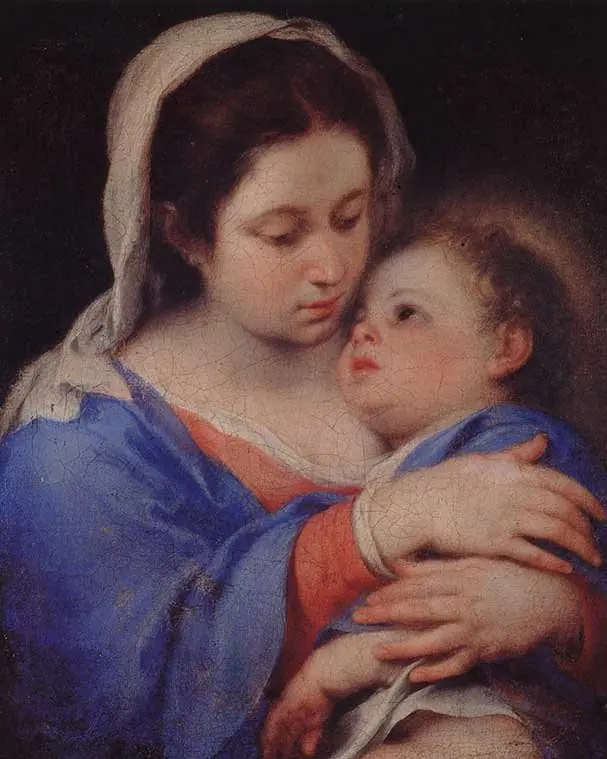
Andreas Wolff’s 1672 oil painting, titled *Maria mit dem Jesusknaben*, depicts the Virgin Mary cradling the infant Jesus. The work is part of the collection of the Alte Pinakothek in Munich. Rendered in a modest scale, the composition centers on a seated figure against a muted brown backdrop, emphasizing the intimate encounter between mother and child.
Subject & Meaning
The image presents Mary in a contemplative pose, her eyes gently closed, suggesting devotion and maternal tenderness. The infant, swaddled in white, gazes directly at the viewer, creating a solemn exchange that underscores the theological focus on the humanity of Christ and the sanctity of the mother’s role.
Technique & Style
Wolff employs a restrained palette of reds, blues, and earth tones, allowing the red dress and blue cloak to stand out against the subdued background. The figures rest upon a gray sphere, rendered with soft modeling that conveys volume. Brushwork is smooth, and the blurred backdrop serves to isolate the subjects, a common Baroque device for spiritual focus.
History & Provenance
Created in the late seventeenth century, the painting entered the Alte Pinakothek’s holdings at an unspecified date, where it remains on public display. Its provenance prior to museum acquisition is not extensively documented, but the work reflects the devotional art commissioned for private chapels in southern Germany during Wolff’s career.
Context
Wolff, active in the Bavarian region, produced religious works that catered to Counter‑Reformation sensibilities, emphasizing clear narrative and emotional accessibility. *Maria mit dem Jesusknaben* aligns with contemporary depictions of the Virgin that favored intimate, humanized portrayals over grandiose, celestial settings, reflecting a shift toward personal piety in the period’s visual culture.
Artist & collection