Artwork
Iisus binecuvântând
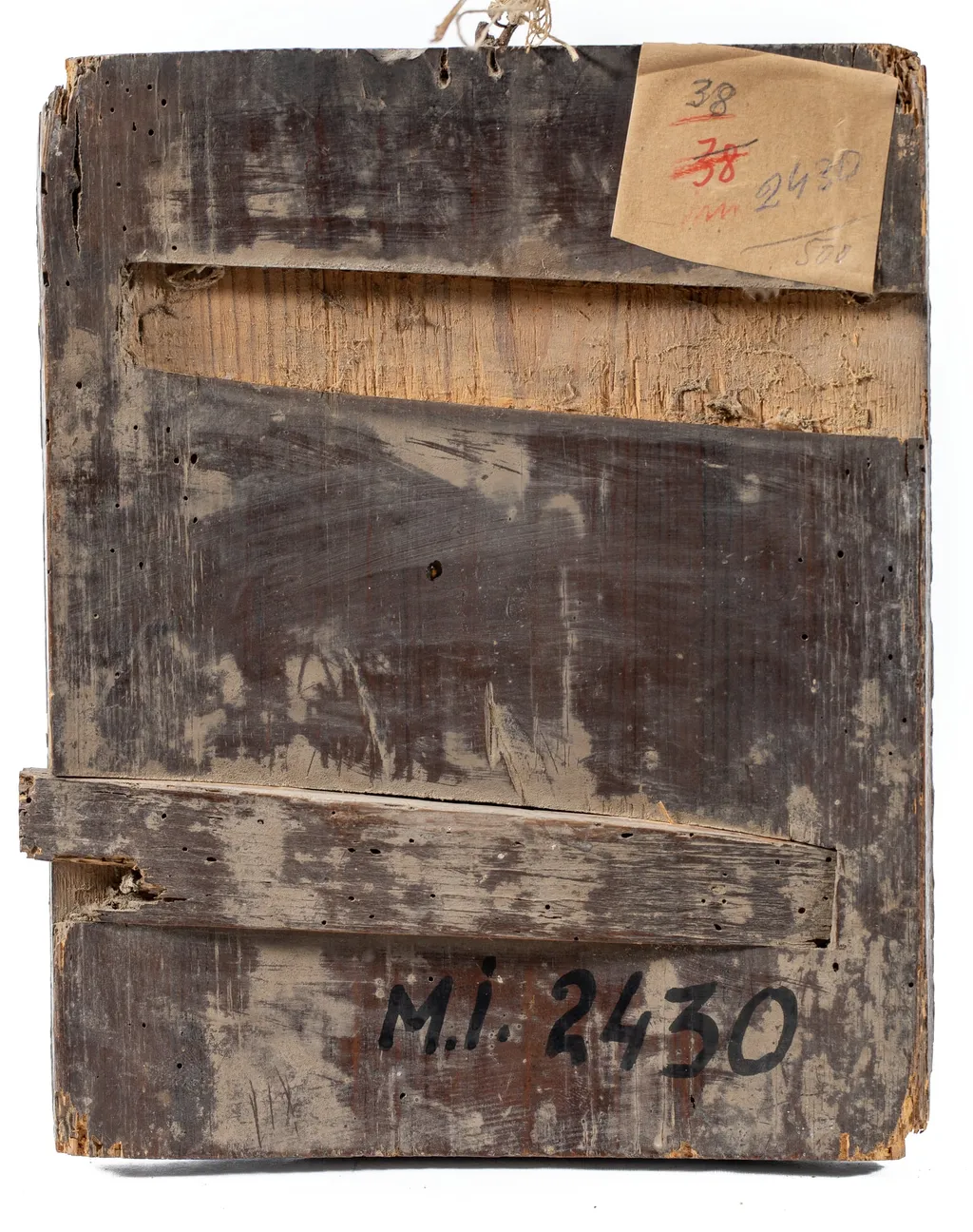
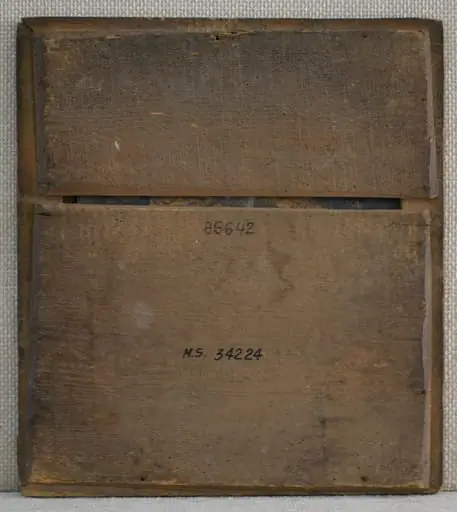
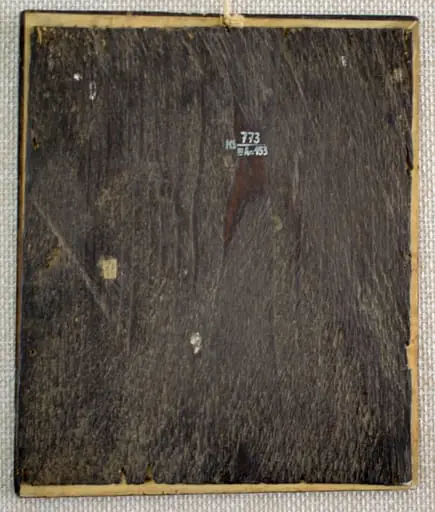
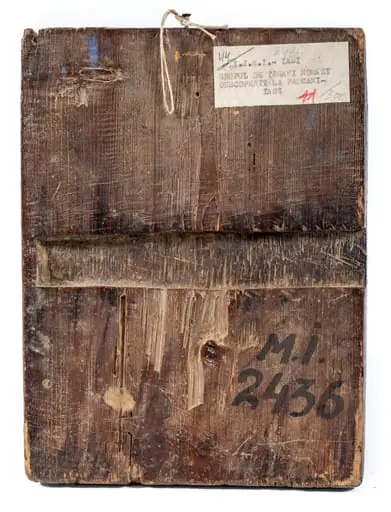
Iisus binecuvântând is a drawing by anonim. It is held in the collection of the Moldova National Museum Complex. This work is a painted wooden panel, its surface heavily worn through time and use.
About this work
Overview
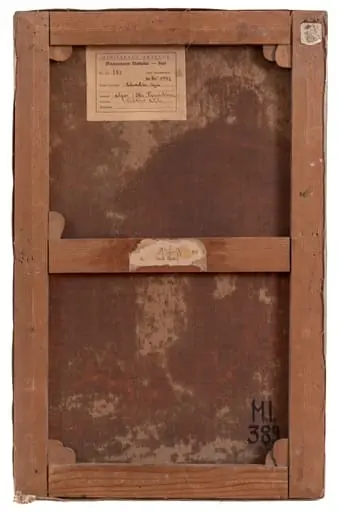
Faded pigments and darkened streaks obscure much of the original imagery, while nail holes and repair marks suggest repeated handling or reinstallation.
This work is a painted wooden panel, its surface heavily worn through time and use. Faded pigments and darkened streaks obscure much of the original imagery, while nail holes and repair marks suggest repeated handling or reinstallation. A small, aged paper label in the upper corner bears handwritten alphanumeric notation, likely an inventory or catalog identifier. Beneath the visible layer, faint traces of earlier compositions remain, hinting at a history of overpainting or reuse.
Subject & Meaning
The title suggests a depiction of Christ blessing, a common devotional subject in Eastern Orthodox tradition. However, the current state of the panel obscures any clear representation. The underlying sketches may have once formed the figures of Christ and possibly attendants, but their forms are now indistinct. The work likely served a liturgical or private devotional purpose, though its exact iconographic program is no longer legible.
Technique & Style
The panel was painted with tempera or oil on wood, typical of medieval and early modern Balkan iconography. The visible wear indicates the use of thin, layered pigments susceptible to abrasion. Faint underdrawings suggest preparatory sketching, possibly with charcoal or ink, a common practice before applying color. The surface shows signs of repainting, indicating the image was modified or restored over time to maintain its religious function.
History & Provenance
The panel’s physical condition—nail holes, repairs, and overpainting—points to prolonged use in a religious setting, possibly a village church or home altar. The handwritten label implies it was cataloged by a collector, museum, or ecclesiastical archive. Its origin is likely from a region with strong Orthodox traditions, such as Moldavia or Wallachia, where wooden icons were commonly produced and reused over centuries.
Context
In Eastern Orthodox communities, icons were not merely artworks but objects of veneration, often repainted or restored as their surfaces deteriorated. This panel reflects a practice where the sacred image was maintained through successive layers, prioritizing spiritual continuity over aesthetic preservation. Similar panels from the 16th to 18th centuries show comparable wear, indicating widespread reuse of wooden supports for devotional imagery.
Legacy
Today, the panel stands as a physical record of devotional practice rather than a finished composition. Its layered surface offers insight into the lifecycle of religious images in pre-modern contexts, where impermanence was accepted as part of sacred function. Scholars study such works to understand material practices, restoration habits, and the evolving role of icons in daily religious life.
Artist & collection
Artist
This anonymous painter made small religious scenes with bold, flat colors and shaky lines, following old church traditions.
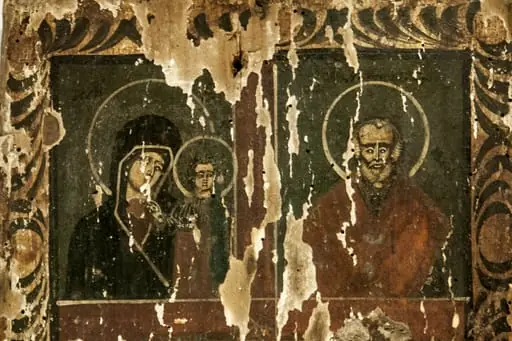 Un câmp central sub formă de cruce, împarte spațiul pictural în patru casete dreptunghiulare care conțin următoarele scene: Stânga sus Maica Domnului cu Pruncul tipul Kazanskaia. Este reprezentată până la piept, nu se văd mâinile, înveșmântată cu maforion negru cu galon alb. Are chipul îndurerat, privirea tristă, capul ușor înclinat spre Prunc. Iisus – Emanuel, binecuvintează cu dreapta, privirea îndreptată lateral, către sfântul Nicolae..Chiton brun deschis, himation verde. Dreapta sus - Sf. Nicolae în veșminte simple, capul descoperit, cărunt, cu barba rotundă și scurtă, privind la rândul său către pruncul Iisus. Înveșmântat cu sacos verde și omofor mare orange, care îi acoperă umerii. În casetele de jos sunt redați doi sfinți în vârstă, în picioare, în veșminte preoțești, întorși unul către altul, cu privirea îndreptată către scenele din registrul superior. Inscripția ce denominează primul dintre ei a fost ștearsă, cel de al doilea posibil sfântul Savatie?. Icoana are un vădit caracter popular, naiv. Spațiul cruciform pictat cu roșu, fondul scenelor verde închis, 2/3 din fondul scenelor de jos galben-orange. Nimburi trasate cu alb, inscripții caligrafice, litere cursive, cu negru. Compoziția este încadrată de un chenar cu decor vegetal, motive ample de factură populară, specifice spațiului slav.
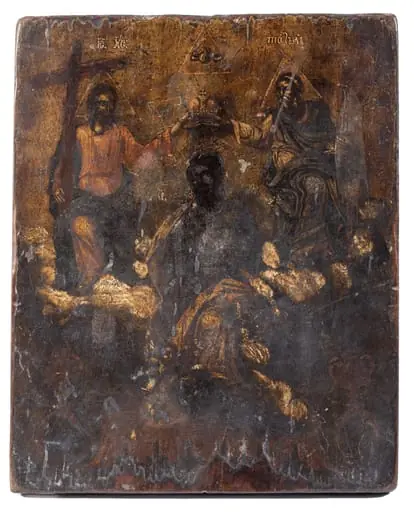 Încoronarea Fecioarei - reprezintă în centrul compoziției pe Fecioara Maria, în planul al doilea pe Iisus Hristos și Dumnezeu Tatăl ținând o coroană în mâini.
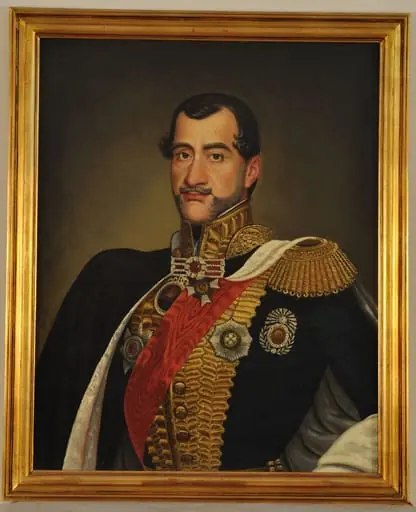 Alexandru Dimitrie Ghica
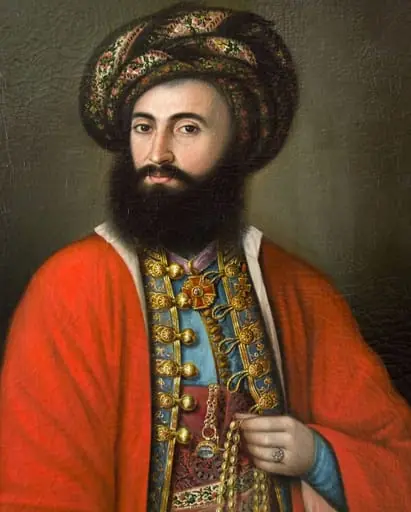 Constantin G. Cantacuzino cu turban (1793 - 1877)
 Icoana este pictată pe dosul unei bucăți de glajă de formă dreptunghiulară în ax vertical. Sfântul Nicolae este redat în prim plan, așezat pe un tron, ținînd Evanghelia închisă în mâna stângă în timp ce cu dreapta binecuvintează. Sfântul Nicolae este înveșmântat ca Mare Arhiereu, cu mitră înaltă, bipartită, omofor mare, verde, decorat cu cruci "patee", sacos roșu cărămiziu cu galon auriu cu motiv spiralat, stihar roșu. De mâna dreaptă îi atârnă bedernița, percepută ca decor al veșmântului. Chipul este sobru, barba albă,scurtă,la fel părul scurt, ondulat. Ochii sunt negri, bine definiți, arcadele evidențiate. Nimb auriu. Tronul, cu spătarul înalt, are marginea aurită realizată în trepte(surmontatea de câte o cruce) și decorată cu motiv spiralat. Spătarul este alb, decorat cu o rețea de linii negre dublate cu bleu, întretăiate. În colțurile de sus câte un serafim pe nori. Câmpul verde intens în partea de jos, până la nivelul jilțului, albastru de Prusia în registrul superior. Desenul este îngrijit, compoziția aglomerată, paleta cromatică variată, culorile tari, Inscripția cu negru în partea de sus, greu vizibilă. Rama, din lemn de brad băițuit, este alcătuită din patru șipci profilate pe o porțiune mică spre interior, îmbinate oblic la colțuri, decorată cu un motiv ușor ondulat, imitînd fibra lemnului, dispus oblic. Dos din scândurele subțiri de brad, dispuse orizonal și fixate în cuie.
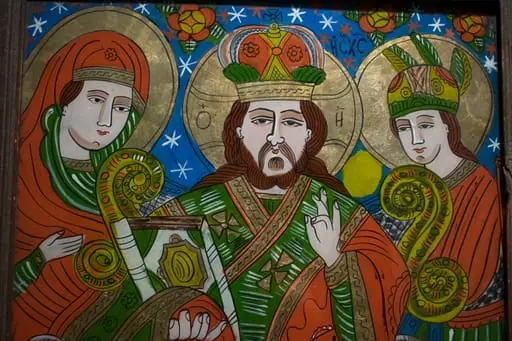 Icoacrip
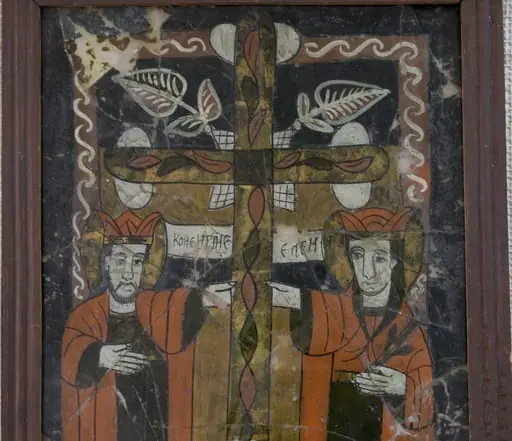 Pictură în oglindă, pe spatele unei bucăți de glajă, ax vertical.Sfinții Împărați Constantin și Elena, 3/4 , în picioare, semiprofil, sub brațele crucii pe care a fost răstignit Isus( găsită de Împărăteasa Elena la Ierusalim) Amândoi au plete castanii, lăsate pe umeri, coroane înalte, veșminte identice, simple, lungi, cămăși verzi și mantii roșii. Plasarea personajelor sub brațele crucii, în jumătatea inferioară, pe fond ocru sugerează complementaritatea celor două planuri(terestru și ceresc). Împărăteasa ține în mână o ramură verde, element ce o însoțește în majoritatea reprezentărilor populare. Fețele sunt ușor diforme, ochii negri. Crucea dreaptă, plasată în centrul compoziției, decorată cu frunze și o spirală în partea de jos, creează simetrie. La întretăierea brațelor crucii elemente vegetale cu contur alb. Chenarul specific icoanelor de Nicula, linia albă(zăluțe, funie) pe fond roșcat. Icoana este caracteristică perioadei de înflorire a picturi pe sticlă de la Nicula. Rama profilată, din lemn de brad, pictată cu o culoare roșcată. Dosul subțire. Sticla spartă în mai multe fragmente.
 Icoana este pictată "în oglindă", pe un suport de sticlă de formă dreptunghiulară în ax vertical. Cuvioasa Parascheva, 3/4, redată din ușor semiprofil, ține în mâna dreaptă o ramura verde, sinuoasă, în stânga o cruce. Fața butucănoasă, ochii căprui, sprâncenele arcuite, gura marcată cu roșu, bărbia pătrată, părul castaniu, lung, revărsat pe umeri. Pe cap poartă o tocă înaltă tripartită. Este înveșmîntată cu o mantie roșie și cămașă albastră. În jurul capului, aureolă realizată cu bronz auriu. Câmp bicolor(1/2 superior -bleu, 1/2 inferior ocru) două ramuri de trandafiri dispuși pe laturile verticale, întâlnindu-se deasupra capului sfintei. Desenul stângaci, dar destul de îngrijit, corola de flori, predominanța culorii roșii, abundența detaliului, fondul bicolor, utilizarea bronzului auriu, sunt caracteristici ale fazei târzie a picturii din centrele Nicula și Gherla. Rama subțire din lemn de brad, de culoare închisă, este completată cu un "dos" nou din scândură de brad.. Țăranii considerau că sfânta Parascheva păzește de grindină și de dureri de cap.
 Fecioara Maria cu Pruncul
 Sfinții Constantin și Elena
 În centrul icoanei este Crucea aurie, cu vrejul de ramificații fitomorfe orange, iar în stânga crucii este Sfântul Împărat Constantin și în dreapta este Împărăteasa Elena, mama sa. Crucea găsită este susținută cu bucurie de cei doi sfinți. Veșmintele Sfinților Constantin și Elena sunt într-o combinație de roșu vermillon, galben și orange. Spațiul albastru senin, din cerul din fondul icoanei, duce cu gândul la Crucea de lumină apărută pe cer In hoc signo vinces - prin acest semn vei învinge. În registrul inferior, este un câmp decorativ geometrizant alternativ de roșu-orange-roz-gri. În registrul superior, în colțurile stânga-dreapta sunt 2 îngeri serafimi. Cromatica este armonioasă: roșu vermillon, roz, galben-ocru, albastru cobalt, ceruleum, alb, negru. Icoana este de Țara Oltului. Inscripția din româno-chirilică se traduce Sf Constantin Elena.
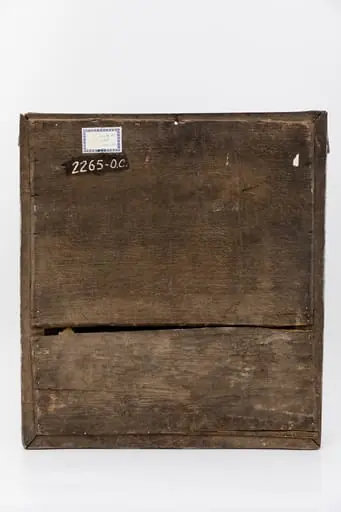 Cei Trei Sfinți Ierarhi Vasile cel Mare, Ioan Gură-de-Aur și Sfântul Grigorie Cuvântătorul de Dumnezeu slujesc și săvârșesc Sfânta Liturghie împreună. Sunt înveșmântați în veșminte liturgice: sacos, felon și epitrahil. Sfântul Vasile cel Mare binecuvântează cu crucea în mâna stângă și ține în mâna dreaptă Sfânta Evanghelie. Sfântul Ioan Gură-de-Aur și Sfântul Grigorie binecuvântează cu mâna stângă și ține în mâna dreaptă Sfânta Evanghelie. Fondul este văzduhul verde văratic, bogat ornamentat cu elemente astrale albe și roșii, în registrul superior, în registrul inferior este un câmp galben-chihlimbar. Inscripția din româno-chirilică se traduce Sf Vasile Sf Ioan Sf Grigorie. Cromatica este armonioasă și luminos-pastelată: roșu vermillon, roz, corai, gri, albastru ceruleum, cobalt, verde văratic, galben chihlimbar, alb, negru. Icoana este din Țara Oltului, Șcheii Brașovului.
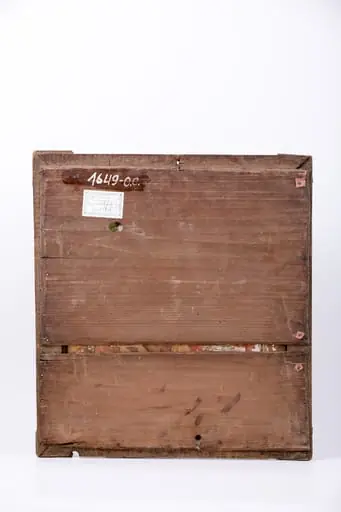 Icoana cu tematica iconografică Botezul Domnului Iisus Hristos este realizată pe trei registre: în registrul central, Domnul Iisus Hristos primește Botezul, în râul Iordanului, din partea Sfântului Mare Prooroc și Înaintemergător Ioan Botezătorul, care se află în stânga Mântuitorului. Mântuitorul este înfășurat cu o pânză de culoare roșie vermillon împrejurul șoldurilor și a coapselor, și are mâinile împreunate pe piept, în semn de supunere, ascultare, smerenie, de bună-voie venind la Botez. În dreapta Lui, este un înger evlavios, cu aripile galbene-aurii de lumină, care Îl așteaptă pe mandorlă de nouri albi-albaștri bleu-ciel, cu un ștergar transparent gata să înveșmânteze Trupul Domnului. Sfântul Ioan Botezătorul este îmbrăcat cu o mantie roșie și un himation alb-albastru sau o haină din păr. Cerurile de culoare albastru sunt deschise și din mijlocul unei mandorle de nouri alb-albaștri se pogoară porumbelul, simbolul Sfântului Duh, pe creștetul Mântuitorului. Cromatica este specifică Țării Oltului: roșu vermillon, albastru cobalt-ceruleum, galben chihlimbar și solar, verde-văratic, brun, crem, rozaliu, alb, negru. Cerul albastru-cobalt și văzduhul verde-văratic sunt bogat ornamentate cu elemente florale - ruje roșii, cu frunze albastre. Întreaga icoană este încadrată pe laterale de chenar decorativ geometrizant bronziu, cu ruje roșii și frunze albastre. Inscripția din româno-chirilică se traduce Botezul Lui IC XC Iisus Hristos. Icoana este de Țara Oltului.
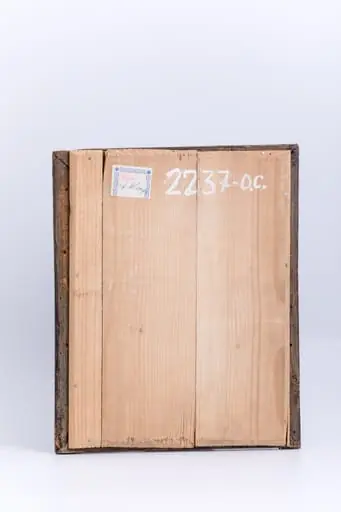 Sfântul Mare Mucenic Gheorghe este așezat călare pe un cal alb-gri, omorând balaurul verde-gri-antracit cu lancea, pe care o ține în amândouă mâinile. Fondul icoanei este cerul cobalt-senin, în registrul superior și alb-bej-bronziu în cel inferior, în centrul icoanei ușor întrepătrundu-se toate culorile. Tunica Sfântului Mucenic Purtător de Biruință este roșie vermillon, cu mânecile verzi, având pantalonii gri, cizme negre și tunică roșie-vermillon. Întreaga compoziție iconografică este încadrată de un chenar decorativ fitomorf, format dintr-o ghirlandă de 7 ruje - trandafiri sălbatici și bujori roșii și roz cu petale și pistil alternativ colorate cu albastru cobalt, roz și roșu vermillon. Ghirlanda excelează prin delicatețea desenului și bogăția cromatică armonioasă. Ziua de praznic a Sfântului Gheorghe este în 23 aprilie, primăvara, justificându-se pentru încă o dată prezența ghirlandei înflorite. Inscripția din româno-chirilică se traduce S. Georgie. Cromatica este armonioasă; roșu vermillon, roz, albastru cobalt, ceruleum, cobalt, gri antracit, ocru, bronziu, brun, crem, alb și negru. Icoana este din Nordul Transilvaniei, Nicula.
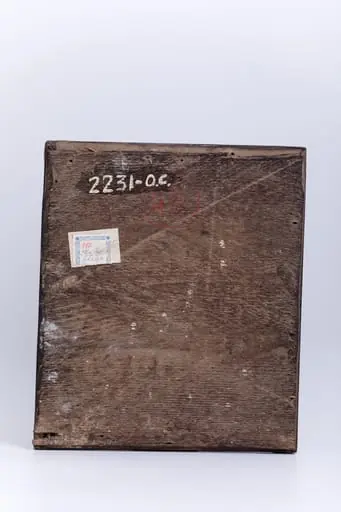 În centrul icoanei este Crucea brun-bronzie, nisipie, cu aripi din elemente vegetale - frunze de finic verzi-corai și bej. În dreapta crucii este Sfânta Împărăteasă Elena, și în stânga este Împăratul Constantin, invers inscripției. Veșmintele sfinților împărați sunt pictate cu roșu vermillon-cărămiziu-corai, verde-smarald. Poartă coroane împărătești și aureole de sfinți, mantiiile de împărați le au prinse la gât cu fibulă. Crucea este bronzie și are capetele brațelor cu elemente decorative trilobate albe-verzi cu cruce neagră. Fondul este cerul albastru cobalt, cu un câmp galben-solar, în registrul din sptaele Crucii, amintind de Soarele Dreptății - Mântuitorul Iisus Hristos. Prin Acest Semn vei învinge! In Hoc signo vinces! Compoziția iconografică este încadrată de un chenar decorativ geometrizant - ramă de fereastră, de culoare nisipie-bej, sable, cu linia albă șerpuitoare. Inscripția din româno-chirilică se traduce Constantin Elena. Cromatica este armonioasă: roșe vermillon, cărămiziu, corai, albastru cobalt, verde smarald, forest, bej, crem, bronziu, galben solar, alb, negru. Icoana este din Nordul Transilvaniei, Nicula.
 Mănăstirea Cozia
 Maica Domnului este Împărăteasa Cerurilor, ținând în brațe Pruncul Iisus Hristos care cu mâna dreaptă ține pe genunchi Sfânta Evanghelie închisă, un hrisov înfășurat și ne-o arată pe Maica Domnului cu mâna stângă. Maica Domnului ni-L arată pe Mântuitorul Iisus Hristos cu mâna dreaptă, ca fiind Calea, Adevărul și Viața, deci este Hodighitria. Maica Domnului este înveșmântată în mantie cu maforion roșu vermillon cu broderie dantelată bronzie, pe margini, cu sacos albastru și verde, dungat cu linii albe paralele. Maica Domnului poartă coroniță de împărăteasă, salbă de aur și aureolă. Pruncul Iisus Hristos este înveșmântat în crem-bej, dungat cu alb, și auriu ocru-brun-bronziu, cu coroană și aureolă. În registrul superior îndepărtat, stânga și dreapta, sunt cei doi îngeri arhangheli Mihail și Gavriil, cu aripile verzi, așezând cu mâinile coronița de Împărăteasă pe capul Maicii Domnului. Lateral Maicii Domnului și Pruncului Iisus Hristos sunt două flori, una cu interiorul albastru, reprezentând-o pe Împărăteasa Cerurilor și cealaltă cu interiorul galben, de Lumină, reprezentându-L pe Mântuitorul. Fondul icoanei este cerul de culoarea albastru ultramarin, în registrul superior, galben-verde, în câmpuri paralele, alternativ-cromatizate, în registrul inferior. Cromatica, specifică Țării Oltului, este vie, luminoasă și armonioasă: roșu vermillon, albastru ultramarin, cobalt, bleu-ciel, alb, verde spanac-avocado, galben-ocru, bej, brun, brun-bronziu, auriu, negru. Icoana este de Șcheii Brașovului, Țara Bârsei - Țara Oltului. Inscripția din româno-chirilică se traduce MP IC XC Maica Domnului Iisus Hristos.
 Icoana reprezintă BunaVestire. Sfântul Arhanghel Gavriil aduce Buna Vestire de bucurie Fecioarei Maria Maicii Domnului, dăruindu-i o floarea de crin. Maica Domnului primește bucuria cu amândouă mâinile, ca într-o îmbrățișare, având în mâini un fus cu fir alb, simbolizând Curățenia, Puritatea, Fecioria și Nașterea. Atât Îngerul Gavriil, cât și Maica Domnului sunt îmbrăcați în veșminte - sacos-uri brune-albastre, acoperite de mantii, cu drapaje bine conturate. Stau cu picioarele, pe o pardoseală în caroiaj, brun-roșu. În registrul îndepărtat sunt elemente de arhitectură: zidurile cetății, cu turnurile și arcadele de Biserică. Arhitectura este realizată dintr-o combinație brun-roz-cărămizie. Cerurile aurii-bronzii se deschid în formă de stea roșie-luminoasă, lăsând să se pogoare Porumbelul, aducând raza de lumină Maicii Domnului, lumina de la Dumnezeu-Tatăl, astfel Pogorându-Se Însuși Sfântul Duh. Preacurata și Preasfânta Fecioară Maria este îmbrăcată cu veșmânt, cu mantie și maforiom roșu vișiniu-roz. Se observă trăsăturile fine și expresive ale chipurilor. Desenul este foarte sigur, drapajele, veșmintele, perspectivele și volumele fiind realizate cu măiestrie artistică. Armonia cromatică este metaforică și blând de luminoasă: roșu stacojiu, vișiniu, roz, brun, negru, cafeniu, albastru bleumarin, ocru, alb. Atmosfera este de o intimitate spirituală diafană. Rama aurie este doar pe cele două laterale, traversele superioară și inferioară lipsind. Icoana este din prima jumătate a secolului al XVIII-lea, atribuită Zugravului Nistor Dascălul din Transilvania, Mărginimea Sibiului, Rășinari.
 Icoaori
 Iisus binecuvântând