Artwork
Sfinții Constantin și Elena
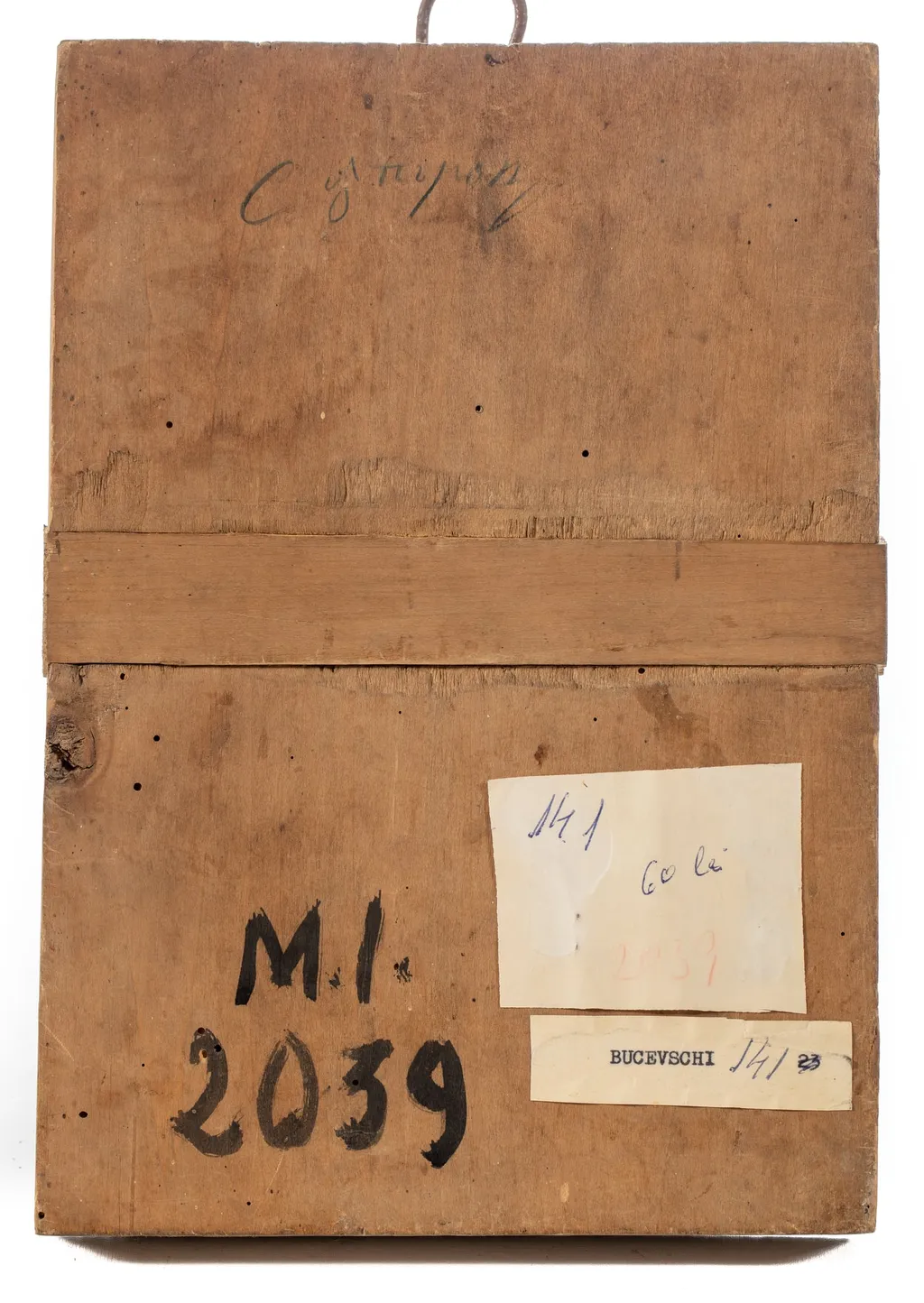
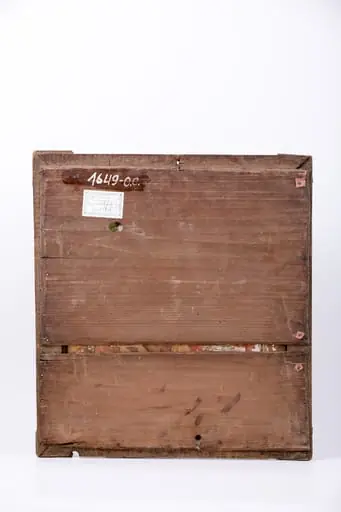
Sfinții Constantin și Elena is an unspecified painting by the Byzantine icon painting artist Hugo Kołłątaj. It is held in the collection of the Moldova National Museum Complex. This wooden panel bears faint traces of religious imagery, likely depicting Saints Constantine and Helena.
About this work
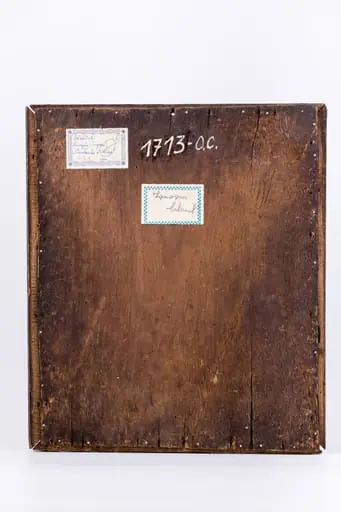
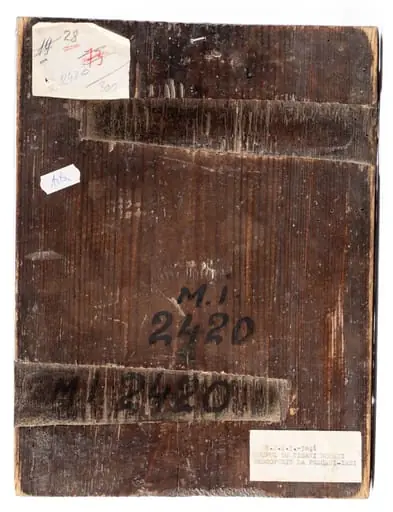
The top has a smudged signature-like scrawl, and the bottom left corner has the letters “M1” and the number “2039” painted in dark ink.
This is a wooden panel with faded paint and handwritten marks. The wood shows scratches and wear, and there’s a small paper label with numbers and names stuck inside. The top has a smudged signature-like scrawl, and the bottom left corner has the letters “M1” and the number “2039” painted in dark ink.
The name “Bucevschi” appears on a label, which might hint at where this piece was kept. The wood looks old, with a rough, uneven texture.
Look up Hugo Kołłątaj to see who painted this.
Overview
This wooden panel bears faint traces of religious imagery, likely depicting Saints Constantine and Helena. The surface shows significant aging: paint has faded, wood is scratched and uneven, and a small paper label with handwritten identifiers is affixed inside. A smudged mark near the top and painted markings in the lower left suggest partial documentation or inventory notation, though no clear artist signature remains visible.
Subject & Meaning
The panel portrays Saints Constantine and Helena, early Christian figures associated with the discovery of the True Cross and the promotion of Christianity in the Roman Empire. Their depiction on a devotional object implies use in private or small-scale worship, possibly within a household or local chapel. The imagery would have served as a focus for prayer and veneration, reinforcing faith through visual representation of sacred patrons.
Technique & Style
The painting was executed in tempera or similar medium on a wooden support, typical of Eastern European religious panels from the 17th to 19th centuries. The style is simplified, with minimal modeling and flat areas of color, reflecting regional folk or workshop traditions rather than academic training. Surface wear and pigment loss indicate prolonged exposure and handling, consistent with liturgical use.
History & Provenance
A paper label bearing the name 'Bucevschi' suggests the panel may have been stored or owned by a family or institution linked to that surname, possibly in Moldavia or Wallachia. The painted markings 'M1' and '2039' likely denote catalog numbers from a later collection or museum inventory. No definitive record confirms the artist, and claims linking it to Hugo Kołłątaj lack supporting evidence.
Context
Produced during a period when Orthodox and Greek Catholic communities in Eastern Europe maintained devotional art traditions despite political upheaval, this panel reflects the persistence of religious iconography in domestic and local ecclesiastical settings. Its modest scale and worn condition indicate it was not commissioned by elite patrons but rather by ordinary believers seeking spiritual connection through accessible imagery.
Legacy
The panel survives as a fragment of a broader cultural practice of religious material culture in Eastern Europe. Though unattributed and poorly documented, its physical state offers insight into how devotional objects were used, maintained, and eventually archived. It remains a quiet testament to the everyday piety of communities whose artistic expressions rarely entered formal art historical records.
Artist & collection
Artist
This Polish folk painter worked in the late eighteenth and early nineteenth centuries, creating religious scenes with bold colors and simple shapes.
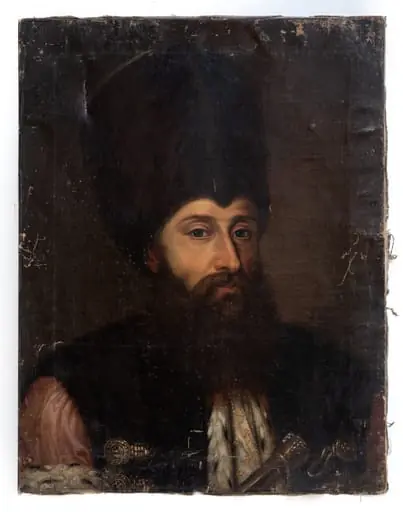 Alexandru Ipsilanti
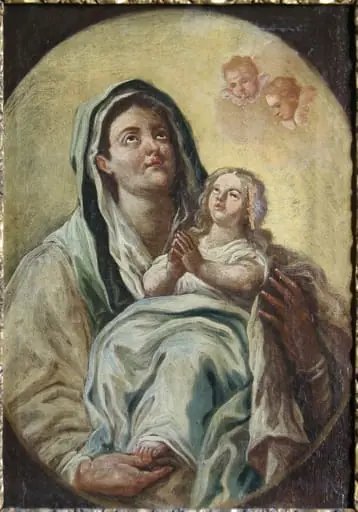 Fecioara Maria cu Pruncul Isus (în Reg. Inv.: Maria cu copilul Isus)
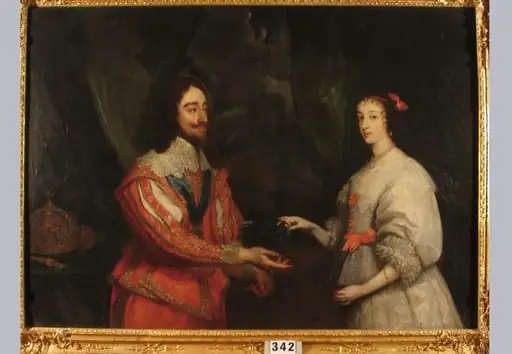 Regele Charles I Stuart al Angliei și soția sa Henrietta Maria de Franța (în Reg. Inv.: Carol I al Angliei și soția sa Henriette din Franța)
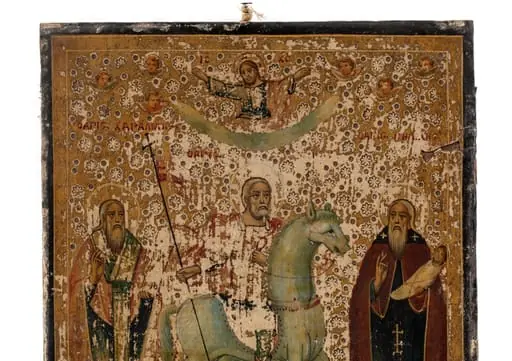 Sfântul Haralambie cu alți doi sfinți
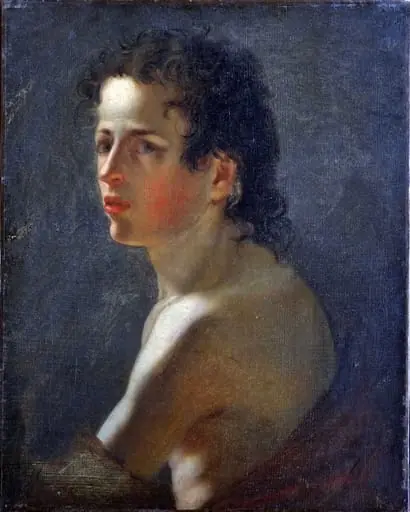 Portret de bărbat
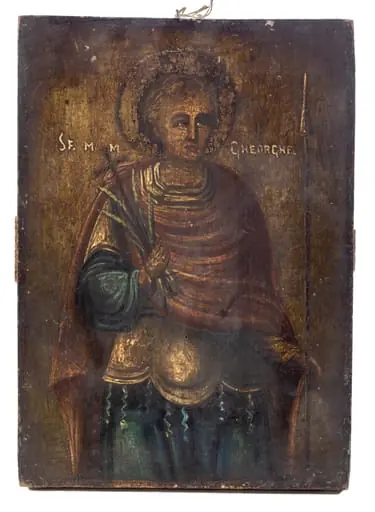 Sfântul Gheorghe
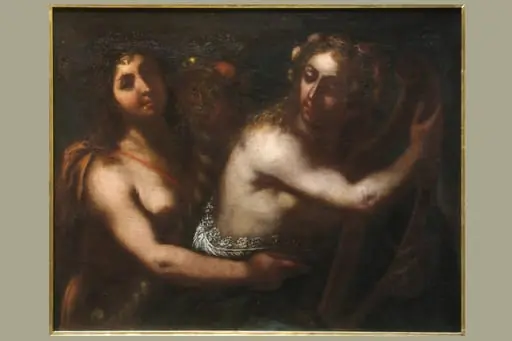 Vertumnus și Pomona (în Reg. Inv.: Vertumnus și Flora)
 Iarnă
Iarnă
 În centrul icoanei este Crucea galbenă, cu terminațiile brațelor trilobate pictate cu roșu-alb-gri, iar în dreapta crucii este Sfântul Împărat Constantin, și în stânga este Împărăteasa Elena, mama sa. În spatele Crucii, este cerul albastru regal, încadrat de o ghirlandă de 4 ruje. Crucea găsită este susținută cu bucurie de cei doi sfinți. Veșmintele Sfinților Constantin și Elena sunt într-o combinație de roșu vermillon, gri antracit. Fondul icoanei este cerul albastru-cobalt, în registrul superior, iar în registrul inferior, este un câmp de galben luminos. În registrul superior, este o boltă-cupolă-arcadă albă luminoasă. Cromatica este armonioasă: roșu vermillon, galben-ocru, albastru regal, gri antracit, alb, negru. Icoana este de Nicula. Inscripția din româno-chirilică se traduce Constantin cu Elena. Postamentul Crucii este realizat printr-un caroiaj alb-negru.
 Fecioara Maria cu Pruncul
 Iisus binecuvântând
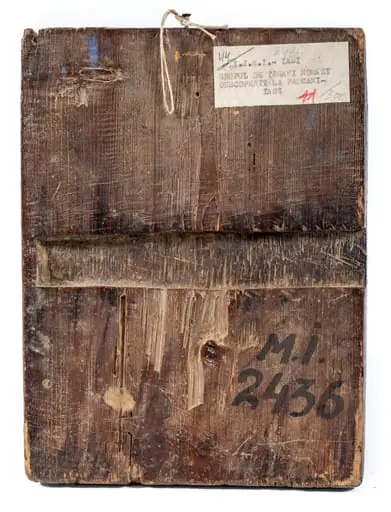 Iisus binecuvântând
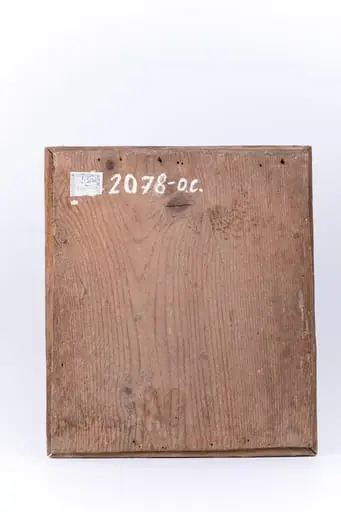 Icoana reprezintă Învierea Domnului Iisus Hristos. Mântuitorul Iisus Hristos, ieșind din mormânt, Înviind, Binecuvântând zdrobește ușile iadului. Mântuitorul este înfășurat cu o țesătură verde kaki-gri în mijlocul coapselor și a mijlocului și cu mantia roșie vermillon pe umeri. În dreapta mormântului gri, deschis, sunt doi ostași romani, uimiți. Icoana de Nicula are o cromatică armonioasă: galben-solar, roșu vermillon, alb, albastru cobalt, verde brad-pădure, negru, gri cenușiu. Fondul icoanei este cerul albastru cobalt-ceruleum, în registrul superior și un câmp galben-ocru, cu brun-maro cu pete crem, în registrul inferior, realizându-se, astfel sugestiv, intrarea și ieșirea din pământul morții și a păcatului. Întreaga compoziție iconografică este încadrată de un chenar decorativ geometrizant roșu vermillon și de unul fitomorf, format dintr-o ghirlandă cu două flori-narcise cu frunze unduitoare. Cromatica este armonioasă: roșu vermillon, galben chihlimbar, albastru cobalt-ceruleum, brun, maro, bej, verde smarald, kaki, negru, gri, alb. Inscripția în româno-chirilică se traduce IC XC Iisus Hristos. Icoana este din Nordul Transilvaniei, Nicula.
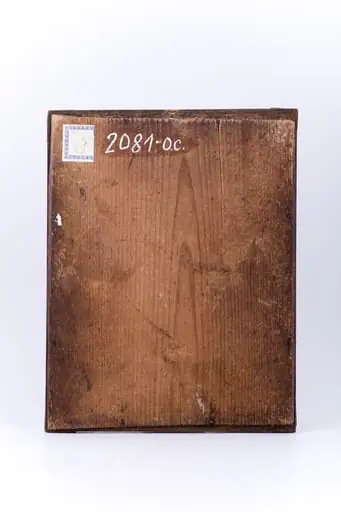 Sfânta Mare Cuvioasă Parascheva de la Iași are crucea și o ramură de finic verde brad, în mâna dreaptă. Este îmbrăcată în veșmânt roșu vermillon, cu interiorul căptușit cu verde, vernil, crem și galben, cu sacosul alb ivoriu, cu dungi crem-bej. Sacosul este alb ivoriu crem-bej, cu danteluță și guleraș galben. Sfânta Cuvioasă are părul negru lung, ondulat, lăsat pe umeri, coroană roșie și aureolă. Fondul icoanei este cerul albastru-negru întunecat, în registrul superior și un câmp înalt luminos de grâu galben-copt, în registrul mediu și inferior, de culoare ocru-muștar. Întreaga compoziție iconografică este încadrată de un chenar decorativ geometrizant alb și unul paralel, fitomorf, format dintr-o ghirlandă de 6 ruje - margarete, cu petale roșii. Ghirlanda excelează prin delicatețea desenului și bogăția cromatică armonioasă. Cromatica este armonioasă: roșu vermillon, albastru-negru, verde forest, kaki, vernil-măr, olive, bej-crem, negru, galben chihlimbar, ocru, muștar, negru, alb. Icoana este din Nordul Transilvaniei, Nicula.
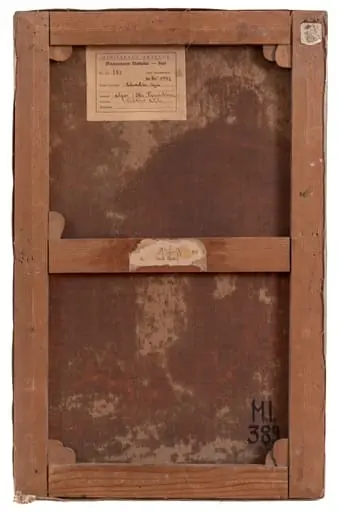 Mănăstirea Cozia
 Icoana cu tematica iconografică Botezul Domnului Iisus Hristos este realizată pe trei registre: în registrul central, Domnul Iisus Hristos primește Botezul, în râul Iordanului, din partea Sfântului Mare Prooroc și Înaintemergător Ioan Botezătorul, care se află în stânga Mântuitorului. Mântuitorul este înfășurat cu o pânză de culoare roșie vermillon împrejurul șoldurilor și a coapselor, și are mâinile împreunate pe piept, în semn de supunere, ascultare, smerenie, de bună-voie venind la Botez. În dreapta Lui, este un înger evlavios, cu aripile galbene-aurii de lumină, care Îl așteaptă pe mandorlă de nouri albi-albaștri bleu-ciel, cu un ștergar transparent gata să înveșmânteze Trupul Domnului. Sfântul Ioan Botezătorul este îmbrăcat cu o mantie roșie și un himation alb-albastru sau o haină din păr. Cerurile de culoare albastru sunt deschise și din mijlocul unei mandorle de nouri alb-albaștri se pogoară porumbelul, simbolul Sfântului Duh, pe creștetul Mântuitorului. Cromatica este specifică Țării Oltului: roșu vermillon, albastru cobalt-ceruleum, galben chihlimbar și solar, verde-văratic, brun, crem, rozaliu, alb, negru. Cerul albastru-cobalt și văzduhul verde-văratic sunt bogat ornamentate cu elemente florale - ruje roșii, cu frunze albastre. Întreaga icoană este încadrată pe laterale de chenar decorativ geometrizant bronziu, cu ruje roșii și frunze albastre. Inscripția din româno-chirilică se traduce Botezul Lui IC XC Iisus Hristos. Icoana este de Țara Oltului.
 Portret de băiat