Artwork
Fecioara Maria cu Pruncul
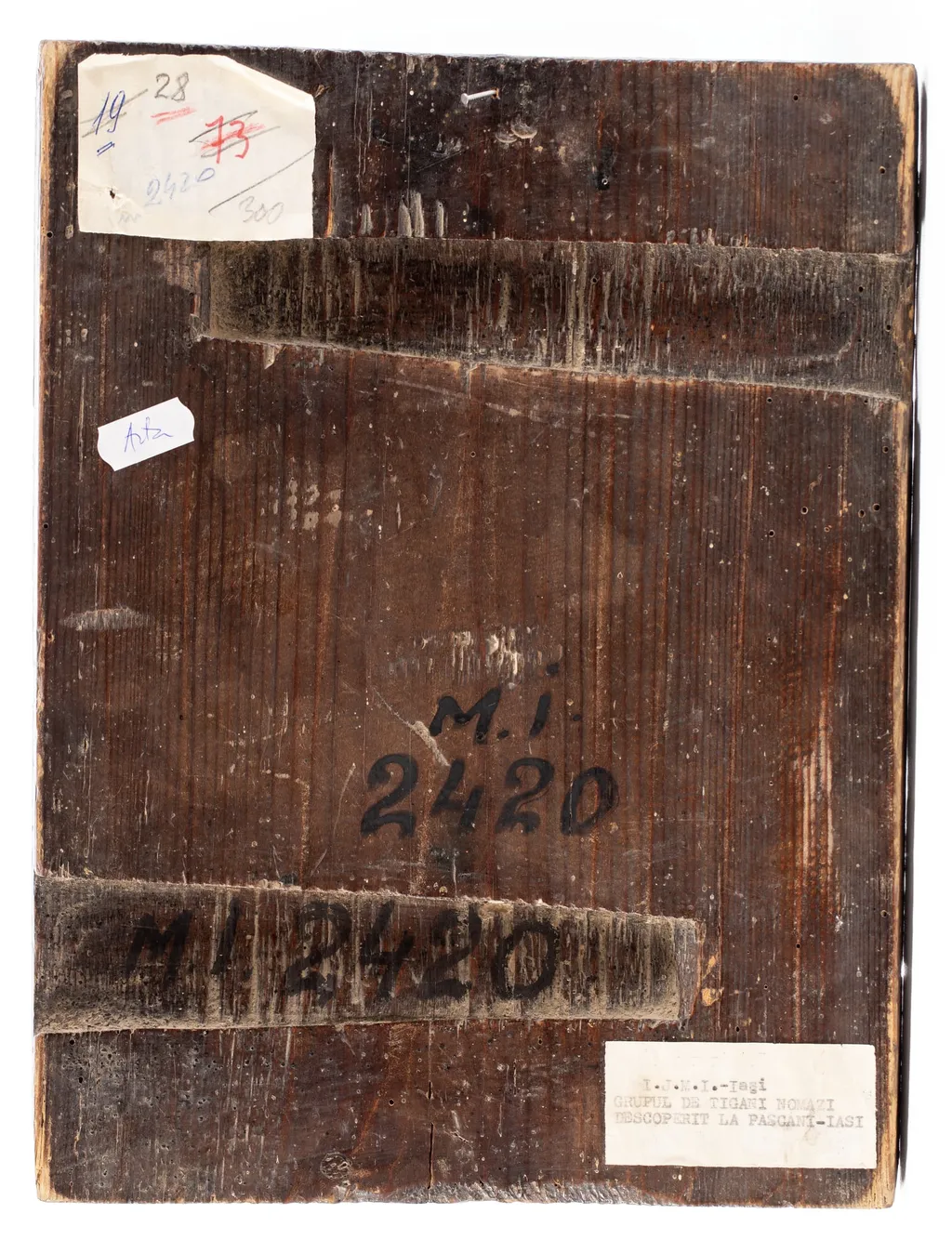
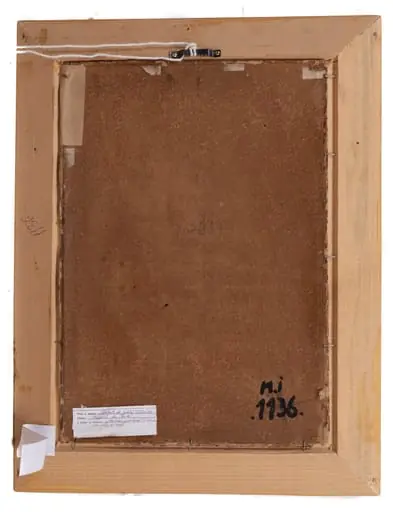
Fecioara Maria cu Pruncul is a drawing by anonim. It is held in the collection of the Moldova National Museum Complex. The object is a wooden panel, aged and weathered, with a dark brown grain visible through surface wear.
About this work
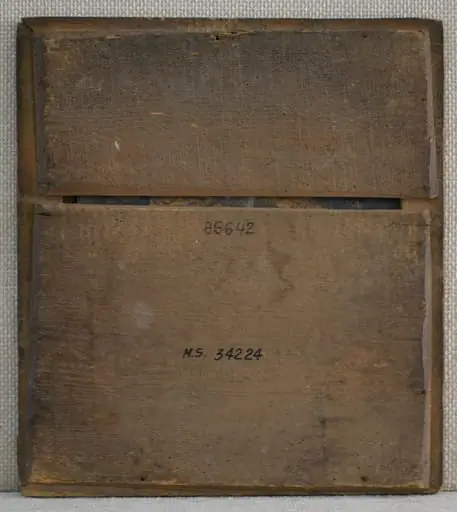
There’s a small white label near the top left with numbers and symbols, and another label at the bottom right with text in Romanian.
This looks like a worn wooden panel with faded markings. The surface is scratched and peeling, showing dark brown wood grain. There’s a small white label near the top left with numbers and symbols, and another label at the bottom right with text in Romanian. The middle has two sets of numbers, "2420" and "2220," stamped or carved into the wood.
The labels suggest this might be part of a collection or inventory system. The bottom label reads *"Grupul de Tigani Nomazi"* and mentions something about Easter in Iași.
If you’re curious about where this comes from, check out the Museum of Ethnography.
Overview
The object is a wooden panel, aged and weathered, with a dark brown grain visible through surface wear. Its front bears faint, scratched markings and two prominent numeric stamps—2420 and 2220—suggesting cataloguing. Small white labels are affixed: one near the upper left edge displaying numbers and symbols, another in the lower right bearing Romanian text.
Subject & Meaning
The panel is identified as "Fecioara Maria cu Pruncul," indicating an iconographic depiction of the Virgin Mary holding the infant Jesus. Such imagery traditionally serves devotional purposes, embodying intercessory themes and the theological significance of the Incarnation within Eastern Christian practice.
Technique & Style
Carved or painted on a wooden substrate, the piece reflects folk‑art methods common in Romanian religious craft. The faded surface and peeling layers point to an original pigment application that has deteriorated, while the numeric stamps likely result from later inventory or preservation interventions.
History & Provenance
Labels on the panel reference the "Grupul de Tigani Nomazi" and an Easter celebration in Iași, linking the object to a nomadic Romani community’s religious observances. The presence of inventory numbers suggests it entered a formal collection, possibly through donation or acquisition by the Museum of Ethnography.
Context
In Romanian ethnographic collections, wooden religious icons often illustrate the syncretic blend of Orthodox iconography with local artisanal traditions. The panel’s association with a nomadic group highlights the diffusion of sacred imagery beyond settled parish churches, reflecting broader patterns of cultural exchange in the region.
Artist & collection
Artist
This anonymous painter made small religious scenes with bold, flat colors and shaky lines, following old church traditions.
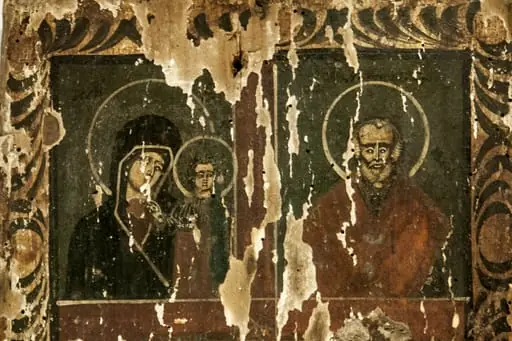 Un câmp central sub formă de cruce, împarte spațiul pictural în patru casete dreptunghiulare care conțin următoarele scene: Stânga sus Maica Domnului cu Pruncul tipul Kazanskaia. Este reprezentată până la piept, nu se văd mâinile, înveșmântată cu maforion negru cu galon alb. Are chipul îndurerat, privirea tristă, capul ușor înclinat spre Prunc. Iisus – Emanuel, binecuvintează cu dreapta, privirea îndreptată lateral, către sfântul Nicolae..Chiton brun deschis, himation verde. Dreapta sus - Sf. Nicolae în veșminte simple, capul descoperit, cărunt, cu barba rotundă și scurtă, privind la rândul său către pruncul Iisus. Înveșmântat cu sacos verde și omofor mare orange, care îi acoperă umerii. În casetele de jos sunt redați doi sfinți în vârstă, în picioare, în veșminte preoțești, întorși unul către altul, cu privirea îndreptată către scenele din registrul superior. Inscripția ce denominează primul dintre ei a fost ștearsă, cel de al doilea posibil sfântul Savatie?. Icoana are un vădit caracter popular, naiv. Spațiul cruciform pictat cu roșu, fondul scenelor verde închis, 2/3 din fondul scenelor de jos galben-orange. Nimburi trasate cu alb, inscripții caligrafice, litere cursive, cu negru. Compoziția este încadrată de un chenar cu decor vegetal, motive ample de factură populară, specifice spațiului slav.
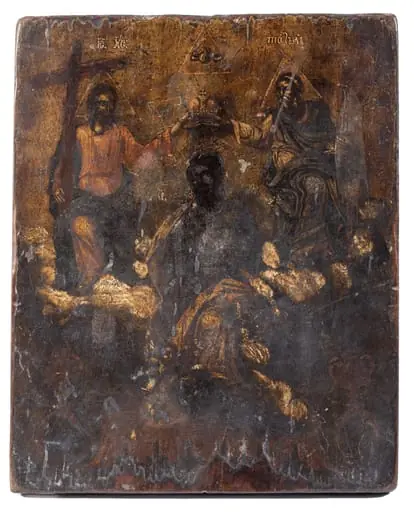 Încoronarea Fecioarei - reprezintă în centrul compoziției pe Fecioara Maria, în planul al doilea pe Iisus Hristos și Dumnezeu Tatăl ținând o coroană în mâini.
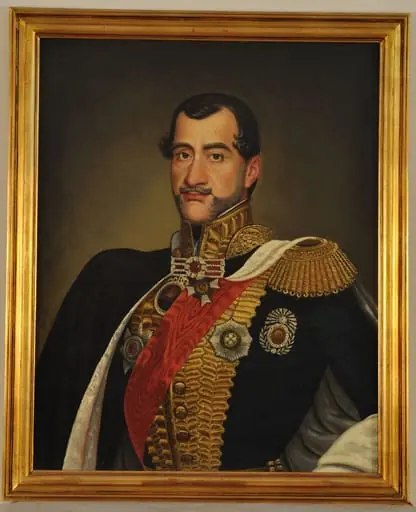 Alexandru Dimitrie Ghica
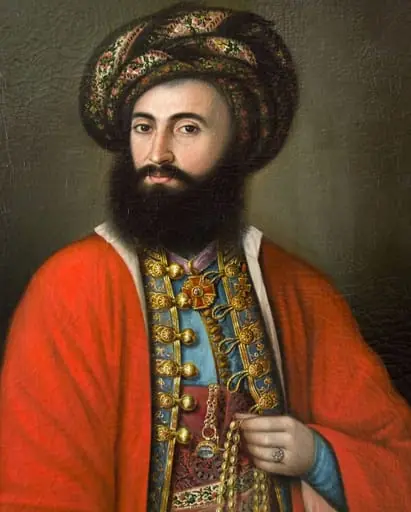 Constantin G. Cantacuzino cu turban (1793 - 1877)
 Icoana este pictată pe dosul unei bucăți de glajă de formă dreptunghiulară în ax vertical. Sfântul Nicolae este redat în prim plan, așezat pe un tron, ținînd Evanghelia închisă în mâna stângă în timp ce cu dreapta binecuvintează. Sfântul Nicolae este înveșmântat ca Mare Arhiereu, cu mitră înaltă, bipartită, omofor mare, verde, decorat cu cruci "patee", sacos roșu cărămiziu cu galon auriu cu motiv spiralat, stihar roșu. De mâna dreaptă îi atârnă bedernița, percepută ca decor al veșmântului. Chipul este sobru, barba albă,scurtă,la fel părul scurt, ondulat. Ochii sunt negri, bine definiți, arcadele evidențiate. Nimb auriu. Tronul, cu spătarul înalt, are marginea aurită realizată în trepte(surmontatea de câte o cruce) și decorată cu motiv spiralat. Spătarul este alb, decorat cu o rețea de linii negre dublate cu bleu, întretăiate. În colțurile de sus câte un serafim pe nori. Câmpul verde intens în partea de jos, până la nivelul jilțului, albastru de Prusia în registrul superior. Desenul este îngrijit, compoziția aglomerată, paleta cromatică variată, culorile tari, Inscripția cu negru în partea de sus, greu vizibilă. Rama, din lemn de brad băițuit, este alcătuită din patru șipci profilate pe o porțiune mică spre interior, îmbinate oblic la colțuri, decorată cu un motiv ușor ondulat, imitînd fibra lemnului, dispus oblic. Dos din scândurele subțiri de brad, dispuse orizonal și fixate în cuie.
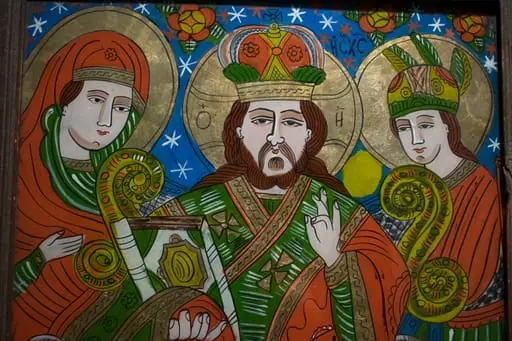 Icoacrip
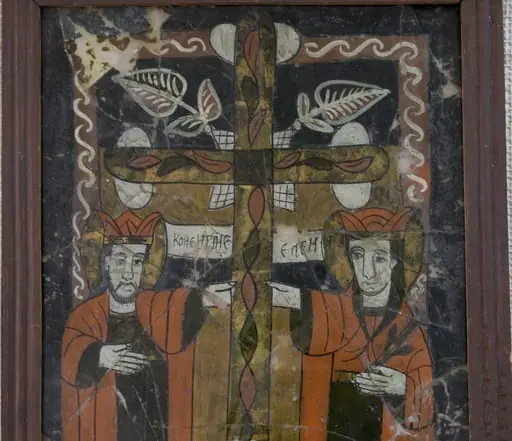 Pictură în oglindă, pe spatele unei bucăți de glajă, ax vertical.Sfinții Împărați Constantin și Elena, 3/4 , în picioare, semiprofil, sub brațele crucii pe care a fost răstignit Isus( găsită de Împărăteasa Elena la Ierusalim) Amândoi au plete castanii, lăsate pe umeri, coroane înalte, veșminte identice, simple, lungi, cămăși verzi și mantii roșii. Plasarea personajelor sub brațele crucii, în jumătatea inferioară, pe fond ocru sugerează complementaritatea celor două planuri(terestru și ceresc). Împărăteasa ține în mână o ramură verde, element ce o însoțește în majoritatea reprezentărilor populare. Fețele sunt ușor diforme, ochii negri. Crucea dreaptă, plasată în centrul compoziției, decorată cu frunze și o spirală în partea de jos, creează simetrie. La întretăierea brațelor crucii elemente vegetale cu contur alb. Chenarul specific icoanelor de Nicula, linia albă(zăluțe, funie) pe fond roșcat. Icoana este caracteristică perioadei de înflorire a picturi pe sticlă de la Nicula. Rama profilată, din lemn de brad, pictată cu o culoare roșcată. Dosul subțire. Sticla spartă în mai multe fragmente.
 Icoana este pictată "în oglindă", pe un suport de sticlă de formă dreptunghiulară în ax vertical. Cuvioasa Parascheva, 3/4, redată din ușor semiprofil, ține în mâna dreaptă o ramura verde, sinuoasă, în stânga o cruce. Fața butucănoasă, ochii căprui, sprâncenele arcuite, gura marcată cu roșu, bărbia pătrată, părul castaniu, lung, revărsat pe umeri. Pe cap poartă o tocă înaltă tripartită. Este înveșmîntată cu o mantie roșie și cămașă albastră. În jurul capului, aureolă realizată cu bronz auriu. Câmp bicolor(1/2 superior -bleu, 1/2 inferior ocru) două ramuri de trandafiri dispuși pe laturile verticale, întâlnindu-se deasupra capului sfintei. Desenul stângaci, dar destul de îngrijit, corola de flori, predominanța culorii roșii, abundența detaliului, fondul bicolor, utilizarea bronzului auriu, sunt caracteristici ale fazei târzie a picturii din centrele Nicula și Gherla. Rama subțire din lemn de brad, de culoare închisă, este completată cu un "dos" nou din scândură de brad.. Țăranii considerau că sfânta Parascheva păzește de grindină și de dureri de cap.
 Iisus binecuvântând
 Iisus binecuvântând
 Sfinții Constantin și Elena
 Mănăstirea Cozia
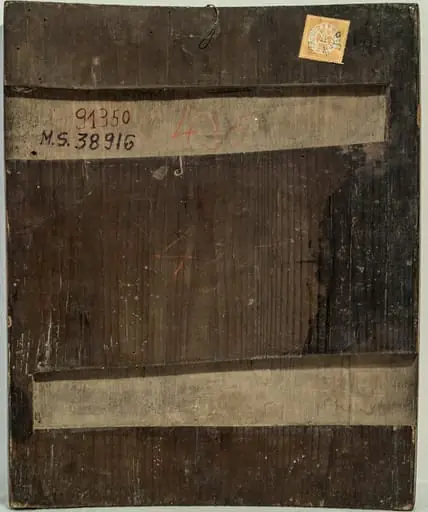 Sfânta Paraschiva încoronată este reprezentată frontal, 3/4, Nimbul trasat cu roșu depășește linia chenarului și partea superioară a coroanei. Tehnica iluminării treptate cu elemente specifice: accentuarea zonei ochilor, tonurile de pământ ale umbrelor. Tunica decorată cu motive fitomorfe ample incizate în stratul de foiță. Mantie închisă în față, cu decor linar și bordură lată cu motive geometrice 3 șiruri de incizii în grund). Pe cap, umeri lăsat pe spate, un maforion de culoare deschisă. În mâna dreaptă, Sfânta ține o cruce mică, rusească, (6 brațe)în stânga un rotulus desfășurat cu inscripția scrisă în limba slavonă: Cred în unul Dumnezeu… alte inscripții: pe chenar de o parte și de alta a nimbului: Chipul Sf. Mucenițe Parascheva Vineri, în colțul stâng al icoanei ѾOН pe nimbul cruciger al lui Iisus, reprezentat ca pe sfântul Keramion. Cromatica: Chenar roșu cu două linii galbene și mărginit cu brun; fond - foița metalică decorată prin incizare, cu chenar multiplu din motive geometrice reteate. Tip Krashnuskha. Pe spate, un timbru al miliței RPR.
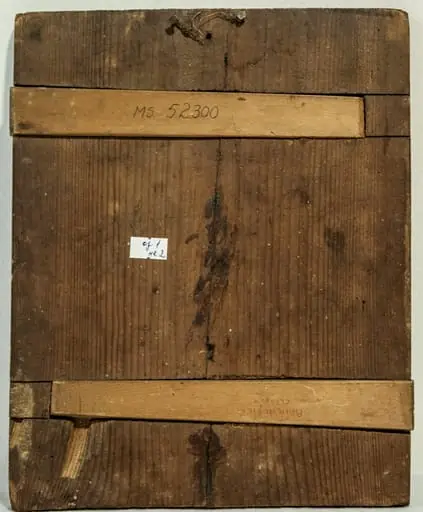 Răstignirea lui Iisus Hristos plasată pe un câmp central sub formă de cruce, împarte spațiul pictural în patru casete dreptunghiulare, Iisus Hristos răstignit pe crucea cu 6 brațe (specifică ortodoxiei ruse), cu un veșmânt alb în jurul mijlocului, ochii închișiNimbul cu inscripțiile consacrate. La baza crucii, sugerat dealul Golgota și craniul lui Adam. Pe latura de sus un nor cu inscripția XC Cele 4 casete conțin următoarele scene: Stânga sus Maica Domnului cu Pruncul tipul Kazanskaia. Este reprezentată până la piept, nu se văd mâinile. Capul ușor înclinat spre Prunc. Maforion roșu, pe frunte și pe umeri stelele Fecioriei, albe, discrete.Iisus – Emanuel, binecuvintează cu dreapta, nimbul cruciger. Chiton albastru și himationgalben. Dreapta sus - Sf. Nicolae în veșminte de arhiereu, cărunt, cu barba rotundă capul descoperit. Nu se văd mâinile.. Înveșmântat cu sacos roșu cu drapaj galben, omofor lat, închis la culoare. Stânga jos - Sf. Gheorghe, oștean, călare pe un cal alb în poziție cambrată.Înfige, cu ambele mâini, sulița în gura balaurului, redat aici ca un șarpe negru, subțire. În oglindă, sfântul mucenic Dimitrie, în veșminte identice, călare pe un cal negru, cu o suliță în mâini. Fondul: brun pentru scena centrală, scenele de sus: brun roșcat, cu o bandă îngustă, aurită sus, niburile cu linie albă, scenele de jos: inferior bandă brună, pământul cu galben, cerul - verde închis, nimburile galbene cu linie discretă, albă pe margine. Chenarul marginal specific icoanelor tip krasnushka.Inscripții caligrafice cu negru. Inscripții cu llitere negre, caligrafice la scenele de sus, alb central. Caracter popular
 Natură statică cu cești de cafea
 Icoambla
 Icoana reprezintă Învierea Domnului Iisus Hristos. Mântuitorul Iisus Hristos, ieșind din mormânt, Înviind, Binecuvântând zdrobește ușile iadului. Mântuitorul este înfășurat cu o țesătură verde kaki-gri în mijlocul coapselor și a mijlocului și cu mantia roșie vermillon pe umeri. În dreapta mormântului gri, deschis, sunt doi ostași romani, uimiți. Icoana de Nicula are o cromatică armonioasă: galben-solar, roșu vermillon, alb, albastru cobalt, verde brad-pădure, negru, gri cenușiu. Fondul icoanei este cerul albastru cobalt-ceruleum, în registrul superior și un câmp galben-ocru, cu brun-maro cu pete crem, în registrul inferior, realizându-se, astfel sugestiv, intrarea și ieșirea din pământul morții și a păcatului. Întreaga compoziție iconografică este încadrată de un chenar decorativ geometrizant roșu vermillon și de unul fitomorf, format dintr-o ghirlandă cu două flori-narcise cu frunze unduitoare. Cromatica este armonioasă: roșu vermillon, galben chihlimbar, albastru cobalt-ceruleum, brun, maro, bej, verde smarald, kaki, negru, gri, alb. Inscripția în româno-chirilică se traduce IC XC Iisus Hristos. Icoana este din Nordul Transilvaniei, Nicula.
 Răst
Răst Icoana cu tematica iconografică Botezul Domnului Iisus Hristos este realizată pe trei registre: în registrul central, Domnul Iisus Hristos primește Botezul, în râul Iordanului, din partea Sfântului Mare Prooroc și Înaintemergător Ioan Botezătorul, care se află în stânga Mântuitorului. Mântuitorul este înfășurat cu o pânză de culoare roșie vermillon împrejurul șoldurilor și a coapselor, și are mâinile împreunate pe piept, în semn de supunere, ascultare, smerenie, de bună-voie venind la Botez. În dreapta Lui, este un înger evlavios, cu aripile galbene-aurii de lumină, care Îl așteaptă pe mandorlă de nouri albi-albaștri bleu-ciel, cu un ștergar transparent gata să înveșmânteze Trupul Domnului. Sfântul Ioan Botezătorul este îmbrăcat cu o mantie roșie și un himation alb-albastru sau o haină din păr. Cerurile de culoare albastru sunt deschise și din mijlocul unei mandorle de nouri alb-albaștri se pogoară porumbelul, simbolul Sfântului Duh, pe creștetul Mântuitorului. Cromatica este specifică Țării Oltului: roșu vermillon, albastru cobalt-ceruleum, galben chihlimbar și solar, verde-văratic, brun, crem, rozaliu, alb, negru. Cerul albastru-cobalt și văzduhul verde-văratic sunt bogat ornamentate cu elemente florale - ruje roșii, cu frunze albastre. Întreaga icoană este încadrată pe laterale de chenar decorativ geometrizant bronziu, cu ruje roșii și frunze albastre. Inscripția din româno-chirilică se traduce Botezul Lui IC XC Iisus Hristos. Icoana este de Țara Oltului.
 Portret de fetiță