Artwork
Gilet aux plumes mauves, au verso inversé gilet aux fleurs en forme de flèches, projets de broderies de gilet, XVIIIème siècle
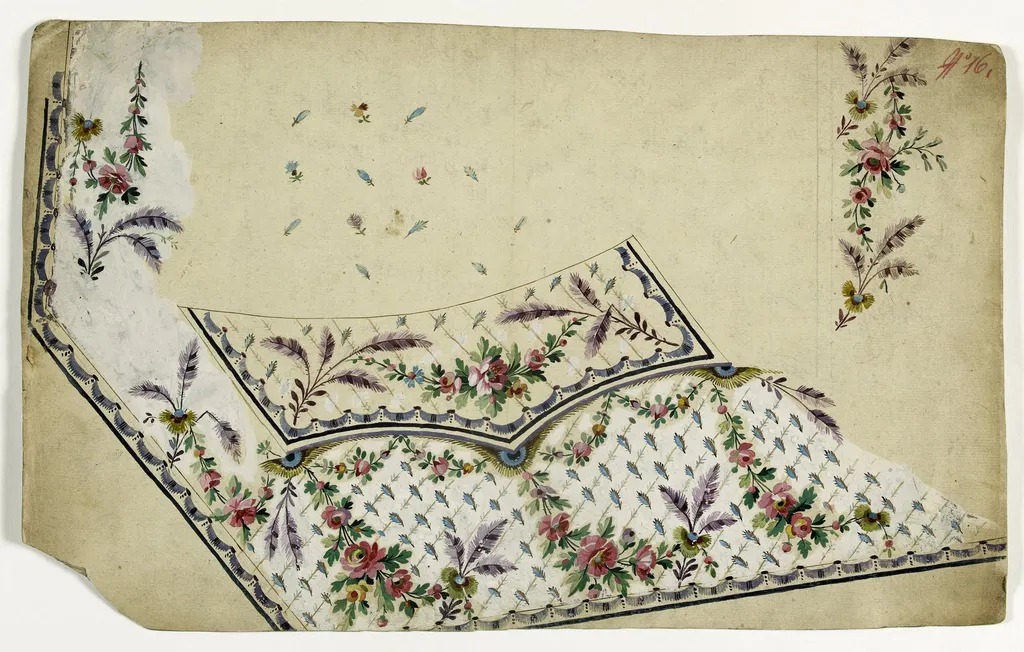
Gilet aux plumes mauves, au verso inversé gilet aux fleurs en forme de flèches, projets de broderies de gilet, XVIIIème siècle is a drawing by Anonyme. It dates from 1750 and is held in the collection of the Palais Galliera - Musée de la Mode de la Ville de Paris.
About this work
Overview
This 18th-century textile design sheet features two proposed vest patterns: one with mauve feathers, the other with arrow-shaped floral motifs.
This 18th-century textile design sheet features two proposed vest patterns: one with mauve feathers, the other with arrow-shaped floral motifs. Executed in ink and watercolor on yellowed paper with a black border, the drawing captures intricate embroidery details. The fabric is depicted folded, revealing a scalloped edge and fine stitchwork. Created around 1750, it served as a pattern guide for skilled artisans rather than a finished garment.
Subject & Meaning
The designs reflect the ornamental tastes of mid-18th-century elite fashion, where natural forms like feathers and flowers symbolized refinement and luxury. The arrow-shaped floral arrangement suggests a deliberate geometric rhythm, blending organic motifs with structured composition. These patterns were not merely decorative but signaled social status through craftsmanship and material cost, particularly in the use of dyed silks and exotic feathers.
Technique & Style
The artist rendered each element with meticulous precision—individual stitches, petal curves, and feather barbs are delicately outlined in fine ink. Watercolor washes in pink, purple, green, and blue suggest dye tones without full saturation, preserving the paper’s texture. The black border frames the composition like a pattern catalog page, emphasizing function over artistic expression. The folded fabric implies a practical use as a working template for embroiderers.
History & Provenance
The sheet originates from a French atelier of textile design, likely used by master embroiderers or fashion houses in Paris. It entered the collection of the Museum of Ethnography in the late 19th or early 20th century, possibly as part of a broader acquisition of historical dressmaking materials. Its anonymous authorship reflects the collaborative, often uncredited nature of artisanal work during the period.
Context
In mid-1700s France, embroidered vests were status symbols among the nobility and wealthy bourgeoisie. Design sheets like this one circulated among workshops, allowing patterns to be adapted across garments. The use of feathers and stylized flowers aligns with the Rococo aesthetic, which favored asymmetry, naturalism, and delicate ornamentation. Such designs were often copied, modified, or lost, making surviving templates rare.
Legacy
This sheet preserves a snapshot of textile production before industrialization, when each stitch was hand-executed and designs were transmitted through drawn templates. It contributes to understanding the labor and skill behind elite fashion, highlighting the role of anonymous designers in shaping visual culture. Today, it serves as a reference for historians studying pre-industrial craft practices and the evolution of textile motifs.
Artist & collection
Artist
A French designer from the 1700s made delicate flower drawings meant to decorate vests.
Museum
Palais Galliera - Musée de la Mode de la Ville de Paris
Continue through works from the same source collection.
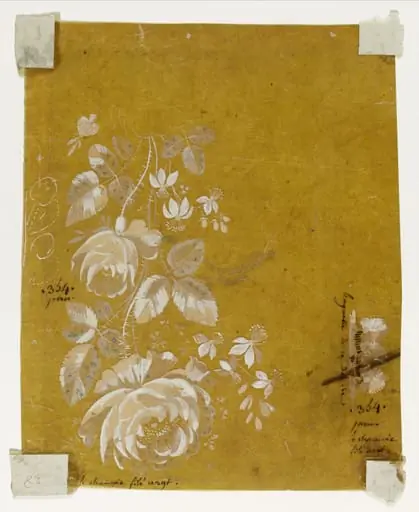 Bouquet de roses blanches pour étoffe, projets de broderies de gilet, XVIIIème siècle
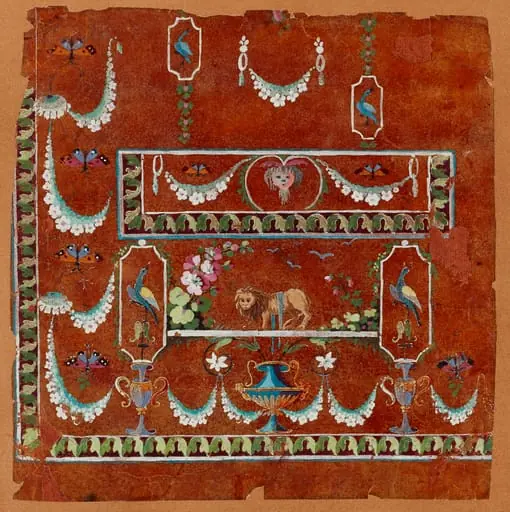 Gilet décor à grotesques, projets de broderies de gilet, XVIIIeme siècle
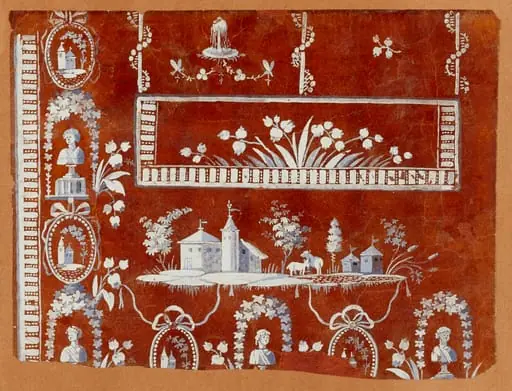 Gilet décor architectures rurales, projets de broderies de gilet, XVIIIème siècle
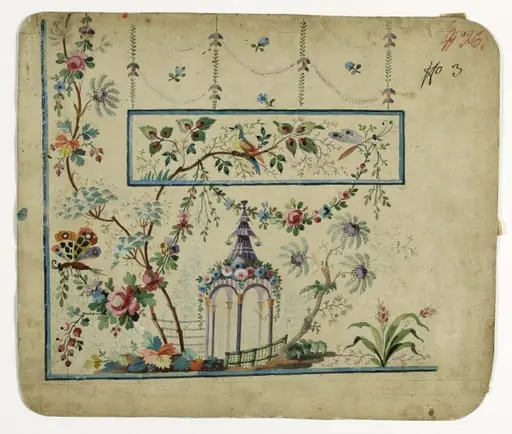 Gilet décor pagode, projets de broderies de gilet, XVIIIème siècle
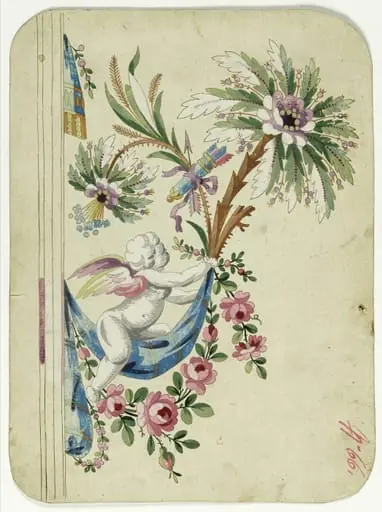 Décor de putti sur palmier, projets de broderies de gilet, XVIIIème siècle
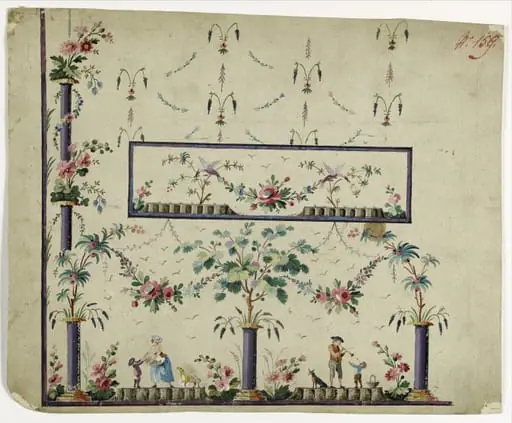 Gilet décor couple avec enfants, projets de broderies de gilet, XVIIIème siècle
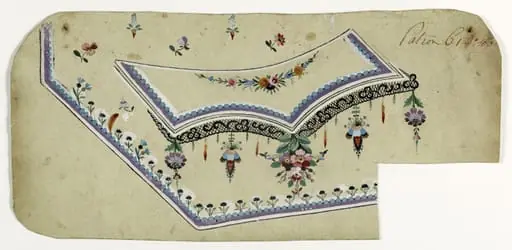 Gilet à la dentelle noire, projets de broderies de gilet, XVIIIème siècle
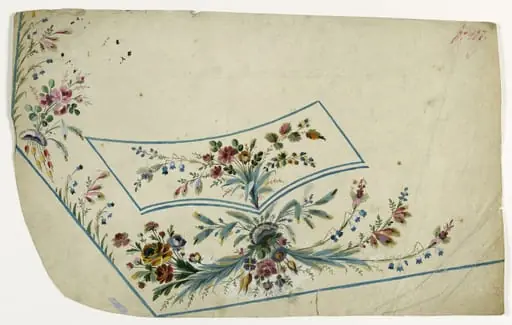 Gilet aux feuilles bleu-gris, projets de broderies de gilet, XVIIIème siècle
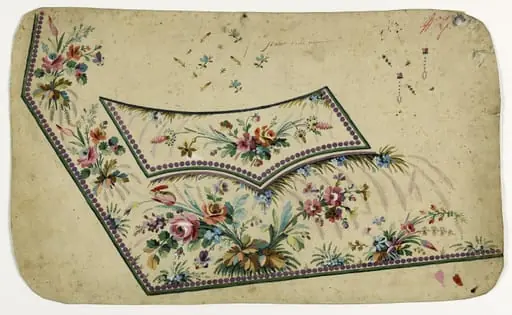 Gilet fleurs et perles mauves, projets de broderies de gilet, XVIIIème siècle
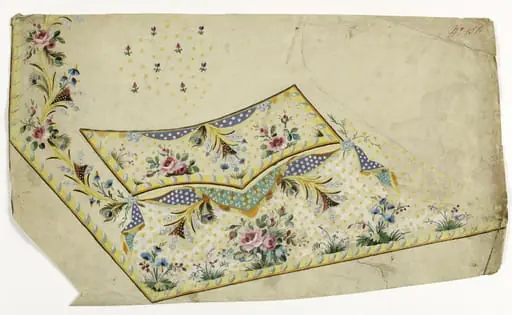 Gilet aux plumes de paon, projets de broderies de gilet, XVIIIème siècle
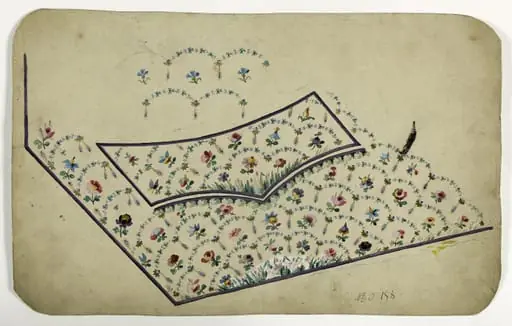 Gilet fleurs dans un réseau, projets de broderies de gilet, XVIIIème siècle
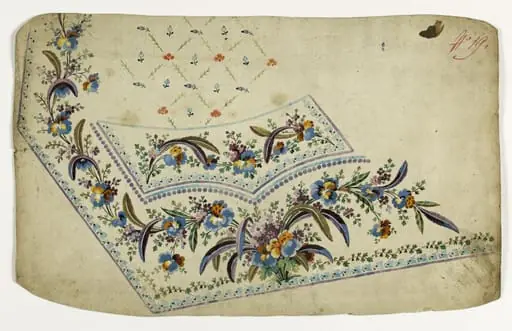 Gilet fleurs bleues et orange, projets de broderies de gilet, XVIIIème siècle
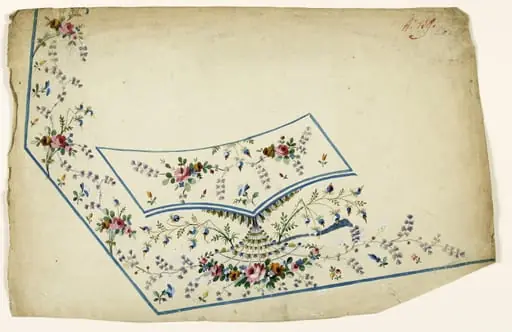 Composition à bouquet de fleurs en éventail et guirlandes de fleurs mauves, projets de broderies de gilet, XVIIIème siècle
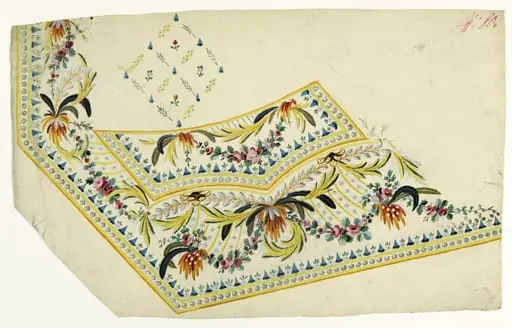 Gilet décor de perles, plumes et paillettes, projets de broderies de gilet, XVIIIème siècle
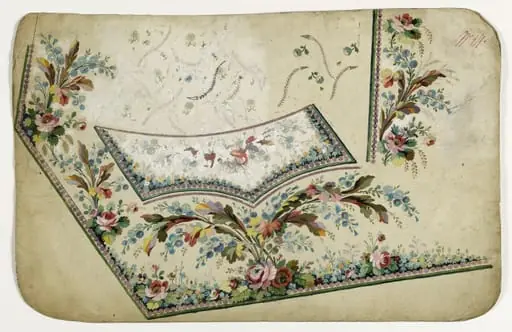 Gilet fleurs et feuilles multicolores, projets de broderies de gilet, XVIIIème siècle
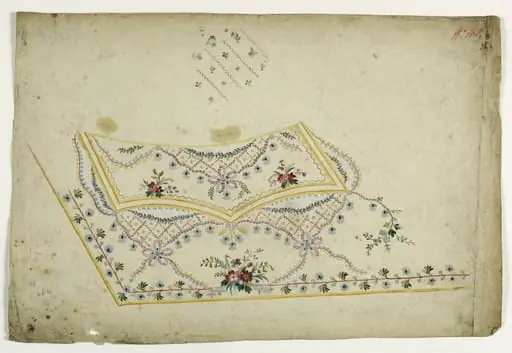 Gilet bouquets et noeuds, projets de broderies de gilet, XVIIIème siècle
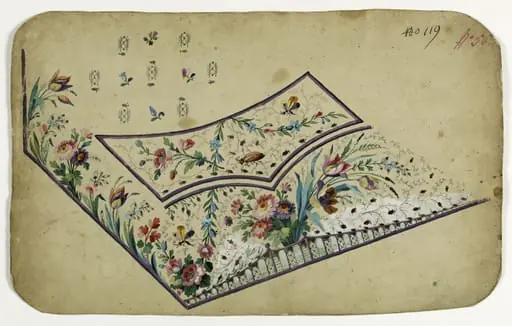 Gilet fleurs, papillons et scarabée, projets de broderies de gilet, XVIIIème siècle
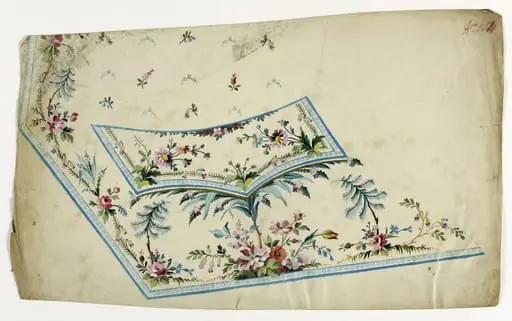 Gilet aux perles bleues, projets de broderies de gilet, XVIIIème siècle
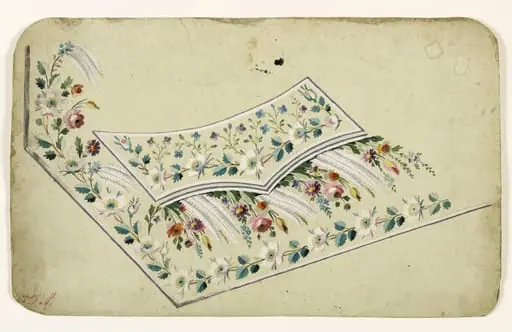 Composition de fleurs multicolores et de feuilles blanches et frises de fleurs de poirier, projets de broderies de gilet, XVIIIème siècle