Artwork
The Crucifixion (Right Panel)
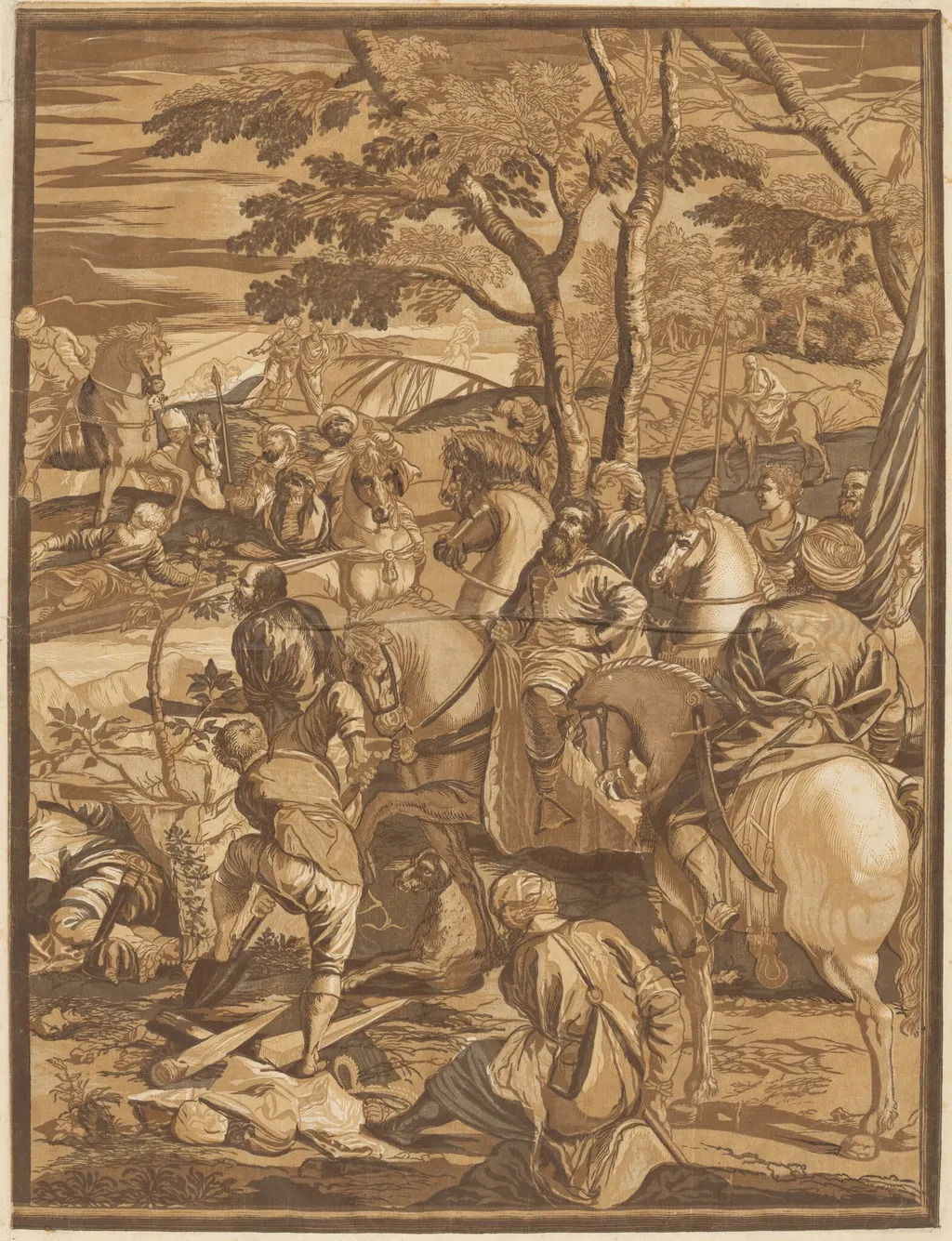
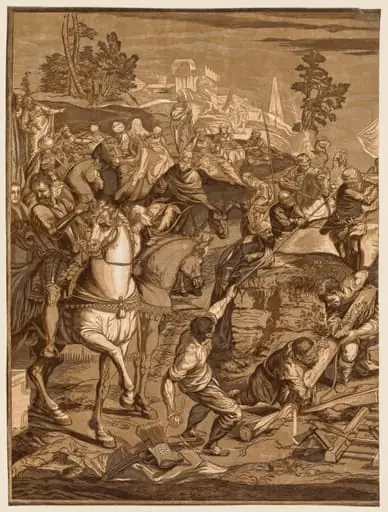
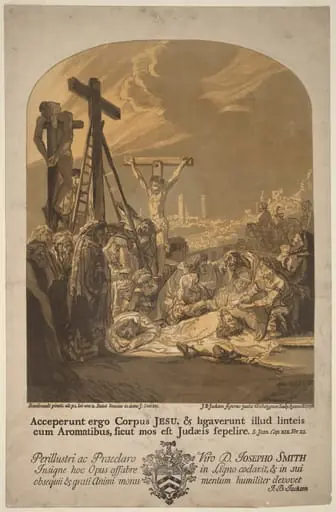
The Crucifixion (Right Panel) is an ink print by the Baroque artist John Baptist Jackson. It dates from 1741 and is held in the collection of the National Gallery of Art.
About this work
Overview
Created in 1741, this chiaroscuro woodcut presents a densely populated crucifixion scene, filled with intertwined figures on foot and horseback. The composition is dominated by a turbulent sky and a foreground of tangled bodies and weapons, rendered in a palette of buff, light brown, gray and red‑brown. The dramatic contrasts of light and shadow give the image a sense of immediacy and movement.
Subject & Meaning
The print illustrates the biblical episode of the crucifixion, focusing on the chaotic aftermath of the event. Soldiers, onlookers, and horses are caught in a frenzied tableau, suggesting the disorder and violence surrounding the execution. The stormy backdrop and stark chiaroscuro amplify the emotional intensity, underscoring themes of suffering and upheaval inherent in the narrative.
Technique & Style
Strong contrasts between illuminated areas and deep shadows create a three‑dimensional effect, while the fine line work conveys motion among the figures.
The work employs a four‑block chiaroscuro woodcut process, each block inked with oil‑based pigments in distinct hues—buff, light brown, gray, and red‑brown—then overprinted on laid paper. This method allows subtle tonal gradations and rich coloration uncommon in earlier monochrome woodcuts. Strong contrasts between illuminated areas and deep shadows create a three‑dimensional effect, while the fine line work conveys motion among the figures.
History & Provenance
British printmaker John Baptist Jackson, active in the eighteenth century, produced the image while working abroad in Paris and Venice. Unlike many contemporaneous prints that copied ink‑and‑wash drawings, Jackson based this piece on an existing oil painting, translating its coloristic qualities into the woodcut medium. The print reflects his reputation for advancing color printing through innovative overprinting techniques.
Context
During the early 1700s, chiaroscuro woodcuts experienced renewed interest as artists sought to rival the tonal richness of paintings. Jackson’s practice of using oil‑based inks and multiple blocks placed him at the forefront of this movement, bridging the gap between printmaking and painting. The work’s religious subject aligns with the period’s continued demand for devotional imagery, while its dynamic composition reflects Baroque influences prevalent in both French and Italian art circles.
Artist & collection

Artist
John Baptist Jackson (1701–1780) was a British artist, a woodcut printmaker of the eighteenth century.

![The Marriage at Cana [left plate], by John Baptist Jackson](https://artifactworldgallery.com/img/john-baptist-jackson--the-marriage-at-cana-left-plate--22bae83d46cc40b5-w320.webp)