Artwork
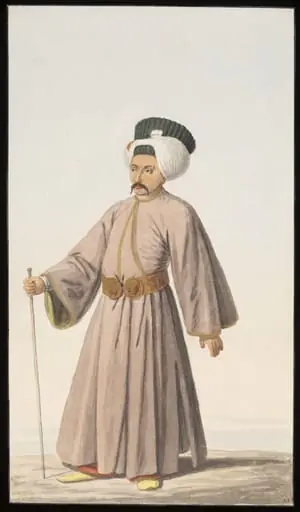
Çavusbasi or Chief Usher
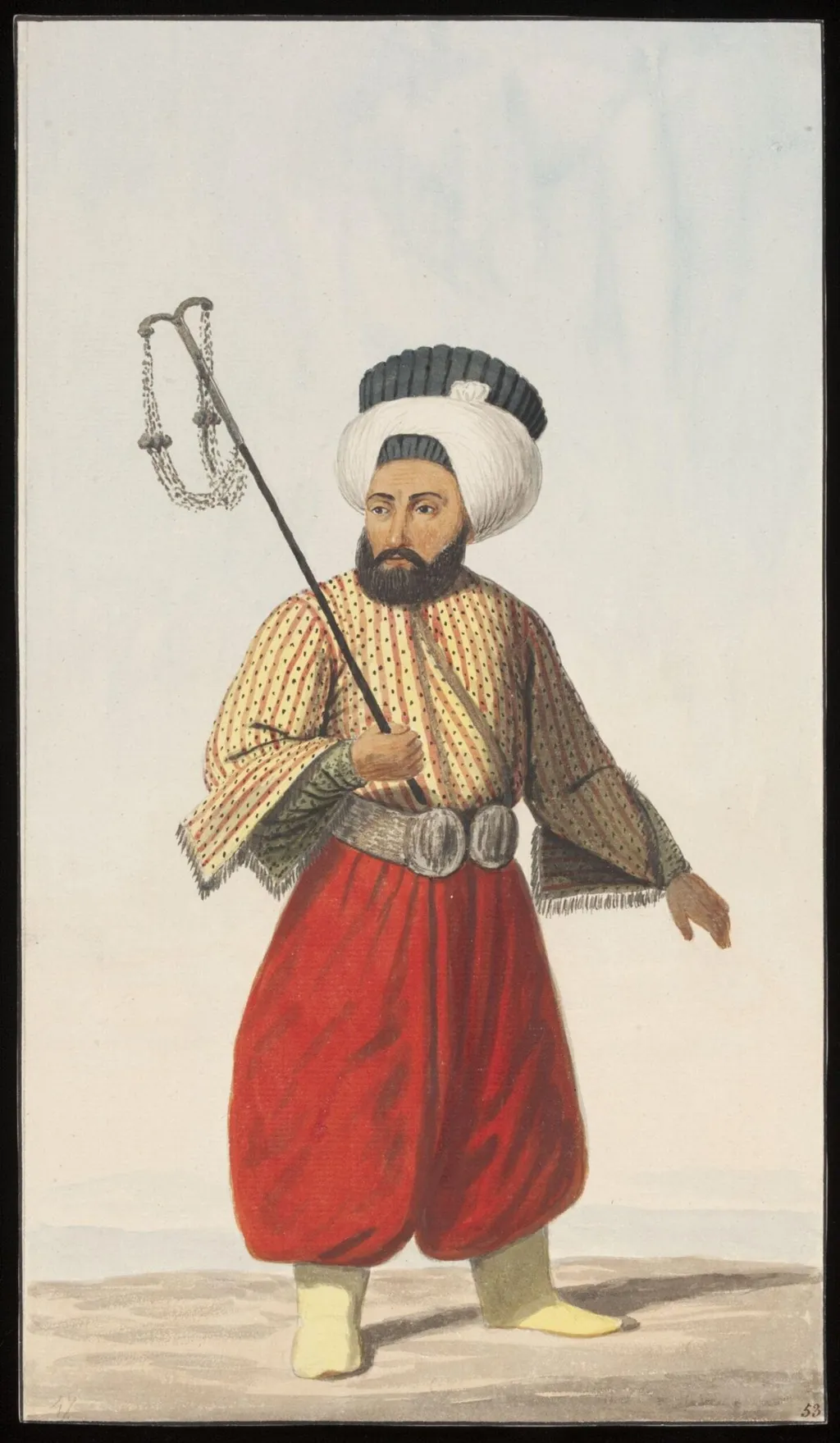
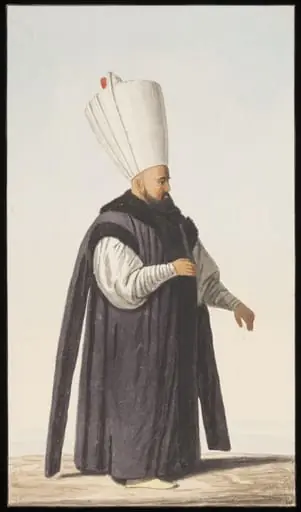
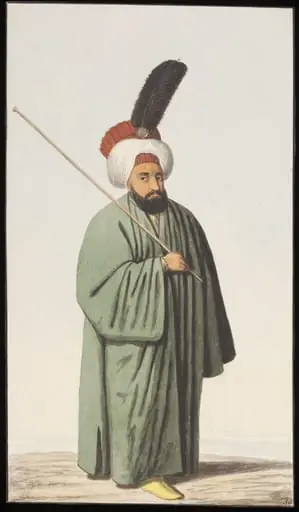
Çavusbasi or Chief Usher is a watercolor work on paper by the Romanesque artist Anonymous Greek artist. It dates from 1809 and is held in the collection of the Victoria and Albert Museum.
About this work
Overview
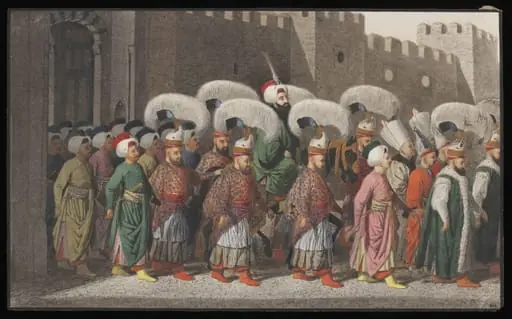
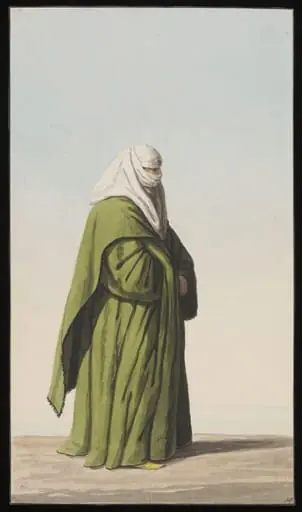
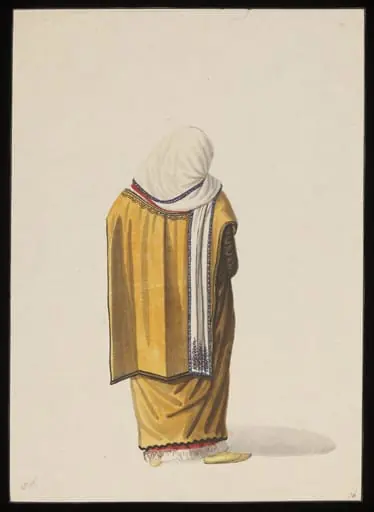
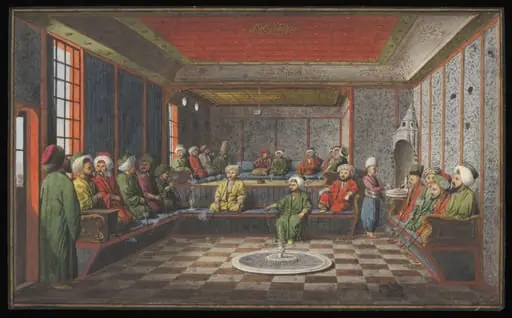
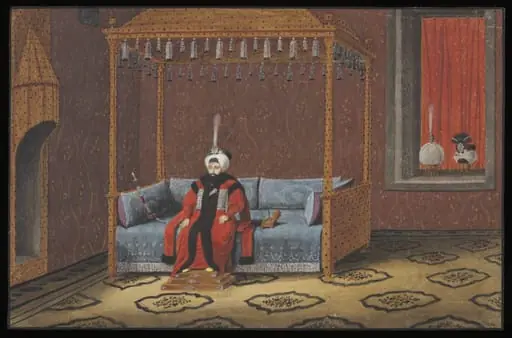
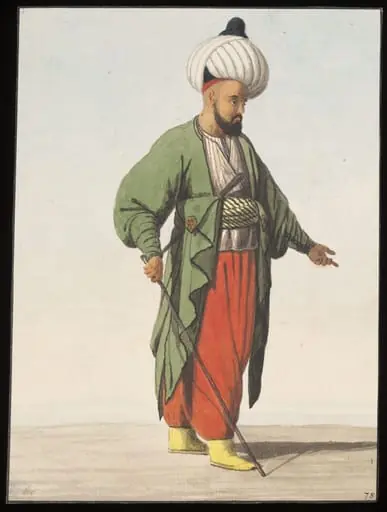
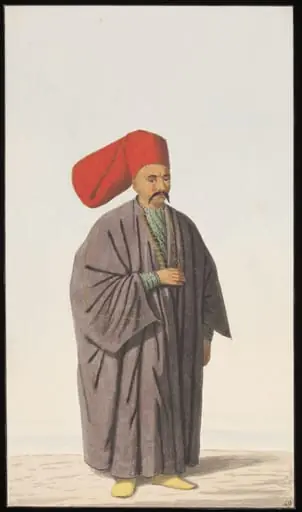
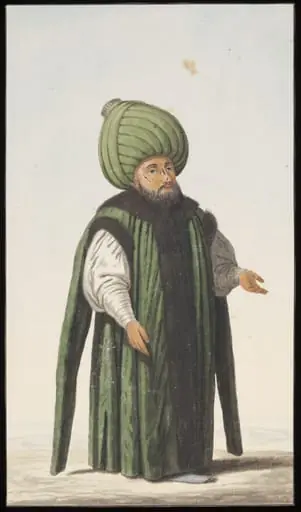
This watercolour portrait, titled Çavusbasi or Chief Usher, is one of a larger set of observational studies commissioned by British diplomat Stratford Canning during his service in Istanbul in the early 1810s. Created by an anonymous Greek artist working within the Ottoman artistic milieu, the series documents Ottoman officials, architecture, and daily life with a blend of local technique and European compositional norms.
Subject & Meaning
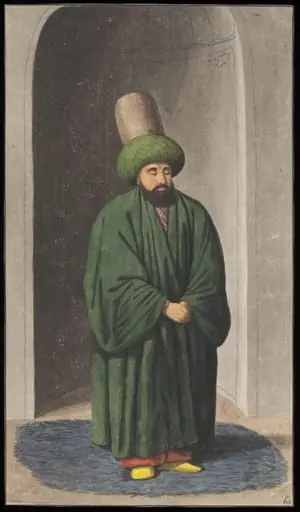
The portrait depicts a Çavusbasi, a high-ranking court usher responsible for protocol and ceremonial order in the Ottoman palace.
The portrait depicts a Çavusbasi, a high-ranking court usher responsible for protocol and ceremonial order in the Ottoman palace. Rendered with formal dignity, the figure’s attire and posture reflect his institutional role rather than individual personality. The image functions as ethnographic documentation, capturing the visual language of Ottoman administrative hierarchy through precise detail and restrained expression.
Technique & Style
The artist employed dense, luminous watercolour and bodycolour, characteristic of Ottoman miniature traditions, while incorporating Western linear perspective and naturalistic shading. The result is a hybrid style: richly layered pigments define fabric and ornamentation with local precision, yet spatial depth and anatomical proportion follow European conventions, suggesting a bridge between artistic systems in early 19th-century Istanbul.
History & Provenance
Stratford Canning commissioned the series around 1810 during his tenure at the British Embassy. The drawings remained in his family until 1895, when his daughter Charlotte donated the complete collection to the Victoria and Albert Museum. Charles Cockerell, a young British architect visiting Istanbul at the time, encountered the artist and made copies of his architectural studies, now held in the British Museum, though the painter’s identity remains unconfirmed.
Context
The series emerged during a period of heightened European interest in Ottoman culture, coinciding with Romanticism’s fascination with the exotic and the historical. Canning’s project was not merely decorative but aimed at systematic record-keeping, reflecting diplomatic curiosity and the era’s growing appetite for visual ethnography. The artist’s Greek identity situates him within a cosmopolitan milieu where Byzantine, Islamic, and Western traditions intersected in Istanbul’s artistic circles.
Legacy
The set of watercolours remains a rare visual archive of Ottoman institutional life as seen through the eyes of a local artist trained in indigenous methods yet responsive to foreign patrons. While the painter’s name is lost, the works contribute significantly to understanding cross-cultural artistic exchange in the early 19th century, offering insight into how Ottoman subjects were observed, recorded, and represented by both insiders and outsiders.
Artist & collection

![A Pasha travelling with his escort[?], by Anonymous Greek artist](https://artifactworldgallery.com/img/anonymous-greek-artist--a-pasha-travelling-with-his-escort--01de32b8fcf30843-w320.webp)