Artwork
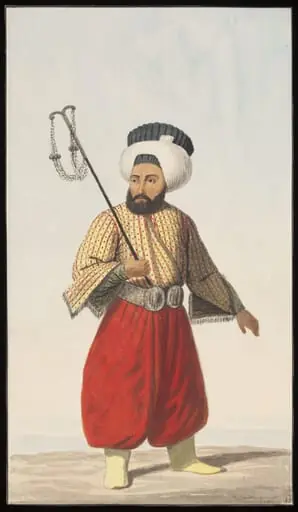
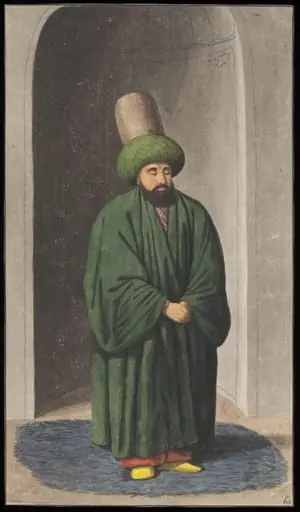
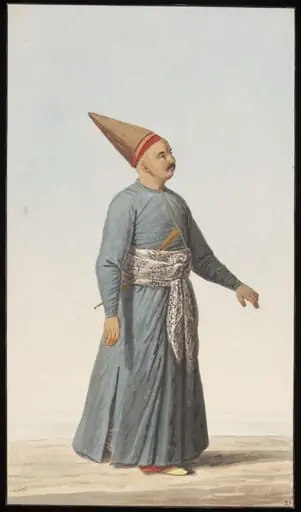
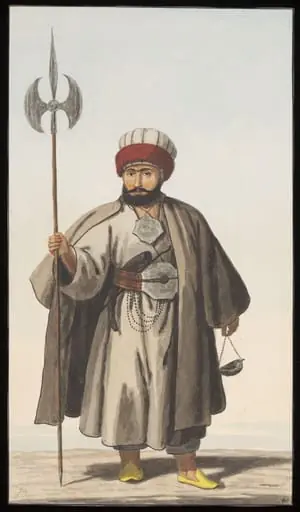
A Dervish[?]
![A Dervish[?], by Anonymous Greek artist, watercolor, 1809](https://artifactworldgallery.com/img/anonymous-greek-artist--a-dervish--3c8916f5a95abb6a-w1024.webp)
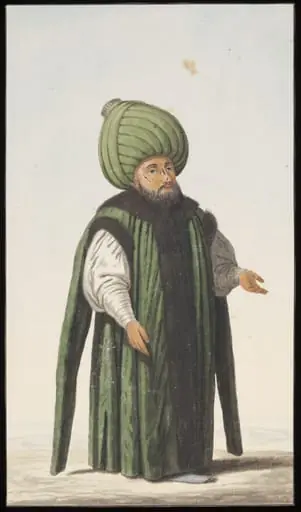
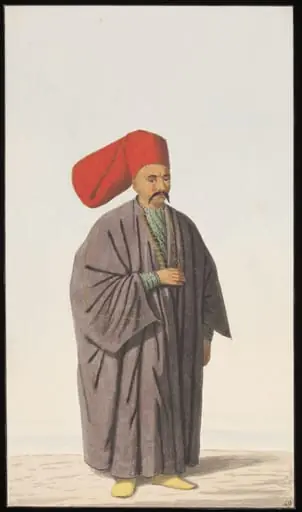
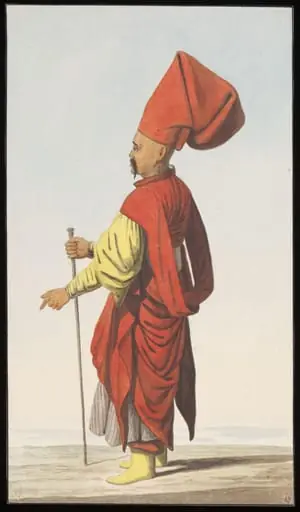
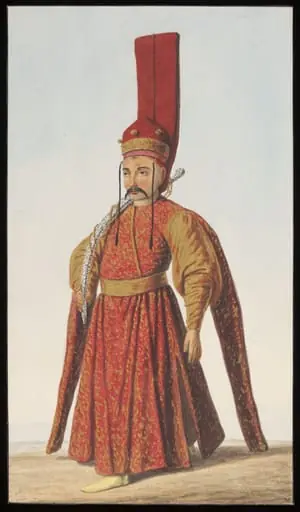
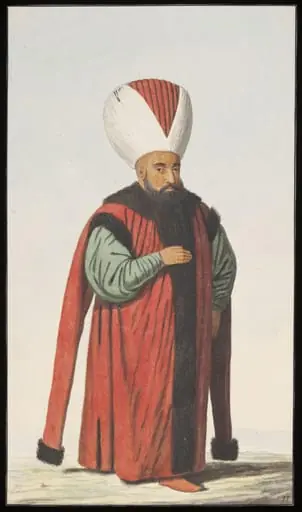
A Dervish[?] is a watercolor work on paper by the Orientalist artist Anonymous Greek artist. It dates from 1809 and is held in the collection of the Victoria and Albert Museum. This watercolour is part of a larger collection commissioned by British diplomat Stratford Canning during his service in Istanbul.
About this work
Overview
This watercolour is part of a larger collection commissioned by British diplomat Stratford Canning during his service in Istanbul.
This watercolour is part of a larger collection commissioned by British diplomat Stratford Canning during his service in Istanbul. Created between 1808 and the early 1810s, the series documents Ottoman life through detailed visual records. The artist remains unidentified, though Turkish scholars suggest ties to the studio of Konstantin Kapidagli. The works were later inherited by Canning’s daughter and entered the Victoria and Albert Museum’s collection in 1895.
Subject & Meaning
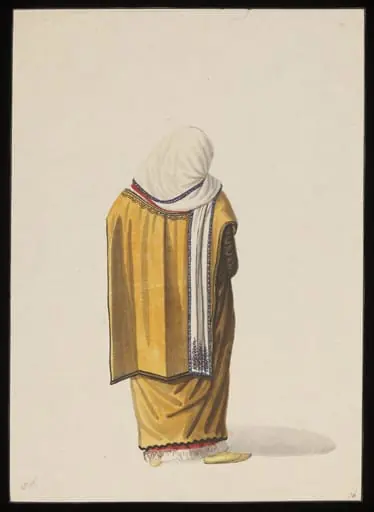
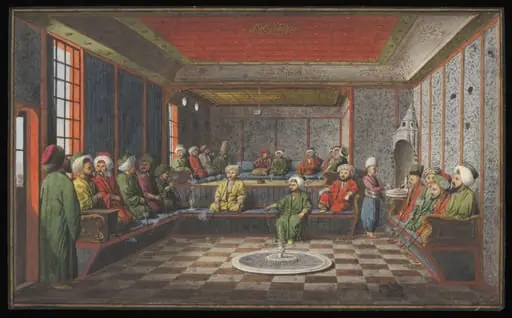
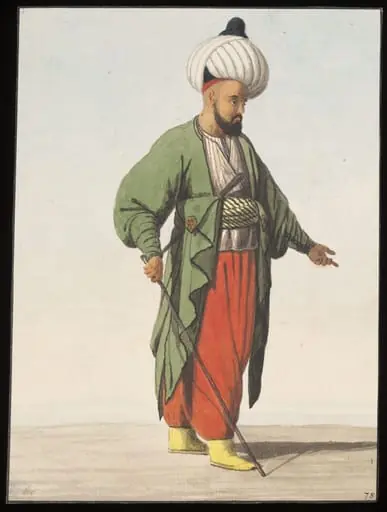
The image depicts a dervish, likely illustrating Sufi religious practice within Ottoman society. Rather than idealized or exoticized, the portrayal reflects observational accuracy, capturing costume, posture, and ritual context. These images served as ethnographic records, intended to convey the complexity of Ottoman institutions to a European audience unfamiliar with their customs.
Technique & Style
The watercolour blends Ottoman traditions of rich, layered pigments with European spatial conventions. Dense application of bodycolour creates luminous surfaces, while perspective and architectural detail align with Western draftsmanship. This hybrid approach reflects the cultural intersection of the artist’s training and the diplomat’s expectations, producing images that are both locally grounded and internationally legible.
History & Provenance
Stratford Canning commissioned the series during his early diplomatic posting in Istanbul. The artist, possibly Greek and active in Kapidagli’s circle, worked under Canning’s direction. British architect Charles Cockerell, who visited the embassy in 1810, observed the artist at work and made copies of his architectural studies, now held at the British Museum. The original drawings passed to Canning’s daughter Charlotte and were acquired by the V&A in 1895.
Context
Canning’s commission emerged during a period of heightened European interest in Ottoman culture, driven by diplomatic engagement and scholarly curiosity. The series was not merely decorative but functioned as a visual archive, documenting architecture, dress, and ritual at a time of political and social transition in the empire. Such projects reflected broader trends in cross-cultural documentation among Western envoys.
Legacy
The set remains a significant resource for understanding early 19th-century Ottoman visual culture through indigenous eyes. Though the artist’s name is lost, the technical synthesis in these works reveals a sophisticated local response to foreign patronage. The preservation of the series in a major museum underscores its value as a historical record rather than a colonial artifact.
Artist & collection

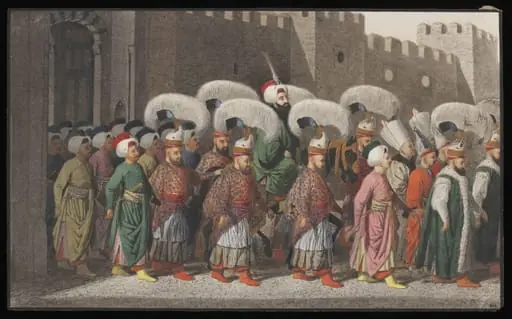
![A Pasha travelling with his escort[?], by Anonymous Greek artist](https://artifactworldgallery.com/img/anonymous-greek-artist--a-pasha-travelling-with-his-escort--01de32b8fcf30843-w320.webp)