Artwork
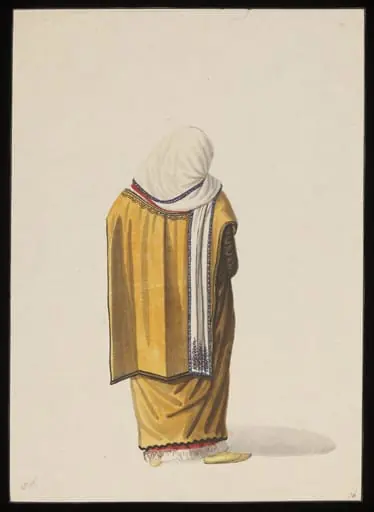
A veiled Turkish woman
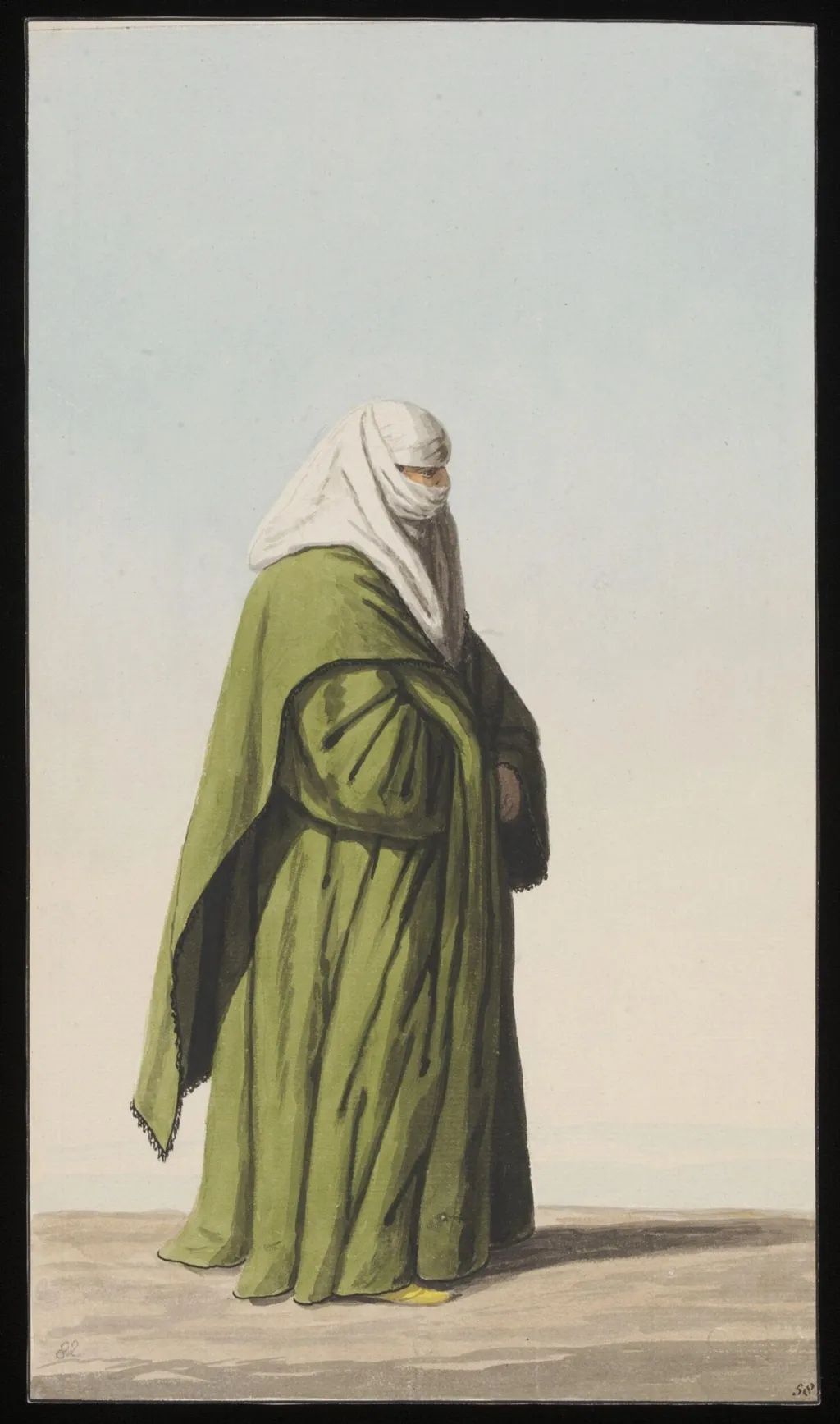
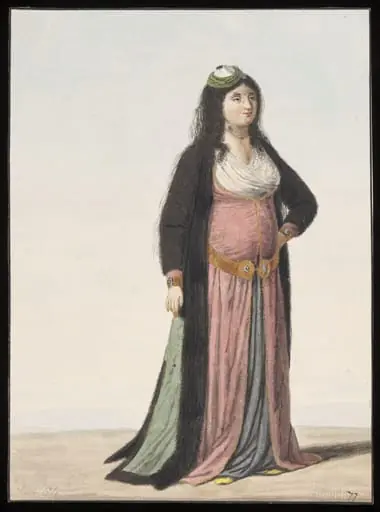
A veiled Turkish woman is a watercolor work on paper by the Orientalist artist Anonymous Greek artist. It dates from 1809 and is held in the collection of the Victoria and Albert Museum.
About this work
Overview
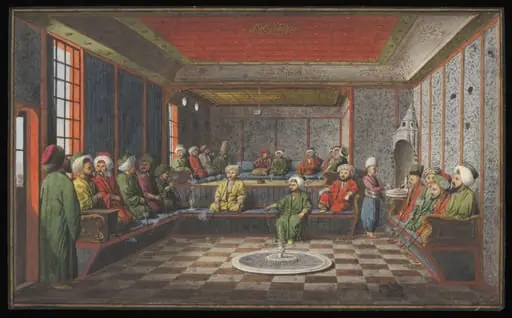
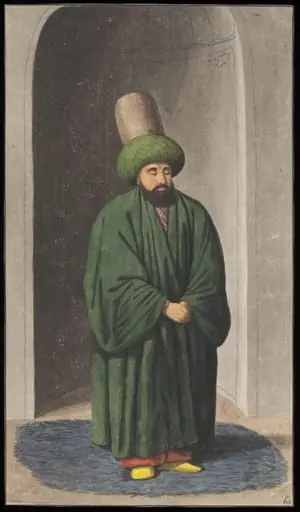
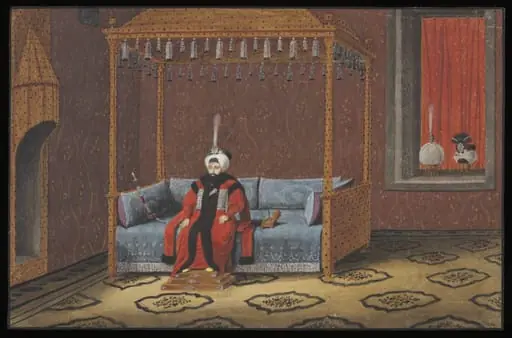
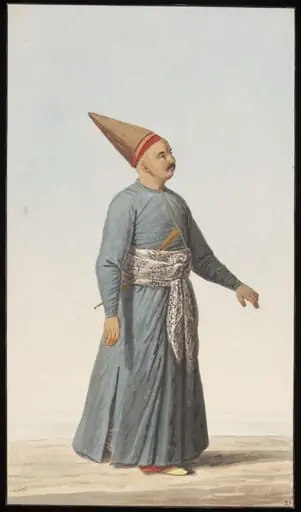
This watercolour depicts a veiled Turkish woman and forms part of a larger series commissioned by British diplomat Stratford Canning during his early posting in Istanbul. The works were intended to document Ottoman architecture, customs and daily life for a Western audience, and were created by an unidentified local artist whose style merges Ottoman colouristic richness with European compositional conventions.
Subject & Meaning
The figure, a modestly dressed woman whose face is concealed by a veil, offers a glimpse into the gendered norms of early‑19th‑century Ottoman society. By presenting a private, domestic subject, the drawing balances Canning’s curiosity about public institutions with an interest in everyday cultural practices.
Technique & Style
Executed in watercolour, the piece combines the dense, luminous pigments typical of Ottoman miniature painting with a linear perspective and spatial depth derived from European art. This hybrid approach reflects the artist’s exposure to both local traditions and foreign visual standards.
History & Provenance
The series was produced around 1810 after Canning’s arrival in Istanbul. The original drawings remained in the Canning family until Canning’s daughter, Charlotte, sold them to the Victoria and Albert Museum in 1895, where they entered the museum’s collection.
Context
Canning’s diplomatic mission coincided with a period of heightened British interest in the Ottoman Empire. To supplement official reports, he employed local artists—possibly linked to the workshop of Konstantin Kapidagli—to create visual records that could be understood by European viewers.
Legacy
The watercolours, now held by the V&A, provide valuable visual evidence of Ottoman urban life and artistic exchange. They illustrate how cross‑cultural encounters shaped visual documentation in the early nineteenth century, influencing later British travelers and scholars who sought to represent the East.
Artist & collection

![A Pasha travelling with his escort[?], by Anonymous Greek artist](https://artifactworldgallery.com/img/anonymous-greek-artist--a-pasha-travelling-with-his-escort--01de32b8fcf30843-w320.webp)
![A Dervish[?], by Anonymous Greek artist](https://artifactworldgallery.com/img/anonymous-greek-artist--a-dervish--3c8916f5a95abb6a-w320.webp)