Artwork
Sipahi Içoglani
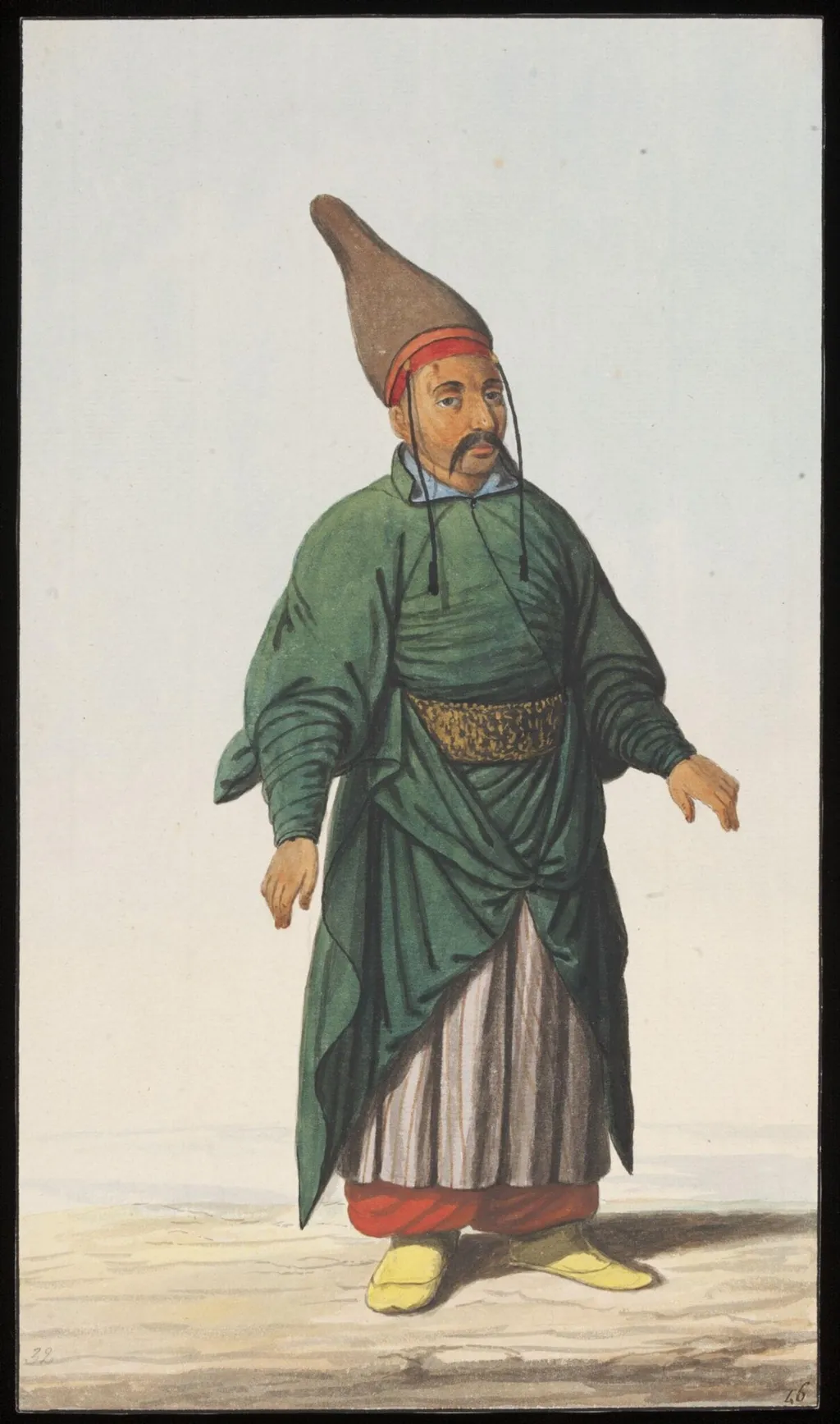
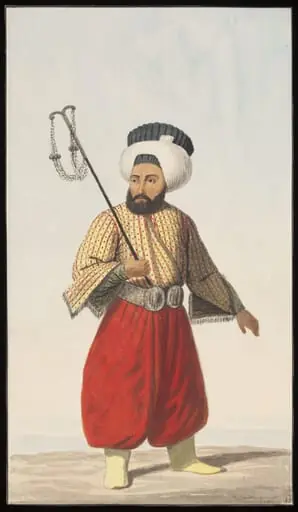
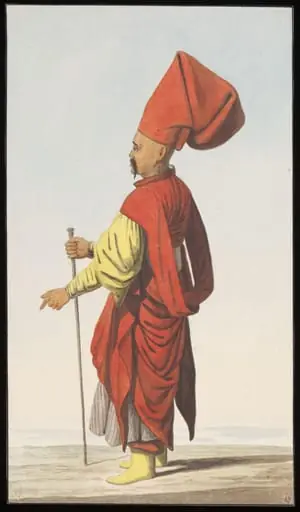
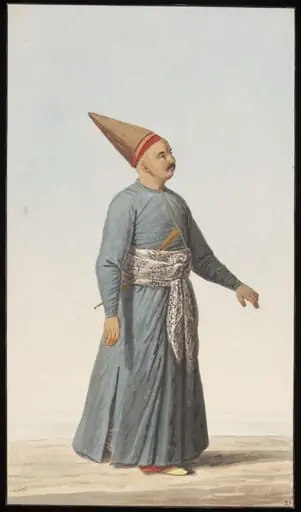
Sipahi Içoglani is a watercolor work on paper by the Romanticist artist Anonymous Greek artist. It dates from 1809 and is held in the collection of the Victoria and Albert Museum.
About this work
Overview
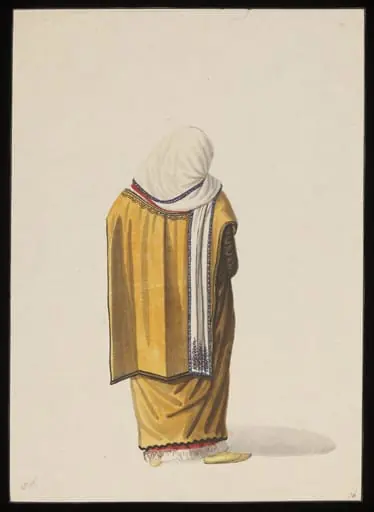
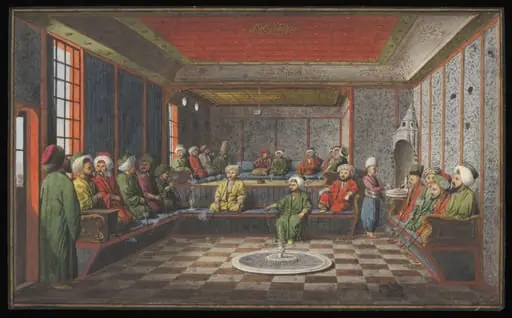
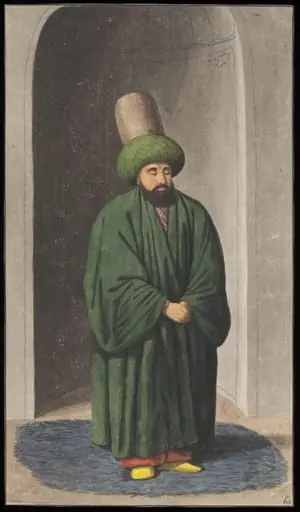
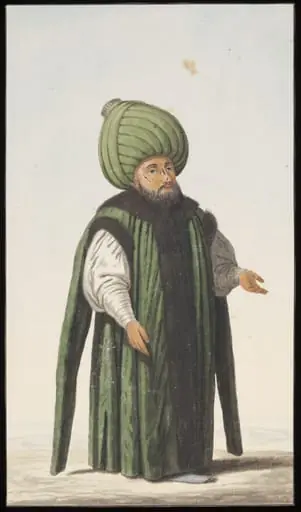
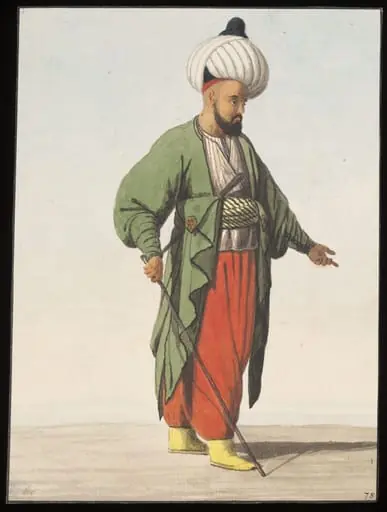
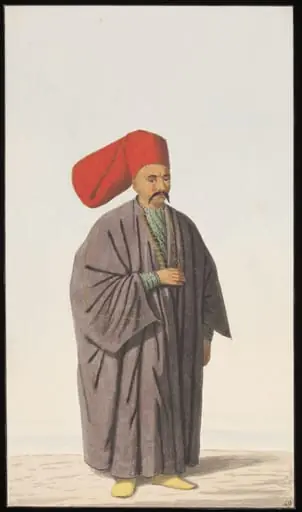
Sipahi Içoglani is a watercolour created as part of a larger series of Ottoman scenes commissioned by Stratford Canning, later Viscount Stratford de Redcliffe (1786‑1880). The series was produced during Canning’s early diplomatic posting in Istanbul in 1808, when he systematically recorded the city’s architecture and customs.
Subject & Meaning
The work depicts a sipahi, a cavalryman of the Ottoman military, rendered in a setting that reflects both the attire and the environment associated with the empire’s provincial forces. It serves as a visual document of Ottoman military culture as observed by a European diplomat.
Technique & Style
The watercolour combines the vivid, dense pigments typical of Ottoman miniature traditions with European conventions of linear perspective and spatial depth. This hybrid approach suggests the hand of a local artist familiar with both Ottoman body‑colour techniques and Western representational methods.
History & Provenance
The original series remained in the Canning family until 1895, when Charlotte Canning, the diplomat’s daughter, sold the drawings to the Victoria and Albert Museum. The set was thus transferred from private diplomatic archives to a public museum collection at the close of the 19th century.
Context
During Canning’s tenure, the British embassy employed a Greek artist—possibly linked to the studio of Konstantin Kapidagli—to produce the drawings.
During Canning’s tenure, the British embassy employed a Greek artist—possibly linked to the studio of Konstantin Kapidagli—to produce the drawings. The artist’s identity remains uncertain, though Turkish scholars associate him with Kapidagli’s circle. The young architect Charles Cockerell, visiting Istanbul in 1810, met this painter and later reproduced some of the views, copies of which are now held by the British Museum.
Artist & collection

![A Pasha travelling with his escort[?], by Anonymous Greek artist](https://artifactworldgallery.com/img/anonymous-greek-artist--a-pasha-travelling-with-his-escort--01de32b8fcf30843-w320.webp)