Artwork
View of the Courtyard of the Fatih Mehmet Camii
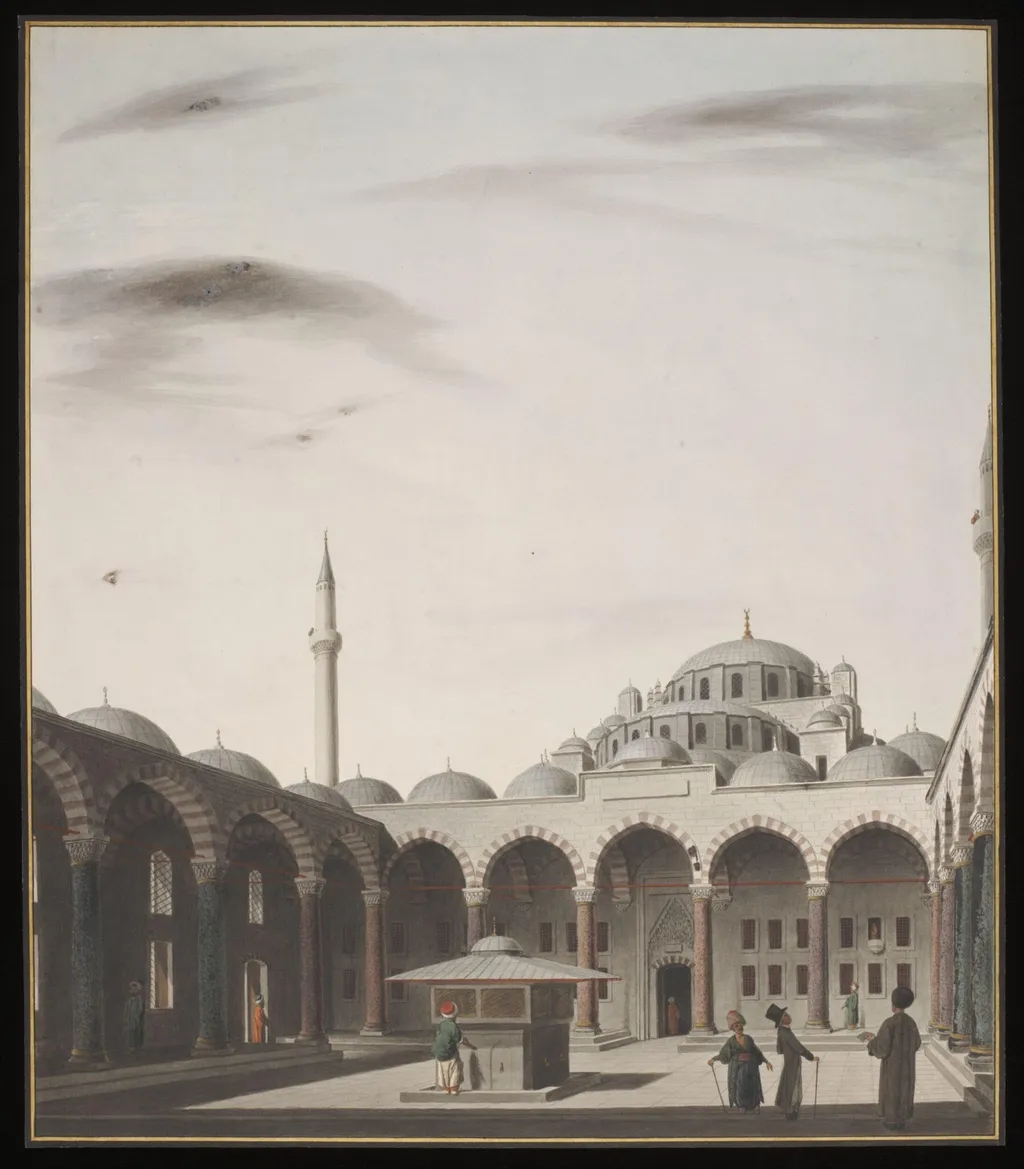
View of the Courtyard of the Fatih Mehmet Camii is a watercolor work on paper by the Romanticist artist Anonymous Greek artist. It dates from 1809 and is held in the collection of the Victoria and Albert Museum.
About this work
Overview
The artist remains unidentified, though scholarly consensus suggests ties to the circle of Konstantin Kapidagli, a known Ottoman painter of the period.
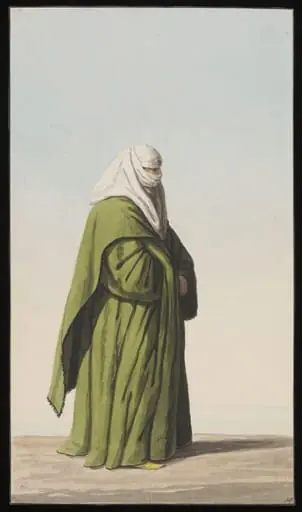
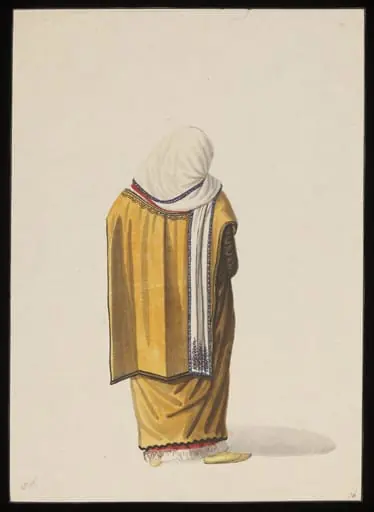
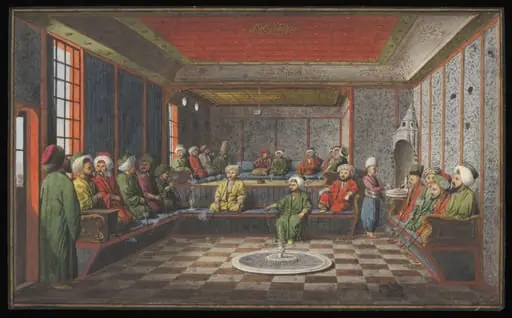
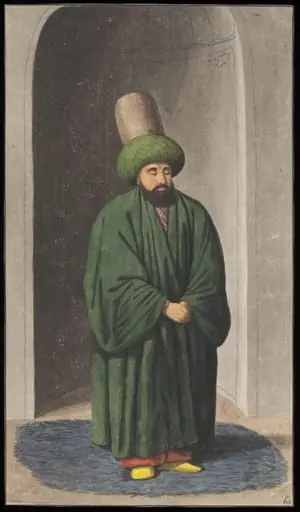
A watercolour series depicting the courtyard of the Fatih Mehmet Camii was produced in the early 19th century under the patronage of British diplomat Stratford Canning. Commissioned during his tenure in Istanbul, the works document Ottoman architecture and urban life through detailed, observational drawings. The artist remains unidentified, though scholarly consensus suggests ties to the circle of Konstantin Kapidagli, a known Ottoman painter of the period.
Subject & Meaning
The series captures institutional and architectural sites of the Ottoman Empire, with the Fatih Mosque courtyard serving as a focal point. These images were not merely decorative but functioned as records of cultural and spatial order, reflecting Canning’s diplomatic interest in Ottoman society. The choice of courtyards and religious structures underscores a fascination with public life and imperial continuity under Ottoman rule.
Technique & Style
The watercolours blend Ottoman traditions of vibrant, layered pigments with European linear perspective and compositional clarity. The artist employed bodycolour to achieve luminous detail, particularly in architectural surfaces and decorative elements. This hybrid approach reflects a cross-cultural visual language, bridging local craftsmanship and Western observational norms prevalent among foreign envoys.
History & Provenance
The drawings were collected by Stratford Canning during his time in Istanbul from 1808 onward. After his death, the set passed to his daughter Charlotte, who donated the complete series to the Victoria and Albert Museum in 1895. Earlier, British architect Charles Cockerell, who visited the embassy in 1810, made copies of the artist’s work, now held in the British Museum, confirming the drawings’ circulation among European intellectuals.
Context
Canning’s commission occurred during a period of heightened European interest in Ottoman culture, as diplomats and travelers sought to document a declining empire through visual means. The artist’s identity as a Greek Christian working within an Ottoman studio reflects the multicultural fabric of Istanbul’s artistic community. These works stand as rare non-official records, made not for propaganda but for personal and scholarly inquiry.
Legacy
The series remains a key visual archive of early 19th-century Istanbul, offering insight into architectural preservation and daily life under Ottoman administration. Though the artist’s name is lost, the technical fusion and documentary precision of the works have influenced later studies of Ottoman visual culture. Their preservation in major collections ensures continued scholarly access to this cross-cultural moment.
Artist & collection

![A Pasha travelling with his escort[?], by Anonymous Greek artist](https://artifactworldgallery.com/img/anonymous-greek-artist--a-pasha-travelling-with-his-escort--01de32b8fcf30843-w320.webp)
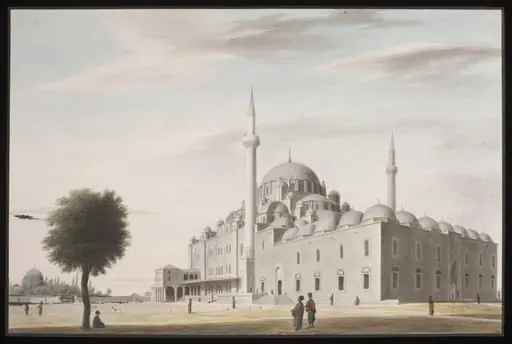 View of the Fatih Mehmet Camii
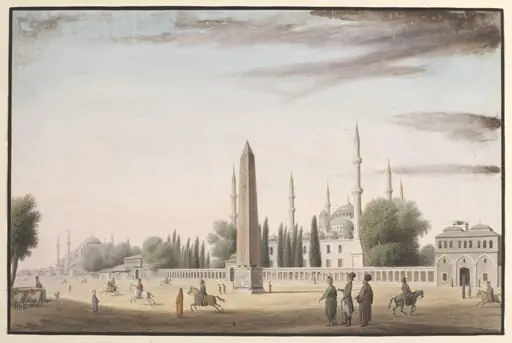 At Meydani, or the Hippodrome, Istanbul
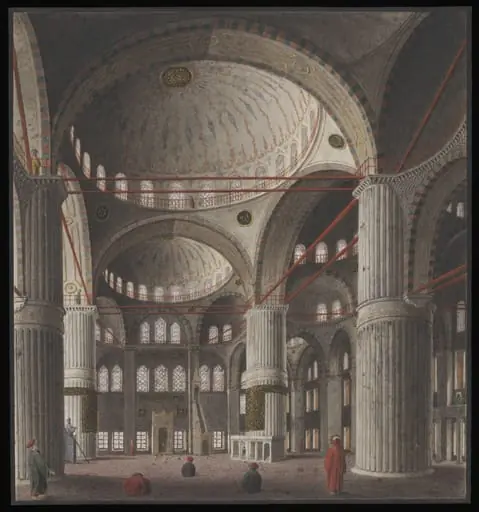 The interior of Sultan Ahmet Camii
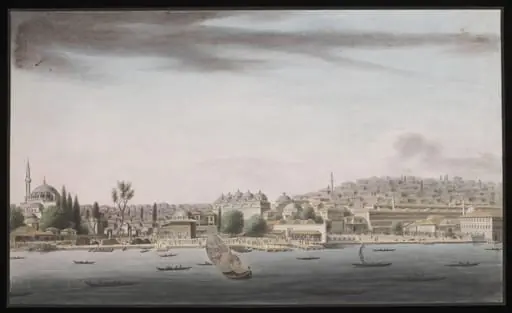 Panoramic view of the buildings on the shore at Tophane
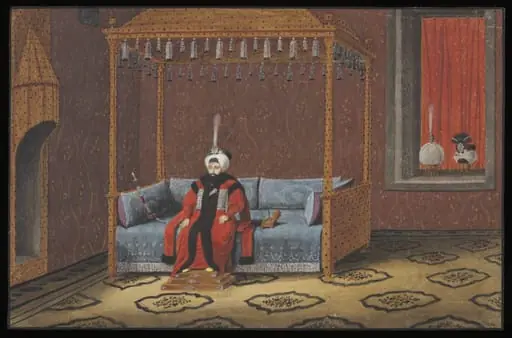 Portrait of Sultan Mahmud II enthroned
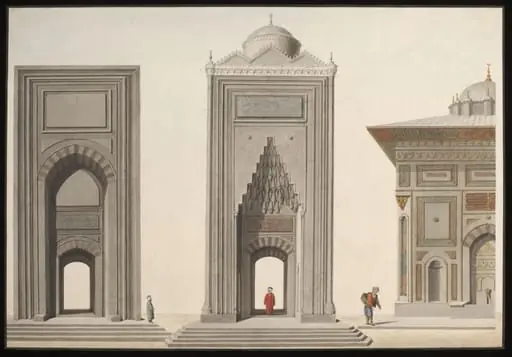 Elevations of two mosque portals, and part of the Hekimoglu Ali Pasha Fountain at Kabatas
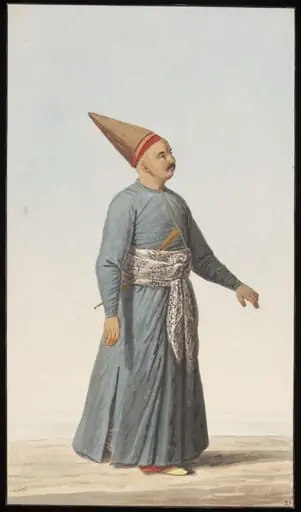 An official in the Sultan's palace
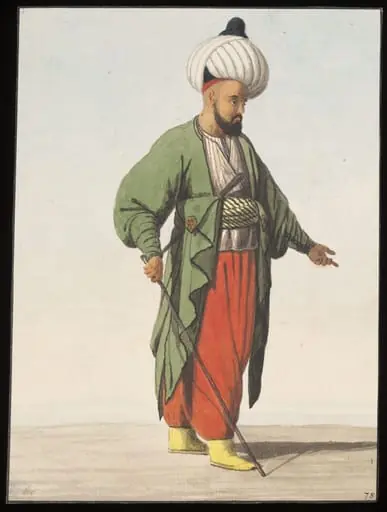 A Turkish official