Artwork
Ornament with Flower and Eight Wild Folk
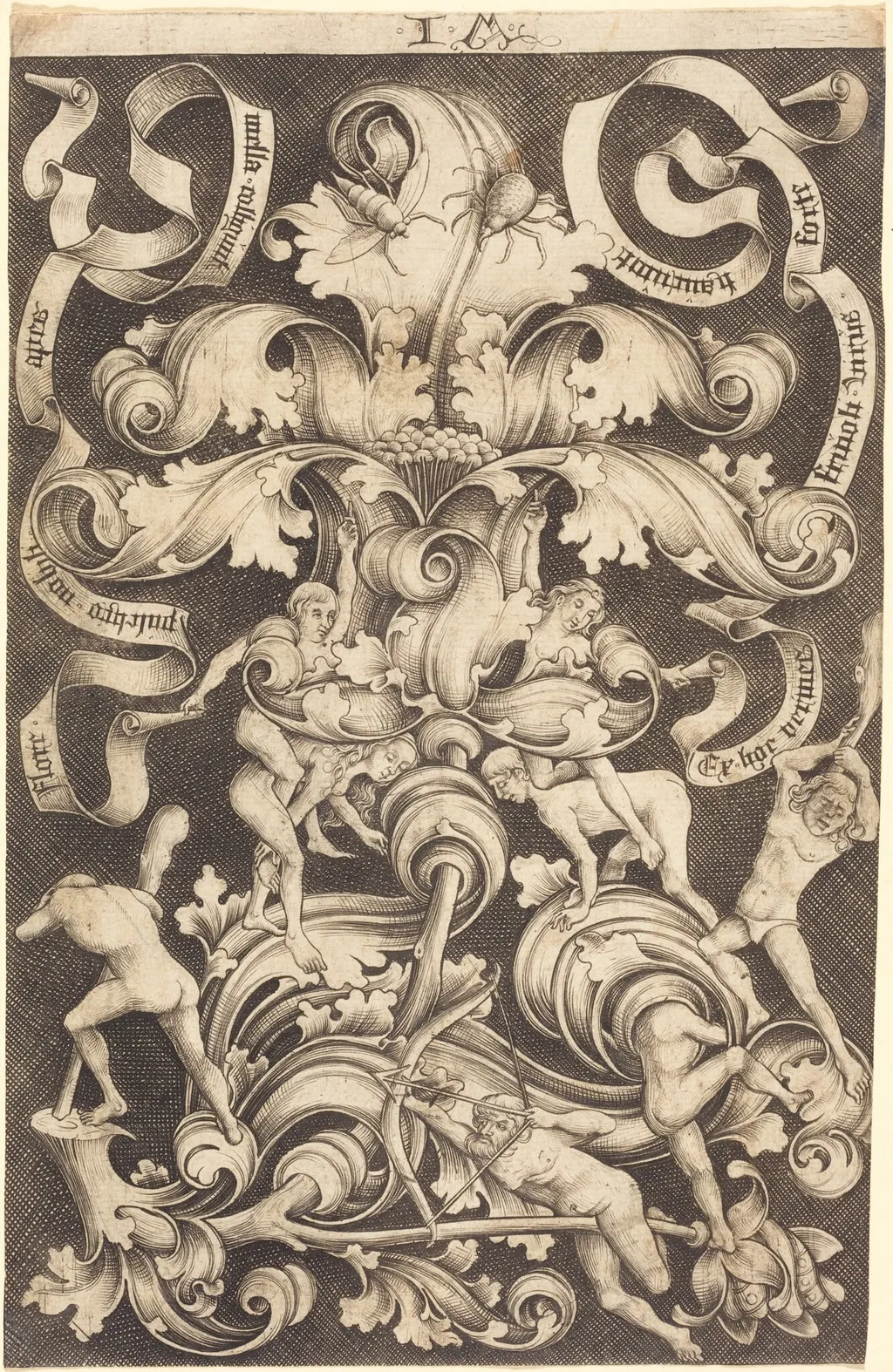
Ornament with Flower and Eight Wild Folk is an ink print by the Renaissance artist Israhel van Meckenem. It dates from 1474 and is held in the collection of the National Gallery of Art.
About this work
Overview
Swirling vines and floral motifs frame a series of eight stylized figures with oversized heads, interspersed with decorative lettering.
Created in 1474, this engraving by Israhel van Meckenem presents a densely packed ornamental design. Swirling vines and floral motifs frame a series of eight stylized figures with oversized heads, interspersed with decorative lettering. The composition fills the entire surface, producing a pattern that could serve as a wall frieze or manuscript border. The work exemplifies the intricate, linear quality typical of late‑medieval Northern European prints.
Subject & Meaning
The central motif consists of eight diminutive, caricature‑like figures—often interpreted as “wild folk”—situated among blossoms and twisting foliage. Their exaggerated heads and simplified forms suggest symbolic or allegorical roles rather than portraiture, functioning as decorative elements that animate the surrounding botanical pattern. The surrounding letters and scrollwork reinforce the piece’s purpose as a decorative border rather than a narrative scene.
Technique & Style
Van Meckenem employed copper engraving, incising fine lines that produce a stark contrast between the dark background and the luminous, linear design. The engraving showcases meticulous cross‑hatching and stippling to render texture in the vines and foliage, while the figures are rendered with bold, simplified contours. This high‑density arrangement of motifs reflects the artist’s skill in maximizing visual impact within a limited space.
History & Provenance
Israhel van Meckenel, active between 1465 and 1503, was one of the most productive printmakers of the fifteenth century, with a catalogue exceeding 620 impressions. Many of his works, including this ornament, were adaptations of earlier designs, indicating a workshop practice of reusing popular motifs. The print survives in several museum collections, attesting to its circulation among patrons interested in decorative patterns for architectural or manuscript applications.
Context
The engraving emerges from a period when Northern European artisans were expanding the possibilities of print as a medium for decorative art. Van Meckenel’s output contributed to the spread of ornamental motifs across Germany and the Low Countries, influencing later woodcut and engraving designs used in book illustration and interior decoration. The piece illustrates the transition from manuscript illumination to reproducible printed ornamentation.
Artist & collection
Artist
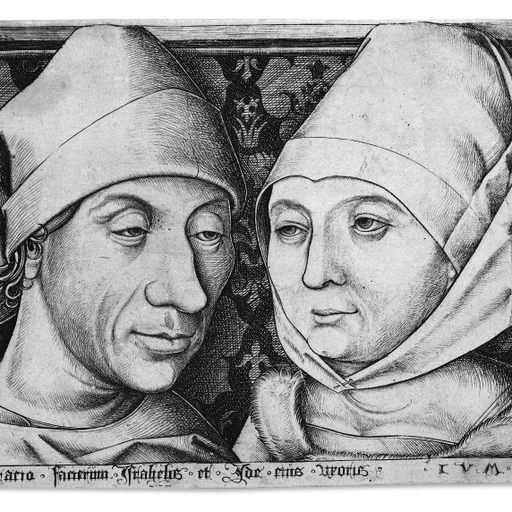
Israhel van Meckenem (c. 1445 – 10 November 1503), also known as Israhel van Meckenem the Younger, was a German printmaker and goldsmith, perhaps of a Dutch family origin. He was the most prolific engraver of the…

 Ornament with Vase and Two Female Figures
 Upright Ornament with Eight Naked Men
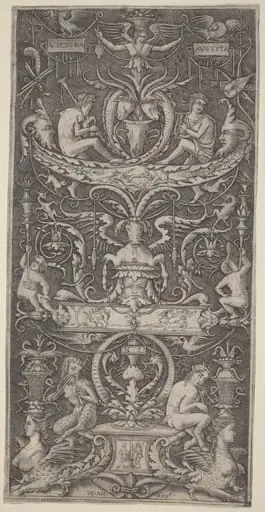 Ornamental Panel Inscribed "Victoria Augusta"
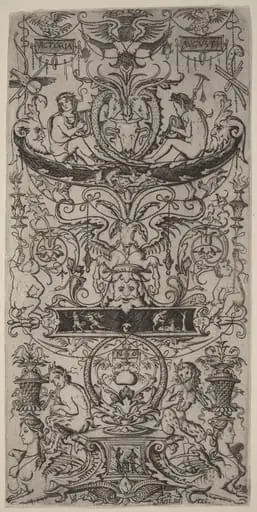 Ornament Panel: Victoria Augusta
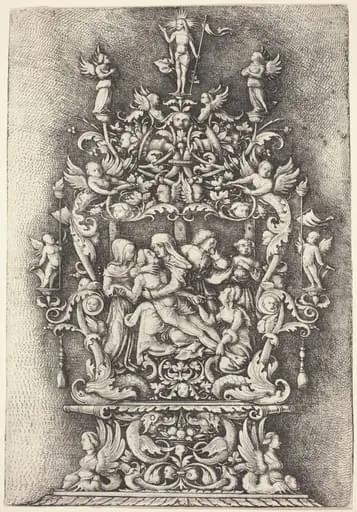 Reliquary with Pietà
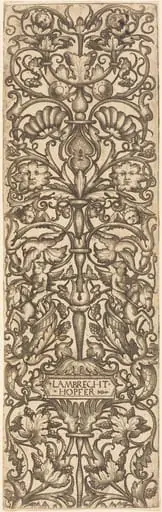 Ascending Ornament
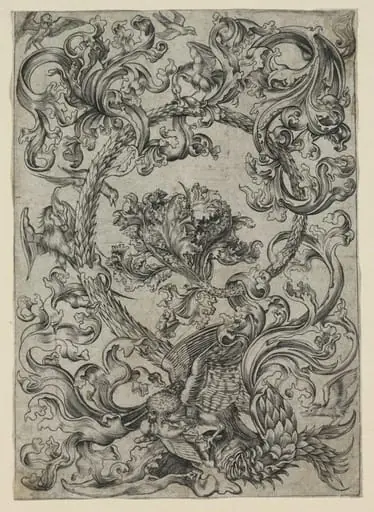 Ornamental Foliage, with an Owl and other Birds
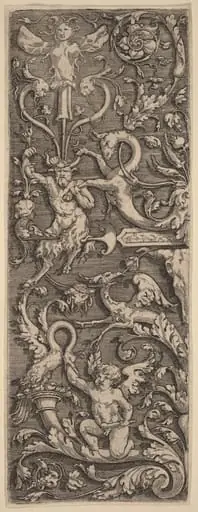 Ornament with a Cupid, a Satyr, and Grotesque Figures
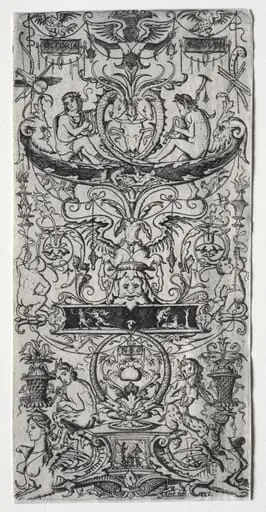 Ornament Panel Inscribed Victoria Augusta