Artwork
Reverberations of Taiga, Volume 1 (leaf 24)
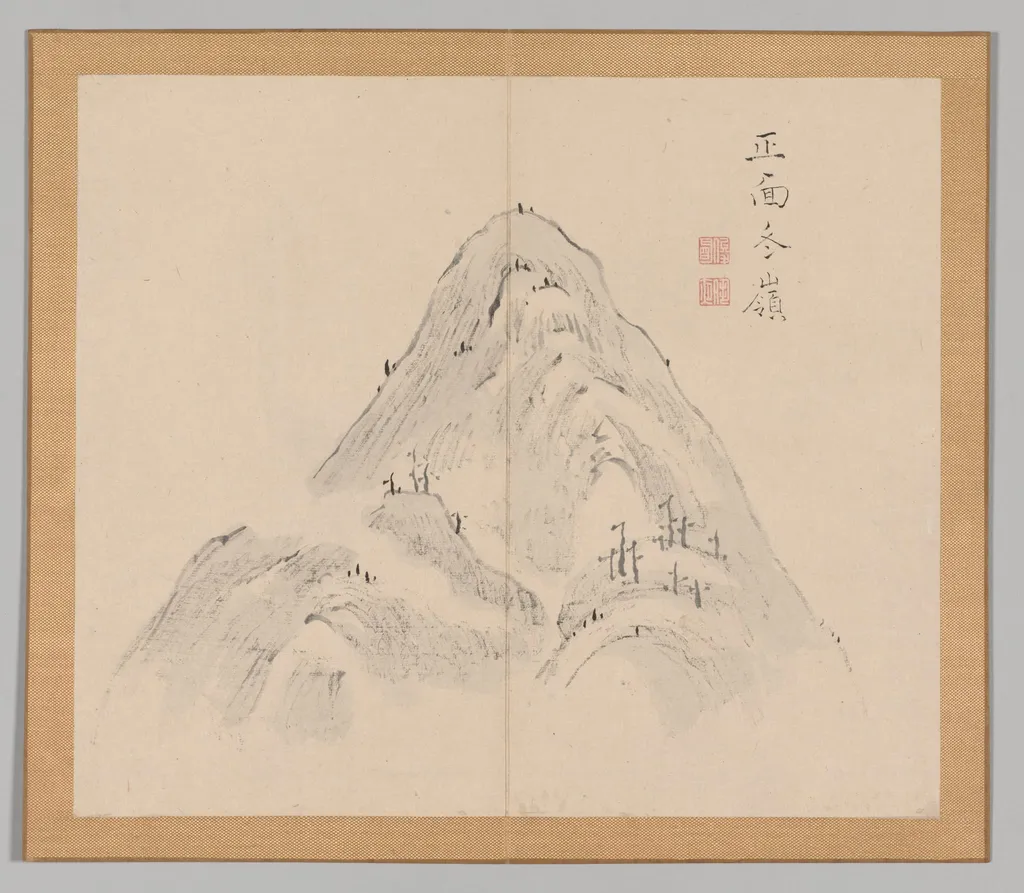
Reverberations of Taiga, Volume 1 (leaf 24) is a work on paper by the Baroque artist Aoki Shukuya. It dates from 1704 and is held in the collection of the Cleveland Museum of Art.
About this work
Overview
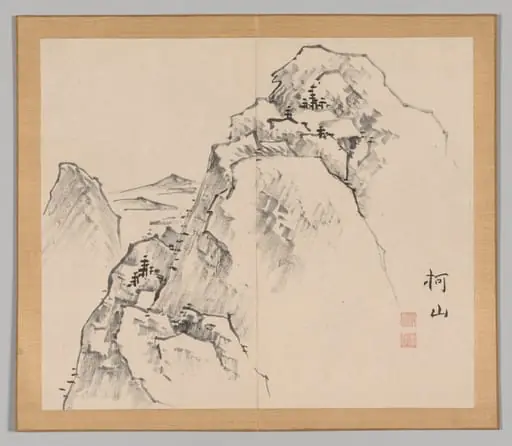
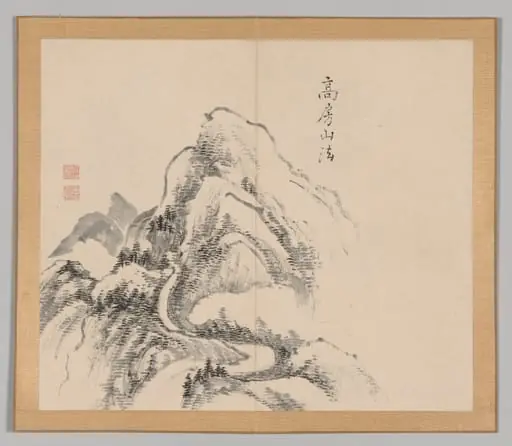
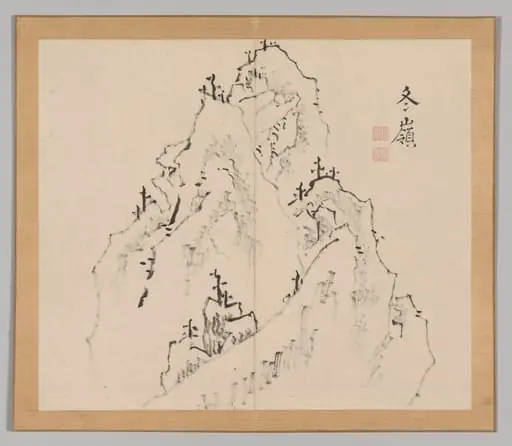
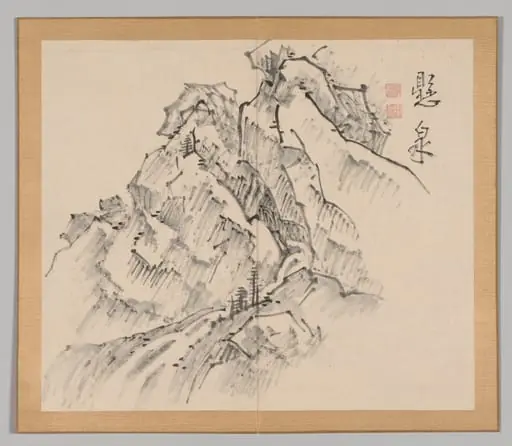
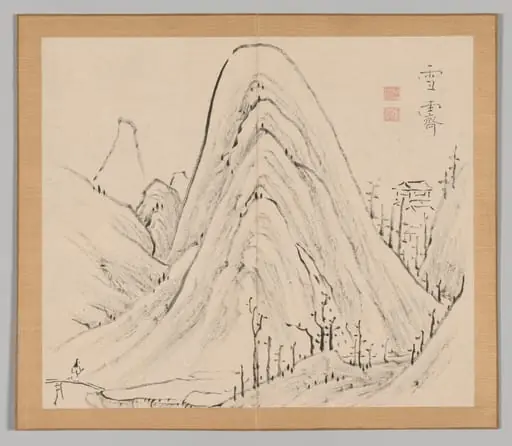
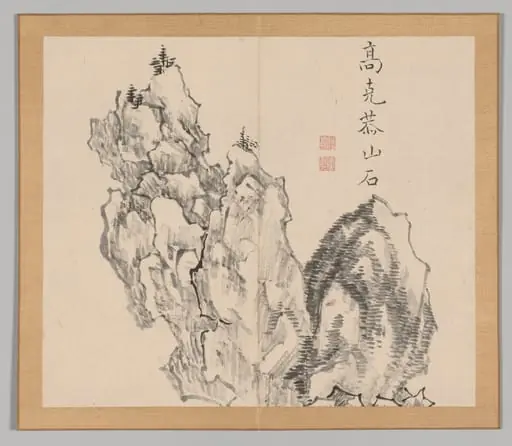
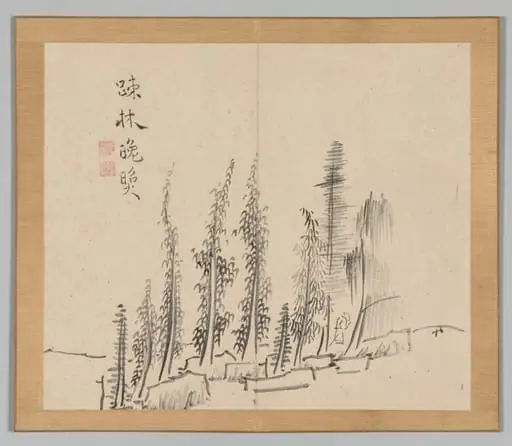
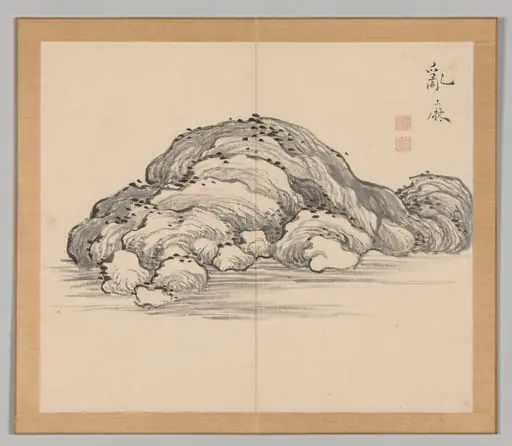
This leaf is part of a portfolio by Aoki Shukuya, a Japanese artist active in the 18th century. It presents a minimalist landscape of rocks, trees, and mountains rendered in ink. The work belongs to a series of studies that reflect the training methods of Japanese ink painting, where apprentices systematically reproduced their master’s compositions to internalize technique.
Subject & Meaning
The subject is a restrained natural scene—barely outlined peaks, gnarled trees, and clustered stones—offering no narrative or symbolic layer. Its purpose was pedagogical: to distill the essential forms of landscape into brushwork exercises. The absence of detail emphasizes the artist’s control over ink density and line variation rather than representational accuracy.
Technique & Style
Shukuya employed monochrome ink washes with controlled brushstrokes, mirroring the aesthetic of his teacher, Ikeno Taiga. The lines are economical, alternating between dry, angular strokes for rock surfaces and fluid, tapered marks for tree branches. The tonal range is narrow, relying on subtle gradations to suggest depth and texture without color or shading.
History & Provenance
Created during Shukuya’s apprenticeship under Taiga, this leaf likely dates to the mid-1700s. Such portfolios were often kept as personal records of study, not intended for public display. The work survives as evidence of the transmission of artistic methods within Kyoto’s literati painting circles, where copying was a foundational practice.
Context
His work reflects a broader cultural emphasis on discipline, observation, and the refinement of technique over originality.
In 18th-century Japan, artistic training occurred through direct mentorship, with apprentices copying masterworks to master brush control and compositional balance. Shukuya’s sketches align with the literati tradition, which valued personal expression within established forms. His work reflects a broader cultural emphasis on discipline, observation, and the refinement of technique over originality.
Legacy
Shukuya’s portfolio leaves, including this one, illustrate how artistic knowledge was preserved and passed down in pre-modern Japan. While he did not achieve the fame of his teacher, his studies remain valuable for understanding the mechanics of ink painting pedagogy. They document a quiet, methodical tradition that shaped generations of Japanese artists.
Artist & collection

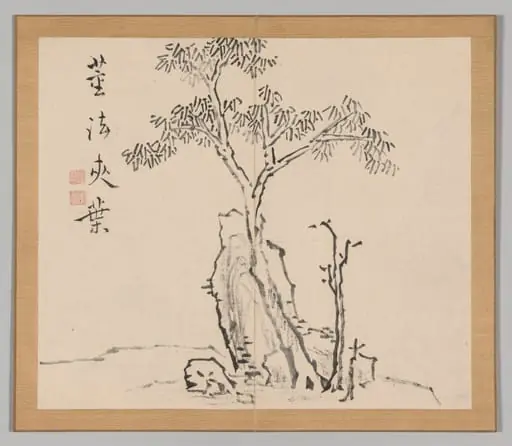 Reverberations of Taiga, Volume 1 (leaf 4)
 Reverberations of Taiga, Volume 2 (leaf 30)
 Reverberations of Taiga, Volume 1 (leaf 12)
 Reverberations of Taiga
 Reverberations of Taiga (Volume 1)
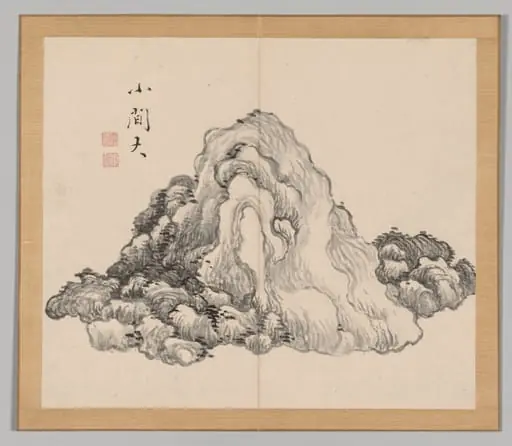 Reverberations of Taiga, Volume 1 (leaf 7)
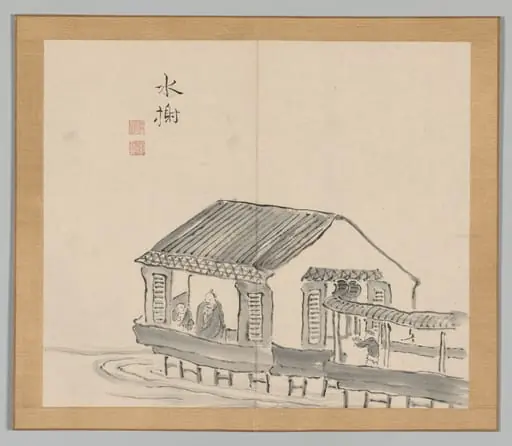 Reverberations of Taiga, Volume 2 (leaf 29)
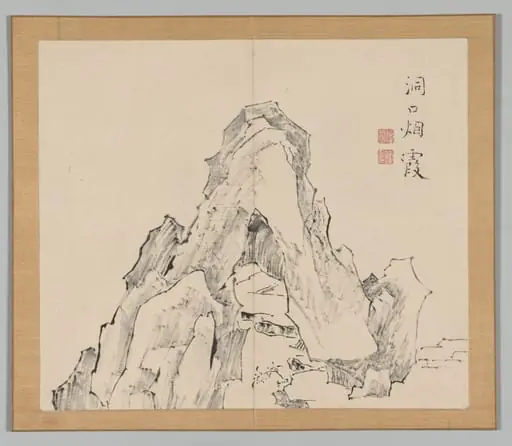 Reverberations of Taiga, Volume 2 (leaf 20)