Artwork
Reverberations of Taiga, Volume 1 (leaf 22)
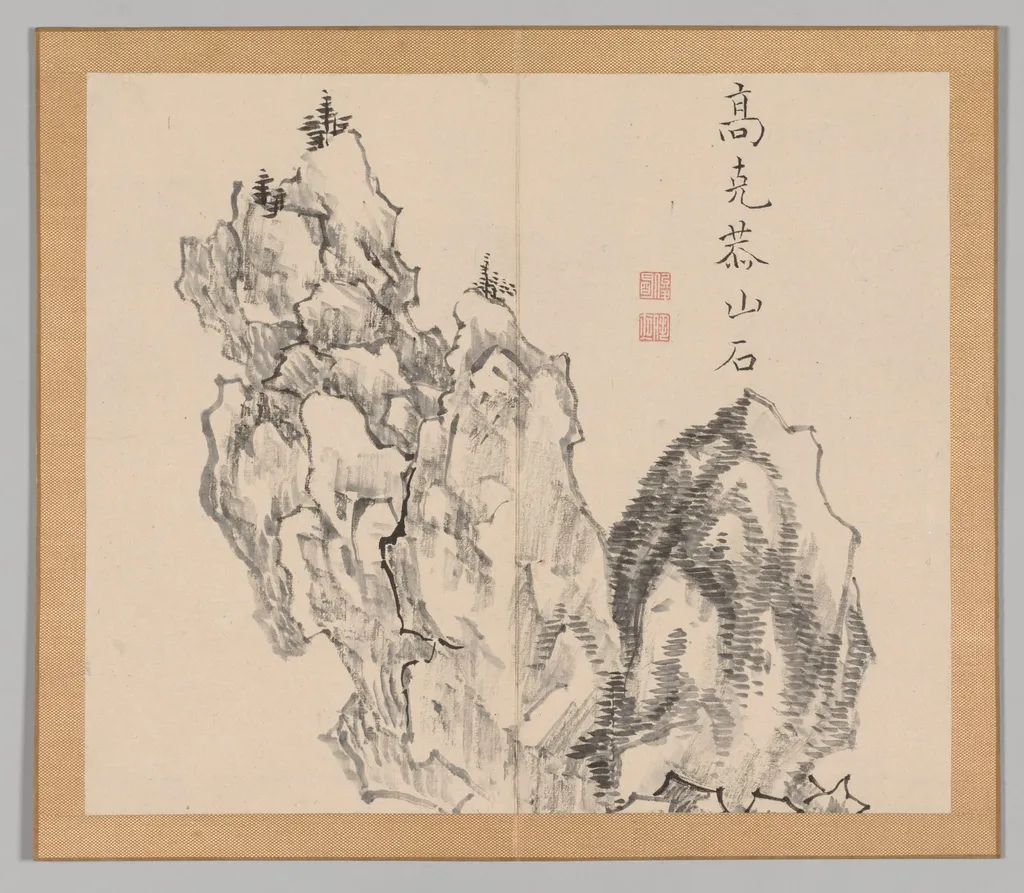
Reverberations of Taiga, Volume 1 (leaf 22) is a work on paper by the Baroque artist Aoki Shukuya. It dates from 1704 and is held in the collection of the Cleveland Museum of Art.
About this work
You can learn more about the artist's style by looking up the work of artist: Aoki Shukuya (Japanese, d.
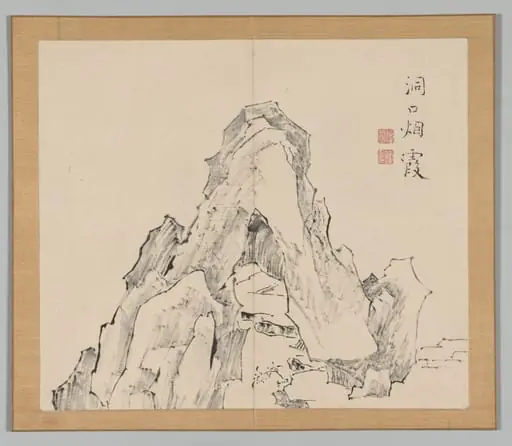
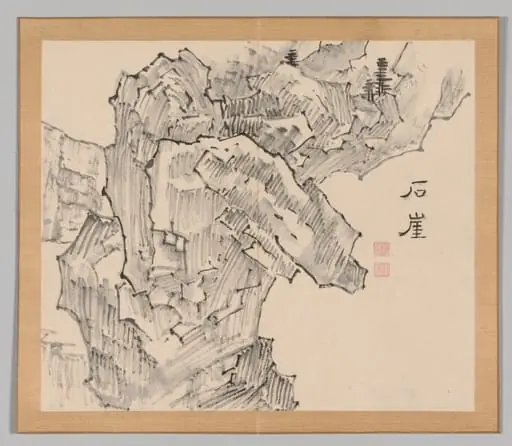
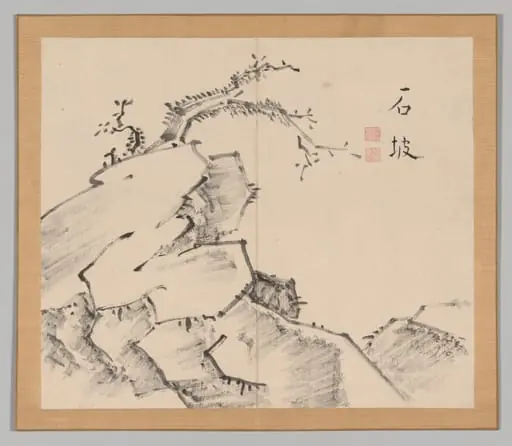
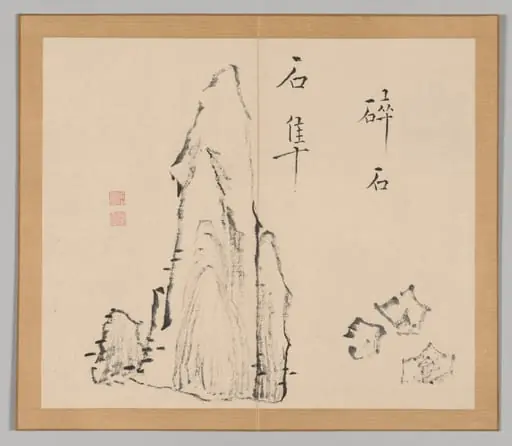
This painting shows rocks, trees, and mountains in a simple style.
The artist likely used a brush to create the scene.
The style is similar to that of the artist's teacher, which is noticeable in the composition.
The teacher, Ikeno Taiga, was a famous Kyoto artist.
The artist learned various ink and brush techniques from Taiga.
You can learn more about the artist's style by looking up the work of artist: Aoki Shukuya (Japanese, d. 1802)
Overview
Reverberations of Taiga, Volume 1 (leaf 22) is a portfolio piece by Aoki Shukuya, a Japanese painter who died in 1802. The work presents a landscape of rocks, trees and mountains rendered in a restrained, monochrome manner typical of Edo‑period ink painting.
Subject & Meaning
The composition focuses on natural elements—rugged rocks, slender trees and distant mountains—arranged to convey the quiet rhythm of the Japanese taiga. By emphasizing simplicity, the piece reflects the aesthetic of wabi‑sabi, valuing understated beauty and the transience of nature.
Technique & Style
Executed with brush and ink, the drawing employs varied strokes to suggest texture and depth, from bold outlines for the rocks to delicate washes for foliage. The handling of line and tone mirrors the teachings of Shukuya’s mentor, Ikeno Taiga, whose influence is evident in the balanced layout and restrained palette.
History & Provenance
Shukuya trained under the renowned Kyoto artist Ikeno Taiga, following the traditional apprenticeship model in which a pupil copied the master’s compositions to master brushwork. This leaf is part of a larger series titled "Reverberations of Taiga," documenting the student’s study of his teacher’s style.
Context
During the Edo period, aspiring painters commonly began their education by reproducing a master’s works, a practice that reinforced stylistic continuity within regional schools. Kyoto, a cultural hub, fostered such lineages, and Shukuya’s work exemplifies the transmission of Taiga’s aesthetic principles to the next generation.
Artist & collection

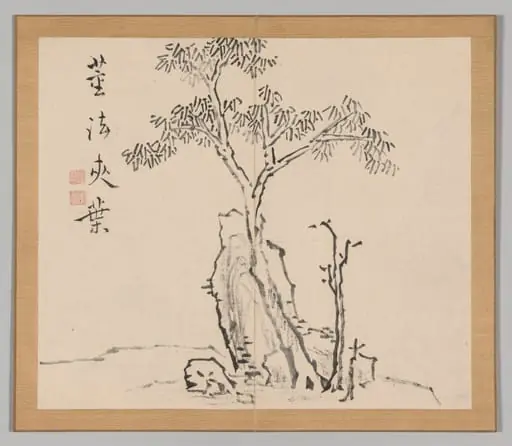 Reverberations of Taiga, Volume 1 (leaf 4)
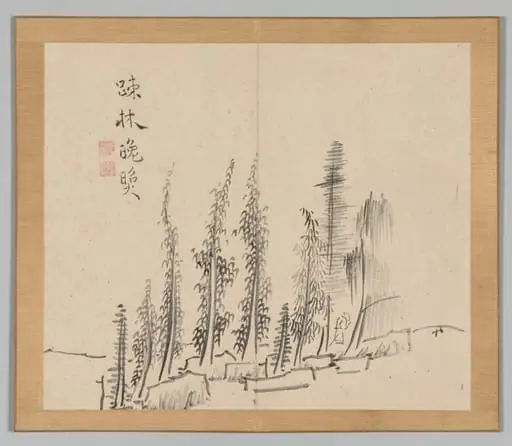 Reverberations of Taiga, Volume 2 (leaf 30)
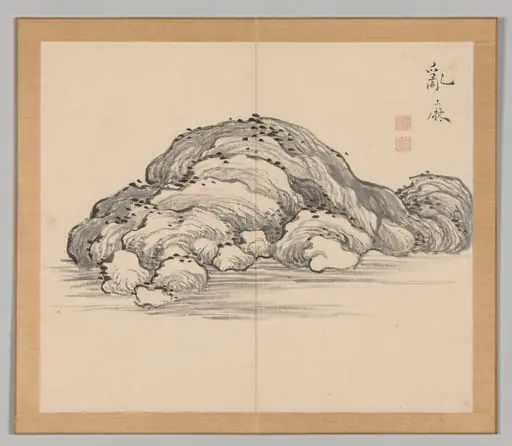 Reverberations of Taiga, Volume 1 (leaf 12)
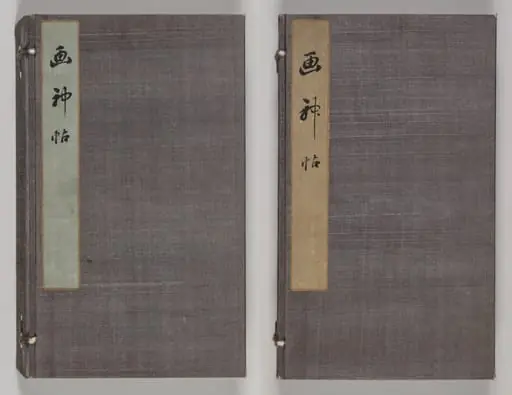 Reverberations of Taiga
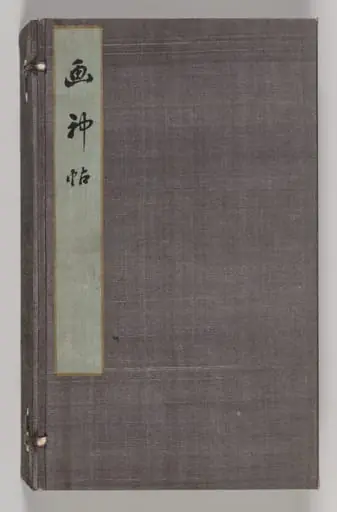 Reverberations of Taiga (Volume 1)
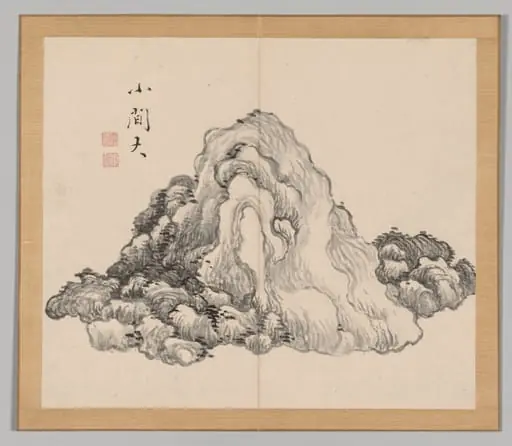 Reverberations of Taiga, Volume 1 (leaf 7)
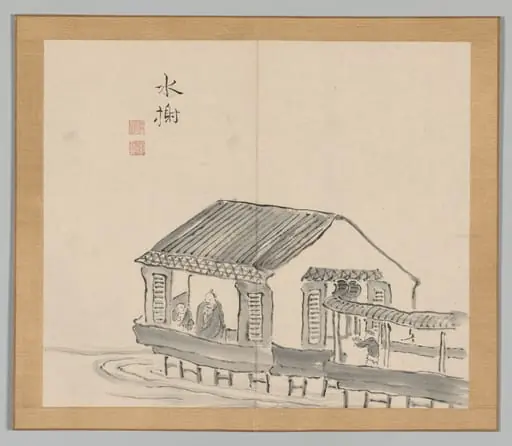 Reverberations of Taiga, Volume 2 (leaf 29)
 Reverberations of Taiga, Volume 2 (leaf 20)
 Reverberations of Taiga, Volume 1 (leaf 19)
 Reverberations of Taiga, Volume 1 (leaf 20)
 Reverberations of Taiga, Volume 1 (leaf 18)
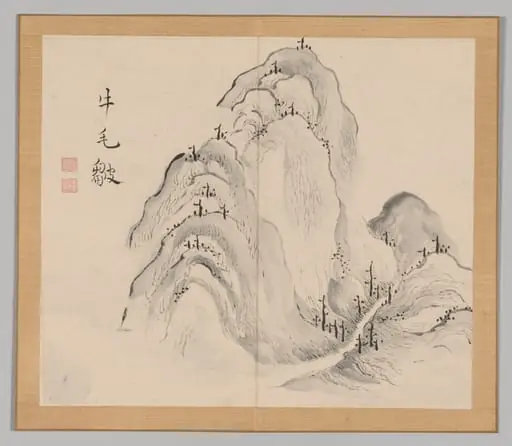 Reverberations of Taiga, Volume 1 (leaf 15)
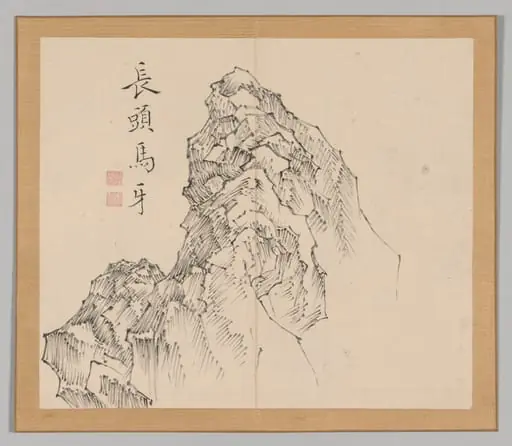 Reverberations of Taiga, Volume 1 (leaf 17)
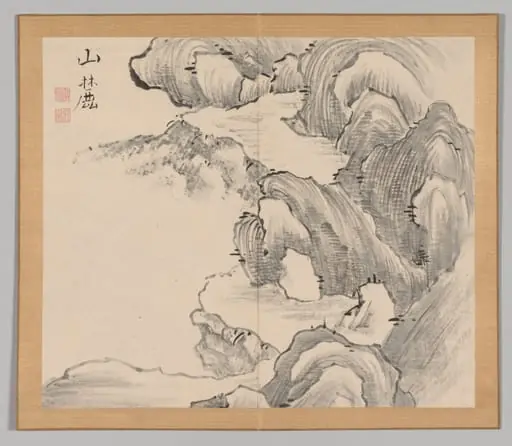 Reverberations of Taiga, Volume 1 (leaf 28)
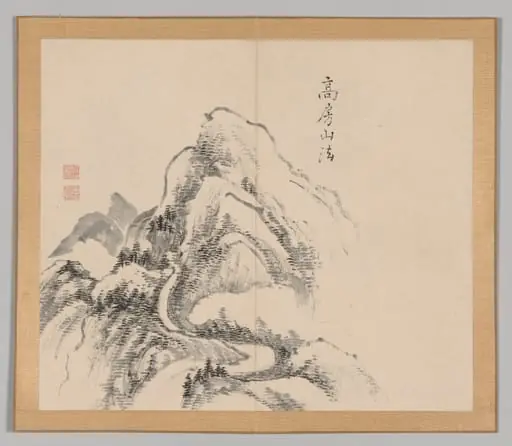 Reverberations of Taiga, Volume 1 (leaf 34)
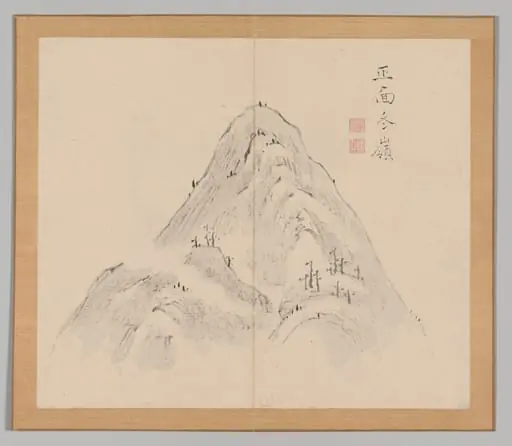 Reverberations of Taiga, Volume 1 (leaf 24)
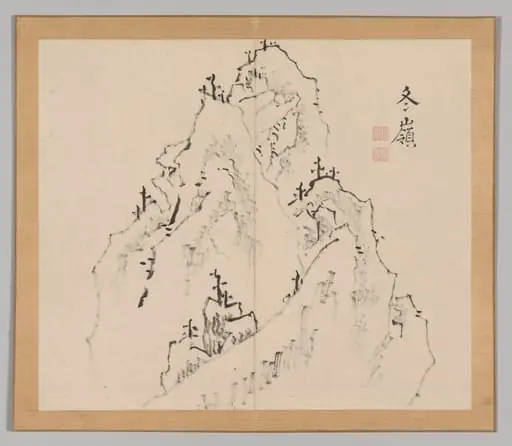 Reverberations of Taiga, Volume 1 (leaf 25)
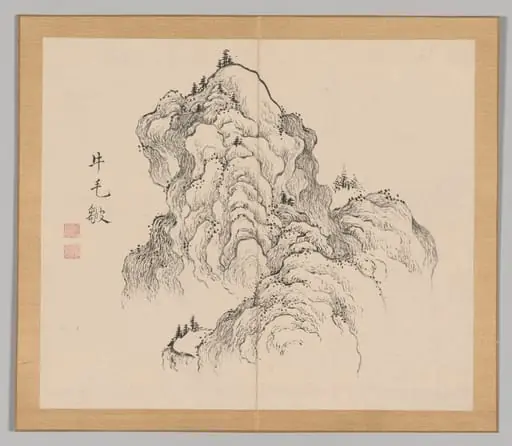 Reverberations of Taiga, Volume 1 (leaf 16)
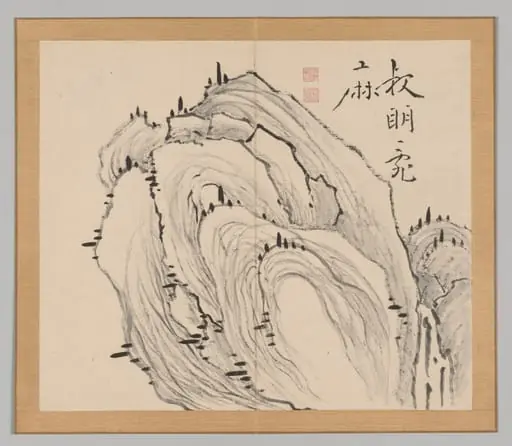 Reverberations of Taiga, Volume 1 (leaf 11)