Artwork
Reverberations of Taiga, Volume 2 (leaf 17)
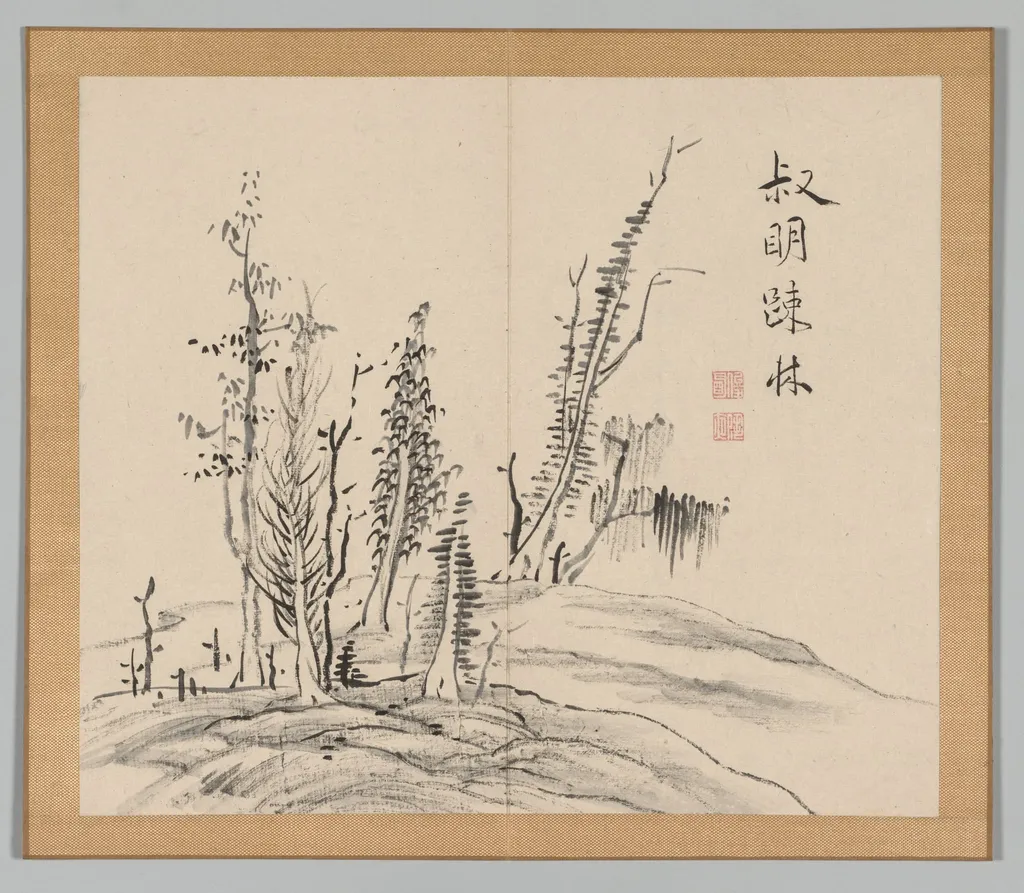
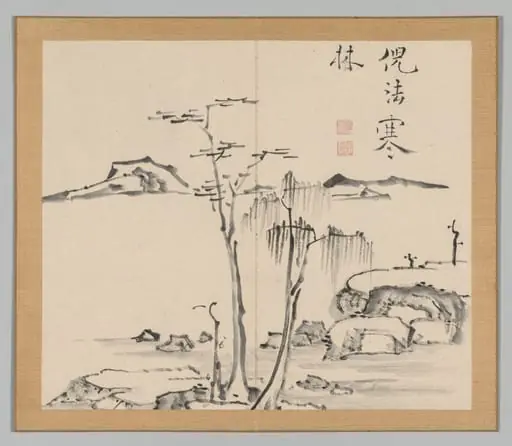
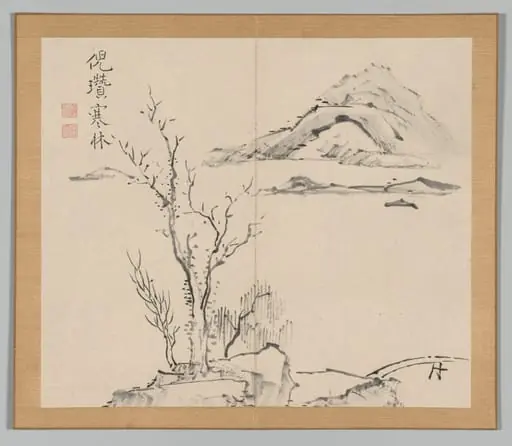
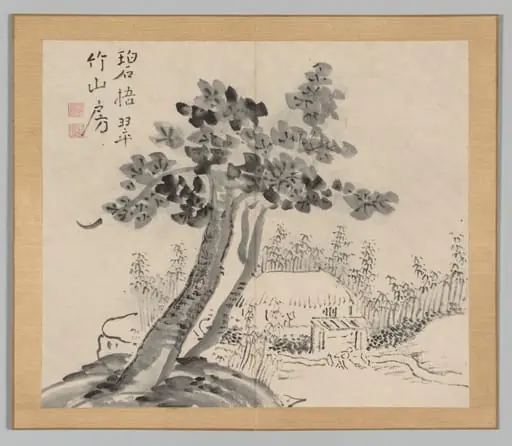
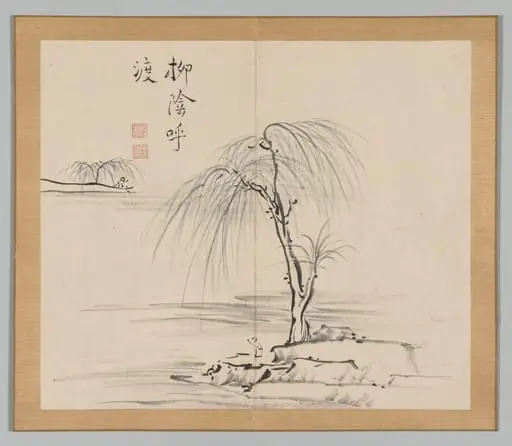
Reverberations of Taiga, Volume 2 (leaf 17) is a work on paper by the Baroque artist Aoki Shukuya. It dates from 1704 and is held in the collection of the Cleveland Museum of Art. This leaf is part of a two-volume portfolio titled Reverberations of Taiga, created by the Japanese artist Shukuya.
About this work
Overview
It contains ink sketches that reflect the training methods of Edo-period painters, who learned through meticulous copying of their master’s compositions.
This leaf is part of a two-volume portfolio titled Reverberations of Taiga, created by the Japanese artist Shukuya. It contains ink sketches that reflect the training methods of Edo-period painters, who learned through meticulous copying of their master’s compositions. The work belongs to a series of studies meant to internalize the visual language of Ikeno Taiga, a leading Kyoto-based artist of the time.
Subject & Meaning
The page depicts natural elements—rocks, trees, and mountains—rendered in restrained ink lines. These forms are not intended as finished landscapes but as exercises in observation and technique. Their simplicity suggests a focus on structure and rhythm rather than narrative or symbolism, serving as foundational studies for developing a painter’s hand and eye.
Technique & Style
Shukuya employed monochrome ink washes and varied brush pressure to suggest volume and texture. While the work shows influence from Taiga’s brushwork, it lacks the dramatic chiaroscuro often associated with Western art; instead, it relies on tonal gradations and line economy to convey depth. The strokes are deliberate, reflecting hours of disciplined practice under Taiga’s method.
History & Provenance
The portfolio was compiled as part of Shukuya’s apprenticeship under Ikeno Taiga in Kyoto during the mid-18th century. Such sketchbooks were typically kept privately, used for personal refinement rather than public display. This leaf, like others in the set, survived as a record of pedagogical practice, later entering the collection of the Cleveland Museum of Art.
Context
In Edo-period Japan, artistic training was hierarchical and transmission-based. Apprentices spent years copying their master’s works to absorb stylistic norms before developing individual voices. Taiga, known for blending Chinese literati traditions with Japanese sensibilities, passed this approach to his students. Shukuya’s sketches exemplify this institutionalized learning system.
Legacy
Though Shukuya did not achieve the same renown as his teacher, these sketches preserve the quiet rigor of traditional Japanese atelier training. They offer insight into how artistic lineage was maintained through repetition and observation. Today, such works are valued not for originality but as documents of a disciplined, apprenticeship-driven art world.
Own this work as a print
Artist & collection

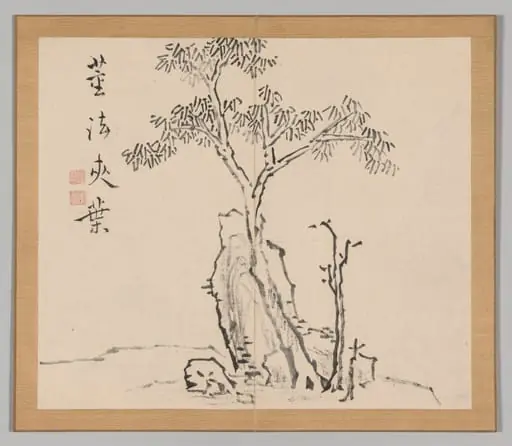 Reverberations of Taiga, Volume 1 (leaf 4)
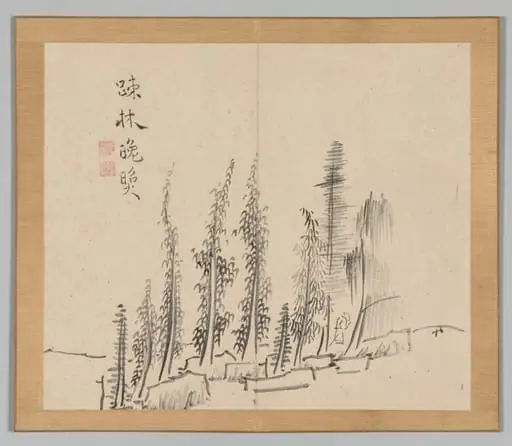 Reverberations of Taiga, Volume 2 (leaf 30)
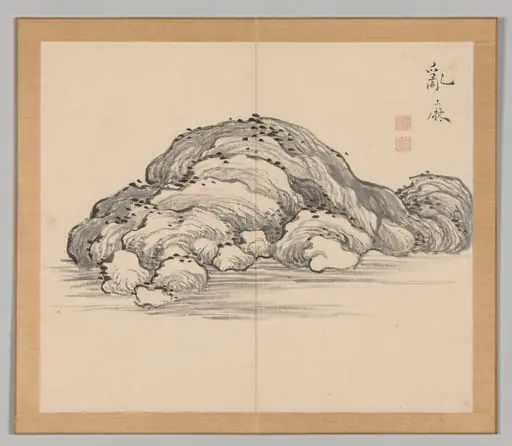 Reverberations of Taiga, Volume 1 (leaf 12)
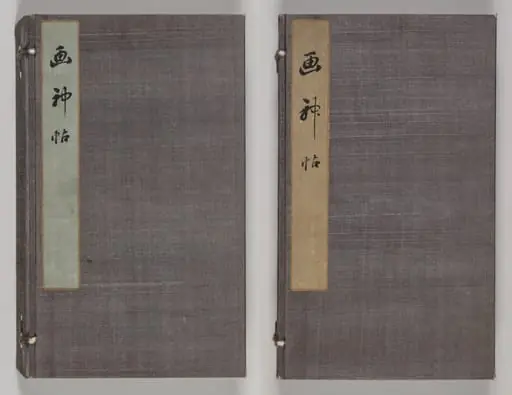 Reverberations of Taiga
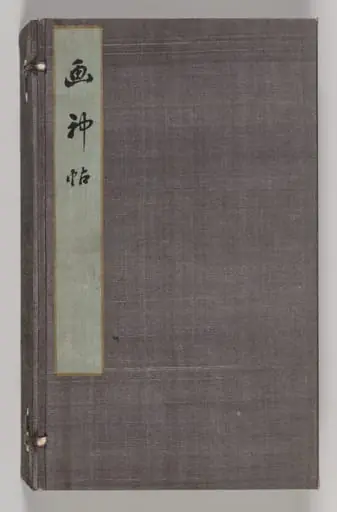 Reverberations of Taiga (Volume 1)
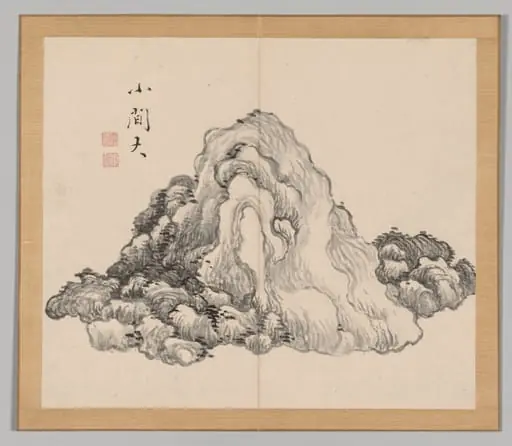 Reverberations of Taiga, Volume 1 (leaf 7)
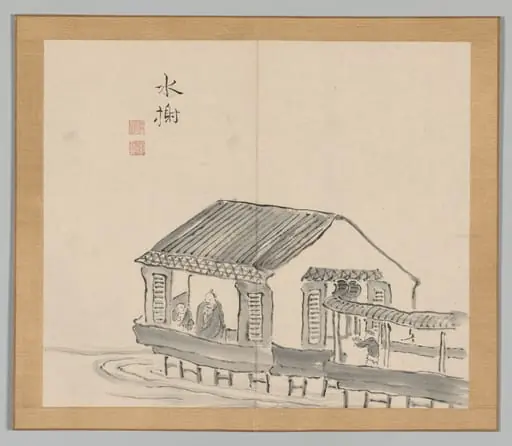 Reverberations of Taiga, Volume 2 (leaf 29)
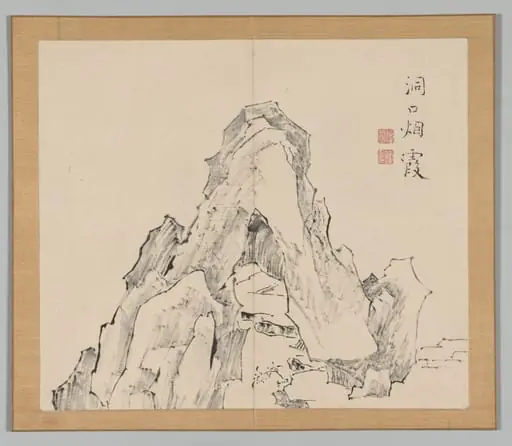 Reverberations of Taiga, Volume 2 (leaf 20)