Artwork
Alexander the Great
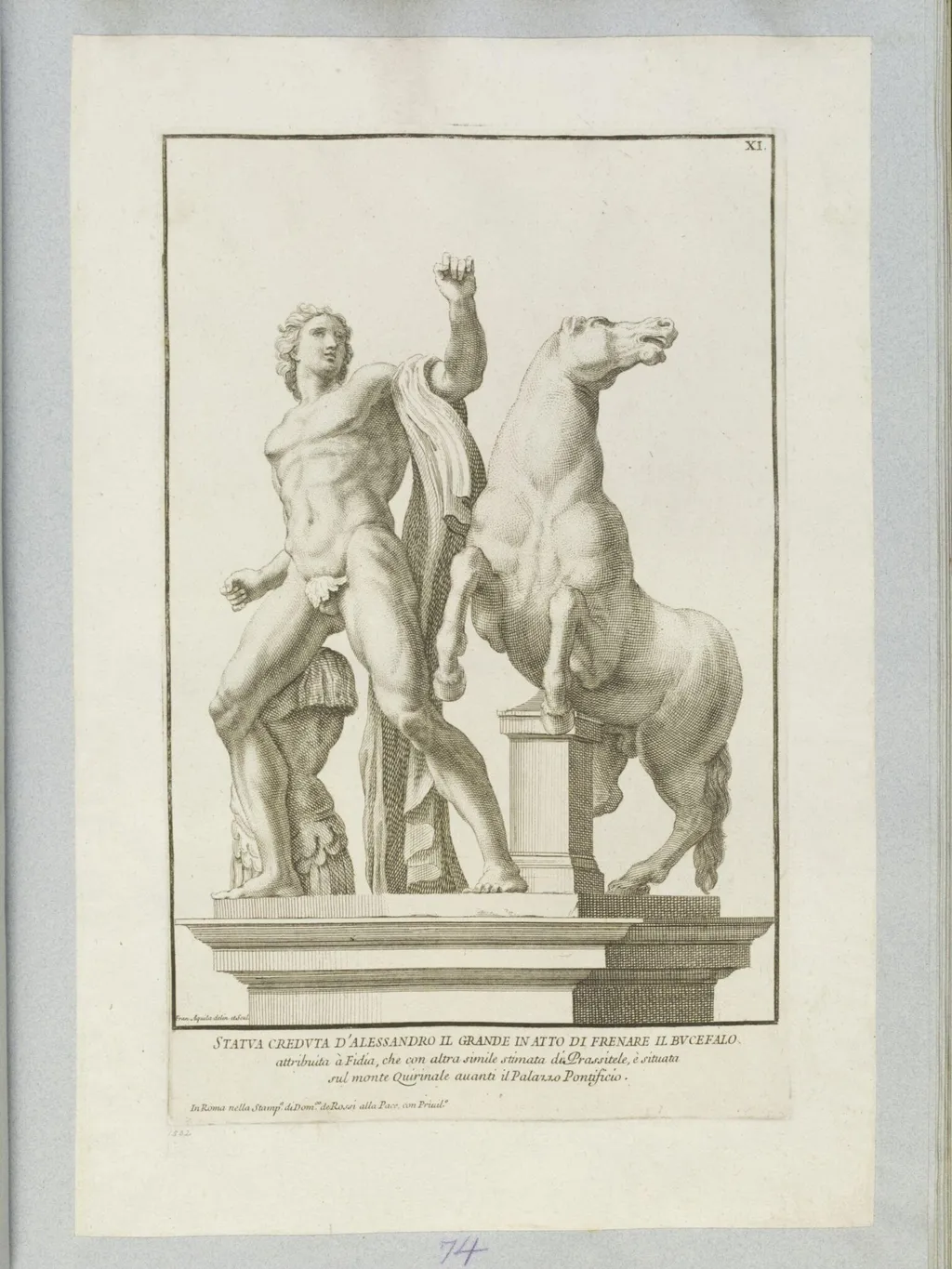
Alexander the Great is a print by Francesco Faraone Aquila. It is held in the collection of the Victoria and Albert Museum.
About this work
Overview
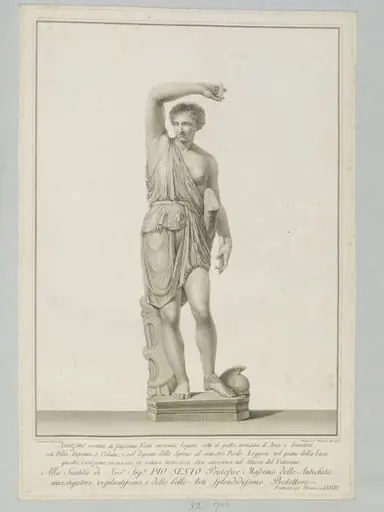
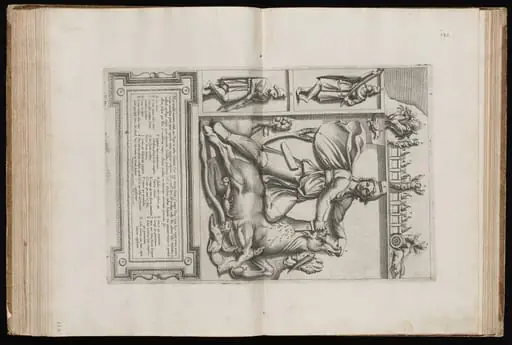
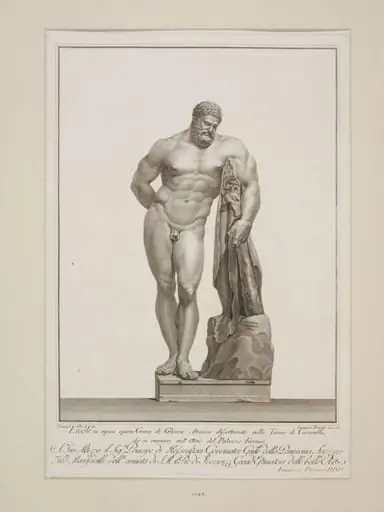
This 1750 print, attributed to Francesco Faraone Aquila, depicts a muscular male figure engaged in a struggle with a wild bull.
This 1750 print, attributed to Francesco Faraone Aquila, depicts a muscular male figure engaged in a struggle with a wild bull. Though labeled as a statue of Alexander the Great, it is a printed image created by engraving a metal plate. The inscription 'Statua creduta d'Alessandro il Grande' reflects a contemporary belief that the scene represented the historical conqueror, though the imagery does not align with known portraits of him.
Subject & Meaning
The scene portrays a solitary male figure, standing on a raised platform, gripping a bull’s horn while the animal rears violently. The composition evokes themes of strength and domination, qualities often associated with Alexander. However, the act of wrestling a bull is not documented in historical accounts of his life. The image likely draws from mythic or allegorical traditions, conflating heroic vigor with the ruler’s legendary persona.
Technique & Style
The image was produced through intaglio engraving, where lines were incised into a metal plate, inked, and pressed onto paper. Strong, deliberate strokes and careful shading create a sense of volume and tension. The use of chiaroscuro enhances the drama of the confrontation, emphasizing the muscular forms and the dynamic struggle between man and beast, characteristic of late Baroque printmaking.
History & Provenance
Created in mid-18th century Italy, the print reflects a period when classical antiquity was frequently reimagined in popular imagery. Francesco Faraone Aquila, known for reproductive engravings, likely based this work on an earlier sculpture or painting now lost. The attribution to Alexander the Great suggests a cultural tendency to associate heroic feats with his name, even when the source material was unrelated.
Context
In the 18th century, prints like this served as accessible representations of classical ideals for a broader audience. Though not historically accurate, such images reinforced cultural narratives linking physical prowess with leadership. The bull-wrestling motif may derive from Hellenistic art or Roman mosaics, where such scenes symbolized triumph over nature, a theme easily mapped onto Alexander’s mythic legacy.
Legacy
This print exemplifies how historical figures were visually reinterpreted through symbolic imagery rather than documentary fidelity. While not a portrait of Alexander, it reveals how his name lent authority to depictions of strength and conquest. Such works influenced later popular representations of antiquity, embedding mythic tropes into the visual language of European print culture.
Artist & collection